-As CMC Pushes Past Internal Turmoil
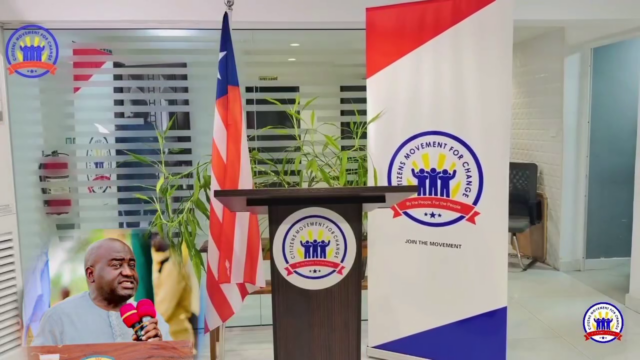
MONROVIA, Liberia — The political leader of the Citizen Movement for Change (CMC), Representative Musa Hassan Bility, has declared 2026 as a decisive turning point for Liberia, unveiling an ambitious political and development agenda while seeking to steady his party after months of internal discord that threatened its cohesion before the close of 2025.
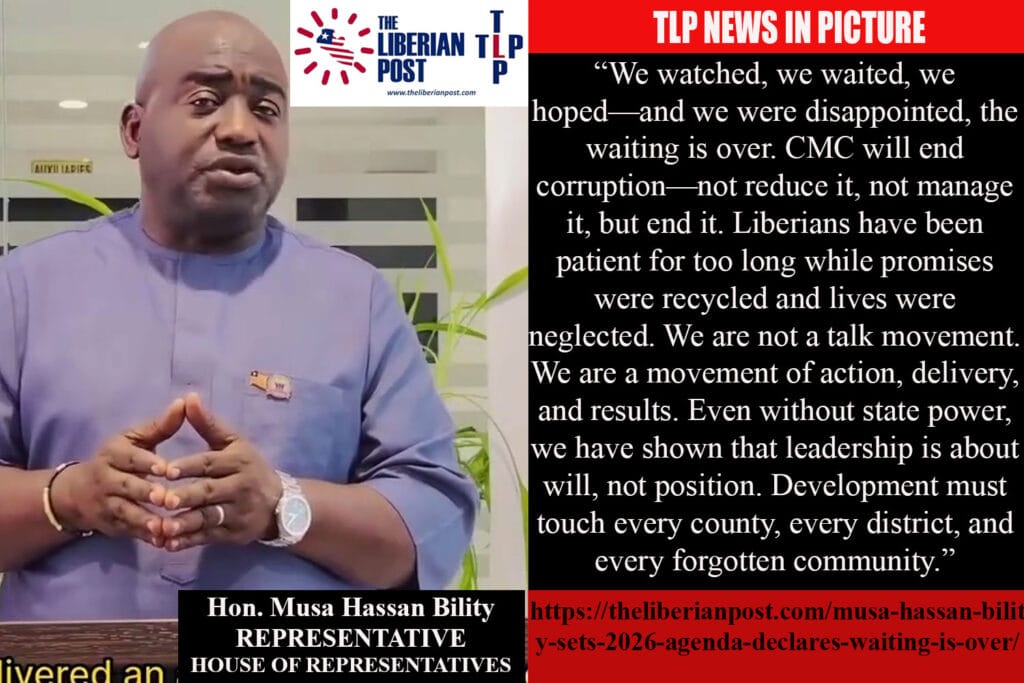
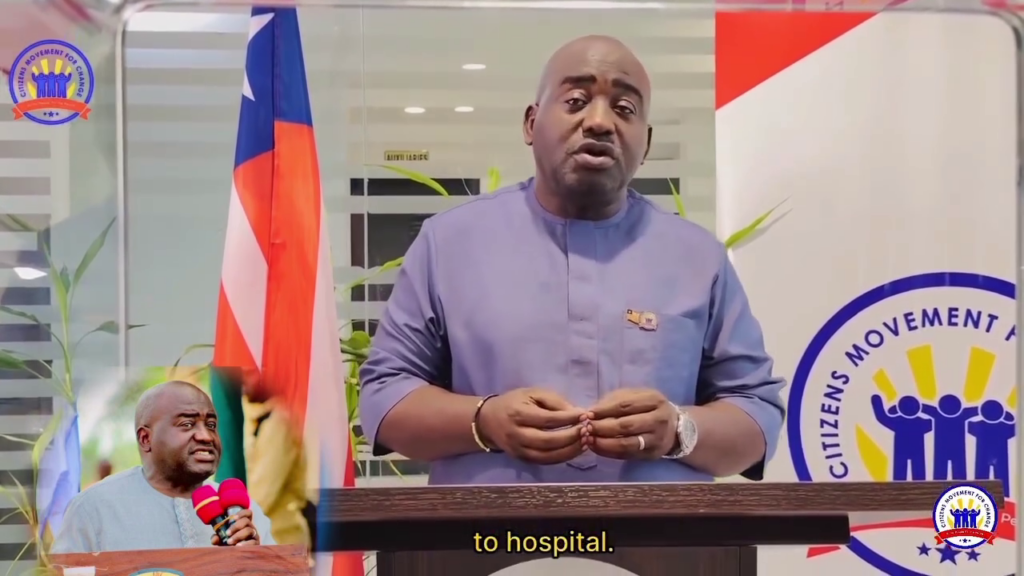
In a fiery New Year’s message address to Liberians at home and abroad, Bility delivered a sweeping critique of both the ruling Unity Party and the former Coalition for Democratic Change (CDC) administration, accusing successive governments of presiding over deepening corruption, unemployment, infrastructure decay, and declining social services. “We watched, we waited, we hoped—and we were disappointed,” Bility said, declaring that “the waiting is over.”
A Message of Urgency and Populist Appeal
Bility’s address was framed as a call to national awakening, drawing heavily on the lived experiences of ordinary Liberians—market women, farmers, unemployed graduates, and diaspora families who continue to send remittances home despite economic hardship. He positioned the CMC as a grassroots alternative to what he described as a political culture of broken promises and elite self-interest.
He outlined a slate of infrastructure projects the movement claims to have already initiated since its launch in March 2025, including roads, bridges, and community facilities across Nimba, Lofa, Bong, and other counties. According to Bility, these early interventions demonstrate that the CMC is “not a talk movement” but one capable of delivering tangible results even outside state power.
Looking ahead to 2026, the CMC political leader announced plans to commence or expand bridge construction projects in Barkedu–Tusu (Lofa), Gbarnga City (Bong), and the Tiawan Saye Gongloe corridor linking Bong and Nimba counties, among others. He also pledged new engagements in Grand Gedeh, River Gee, Sinoe, Grand Cape Mount, Bomi, Gbarpolu, Montserrado, Grand Bassa, and Margibi counties.
Promises of Reform—and a Direct Challenge to the Establishment
Bility’s rhetoric sharpened as he laid out what he described as non-negotiable commitments: ending corruption outright, creating “real jobs,” fixing farm-to-market roads, restocking hospitals with essential medicines, and uniting the country under a competence-based leadership model.
“CMC will end corruption—not reduce it, not manage it, but end it,” he declared, a statement clearly aimed at resonating with a population weary of anti-graft promises that have yielded few convictions.
He also appealed strongly to the diaspora, framing overseas Liberians as an essential pillar of national renewal and urging them to see the CMC as a vehicle for reclaiming a country they were forced to leave behind but never abandoned emotionally.
A Movement Emerging From Internal Strain
While the New Year’s message projected confidence and momentum, it comes against the backdrop of significant internal struggles within the CMC that unfolded in the latter half of 2025. The movement, though young, was rocked by leadership disagreements, accusations of unilateral decision-making, and tensions between founding members and newer political allies.
Several senior figures privately complained of inadequate consultation on strategy, project selection, and public messaging, while others questioned whether the movement was moving too quickly into electoral posturing without solidifying its internal governance structures. These disputes spilled into social media and community meetings, briefly denting the CMC’s image as a disciplined alternative force.
Bility’s allies insist that the tensions reflected growing pains rather than existential fractures, arguing that the movement has since taken steps to improve internal communication, clarify leadership roles, and recommit to collective decision-making. The New Year’s address itself appeared carefully crafted to re-center the CMC around shared purpose, popular legitimacy, and national—not personal—ambition.
Testing Credibility in a Crowded Political Space
Political analysts say Bility’s speech places the CMC squarely in competition with both traditional opposition actors and emerging reformist voices ahead of the 2029 electoral cycle. His emphasis on early project delivery is seen as an attempt to differentiate the movement from parties that rely solely on campaign promises.
However, critics argue that without transparent funding disclosures, independent verification of completed projects, and clearer policy frameworks, the CMC risks being judged by the same standards it applies to the political establishment it condemns.
Still, supporters view Bility’s message as one of the most emotionally resonant and politically calculated addresses delivered by an opposition leader entering 2026—particularly in a climate of widespread public frustration with governance outcomes. As Liberia enters a politically charged new year, the challenge for Bility and the Citizen Movement for Change will be to convert rhetoric into verifiable results, manage internal cohesion, and demonstrate that their promise of change extends beyond passion into sustainable national leadership.