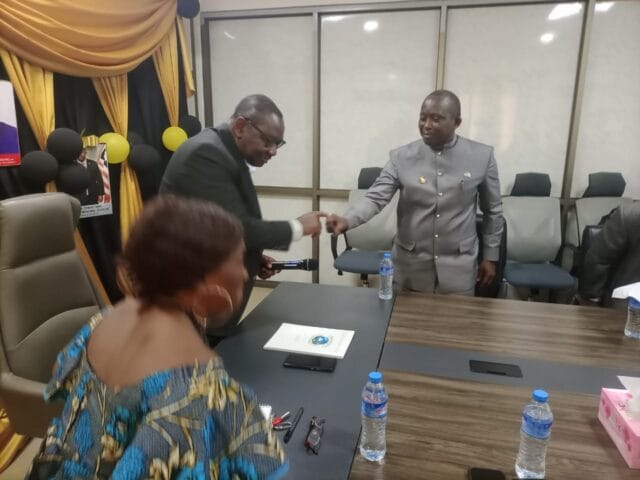
MONROVIA, Liberia — In a significant step toward strengthening accountability and transitional justice in Liberia, Cllr. Jallah A. Barbu, Executive Director of the Office for the Establishment of the War and Economic Crimes Court for Liberia (OWECC-L), has formally presented draft legislations for the establishment of the War and Economic Crimes Court (WECC) and the National Anti-Corruption Court (NACC) to Oswald Tweh, Minister of Justice and Attorney General of Liberia.
The presentation, held at the Ministry of Justice, marks the culmination of months of technical consultations, legal drafting, and stakeholder engagement aimed at addressing long-standing calls for justice for war-related atrocities and entrenched corruption in Liberia.
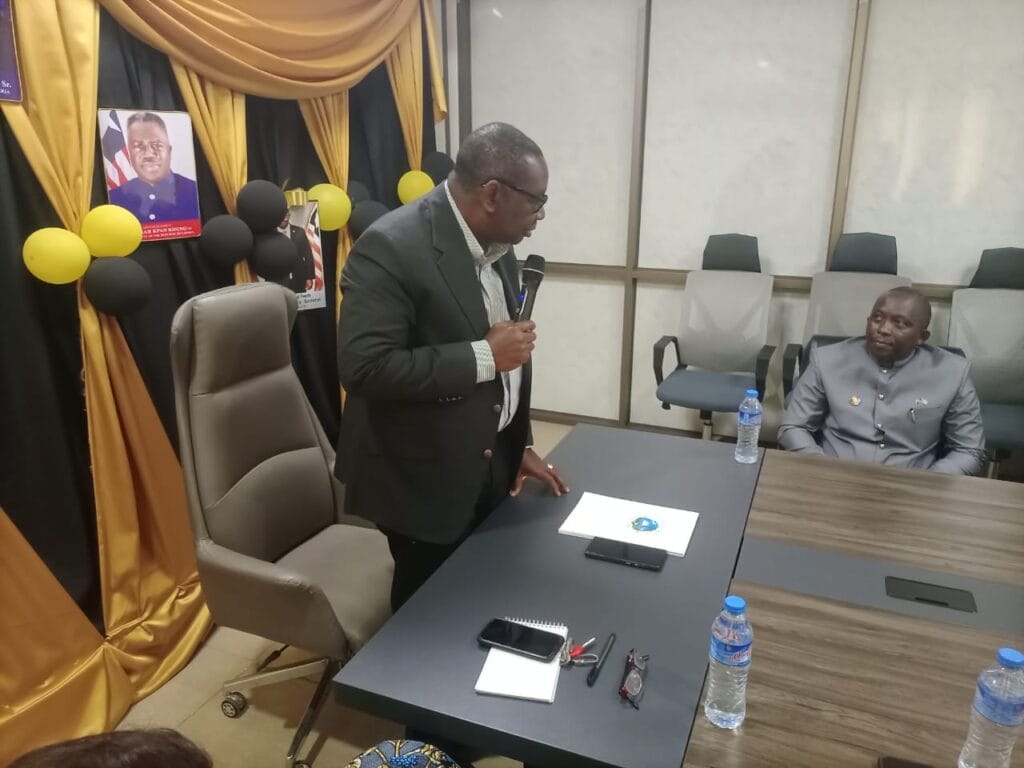
Speaking during the presentation, Cllr. Barbu described the moment as both historic and consequential for Liberia’s rule of law. He reflected on his year-long stewardship of OWECC-L, noting that while the process was demanding, it was necessary to confront the culture of impunity that has persisted since the country’s civil conflict.
“We are here today to submit these critical draft laws, developed through extensive consultations with local stakeholders and with support from international partners, to ensure Liberia finally confronts its past and secures justice for future generations,” Cllr. Barbu said.
He expressed appreciation to Joseph Nyuma Boakai, President of the Republic of Liberia, for the confidence placed in him to lead the process, and commended Minister Tweh for his consistent institutional backing and collaboration throughout the drafting phase.
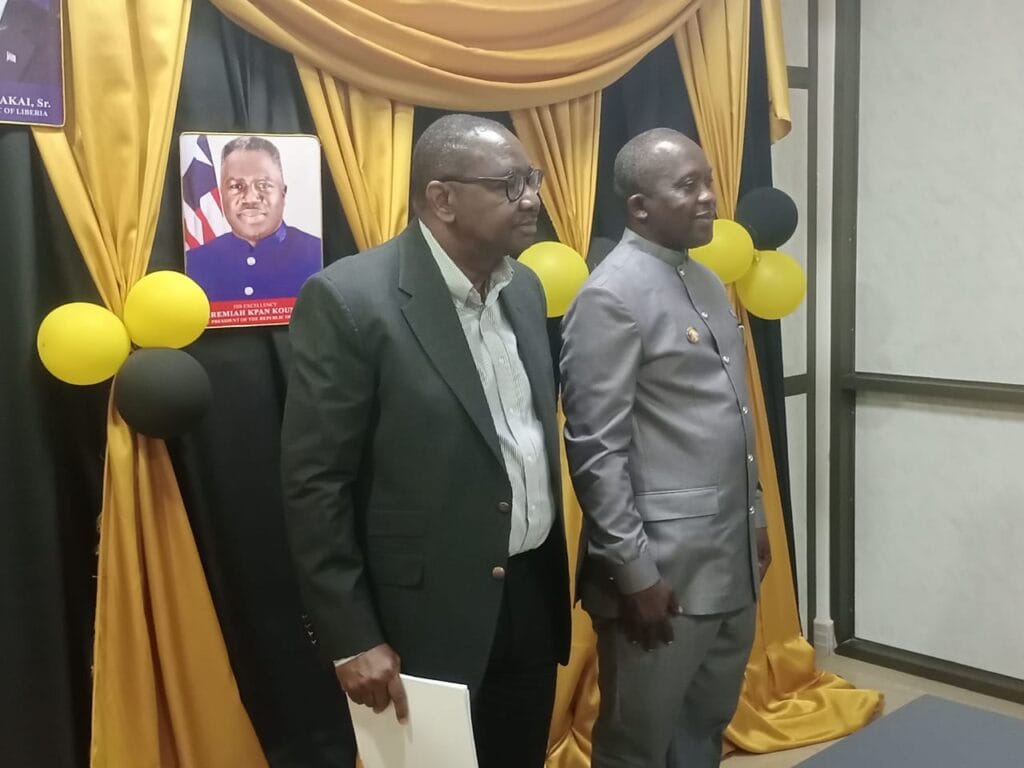
The proposed War and Economic Crimes Court is intended to prosecute serious violations of international humanitarian law and economic crimes committed during Liberia’s civil war years, while the National Anti-Corruption Court will focus on high-level corruption and abuse of public office, reinforcing ongoing governance and accountability reforms.
In response, Minister Tweh welcomed the submission and praised the professionalism and inclusiveness of the drafting process. He emphasized that the proposed courts align squarely with the government’s broader justice reform agenda and President Boakai’s commitment to accountability and national healing.
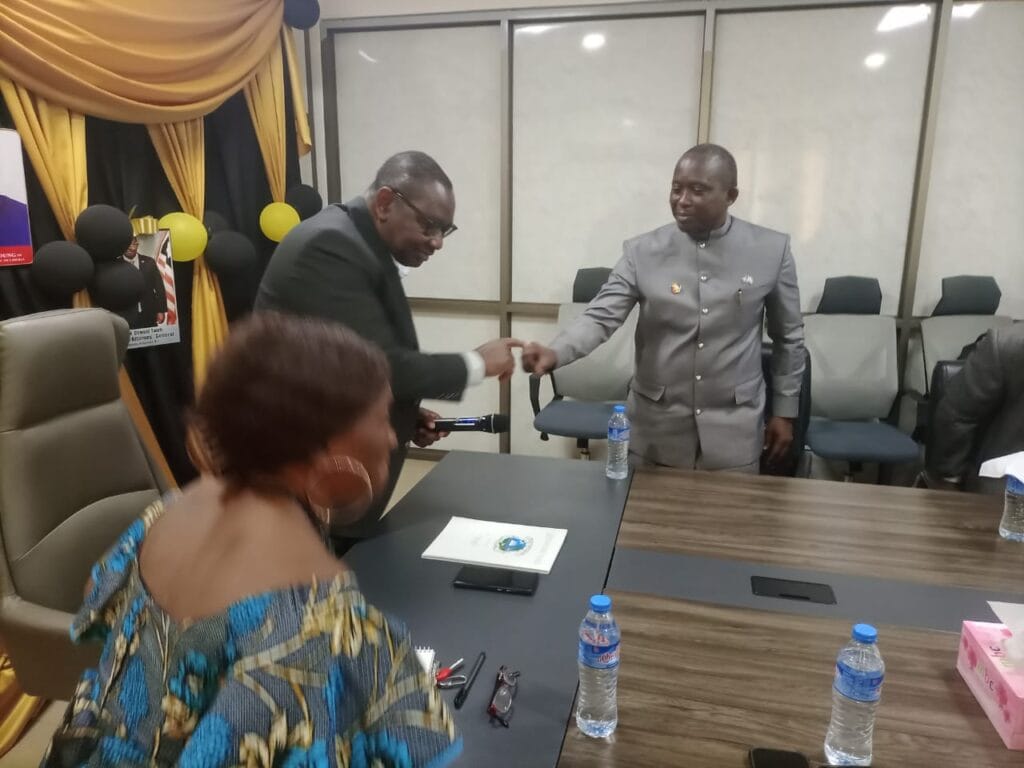
“This initiative speaks directly to our collective responsibility to confront impunity, restore public trust in the justice system, and strengthen the foundations of our democracy,” Minister Tweh said.
He assured that the Ministry of Justice would review the draft laws thoroughly and work with relevant branches of government to advance the process in line with constitutional and legislative requirements.
The submission of the draft laws is widely viewed as a pivotal milestone in Liberia’s post-war justice trajectory, signaling renewed political will to address war crimes, economic crimes, and systemic corruption. If enacted, the legislation would represent one of the most consequential legal reforms in Liberia’s modern history.