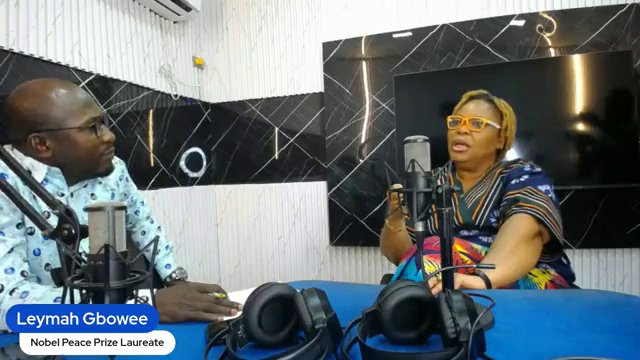
MONROVIA — Nobel Peace Prize Laureate Leymah R. Gbowee has delivered a stern warning to Liberia’s political class and citizenry alike, cautioning that poverty, desperation, and political ignorance are being dangerously exploited to manipulate public discourse and undermine national progress.
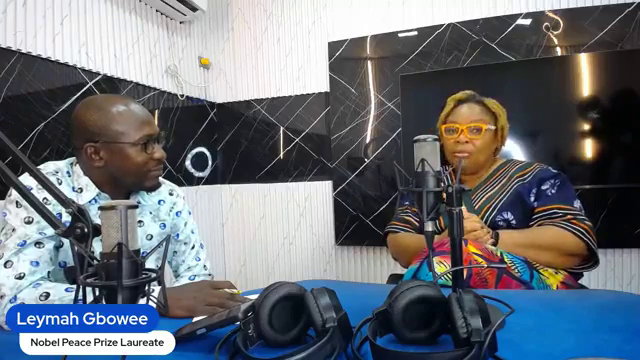
Speaking Tuesday on Truth FM’s Truth Breakfast Show, Gbowee said Liberia’s governance challenges are not rooted solely in failed leadership, but also in a culture that allows politicians to weaponize poverty for political gain.
“Too many people are being used because they are poor,” she said, arguing that political actors routinely exploit economic hardship by distributing money or favors in exchange for loyalty, silence, or attacks against perceived opponents. “When people are hungry, it becomes easy to buy their voices.”

Gbowee stressed that such practices are not confined to one political party or administration. According to her, successive governments have relied on the same playbook—mobilizing vulnerable citizens to defend power rather than principles.
She warned that the normalization of this behavior is eroding Liberia’s democratic culture, even as the country enjoys a level of freedom of expression unmatched during the civil war years.
“We did not always have this space to talk freely,” she reminded listeners. “People died for this freedom. So, when we abuse it by spreading lies, insults, and propaganda for politicians, we dishonor that sacrifice.”
While critical of political elites, Gbowee also turned the spotlight on ordinary citizens, insisting that corruption and misgovernance thrive because society tolerates them at every level.

“We blame government for corruption, but who is paying bribes? Who is asking for shortcuts?” she asked. “Corruption is not just in high offices—it lives in our daily behavior.”
Gbowee urged Liberians to stop romanticizing leaders based on handouts or personality cults and instead demand competence, empathy, and service. She argued that leadership divorced from compassion is unsustainable and historically doomed to collapse.
Drawing from faith and moral teachings, she cited Proverbs 19:17, which states that “whoever is kind to the poor lends to the Lord,” emphasizing that leadership should be understood as stewardship, not entitlement.
“When leaders forget the poor, power eventually forgets them,” she said.
Gbowee also expressed concern about the growing trend of political toxicity, where critics are attacked not with ideas but with insults, threats, and character assassination. She warned that such behavior discourages constructive debate and drives away credible voices from public service.
“Every time someone speaks the truth, they are labeled, attacked, or accused of having hidden agendas,” she said. “That is not democracy; that is fear.”
Despite her criticism, Gbowee maintained that Liberia is not beyond repair. She described the country as fragile but hopeful, noting that its peace and freedoms remain achievements worth protecting.
“What we need is moral courage,” she said. “Courage from leaders to serve honestly, and courage from citizens to stop being tools.”
Her remarks come at a time of growing public frustration over economic hardship, rising youth unemployment, and political polarization. Observers say her intervention adds a rare nonpartisan voice to Liberia’s often polarized national conversation.
Gbowee concluded with a call for ethical renewal, urging Liberians to reject politics of survival and embrace politics of responsibility.
“If we don’t change our mindset,” she warned, “we will keep recycling the same problems—just with different names.”