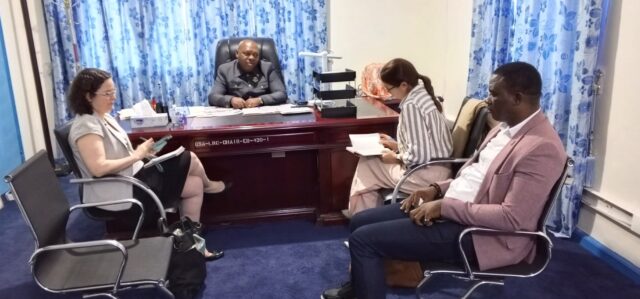
MONROVIA — The Law Reform Commission (LRC) has held high-level consultations with Human Rights Watch (New York) and Liberia’s Civil Society Human Rights Advocacy Platform, as stakeholders intensify efforts to align positions and speak with one voice on the establishment of a War and Economic Crimes Court for Liberia.
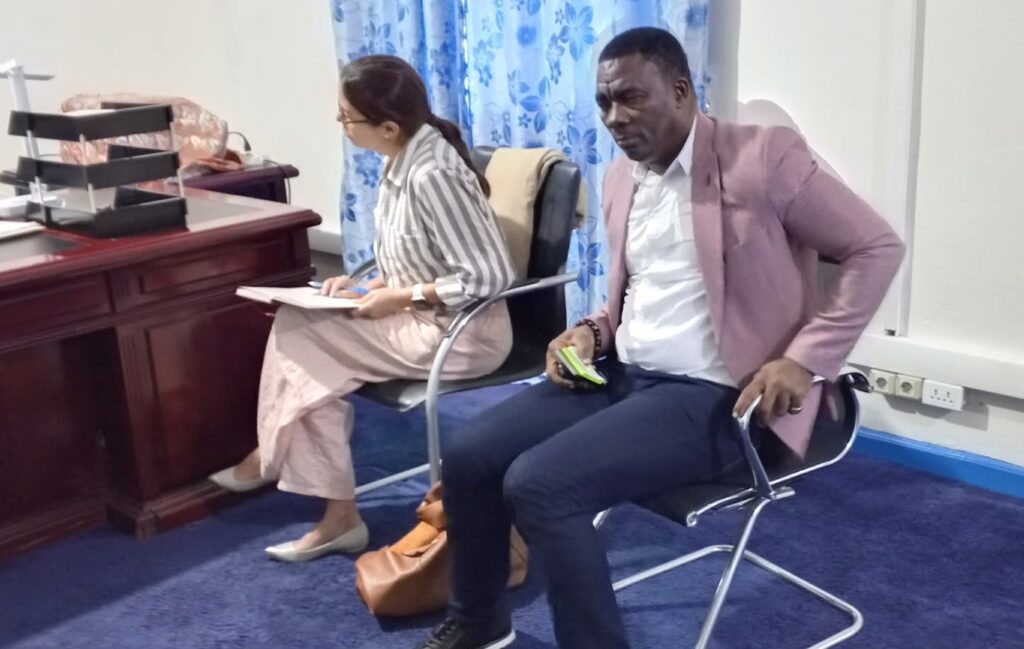
The discussions took place at the LRC’s offices in Mamba Point and brought together a three-member delegation comprising Michelle E. Reyes Milk, Senior Counsel with Human Rights Watch’s International Justice Program; Elise Keppler, Executive Director of the Global Justice Center; and Adama Dempster, Head of Secretariat of the Civil Society Human Rights Advocacy Platform—a network of 30 leading human rights organizations advocating accountability for atrocities committed during Liberia’s civil conflicts.
Ms. Reyes Milk said the visit was timed to coincide with ongoing transitional justice engagements in Liberia and aimed to hear directly from key national actors tracking accountability efforts. She commended the Executive Branch for demonstrating political will toward establishing the court and said the meeting provided an opportunity to assess progress, clarify roles, and explore how Human Rights Watch and international partners can support the process.
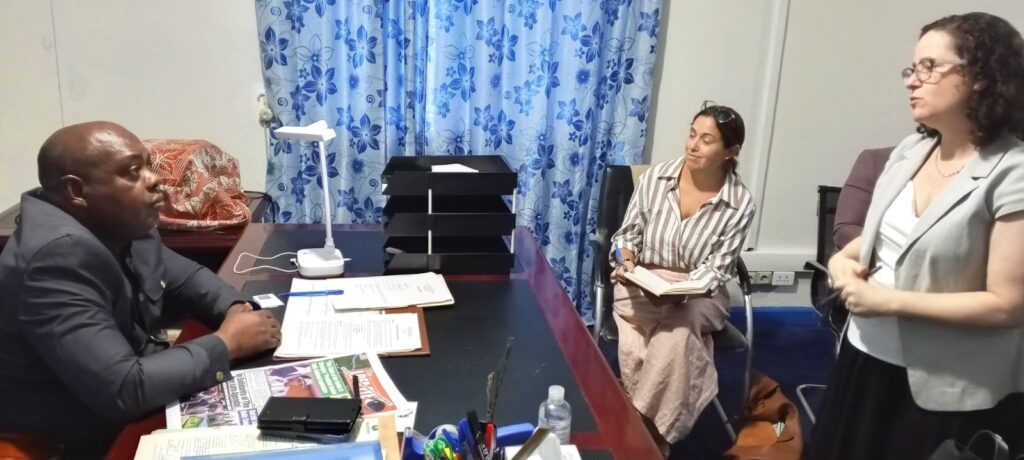
Welcoming the delegation, LRC Chair and Chief Executive Officer Bornor M. Varmah emphasized the Commission’s commitment to advancing justice and providing closure for victims. He underscored the pivotal roles played by the Liberia National Bar Association (LNBA)—which he currently heads—and civil society organizations in driving the accountability agenda.
Cllr. Varmah traced the evolution of the process, including advocacy that led to the establishment of the Office for the War and Economic Crimes Court–Liberia (OWECC-L) and the appointment of its Executive Director. He called for recalibration and closer coordination among the LRC, civil society, the Independent National Commission on Human Rights (INCHR), and OWECC-L—particularly as two draft bills related to the court are reportedly before the President.
“The Law Reform Commission will take the lead to harmonize the draft bills,” Cllr. Varmah said, warning that unaligned perspectives could undermine momentum. He advocated a multi-pronged approach: while legislation advances, Liberia should begin training judges, prosecutors, and investigators, noting that the Truth and Reconciliation Commission’s report alone will not suffice as trial-ready evidence for international crimes.
He further explained that Liberia’s obligations under international conventions require a process aligned with international law. “No partner will support a purely nationalized approach for international crimes,” he said, adding that harmonization and early capacity-building are essential—especially if a hybrid court model is adopted.
On behalf of civil society, Mr. Dempster praised the LNBA’s leadership and urged urgency. He warned that delays risk justice being denied as victims, witnesses, and alleged perpetrators age or pass away. He also pointed to the impending expiration of an Executive Order framework and cautioned that prolonged timelines could collide with electoral cycles and legislative divisions. Civil society, he said, favors swift consolidation to secure broad endorsement and avoid unnecessary extensions.
Closing the meeting, Cllr. Varmah reaffirmed the LRC’s statutory mandate to lead law reform and pledged to convene stakeholders to reconcile the draft bills before enactment. “Civil society has been part of this process from the beginning,” he said. “Their perspectives must be fully heard as we move forward.”
Follow The Liberian Post on Facebook and X (formerly twitter)