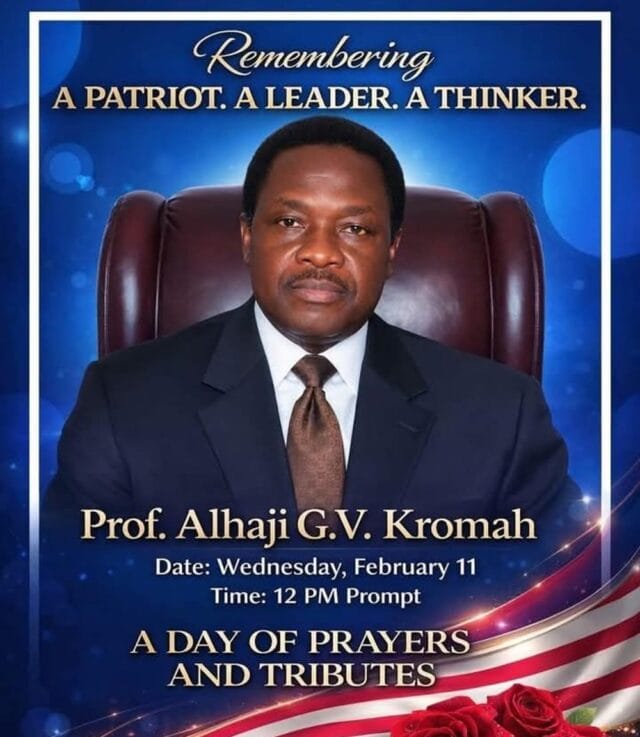
MONROVIA, Liberia — In a memorial gathering honoring the late Alhaji Garxim Varmuyan Kromah, Dr. Henry Boima Fahnbulleh, widely regarded as one of Liberia’s most astute political scientists and public intellectuals, delivered a moving speech that celebrated friendship, courage, and the lasting values that bind Liberian leaders and citizens alike.
Fahnbulleh, affectionately known as HB, began with a candid note about the occasion. “I’m not going to discuss politics today. I’ve retired from political life,” he said, signaling a departure from partisan discourse to honor a fallen comrade. The memorial, attended by family, peers, and veterans of Liberia’s political struggles, provided HB with a platform to reflect on the character and humanity of his longtime friend.
Central to HB’s tribute were three defining traits he attributed to Alhaji G.V. Kromah: honesty, compassion, and the ability to navigate both victory and defeat with grace. “Honesty is the only subject that is not taught in any university in the world,” HB declared, stressing that integrity is a virtue that cannot be learned from textbooks alone but must be cultivated within a person’s character. He recalled times when Alhaji’s honesty shone brightly: “There were times I visited him, and he would say to me, ‘Boimah, listen, I’m not here for your joke. What did you come for?’” The former minister and political advisor painted a picture of a man who was consistently genuine, even when guests pressed for favors or discussions beyond the business of friendship.
HB’s recollections extended to Alhaji’s generosity and hospitality. He recalled a moment when Alhaji, despite having little, opened his door—and his pocket—to a guest. “There was a time I went to him and said, ‘Alhaji, I need $200,’” Fahnbulleh said. “He opened his pocket, took out $500, and said, ‘I will only gave you $100 because I know you want to go and divide it.’” The memory underscored a broader theme: Alhaji’s readiness to support others, a trait Fahnbulleh described with warmth as emblematic of his friend’s character.
Compassion, Fahnbulleh noted, extended beyond personal generosity to a deep concern for people’s welfare. He recounted a wartime moment in Liberia when Alhaji intervened to protect a family member during a period of danger, illustrating the elder statesman’s willingness to act on behalf of others in dire circumstances. Fahnbulleh framed Alhaji as a man who cared for the vulnerable and placed communal well-being above personal gain.
The third pillar of Alhaji’s legacy, according to Fahnbulleh, was his grace in victory and defeat. “The greatness of a man comes from the attitude of a man in defeat and in victory,” HB said, noting that Alhaji faced setbacks with humility rather than arrogance, and continued to pursue the country’s best interests with decency and resolve.

The speech also touched on intimate ties. Fahnbulleh reminded the audience that their bond went beyond friendship: “We are brothers. We are related. His sister by his mother is my first cousin.” The revelation underscored the deep personal history that shaped their shared public life.
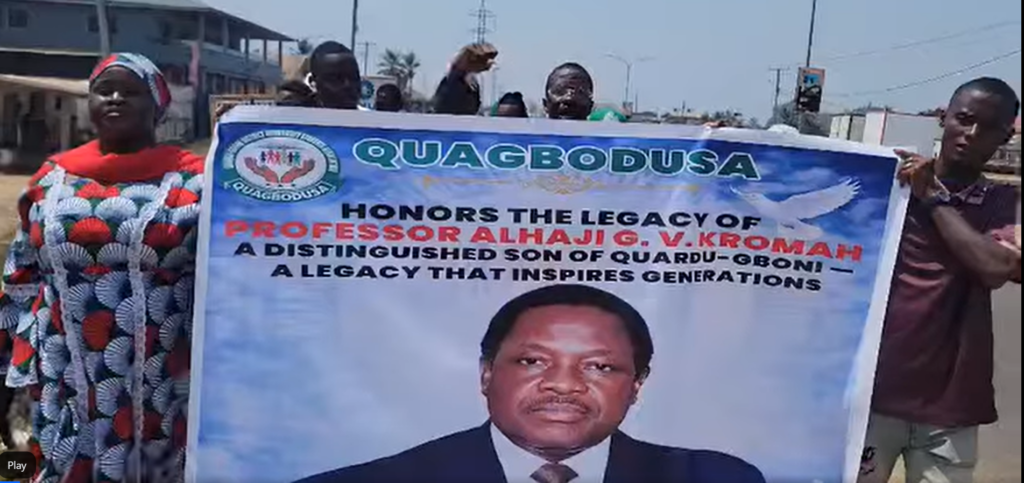
HB’s tribute concluded with a sober acknowledgment of Liberia’s turbulent past and the enduring value of principled leadership. He argued that the memory of Alhaji Kromah should inspire younger generations to pursue honesty, empathy, and resilience in their own service to Liberia.
As Liberia continues to reckon with its complex history, Fahnbulleh’s earnest remembrance of his comrade offers a lens on how personal integrity and loyalty can illuminate a nation’s path forward.
Follow The Liberian Post on Facebook and X (formerly twitter).