By Daniel Henry Smith, PhD
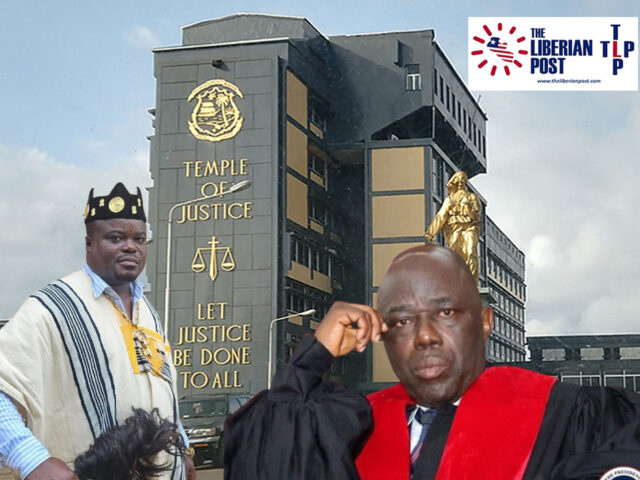
The Supreme Court of the Republic of Liberia’s opinion of February 13, 2026, in the case In Re: Contempt Proceedings Against Mr. Justin Oldpa Yeazehn, has ignited a fierce national debate about the boundaries of free speech, the scope of judicial authority, and the very nature of democratic governance. At the heart of this controversy lies a fundamental tension: the right of citizens to criticize public officials—even in crude and offensive terms—versus the judiciary’s interest in preserving its institutional dignity. While Cllr. Arthur Johnson defends the Court’s ruling as “sound in law” and Cllr. Tiawan Saye Gongloe, a senior legal figure, has advanced similar arguments, both lawyers propagate several logical and institutional fallacies that demand rigorous critical scrutiny. Chief among these are the assertions that insulting a public official is inherently more harmful than accusing them of corruption, that the Supreme Court as an institution can be meaningfully separated from the individual justices who compose it, and that public perception of the Court constitutes a sufficient ground for suppressing speech.
My analysis on this issue is in two parts. In Part I, I critically examine the fallacies of both Cllrs. Arthur Johnson and Tiawan Gongloe through the lens of institutional theory and organizational analysis while in Part II I address seven interrelated subthemes including: freedom of speech, contempt of court, judicial overreach, the dubious cultural defense against vulgarity, equality before the law, vulgarity as a form of protected speech, and the right to a fair trial. The central thesis of my analysis is that the Supreme Court’s ruling, far from protecting the rule of law, represents a dangerous conflation of personal grievance with institutional authority, and that free speech—even when vulgar, offensive, and uncomfortable—must be defended as the cornerstone of democratic society.

Part I: Critical Examination of the Fallacies of Cllr. Johnson and Cllr. Gongloe
A. The Fallacy That Insult Is More Harmful Than Accusation
Both Cllr. Johnson and Cllr. Gongloe advance, either explicitly or implicitly, the notion that Prophet Key’s vulgar insults directed at the Chief Justice and his mother constitute a graver offense than his substantive accusations of corruption. This is a remarkable inversion of democratic priorities. In any functioning democracy, an accusation that a sitting Chief Justice accepts bribes from litigants and operates commercial enterprises that create conflicts of interest is an extraordinarily serious charge—one that, if true, strikes at the very foundation of judicial integrity. Prophet Key’s vulgar language, while offensive and crude, is ultimately a matter of tone and decorum. The accusation of corruption, by contrast, is a matter of substance that directly implicates the administration of justice for every Liberian citizen.
Institutional theory, particularly as articulated by scholars such as Douglass North and W. Richard Scott, holds that institutions derive their legitimacy not from ceremonial deference but from the substantive trust that citizens place in their fair and impartial operation (North, 1990; Scott, 2014). North’s framework distinguishes between the formal rules that govern institutions and the informal constraints that shape behavior within them. Under this framework, the real threat to the Supreme Court’s legitimacy is not vulgar language but the possibility—however remote or well-founded—that its Chief Justice is corrupt. By focusing the contempt proceedings on the insults rather than investigating the corruption allegations, the Court reveals a troubling prioritization of decorum over accountability. Johnson and Gongloe’s framework effectively immunizes public officials from substantive criticism by redirecting public attention toward the manner of speech rather than its content. This is not merely a logical fallacy; it is a strategy of deflection that undermines the democratic accountability essential to institutional legitimacy.
Furthermore, the distinction between insult and accusation collapses upon closer examination. Prophet Key’s vulgar language was not deployed in a vacuum—it was embedded within a broader critique of judicial corruption. To surgically separate the vulgarity from the accusation and then prosecute only the former is an act of selective justice that ignores the communicative context of the speech. As organizational communication theorists have long recognized, the form and content of speech are inextricably linked; to punish the form while ignoring the content is to engage in a kind of institutional censorship that chills all criticism, not merely the vulgar variety (Putnam & Nicotera, 2009).

B. The False Dichotomy Between the Court and Its Justices
Perhaps the most intellectually dishonest argument advanced by Johnson and Gongloe is the claim that one can distinguish between the Supreme Court as an institution and the individual justices who sit on its bench. This dichotomy serves a convenient purpose: it allows the Court to characterize criticism of the Chief Justice as an attack on the institution itself, thereby invoking the extraordinary power of contempt to punish what would otherwise be personal grievances.
Institutional theory flatly contradicts this separation. As Philip Selznick argued in his seminal work on organizations, institutions are not abstract entities floating above the individuals who compose them—they are embodied in those individuals (Selznick, 1957). The Supreme Court of Liberia does not exist as a Platonic form independent of Chief Justice Gbeisay and his Associate Justices. Its authority, its credibility, and its legitimacy are constituted by the actions, decisions, and conduct of the human beings who occupy its bench. When citizens criticize the Chief Justice, they are necessarily commenting on the institution he leads, but this does not mean that the institution can claim injury separate from the individual. To hold otherwise is to create an absurd legal fiction in which the Court possesses a disembodied dignity that can be offended independently of any living person.
This false dichotomy has a profoundly dangerous implication: it allows sitting justices to use the institutional power of contempt to avenge personal slights. In the instant case, Chief Justice Gbeisay—the very person allegedly insulted—presided over the contempt proceedings, appointed the Amici Curiae, and appointed the defense lawyers. The institutional veil does not merely obscure the personal nature of the grievance; it enables a structural conflict of interest that violates the most basic principles of natural justice. The legal maxim nemo judex in causa sua—no one shall be a judge in his own cause—exists precisely to prevent the kind of self-interested adjudication that this case exemplifies (Wade & Forsyth, 2014). By collapsing the distinction between personal insult and institutional harm, Johnson and Gongloe provide intellectual cover for what is, in substance, a judge prosecuting his own case.
C. The Public Perception Fallacy
Both lawyers argue that Prophet Key’s speech must be punished because it has “exposed the Supreme Court to public ridicule and disrepute.” This argument treats public perception as an independent ground for suppressing speech—a position that is both logically circular and democratically corrosive. The argument essentially holds that speech which causes people to think less of the Court must be punished because it causes people to think less of the Court. This is a tautology masquerading as legal reasoning.
Institutional legitimacy theory, particularly as developed by Mark Suchman, identifies three forms of legitimacy: pragmatic (based on self-interest), moral (based on normative approval), and cognitive (based on comprehensibility and taken-for-grantedness) (Suchman, 1995). Under all three frameworks, legitimacy is earned through institutional performance, not through the suppression of criticism. A court that punishes citizens for damaging its reputation does not restore its legitimacy—it further erodes it by demonstrating that it values its image above the rights of the citizens it serves. The public perception argument, if taken to its logical conclusion, would justify punishing any criticism of the judiciary, since all criticism carries the potential to diminish public confidence. This is the logic of authoritarianism, not constitutionalism.
Part II: Thematic Analysis
1. Freedom of Speech
Article 15 of the 1986 Liberian Constitution guarantees freedom of speech, expression, opinion, and thought, subject to the proviso that persons shall be “held responsible for the abuse” of such freedom (Constitution of the Republic of Liberia, 1986, Art. 15). The Amici Curiae seized upon this caveat to argue that Prophet Key’s vulgarity constitutes an “abuse” falling outside constitutional protection. However, this interpretation renders the right meaningless. If the government—or in this case, the judiciary—is the arbiter of what constitutes “abuse” of free speech, then the right exists only at the pleasure of those in power. The entire purpose of constitutional free speech protections is to shield citizens from exactly this kind of governmental determination. Speech that pleases the powerful needs no constitutional protection; it is the offensive, the uncomfortable, and yes, the vulgar speech that the Constitution must protect if the right is to have any substance.

Internationally, the Universal Declaration of Human Rights (Article 19), the International Covenant on Civil and Political Rights (Article 19), and the African Charter on Human and Peoples’ Rights (Article 9) all protect freedom of expression with narrow, carefully delineated exceptions related to national security, public order, and the rights of others (United Nations, 1948; United Nations, 1966; Organization of African Unity, 1981). None of these instruments contemplates the punishment of vulgarity directed at public officials as a legitimate restriction on speech. Prophet Key’s speech, however crude, falls squarely within the realm of political commentary on the conduct of a public official—the category of speech that receives the highest protection under virtually every democratic legal tradition.
2. Contempt of Court
The contempt power is an extraordinary judicial tool designed to protect the administration of justice, not the personal feelings of judges. Its legitimate exercise extends to conduct that obstructs court proceedings, defies court orders, or interferes with the fair administration of justice (Halsbury’s Laws of England, 2012). Historically, constructive contempt—contempt committed outside the courtroom—has been treated with particular suspicion because of its potential for abuse. The English common law tradition, from which Liberian jurisprudence draws significant influence, gradually curtailed the scope of constructive contempt precisely because courts recognized that punishing out-of-court speech created an irreconcilable tension with the principles of free expression. The Contempt of Court Act 1981 in England, for instance, narrowed the scope of contempt to conduct that creates a “substantial risk” of serious prejudice to active court proceedings—a standard that Prophet Key’s Facebook podcast, which was not connected to any pending case or active proceeding, would manifestly fail to meet (Contempt of Court Act, 1981, s. 2). To invoke contempt for speech that is merely offensive to a judge, rather than obstructive to the judicial process, is to transform a procedural safeguard into a tool of personal vindication.
Prophet Key’s Facebook podcast was not delivered in a courtroom, did not interrupt any judicial proceedings, and did not defy any court order. It was political speech delivered on a public platform directed at the conduct of a public official. The substantive content of his broadcast—allegations of corruption against the Chief Justice—pertained to the character and fitness of a judicial officer, not to the outcome of any particular case before the Court. There is a critical distinction between speech that genuinely threatens the administration of justice, such as tampering with witnesses, intimidating jurors, or publishing prejudicial material about pending cases, and speech that merely embarrasses or offends a judge (Borrie & Lowe, 1996). The former falls squarely within the legitimate scope of contempt; the latter does not. To characterize Prophet Key’s speech as contempt is to conflate personal affront with institutional harm—a conflation that, as demonstrated in Part I, is both logically and institutionally untenable. If every citizen who expressed anger or frustration at a judge in vulgar terms on social media could be hauled before the Supreme Court for contempt, the doctrine would swallow the right to free expression whole.

Furthermore, the distinction between civil contempt and criminal contempt is of paramount importance in evaluating the procedural fairness of these proceedings. Civil contempt is coercive—designed to compel compliance with a court order—while criminal contempt is punitive, designed to punish past conduct that has affronted the dignity or authority of the court (Goldfarb, 1963). The proceedings against Prophet Key were unambiguously punitive in nature, as there was no court order with which he had failed to comply. Criminal contempt, because it carries the stigma and consequences of a criminal sanction, demands the full panoply of procedural protections afforded to criminal defendants: the right to an impartial tribunal, the presumption of innocence, the right to confront witnesses, and proof beyond a reasonable doubt. As noted above, the Chief Justice’s involvement in every stage of these proceedings—from issuing the citation to appointing counsel on both sides to presiding over the hearing—represents a structural violation of impartiality that no amount of procedural formality can cure. A criminal contempt proceeding in which the aggrieved party serves simultaneously as complainant, prosecutor, and judge is not a proceeding at all; it is a spectacle of power dressed in judicial robes.
3. Judicial Overreach
The Prophet Key case represents a textbook example of judicial overreach. The Supreme Court acted simultaneously as complainant, prosecutor, judge, and jury. It identified the offense, initiated the proceedings, appointed the “friends of the court” who argued for conviction, appointed the defense lawyers, presided over the hearing, and rendered judgment—all in a matter of days. This concentration of functions in a single body violates the principle of separation of functions that underlies due process and fair trial guarantees (Montesquieu, 1748). The speed of the proceedings—citation issued on February 4, hearing on February 10, argument on February 12, judgment on February 13—suggests a process designed to produce a predetermined outcome rather than to afford the contemnor a meaningful opportunity to defend himself.
Judicial overreach is particularly dangerous because the judiciary, unlike the executive and legislature, is not subject to direct democratic accountability (Hamilton, 1788). When a court exceeds its legitimate authority, citizens have limited recourse. This makes it all the more essential that courts exercise self-restraint and confine themselves to their proper constitutional role. In this case, the Court’s eagerness to punish a social media critic suggests an institution more concerned with its own prestige than with the rights of citizens.
4. The Cultural Defense: A Critique
The Amici Curiae’s invocation of Article 5(d) of the Constitution—which calls for the preservation and promotion of “positive Liberian culture”—as a basis for punishing Prophet Key’s vulgarity is perhaps the most intellectually bankrupt argument in the entire proceedings (Constitution of the Republic of Liberia, 1986, Art. 5(d)). The argument presupposes the existence of a uniform, identifiable “Liberian culture” that can serve as a legal standard against which speech is measured. This presupposition is demonstrably false.

Liberia is a nation of extraordinary cultural, ethnic, and linguistic diversity, comprising over sixteen ethnic groups with distinct traditions, languages, and social norms (Liebenow, 1987). Liberian law itself reflects this diversity: the legal system simultaneously recognizes polygamous marriage under customary law and monogamous marriage under statutory law—two fundamentally different conceptions of family structure rooted in different cultural traditions (Liberian Domestic Relations Law, Title 9, Liberian Code of Laws Revised). If Liberian law cannot even settle on a single model of marriage, on what basis can the Court claim to identify a single standard of “positive Liberian culture” by which to judge the acceptability of speech?
Furthermore, the concept of “positive culture” is inherently subjective and politically manipulable. Throughout history, authoritarian regimes have invoked “culture” and “tradition” to suppress dissent, silence minorities, and maintain the power of ruling elites (Mamdani, 1996). The Amici Curiae’s argument that “women cuss” is “un-Liberian” imposes a particular cultural norm—one associated with settler-Liberian Christian respectability—on a diverse population whose cultural practices and norms of expression vary enormously. To weaponize an amorphous concept of culture as a legal tool for suppressing speech is to open a door that can never be satisfactorily closed, because “culture” can be defined and redefined at the convenience of those in power.
5. Equality Before the Law
Article 11 of the 1986 Liberian Constitution guarantees equality before the law and equal protection of the law for all persons (Constitution of the Republic of Liberia, 1986, Art. 11). This principle demands that the law be applied uniformly, without regard to the social status, political power, or institutional position of the parties involved. The Prophet Key case raises serious equality concerns. Ordinary Liberians who are insulted on social media—including women, who are routinely subjected to vulgar abuse online—have no access to the extraordinary contempt power to punish their abusers. They must resort to the ordinary criminal and civil processes, with all their attendant delays and limitations. The Chief Justice, by contrast, was able to mobilize the full machinery of the Supreme Court within days to punish a citizen who offended him personally. This disparity in treatment is incompatible with the constitutional guarantee of equality. If vulgarity is a punishable offense, it must be punishable for all and through ordinary legal processes—not through an extraordinary procedure available only to the most powerful judicial officer in the land.

6. Vulgarity as a Form of Speech
The claim that vulgar speech is categorically unprotected is contradicted by legal traditions across the democratic world. In the landmark United States case Cohen v. California (1971), the Supreme Court held that a man who wore a jacket bearing the words “Fuck the Draft” in a courthouse could not be punished for his vulgarity, because “one man’s vulgarity is another’s lyric” (Cohen v. California, 403 U.S. 15, 1971). Justice Harlan’s opinion recognized that the emotive function of speech—its capacity to convey intensity of feeling—is inseparable from its communicative content. Similarly, in Watts v. United States (1969), the U.S. Supreme Court distinguished between true threats and political hyperbole, even when the hyperbole was crude and violent in its imagery (Watts v. United States, 394 U.S. 705, 1969). While Liberian law is not bound by American precedent, these cases illustrate a principle with universal application: that democratic societies must tolerate offensive speech as the price of free expression.
Prophet Key’s vulgarity, while undeniably crude, was deployed in the context of political criticism. His references to the Chief Justice’s mother and his use of sexual imagery, however distasteful, were rhetorical devices intended to express the depth of his anger and frustration. To strip these expressions of constitutional protection is to create a regime in which the government determines the acceptable vocabulary of dissent—a power incompatible with any meaningful conception of free expression.
7. Fair Trial Under the Law
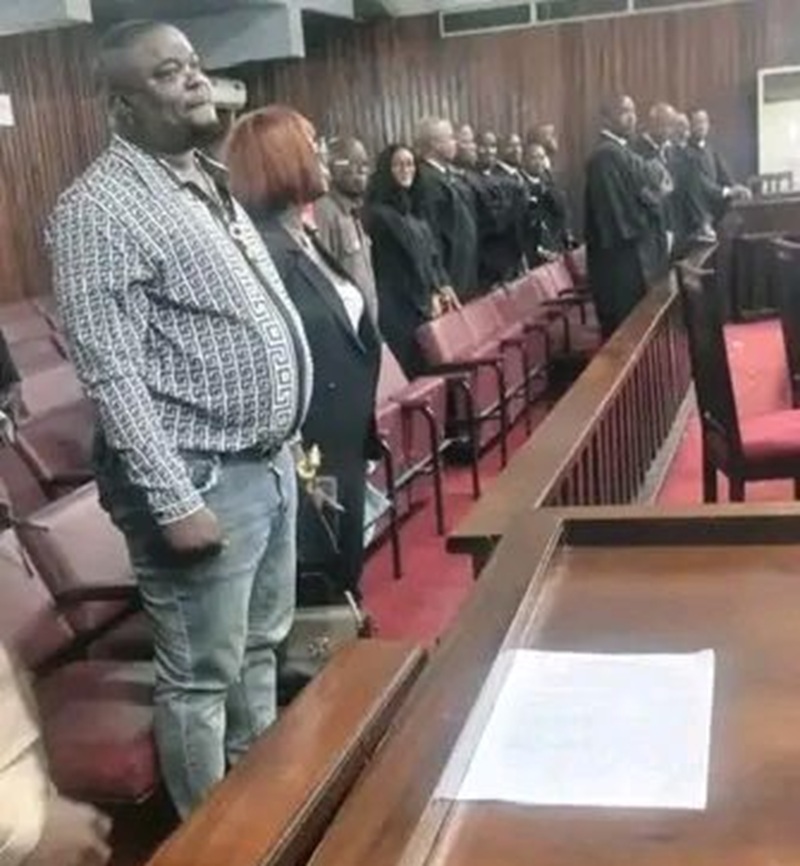
The legal maxim nemo judex in causa sua—no one shall be a judge in his own cause—is one of the foundational principles of natural justice (Wade & Forsyth, 2014). Its purpose is to ensure that adjudicatory proceedings are free from bias, whether actual or perceived. In the Prophet Key case, this principle was violated in the most fundamental way possible. Chief Justice Gbeisay, the person whose mother was insulted and who was personally accused of corruption, presided over the very proceedings brought to punish those insults and accusations. He issued the contempt citation, he appointed the Amici Curiae who argued for conviction, and he appointed the lawyers who were to defend Prophet Key. The entire proceeding was structured and controlled by the aggrieved party.

Additionally, the maxim audi alteram partem—hear the other side—demands that the accused be given a genuine and meaningful opportunity to present a defense (De Smith, Woolf & Jowell, 1995). While Prophet Key was technically afforded legal representation, the defense lawyers were appointed by the very judge whose conduct was at issue, the timeline was compressed to a matter of days, and the outcome appears to have been largely predetermined. Prophet Key’s reported “concession” of guilt and plea for forgiveness—made by an indigent, self-described prophet facing the full power of the state’s highest court—cannot be taken at face value as a free and voluntary admission. The coercive dynamics of the proceeding, in which a powerless citizen confronts the assembled might of the Supreme Court in a case initiated by the Chief Justice himself, suggest that the conditions for a fair trial were structurally absent.
Conclusion
The case of In Re: Contempt Proceedings Against Mr. Justin Oldpa Yeazehn is not merely a legal dispute about the boundaries of free speech; it is a test of Liberia’s democratic commitments. The fallacies advanced by Cllr. Johnson and Cllr. Gongloe—that insult is more harmful than accusation, that the Court can be separated from its justices, and that public perception justifies suppression—are not merely intellectually flawed; they are dangerous to the democratic order. Institutional theory teaches us that the legitimacy of institutions depends not on their ability to silence critics but on their capacity to withstand criticism through transparent, accountable, and just governance (Suchman, 1995; Scott, 2014). A Supreme Court that punishes a citizen for vulgar speech while ignoring the substance of corruption allegations does not protect its dignity—it reveals its fragility.
Free speech, including speech that is vulgar, offensive, and uncomfortable, is the lifeblood of democracy. It is the mechanism through which the powerless hold the powerful to account, and its suppression—particularly by the very officials it targets—is the hallmark of authoritarianism. The defense of free speech is not a defense of Prophet Key’s language; it is a defense of the principle that no public official, however exalted, is above the criticism of the citizens they serve. As Voltaire’s biographer Evelyn Beatrice Hall wrote, encapsulating the philosopher’s belief: “I disapprove of what you say, but I will defend to the death your right to say it” (Hall, 1906). This principle, more than any contempt citation or judicial opinion, is the true foundation of the rule of law.
References
Borrie, G. & Lowe, N. (1996). The Law of Contempt (3rd ed.). London: Butterworths.
Cohen v. California, 403 U.S. 15 (1971).
Constitution of the Republic of Liberia (1986). Articles 5(d), 11, 14, and 15.
Contempt of Court Act (1981). United Kingdom, s. 2.
De Smith, S.A., Woolf, H. & Jowell, J.(1995). Judicial Review of Administrative Action (5th ed.). London: Sweet & Maxwell.
Goldfarb, R. (1963). The Contempt Power. New York: Columbia University Press.
Hall, E.B. (1906). The Friends of Voltaire. London: Smith, Elder & Co.
Halsbury’s Laws of England (2012). Contempt of Court (5th ed., Vol. 22). London: LexisNexis.
Hamilton, A.(1788). “Federalist No. 78.” In The Federalist Papers. New York.
Liberian Domestic Relations Law, Title 9, Liberian Code of Laws Revised.
Liebenow, J.G. (1987). Liberia: The Quest for Democracy. Bloomington: Indiana University Press.
Mamdani, M. (1996). Citizen and Subject: Contemporary Africa and the Legacy of Late Colonialism. Princeton: Princeton University Press.
Montesquieu, C. de (1748). The Spirit of the Laws (De l’esprit des lois). Geneva.
North, D.C.(1990). Institutions, Institutional Change, and Economic Performance. Cambridge: Cambridge University Press.
Organization of African Unity (1981). African Charter on Human and Peoples’ Rights. Nairobi.
Putnam, L.L. & Nicotera, A.M. (Eds.) (2009). Building Theories of Organization: The Constitutive Role of Communication. New York: Routledge.
Scott, W.R. (2014). Institutions and Organizations: Ideas, Interests, and Identities (4th ed.). Thousand Oaks, CA: Sage Publications.
Selznick, P. (1957). Leadership in Administration: A Sociological Interpretation. New York: Harper & Row.
Suchman, M.C. (1995). “Managing Legitimacy: Strategic and Institutional Approaches.” Academy of Management Review, 20(3), 571–610.
United Nations (1948). Universal Declaration of Human Rights. Article 19.
United Nations (1966). International Covenant on Civil and Political Rights. Article 19.
Wade, H.W.R. & Forsyth, C.F. (2014). Administrative Law (11th ed.). Oxford: Oxford University Press.
Watts v. United States, 394 U.S. 705 (1969).