Fred Mills contrituted to the Story
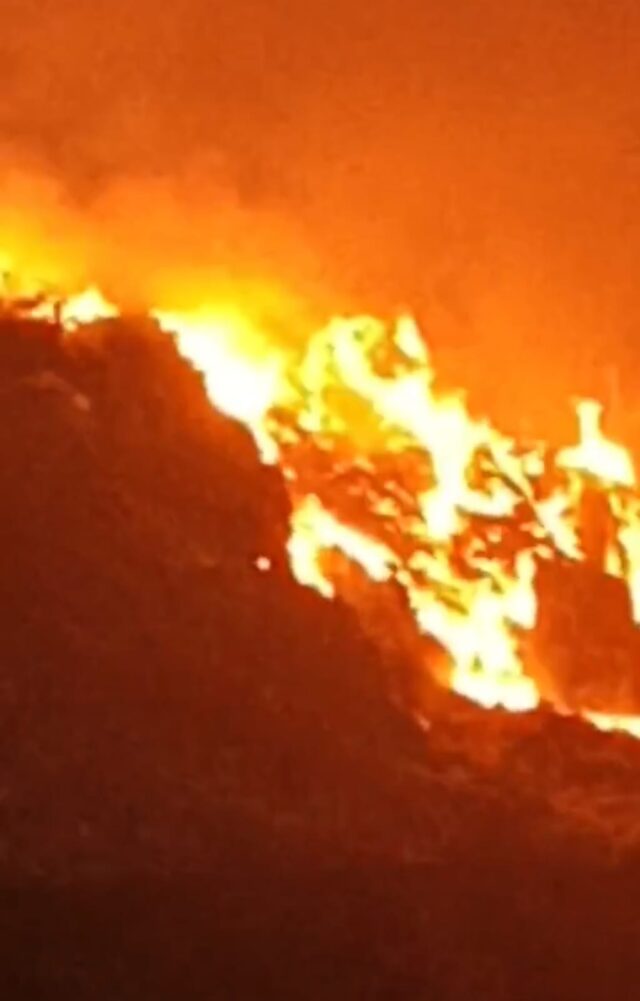
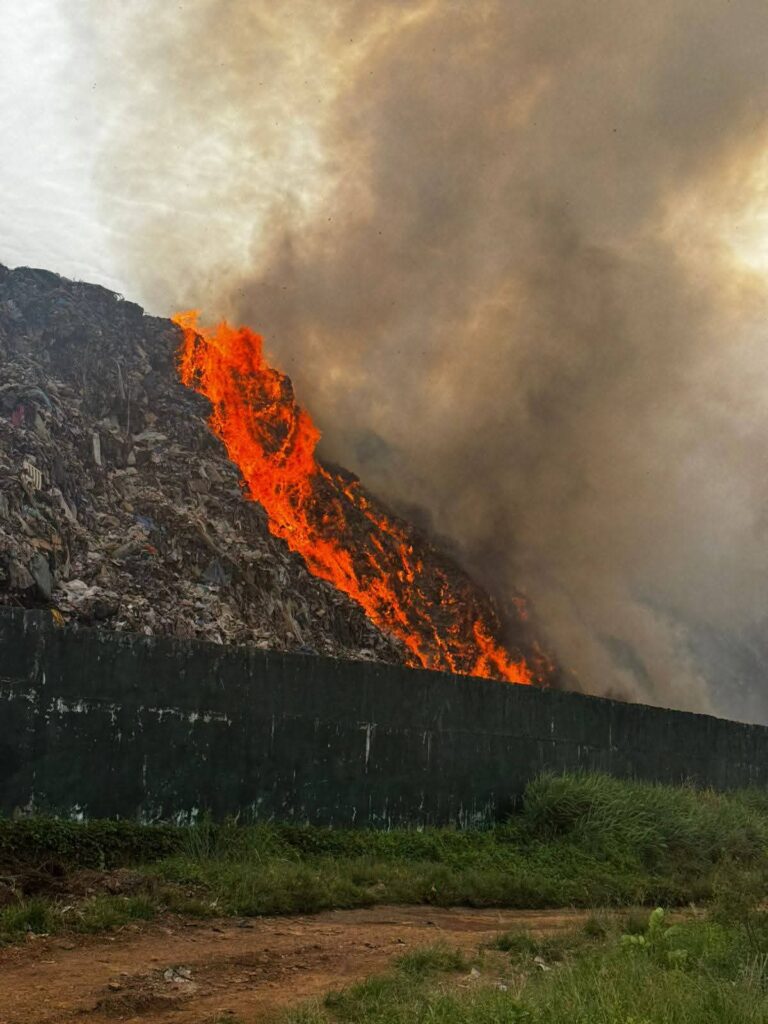
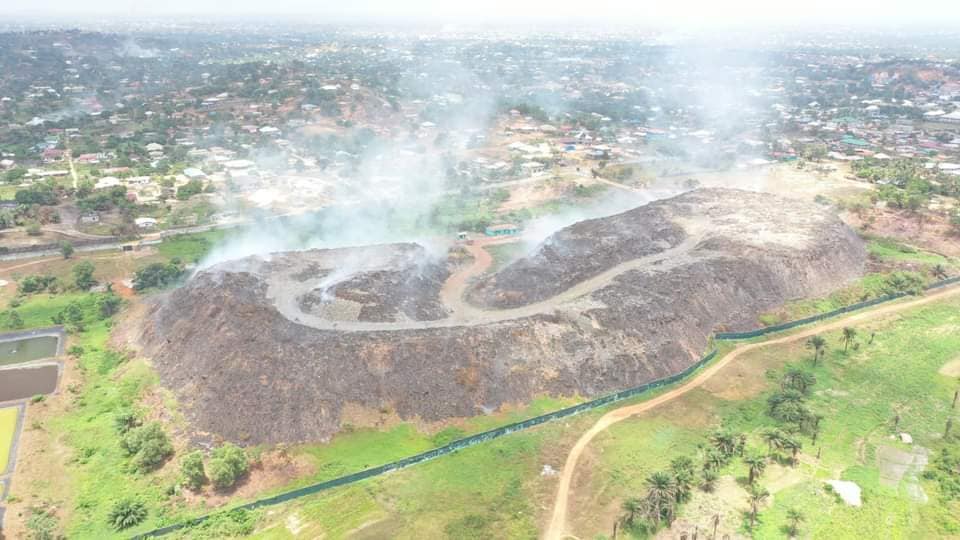
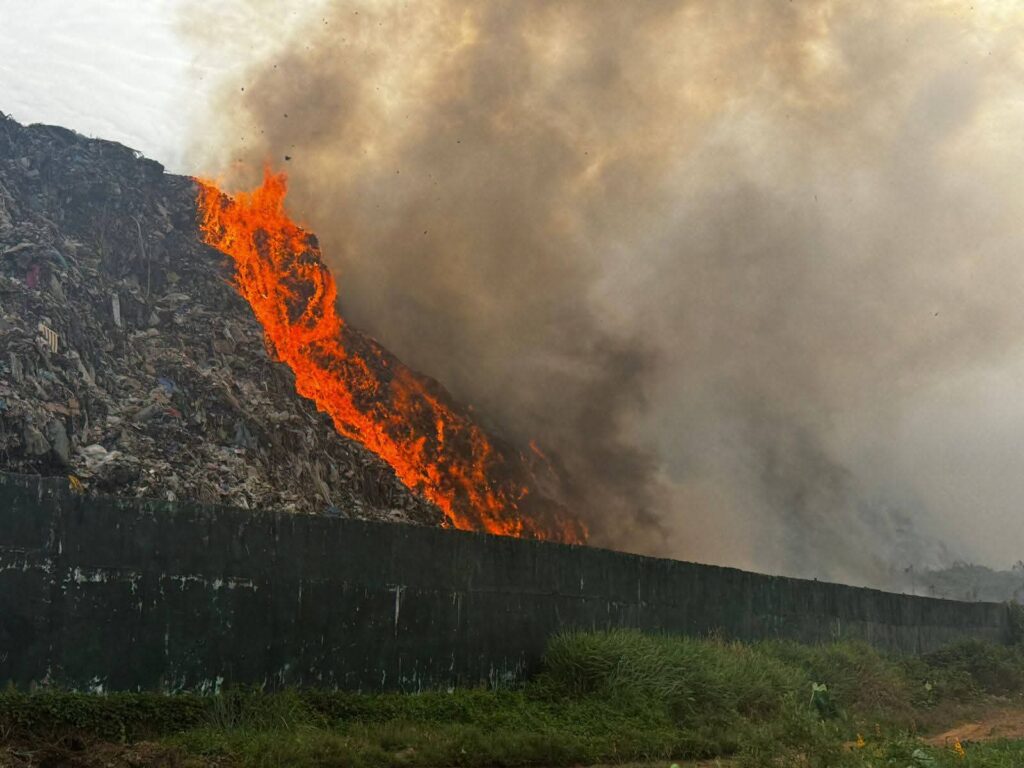
WHEIN TOWN, PAYNESVILLE CITY, Monrovia – A raging fire at the Whein Town Landfill, the primary waste disposal site for Greater Monrovia, has triggered an urgent environmental and public health crisis, with authorities and experts warning of potentially severe consequences if swift action is not taken.
The Monrovia City Corporation (MCC) confirmed that the blaze erupted in the early afternoon hours of Tuesday, February 24, 2026, at the overburdened landfill, which was established in 2011 with a projected five-year lifespan but has continued operating far beyond its intended capacity.
City officials say emergency efforts are underway to contain the inferno. However, the scale and intensity of the fire have overwhelmed routine response mechanisms, prompting an urgent appeal for national and international assistance.

Emergency Response Underway
The MCC has formally called on key national agencies — including the Liberia National Fire Service (LNFS), Liberia Petroleum Refining Company (LPRC), and the National Disaster Management Agency (NDMA) — to deploy technical and logistical support.
International partners such as the United Nations, the World Bank, the European Union, and the Liberia National Red Cross Society have also been requested to assist in containing the crisis.
The Mayor of Monrovia is currently out of the country as part of the Liberian government delegation attending the Liberia–EU Partnership Dialogue in Brussels. In his absence, municipal authorities are coordinating local response efforts.

City officials warned that restricted access to the landfill may cause temporary disruptions in garbage collection services across Greater Monrovia as resources are diverted to fire suppression.
But beyond sanitation delays lies a more immediate danger: toxic smoke drifting over densely populated communities near the landfill site.
A Public Health Threat
Environmental experts say landfill fires are not ordinary fires. They release a toxic cocktail of gases and fine particulate matter capable of causing both short-term and long-term health complications.
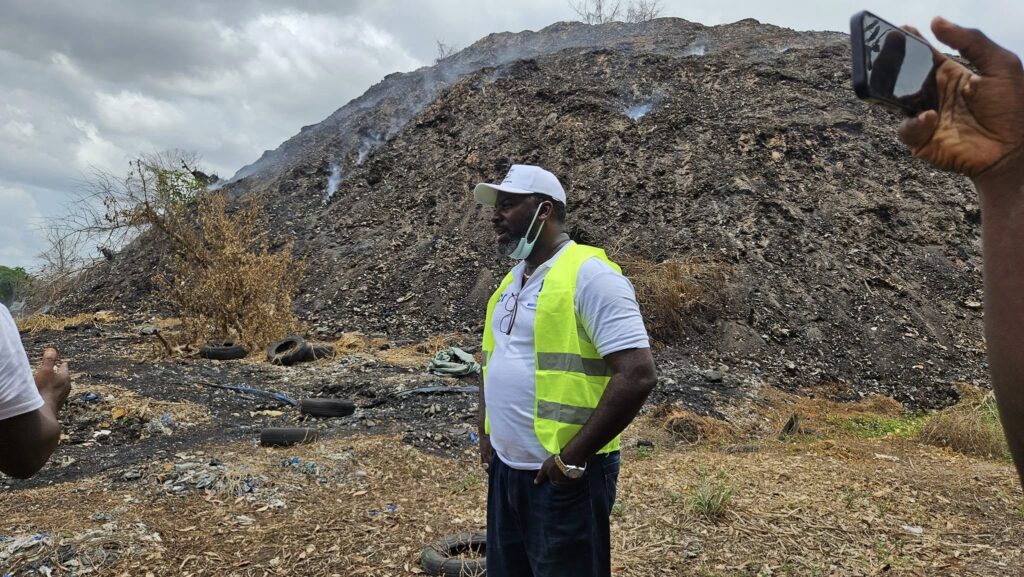
K. Edward Norman, Jr., an Environmental Manager and Master of Arts graduate in Environmental Management from the University of Liberia, described the incident as “both an environmental emergency and a governance wake-up call.”

“This is not just a fire,” Norman stressed. “It is the cumulative effect of overburdened waste infrastructure, methane gas buildup, unmanaged waste layering, and limited long-term planning.” According to Norman, landfill fires release methane, carbon monoxide, sulfur dioxide, and potentially dioxins from burning plastics — pollutants that can aggravate asthma, cause eye and skin irritation, and increase long-term cancer risks with prolonged exposure.
Communities in Whein Town, Paynesville, and surrounding neighborhoods are already reporting heavy smoke and foul odors. Experts warn that children, the elderly, and individuals with respiratory conditions are particularly vulnerable. Some of locals complained that when it rains, the water from the dumpsite, along with feces and poisonous snakes and other harmful things including scorpions and wide spiders, roll down the huge mountain of garbage on them.
“Reduced air quality in densely populated areas can trigger respiratory distress within hours,” Norman warned. “If exposure continues, we could see a spike in chronic respiratory illnesses in the months and years ahead.”
Homes at Risk
The landfill is located dangerously close to residential communities. Thick smoke plumes have reportedly drifted toward homes, raising fears of structural fire spread and worsening air contamination inside living spaces.
Experts caution that landfill fires can burn underground for days or even weeks due to methane gas pockets and compacted waste layers, making them extremely difficult to extinguish without heavy equipment and specialized containment strategies.
Norman emphasized the need for urgent air quality monitoring and coordinated fire suppression.
“Emergency response must go beyond spraying water,” he said. “Heavy equipment should be deployed immediately to isolate burning cells and apply soil cover to suffocate the fire at its core.”
Sanitation and Disease Risks
With the landfill temporarily inaccessible, waste accumulation in neighborhoods could create additional public health hazards.
Norman warned that delayed garbage disposal may increase flies, rodents, and mosquito breeding, heightening the risk of cholera and other sanitation-related diseases.
“This situation can quickly escalate from an environmental problem to a public health emergency if waste begins piling up across the city,” he noted.
Long-Term Environmental Damage
Beyond immediate smoke exposure, experts fear deeper environmental degradation. Landfill fires can compromise protective liners and increase the risk of leachate contamination, potentially polluting nearby soil and groundwater sources.
Norman cautioned that without structural reforms, similar incidents could become recurring events.
“If structural reforms are not implemented, recurring landfill fires will become the norm, methane emissions will undermine our climate commitments, and public trust in governance will erode,” he warned.
A Turning Point for Waste Management
The Whein Town Landfill has long exceeded its design capacity. Experts say the current crisis highlights the urgent need for a national integrated solid waste management strategy.
Norman called for comprehensive environmental audits, engineered sanitary landfill systems, methane venting mechanisms, recycling initiatives, and long-term investment in waste-to-energy infrastructure.
“We must move from reactive firefighting to proactive environmental planning,” he declared. “Sustainable waste management is not optional; it is foundational to public health and urban development.”

Urgent Call to Action
As smoke continues to billow over surrounding communities, calls are mounting for immediate intervention.
Public health authorities are being urged to issue advisories, distribute protective masks, and consider temporary relocation measures if air quality deteriorates further.
For residents living closest to the landfill, the danger is not abstract — it is immediate and visible in the smoke-filled air.
The unfolding crisis at Whein Town may well become a defining test of Liberia’s environmental governance — and whether emergency response can transition into long-overdue structural reform.
Follow The Liberian Post on Facebook and X (formerly twitter)