

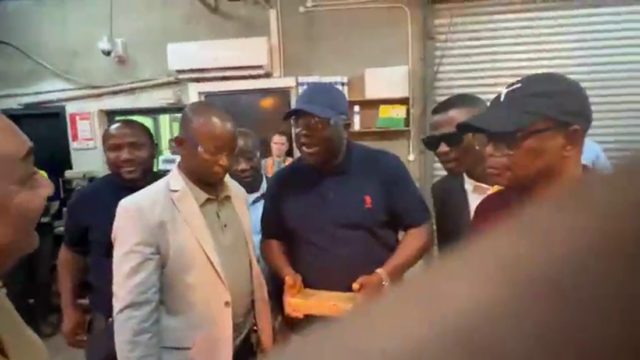
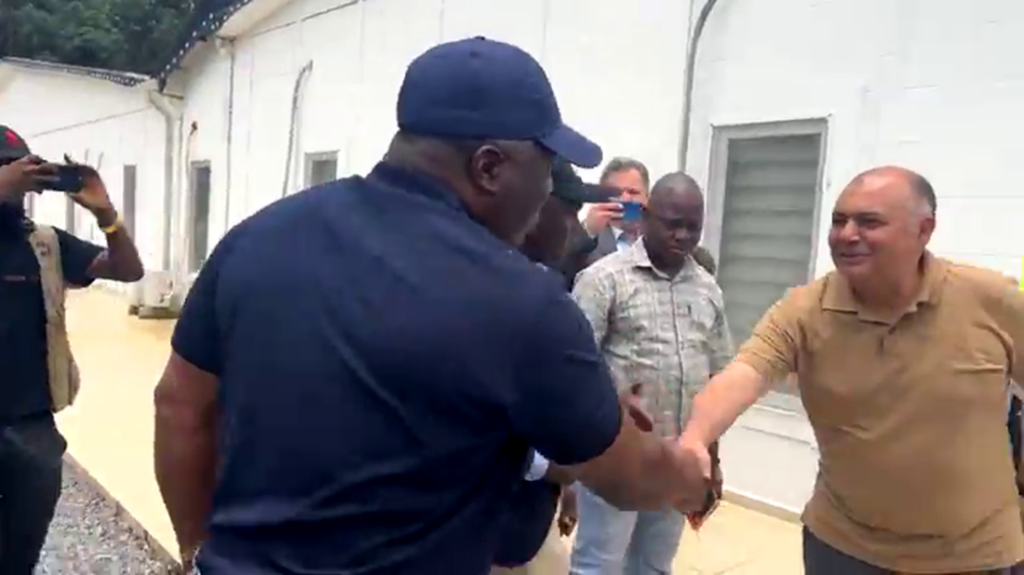
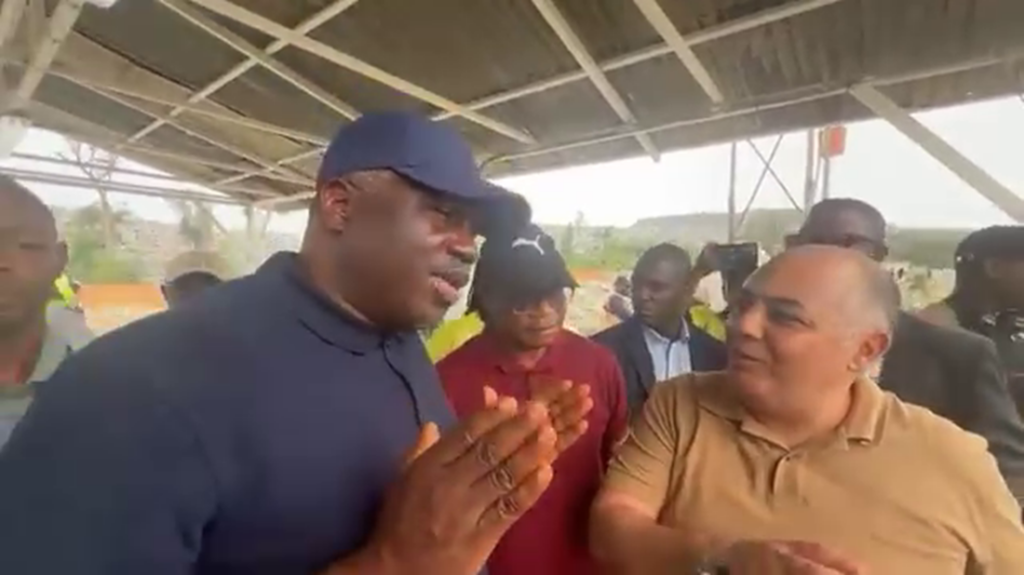
KINJOR, Grand Cape Mount County — Liberia’s Vice President, Jeremiah Kpan Koung, on Saturday, April 11, 2026, conducted a high-profile tour of the concessional areas of Bea Mountain Mining Corporation (BMMC) in Kinjor, triggering renewed public scrutiny over the country’s benefits from its vast mineral resources.

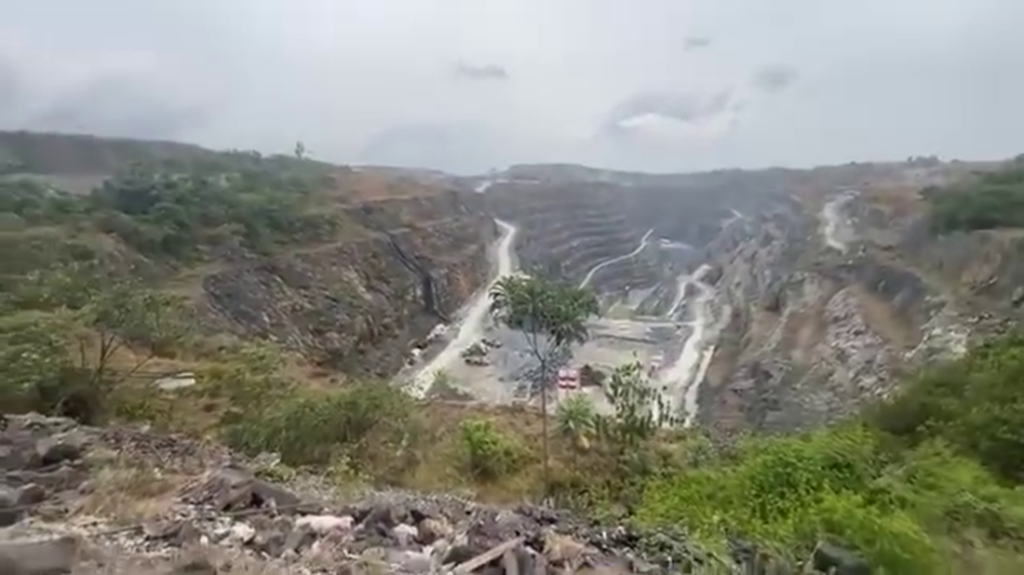
During the tour, company officials walked the Vice President through key operational sites, explaining the technical processes involved in gold extraction—from open-pit mining to underground operations. Engineers detailed the massive scale of excavation required, noting that tens of thousands of tons of rock must be processed to yield relatively small quantities of gold.
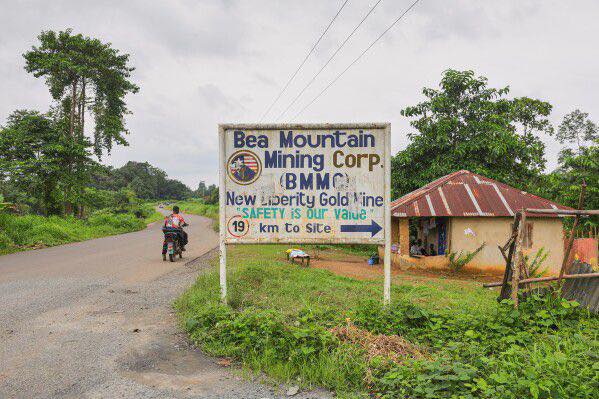
Vice President Koung was shown ore-bearing rocks and underground mining infrastructure, including ventilation systems and shafts currently being developed to expand extraction activities deeper below the surface.
Officials disclosed that BMMC produces approximately 900 kilograms of gold monthly, translating to nearly 10,800 kilograms annually. At current international market prices—estimated at over US$152,000 per kilogram—this output represents annual revenues of about US$1.62 billion.
However, the disclosure has ignited widespread reaction across Liberia, particularly on social media, where citizens have raised concerns about the apparent disparity between the company’s earnings and the country’s share.
According to figures cited from the Liberia Revenue Authority, BMMC reportedly contributes between US$48.6 million and US$63.44 million annually in taxes—representing roughly 3 to 3.8 percent of its estimated gross revenue.
The revelation has intensified debate over whether Liberia is receiving a fair return on its natural resources.
Some critics have questioned the accuracy of the company’s production figures, alleging that actual monthly output could be significantly higher—up to 1,271 kilograms—potentially pushing annual revenues above US$2.3 billion.
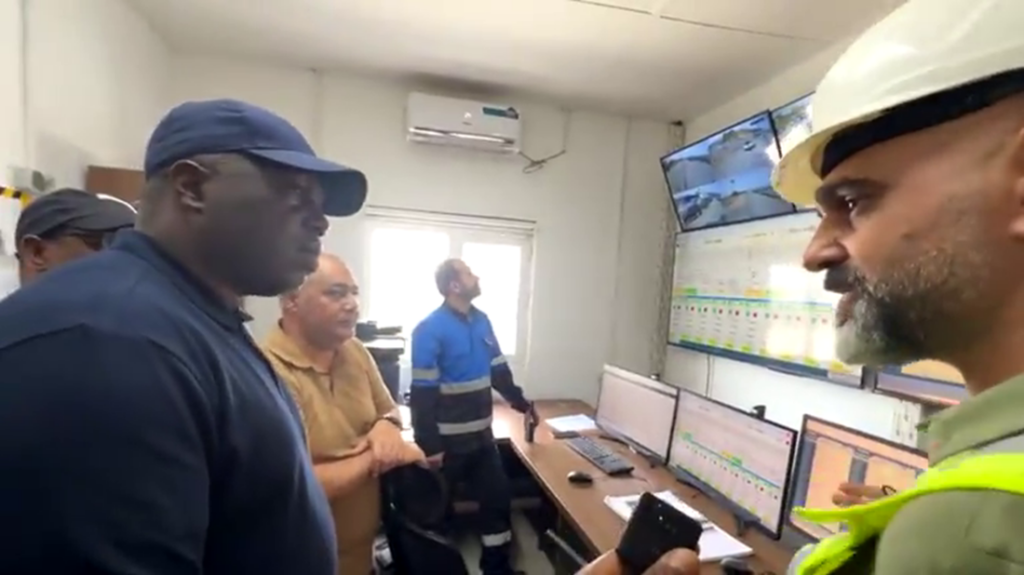
“This raises serious accountability concerns,” one analyst noted. “If production is underreported, then Liberia could be losing hundreds of millions of dollars annually.”

Others argue that the issue reflects deeper structural problems within concession agreements, which they say disproportionately favor foreign investors while leaving host communities underdeveloped.
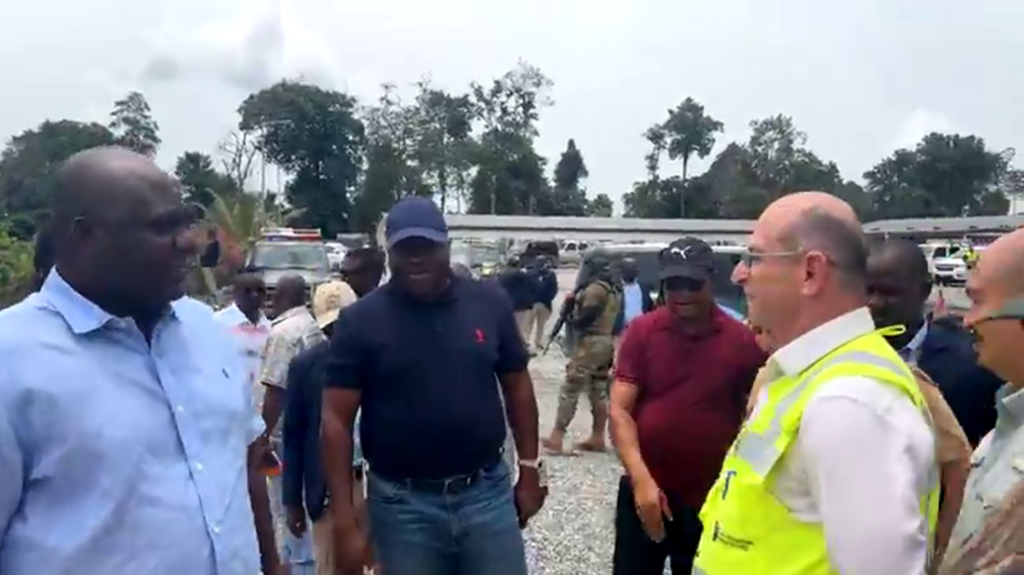
Despite the enormous wealth generated from gold mining, residents of Grand Cape Mount County continue to face significant challenges, including poor infrastructure, inadequate healthcare, and struggling educational systems.
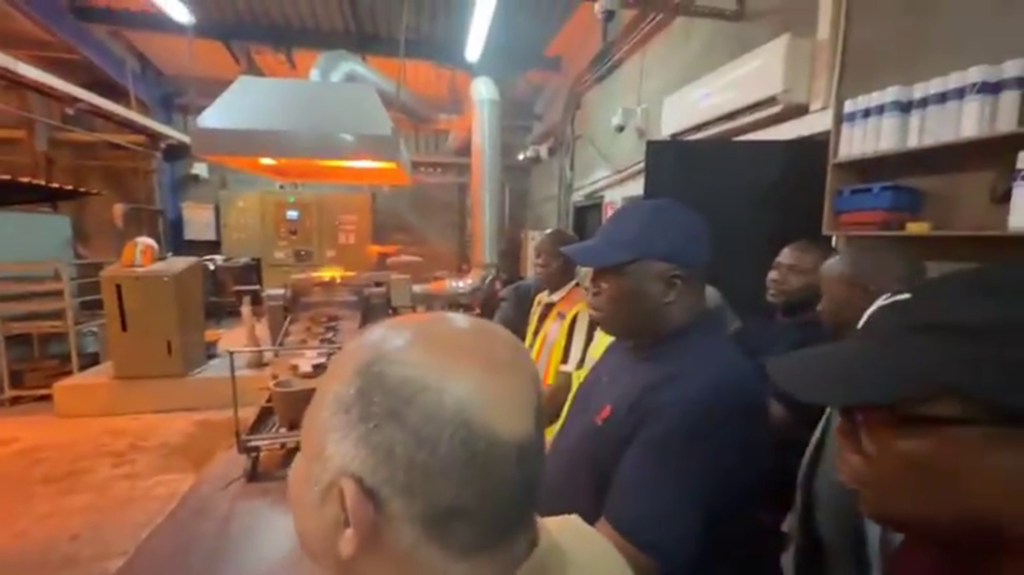
The situation has prompted growing calls for the administration of President Joseph Nyuma Boakai to review existing concession agreements and ensure that Liberia’s natural resources translate into tangible development outcomes.
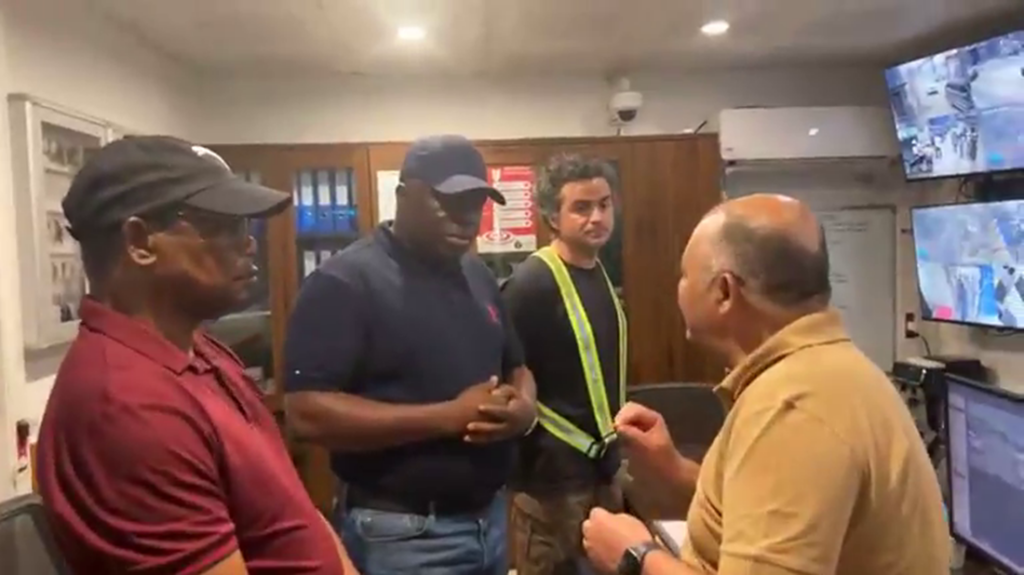
Some citizens are advocating for a shift toward stronger state participation in the mining sector, including proposals for government equity stakes and independent monitoring mechanisms to track production and revenue more transparently.
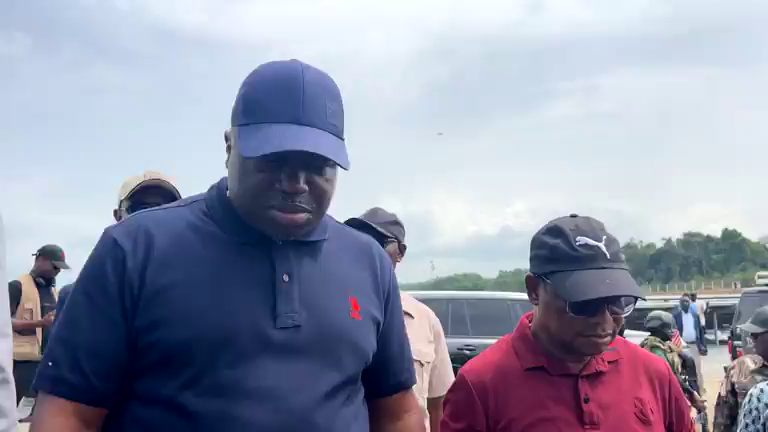
As the debate intensifies, the Vice President’s visit has become a catalyst for a broader national conversation about resource governance, equity, and economic sovereignty.
Follow The Liberian Post on Facebook and X (formerly twitter)