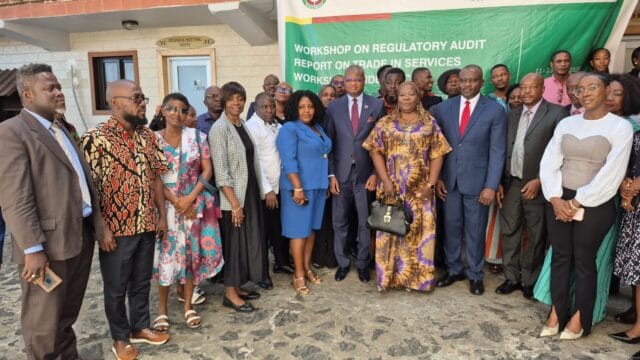
MONROVIA – The Government of Liberia, in partnership with the ECOWAS Commission and the United Nations Development Programme, on Monday officially opened a three-day workshop on the AfCFTA Regulatory Audit Report on Trade in Services at the The Cape Hotel.
The workshop brings together policymakers, private sector actors, negotiators, regulators, development partners, academics, and civil society organizations to deepen understanding of trade in services under the frameworks of the African Continental Free Trade Area (AfCFTA), ECOWAS, and the World Trade Organization.
Officially opening the event, Wilmot A. Reeves, Deputy Minister for Commerce and Trade Services at the Ministry of Commerce and Industry, described the AfCFTA as one of Africa’s most transformative economic initiatives since the establishment of the African Union.
According to Reeves, the agreement presents significant opportunities for industrialization, investment, job creation, and economic growth across the African continent.
He emphasized that for Liberia, the AfCFTA represents more than a trade agreement, describing it as a strategic platform for economic diversification, private sector development, innovation, and inclusive growth aligned with the government’s ARREST Agenda for Inclusive Development.
Reeves highlighted Liberia’s progress under the AfCFTA process, including ratification of the agreement in 2023, submission of its Instrument of Ratification in 2024, and the launch of the country’s AfCFTA National Implementation Strategy in 2025.
According to him, trade in services remains a major driver of modern economies, particularly in sectors such as finance, telecommunications, transportation, tourism, education, logistics, and digital services.
He stressed the need for Liberia to maintain transparent, coherent, and AfCFTA-aligned regulatory systems in order to fully benefit from emerging regional trade opportunities.
“The AfCFTA must ultimately translate into tangible improvements in the lives of our people. It must create jobs for our youth, expand opportunities for women-owned businesses, support MSMEs, encourage local production and industrialization, and contribute meaningfully to poverty reduction and sustainable development,” Reeves said.
Also speaking, Aliou Mamadou Dia, Resident Representative of the United Nations Development Programme in Liberia, described the workshop as a critical step toward ensuring that Africa’s integration agenda delivers real economic opportunities for citizens and businesses.
Dia said the AfCFTA presents a historic opportunity to boost intra-African trade, strengthen competitiveness, and accelerate economic transformation across the continent.
He encouraged stakeholders to actively engage in the discussions and reaffirmed the UNDP’s commitment to supporting Liberia and ECOWAS in implementing reforms aimed at improving trade facilitation, institutional coordination, and private sector participation.
Representing the ECOWAS Commission, Nathaniel B. Walker, Acting Resident Representative of ECOWAS in Liberia, said the workshop forms part of the regional bloc’s broader strategy to assist Member States in effectively implementing the AfCFTA Agreement.
Walker noted that trade in services accounts for more than 51 percent of Africa’s Gross Domestic Product and remains central to driving economic growth, employment, and investment across the continent.
He disclosed that ECOWAS deposited the draft consolidated schedule of specific commitments of its Member States with the AfCFTA Secretariat in December 2025 as part of ongoing efforts to advance the Trade in Services agenda.
Walker further explained that regulatory audit reports serve as important tools for improving transparency, identifying barriers and opportunities within the services sector, supporting negotiations, and guiding evidence-based policy reforms.
He urged participants to actively contribute to discussions aimed at strengthening Liberia’s readiness to implement its AfCFTA commitments.
Speaking on behalf of the Liberia Chamber of Commerce, Secretary General Catherine Harris Karmo described the workshop as timely as Africa advances efforts toward establishing a Single African Services Market.
Karmo emphasized that the services sector remains a critical pillar of modern economies and stressed the importance of aligning Liberia’s domestic regulations with AfCFTA commitments to improve competitiveness and unlock new economic opportunities.
She described the regulatory audit process as a valuable mechanism for identifying policy gaps, removing regulatory bottlenecks, and strengthening the business environment for Liberian enterprises.
Karmo also reaffirmed the Chamber’s commitment to working alongside government and development partners to support reforms aimed at improving trade facilitation, strengthening public-private partnerships, and expanding opportunities for Liberian businesses.
According to consultants facilitating the sessions, the training is designed to strengthen coordination among stakeholders while enhancing understanding of the role regulatory audit reports play in shaping trade in services policies and negotiations.
Participants are expected to examine key findings from Liberia’s Regulatory Audit Report, including policy gaps, reform priorities, and sector-specific opportunities critical to the country’s participation in AfCFTA implementation.
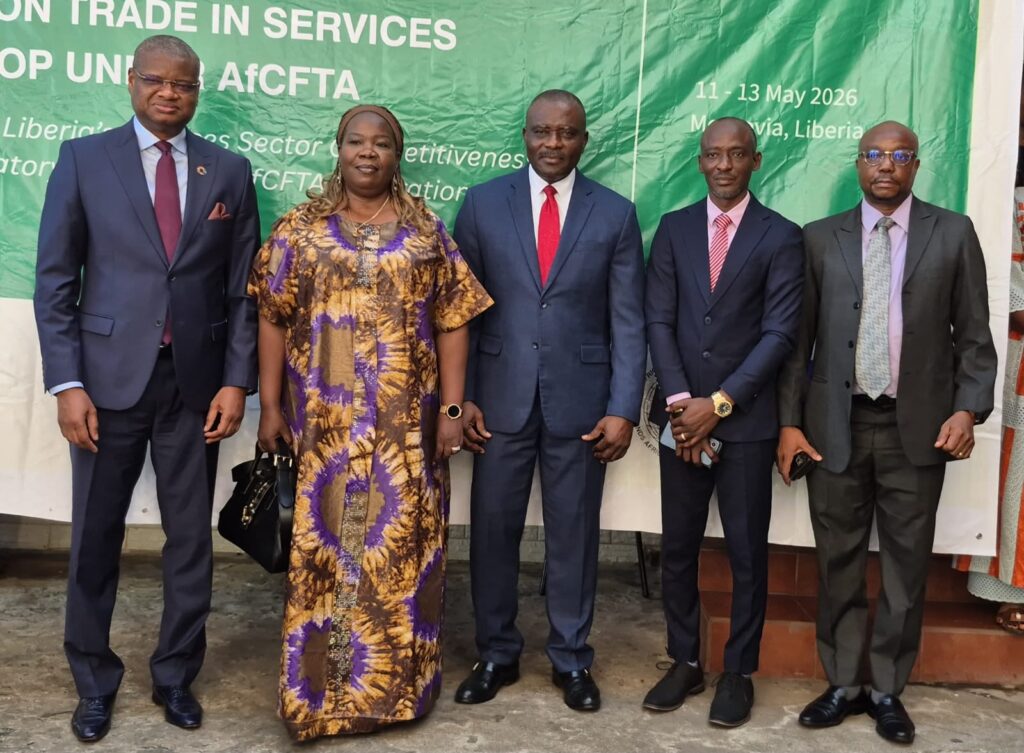
The consultants further noted that the workshop will provide a comprehensive overview of trade in services concepts, rules, and developments under the AfCFTA Protocol on Trade in Services, including ongoing efforts to establish a Single African Services Market.
Participants will also review trade policy trends and the cost of services trade across Africa, with particular focus on Liberia, while assessing how regulatory frameworks influence competitiveness and market access in key sectors.
Emphasizing a practical approach, facilitators said participants will engage in hands-on exercises to assess domestic regulations, benchmark them against AfCFTA commitments, and develop hypothetical commitments in sectors including construction, health, and distribution services.
The workshop will also explore how regulatory audits can inform policy reforms, support negotiations, and facilitate the domestication of Liberia’s AfCFTA schedule of specific commitments.
The three-day workshop is expected to conclude on May 13, 2026, with participants producing recommendations aimed at improving Liberia’s regulatory environment, strengthening services trade competitiveness, and supporting the effective implementation of the AfCFTA Agreement.
Follow The Liberian Post on Facebook and X (formerly twitter)