-High-Level Policy Dialogue to Examine Need for Constitutional Reform as Experts Call for Document to Reflect Modern Realities
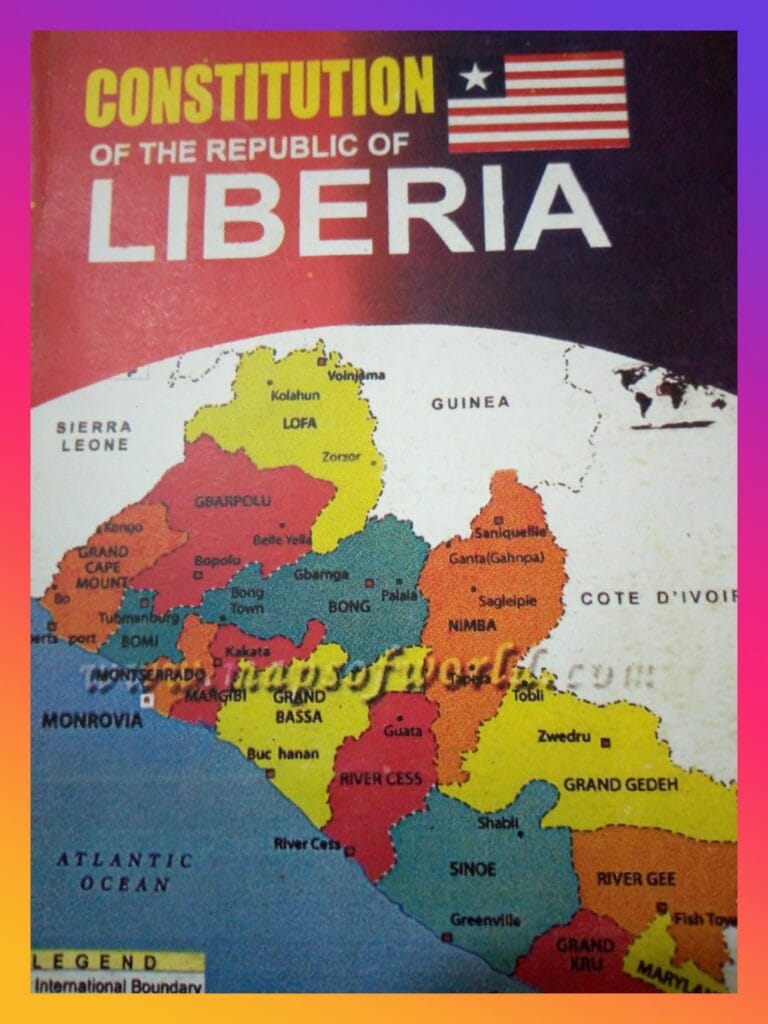
MONROVIA, Liberia – Liberia may be taking the first significant step toward a comprehensive review—and possible rewriting—of its nearly 40-year-old Constitution, with the Governance Commission (GC) announcing a major national dialogue on constitutional reform scheduled for next week.
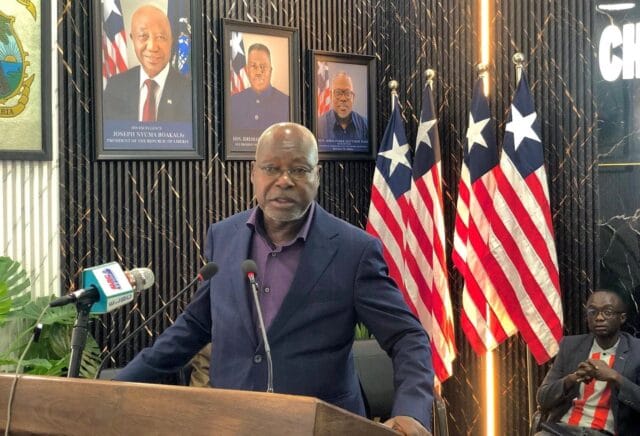
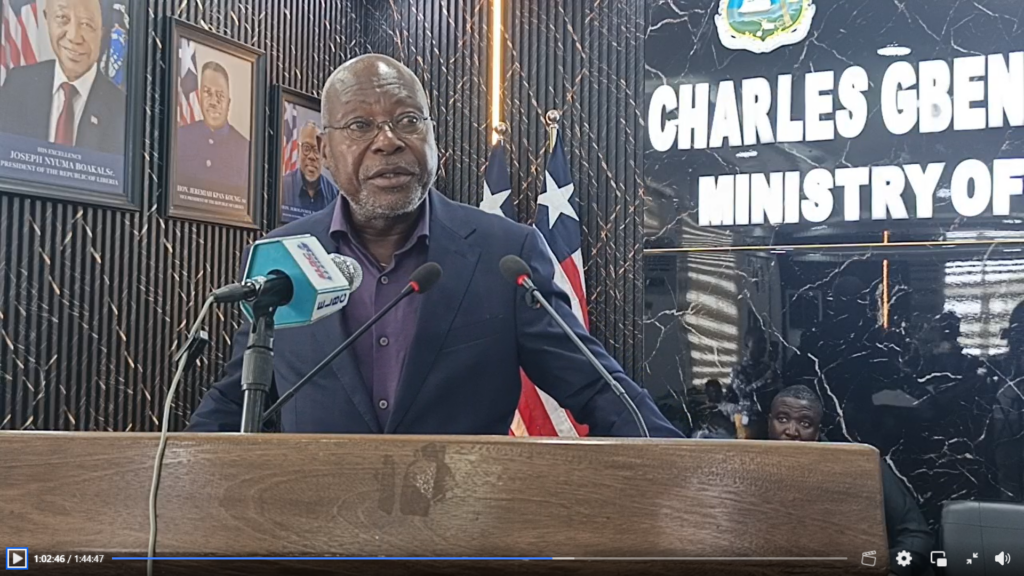
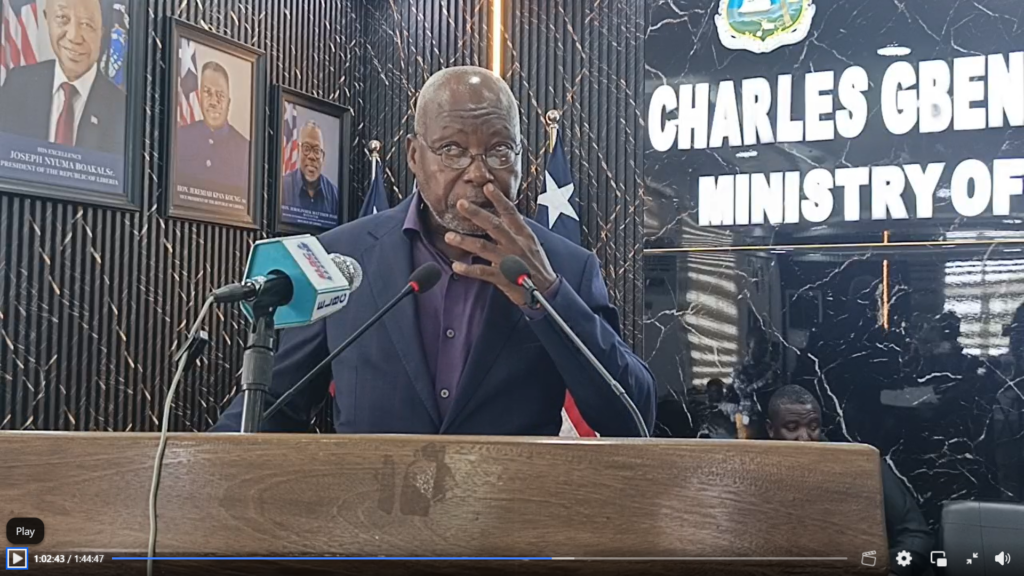
Speaking Thursday, June 4, 2026, at the Ministry of Information’s regular press briefing, Governance Commission Acting Chairman Prof. Alaric K. Tokpa disclosed that the Commission will host a two-day High-Level Policy Dialogue on the future of Liberia’s 1986 Constitution on June 10-11 at Monrovia City Hall in Sinkor.
The dialogue will be held under the theme: “Review of the 1986 Constitution of Liberia: Imperatives, Challenges, and Prospects.”
According to Prof. Tokpa, the forum is intended to spark a broad national discussion on whether Liberia’s current constitutional framework remains adequate to address the governance, social, economic, and environmental realities of the 21st century.
Constitution Must Evolve with Society
Prof. Tokpa stressed that no constitution should be viewed as untouchable when the needs and aspirations of citizens demand change.
“When it comes to the concerns of citizens, no Constitution is sacred,” he declared. “Every constitution must remain open to critique, review, and amendment whenever national circumstances require it.”
He explained that the upcoming dialogue seeks to clarify misconceptions surrounding constitutional reform while providing a platform for legal scholars, policymakers, governance experts, civil society actors, academics, and citizens to examine the strengths and weaknesses of the country’s current constitutional order.
The Governance Commission chief noted that the initiative derives its authority from the Commission’s statutory mandate, which empowers it to propose governance reforms, including constitutional amendments where necessary.
He further indicated that the review process is anchored in Articles 91 and 92 of the Liberian Constitution, which establish the legal framework for constitutional amendments and revisions.
Experts to Examine Key Reform Areas
According to Prof. Tokpa, the policy dialogue will feature presentations from leading constitutional scholars and governance practitioners who will provide both theoretical and practical perspectives on constitutional reform.
The discussions are expected to focus on a range of critical issues, including governance structures, decentralization, democratic accountability, separation of powers, electoral reforms, citizenship, local government autonomy, and emerging global challenges that were not contemplated when the Constitution was adopted in 1986.
Among the issues expected to receive considerable attention are climate change, environmental governance, social inclusion, youth participation, gender equity, digital governance, and other contemporary concerns increasingly shaping public policy worldwide.
Tokpa argued that while the Constitution has served Liberia for decades, portions of the document may need to be updated, reorganized, and expanded to respond to modern realities.
“We must ensure that our Constitution reflects present-day realities and addresses challenges that were either nonexistent or not fully understood when the document was originally drafted,” he said.
Citizens Urged to Participate
The Governance Commission is calling for broad public participation in the dialogue, particularly from citizens living outside Monrovia.
Prof. Tokpa emphasized that constitutional reform should not be viewed as an elite-driven exercise but rather as a national undertaking requiring the involvement of ordinary Liberians from every county and community.
He said meaningful participation from rural and urban populations alike is essential to advancing Liberia’s decentralization agenda and strengthening democratic governance.
“The Constitution belongs to the people,” he noted. “Any conversation about its future must involve the people.”
Growing Calls for Constitutional Reform
The Governance Commission’s initiative comes amid increasing calls from legal experts, judges, policymakers, and governance institutions for a comprehensive review of Liberia’s Constitution.
Over the past several years, concerns have been raised about provisions relating to governance, public administration, local government, elections, citizenship, and the balance of power among the three branches of government.
Many observers argue that while the Constitution has played a vital role in Liberia’s democratic development since its adoption in 1986, the country has undergone profound political, economic, technological, and social changes that warrant a fresh examination of the document.
Legal Community Has Long Advocated Review
The call for constitutional reform is not new.
During his confirmation hearings before the Liberian Senate last year, former Law Reform Commission Chairperson Cllr. Boakai N. Kanneh, who now serves as an Associate Justice of the Supreme Court of Liberia, argued that the Constitution requires substantial review to align it with contemporary realities.
At the time, Justice Kanneh observed that the Constitution, now approaching four decades in existence, contains provisions that deserve serious reconsideration and modernization.
Similar views have been expressed by Chief Justice Yarmie QuiQui Gbeisay, current Law Reform Commission Chairperson Cllr. Bornor M. Varmah, and several constitutional scholars, civil society organizations, and governance experts.
Many have advocated not merely piecemeal amendments but a broader national conversation on whether aspects of the Constitution should be comprehensively rewritten to reflect Liberia’s post-war democratic evolution.
Law Reform Commission Expected to Play Key Role
Should the constitutional review process advance beyond the dialogue stage, the Law Reform Commission is expected to play a central role in drafting proposals and providing technical expertise.
As the institution statutorily mandated to review, modernize, and revise Liberia’s legal framework, the Commission would likely work alongside the Legislature, Executive Branch, Judiciary, civil society organizations, and citizens in any future constitutional reform process.
Political analysts believe the Governance Commission’s initiative could mark the beginning of one of Liberia’s most consequential governance discussions since the adoption of the 1986 Constitution.
Whether the process ultimately results in targeted amendments or a broader constitutional rewrite remains to be seen. However, next week’s dialogue is expected to provide an important platform for shaping the future of Liberia’s constitutional democracy.
A Defining National Debate
For many observers, the central question is no longer whether Liberia’s Constitution should be reviewed, but how extensive that review should be and what vision of governance it should embody for future generations.
As policymakers, legal experts, and citizens prepare to gather at Monrovia City Hall next week, Liberia appears poised to begin a critical national conversation about the document that serves as the foundation of its democratic system.
The outcome of that conversation could influence the country’s governance architecture for decades to come.
Follow The Liberian Post on Facebook and X (formerly twitter)