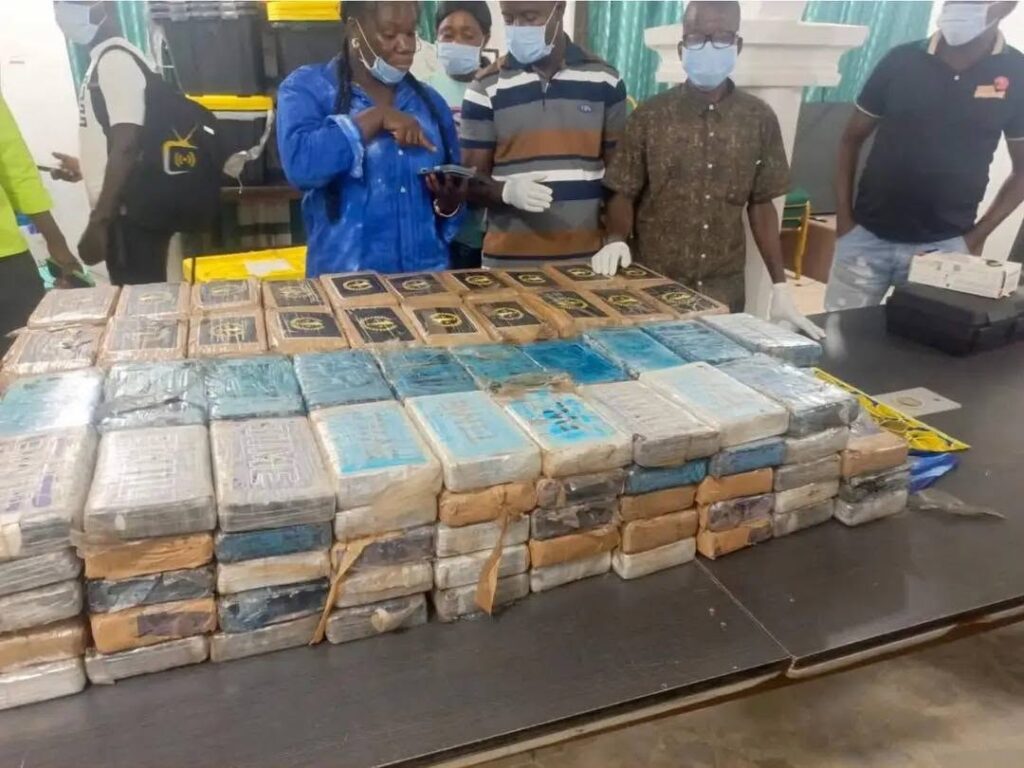
The massive cocaine seizure at Roberts International Airport should have been a moment of national unity.
Instead, it has become the center of an increasingly heated debate over whether the Liberia Drug Enforcement Agency (LDEA) is justified in withholding the names of individuals linked to what authorities describe as one of the largest cocaine busts in the country’s history.
At the heart of the controversy are two important arguments advanced by Deputy Information Minister Daniel O. Sando and LDEA Officer-in-Charge Fitzgerald T.M. Biago. Their central message is straightforward: the government is not concealing information to protect anyone; rather, it is protecting the integrity of an ongoing investigation into what appears to be a sophisticated transnational criminal network.
On the surface, that argument is both reasonable and legally sound.
Drug trafficking is not a simple crime. It is often a multilayered enterprise involving financiers, transporters, facilitators, intermediaries, and international connections stretching across several jurisdictions. Investigators who prematurely release sensitive information can unintentionally alert suspects, destroy opportunities for intelligence gathering, compromise evidence, and weaken eventual prosecutions.
Around the world, law enforcement agencies routinely withhold certain information during active investigations for precisely these reasons.
In that regard, Biago’s insistence on caution deserves serious consideration.
Liberians should want investigators to build airtight cases, not merely hold dramatic press conferences. If the goal is to dismantle an entire trafficking network rather than simply arrest a few low-level operatives, then investigators must be given room to do their work.
However, the government’s position also raises legitimate public concerns.
Liberia’s history with drug trafficking has not been reassuring. Over the years, numerous high-profile seizures have generated headlines, only for the public to receive little information about the final outcome of investigations. Too often, citizens hear about arrests but never about convictions. They hear about seizures but rarely about the dismantling of the criminal organizations behind them.
This history naturally breeds skepticism.
When authorities ask the public to trust the process, they must also recognize that trust cannot be demanded; it must be earned.
The public has a right to know whether investigations are moving forward. Citizens have a right to expect accountability. And perhaps most importantly, the public has a right to expect that the law will be applied equally regardless of wealth, status, political affiliation, or social influence.
This is why transparency and confidentiality must not be viewed as opposing principles. They are complementary requirements of good governance.
The government is correct to protect the integrity of an active investigation. But it is equally obligated to provide timely updates, explain investigative decisions, and assure the public that no individual is receiving special protection.
The challenge for the LDEA is therefore not simply to investigate the case. The challenge is to convince Liberians that justice is being pursued without fear or favor.
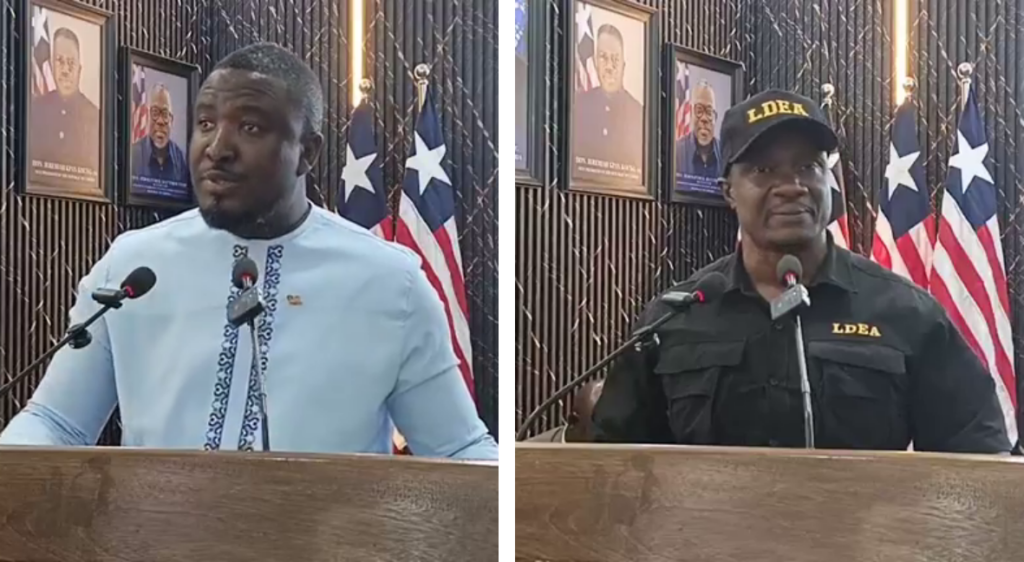
Equally important is Daniel Sando’s criticism of misinformation and irresponsible reporting. He is right to remind journalists and social media commentators that credibility remains the most valuable asset in public discourse.
The recent controversy surrounding the fabricated Nigerian Foreign Ministry letter demonstrated how quickly false information can spread and how damaging such misinformation can become once amplified by influential voices.
Journalists have a duty to verify before publishing. Political actors have a duty not to weaponize falsehoods for partisan advantage. Citizens have a duty to distinguish between facts and speculation.
But government officials must also understand that public suspicion often thrives where official information is scarce.
The best antidote to rumors is not silence. It is credible, consistent, and factual communication.
The cocaine seizure at RIA represents a significant victory for Liberia’s security institutions. Intercepting nearly a quarter-ton of cocaine before it could leave the country demonstrates vigilance, professionalism, and growing operational capacity within the LDEA and other security agencies.
Yet the true measure of success will not be the seizure itself.
Success will be determined by whether investigators identify the masterminds, expose the network, prosecute those responsible, secure convictions where evidence warrants, and demonstrate that no individual is above the law.
Liberians are prepared to be patient. But patience must ultimately be rewarded with results.
The public should give investigators the time they need. In return, investigators must give the public the accountability it deserves.
That balance between transparency and justice is where public confidence is either built—or lost.
Follow The Liberian Post on Facebook (https://web.facebook.com/profile.php?id=61576017166570) and X, formerly twitter (https://x.com/LiberianPost).