–The Backlash Against the Veteran Artist’s Political Opinions Raises a Bigger Question About Whether Liberians Are Still Able to Disagree Without Dehumanizing One Another
There comes a moment in the life of every democracy when the issue is no longer what was said, but how society responds to what was said. Liberia has reached one of those moments.
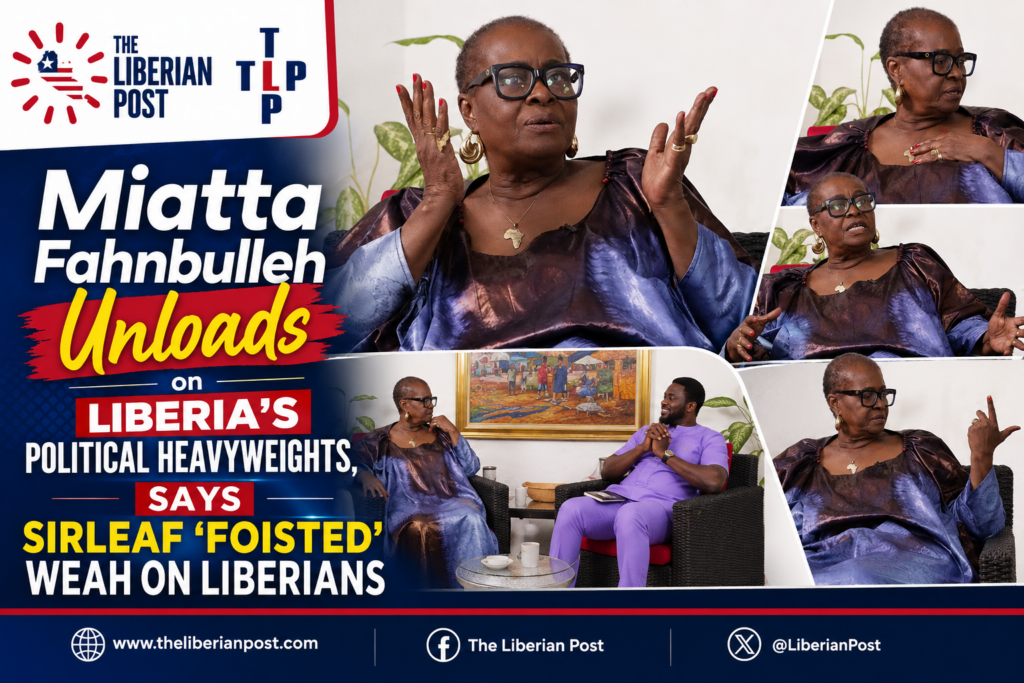
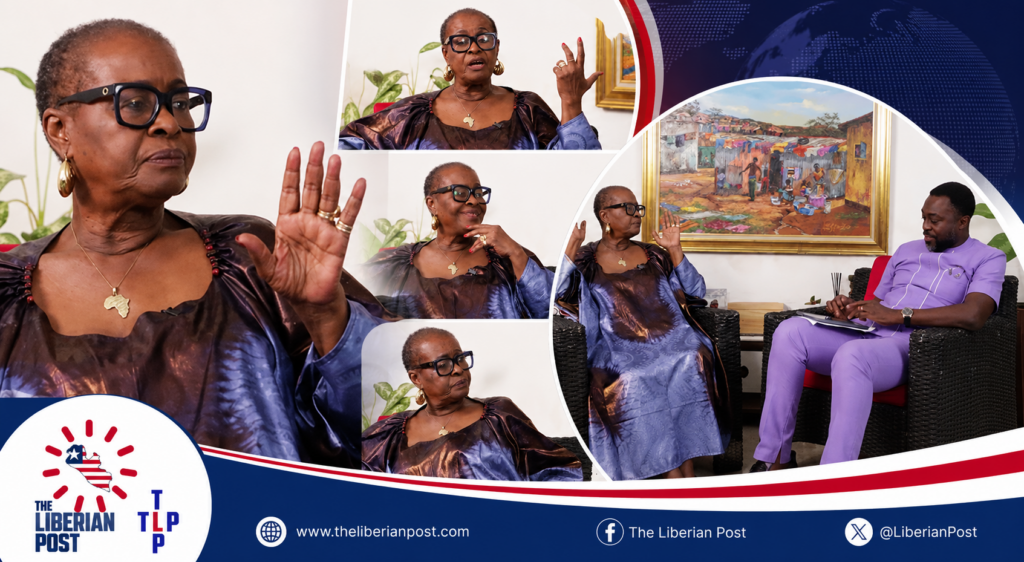
The Liberian Post believes the national debate sparked by veteran musician, broadcaster and activist Miatta Fahnbulleh’s interview is no longer about Miatta Fahnbulleh alone. It is about us. It is about whether Liberia has become so politically polarized that every opinion is treated as a declaration of war, every criticism as an act of betrayal, and every disagreement as a reason to destroy another person’s character.
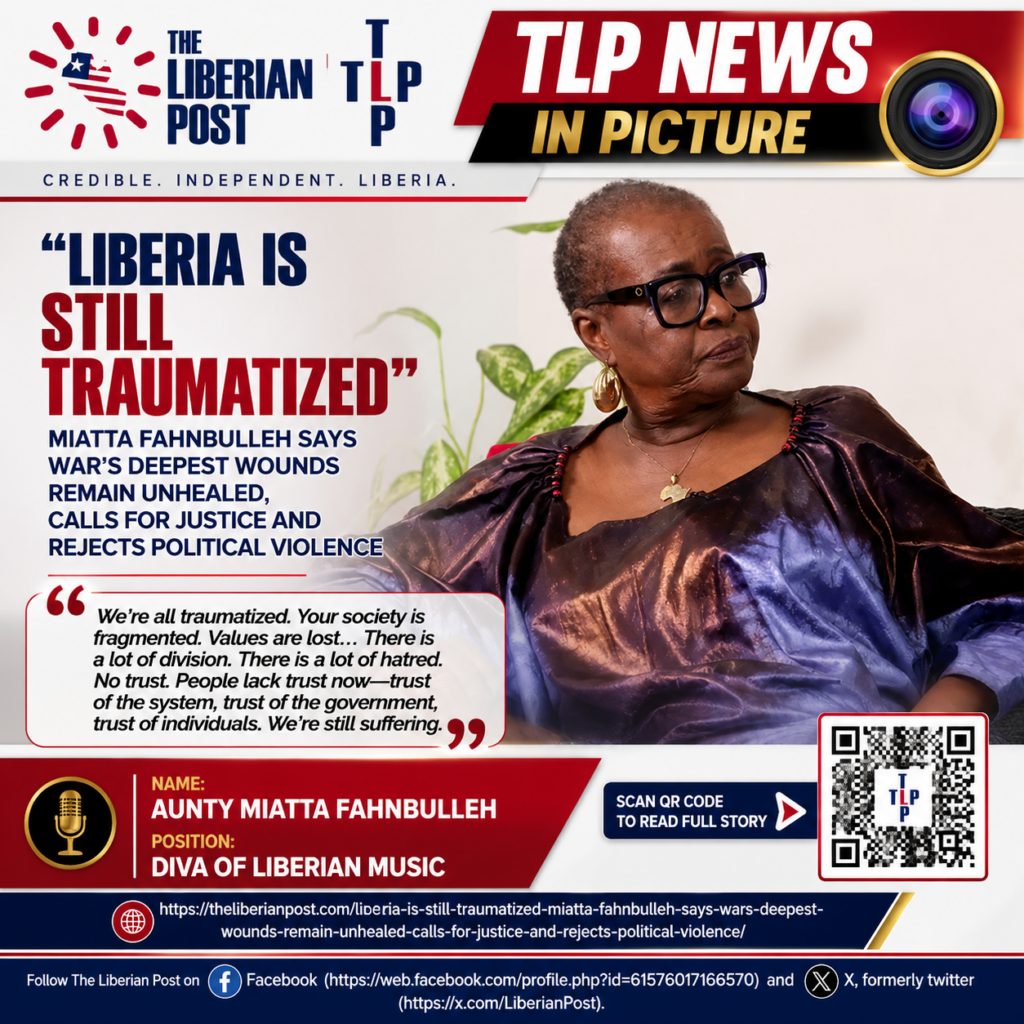
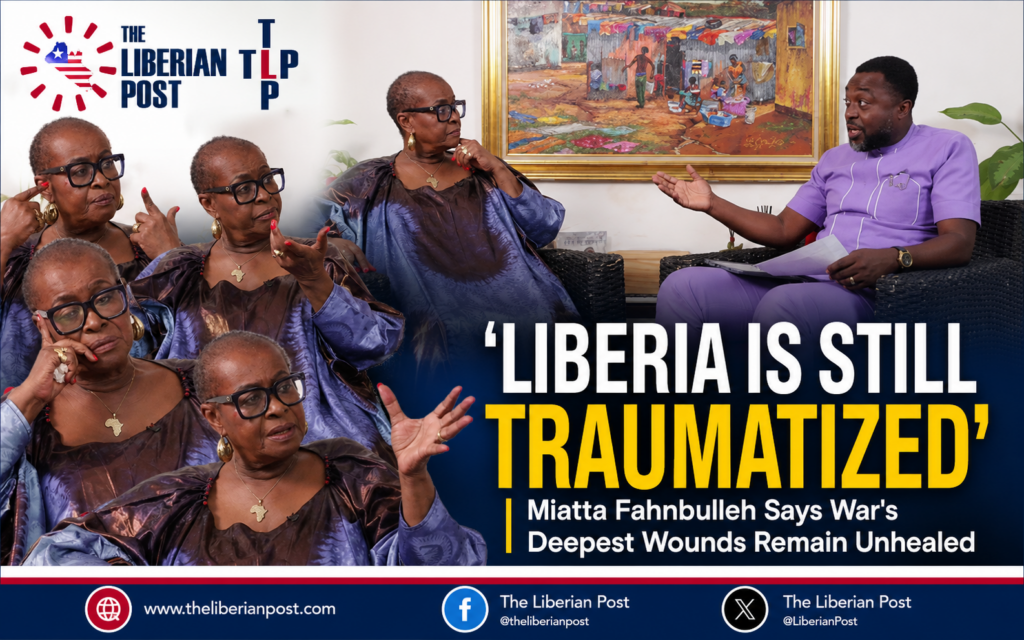
Few interviews have generated as much conversation in recent months as Fahnbulleh’s candid reflections on Liberia’s political past and present. In speaking to Ghanaian award-winning broadcaster Kafui Dey, she questioned former President Ellen Johnson Sirleaf’s decision to back George Weah’s rise to the presidency, argued that Weah failed to meet the enormous expectations Liberians placed upon him, and held Charles Taylor historically responsible for plunging Liberia into a conflict that robbed generations of their future.
Whether one agrees with those opinions is entirely beside the point. In a democratic society, opinions are not crimes. They are invitations to debate.
Unfortunately, much of the public reaction has demonstrated precisely the opposite. Instead of engaging Aunty Miatta’s arguments, some have chosen to attack the woman herself. Across social media platforms, she has been ridiculed, insulted, labeled a traitor, and subjected to deeply personal attacks. Many of those responding have scarcely addressed the substance of her interview. Instead, they have sought to discredit the messenger.
That should trouble every Liberian.
Today it is Aunty Miatta. Tomorrow it could be a journalist asking difficult questions as is now in the case of Mr. Rodney Sieh and Spoon’s late evening show’s panelists on the cocaine busts. It could be a university lecturer publishing uncomfortable research. It could be a student expressing an unpopular opinion. It could be a religious leader challenging government policy. Or it could simply be an ordinary citizen exercising a constitutional right to speak.
Freedom of expression cannot survive if society decides that only agreeable opinions deserve protection.
Our Constitution guarantees every Liberian the freedom to speak, to criticize and to participate in public discourse. Those protections were not written for moments of consensus. They were written precisely for moments like these—when speech provokes discomfort, disagreement and even anger.
History teaches us that democracies do not suddenly collapse because people disagree. They begin to weaken when citizens become afraid to disagree. When fear replaces dialogue, democracy slowly gives way to conformity. When intimidation replaces persuasion, ideas stop competing and personalities begin ruling.
Liberia knows this lesson better than most nations.
Our national tragedy did not begin with bullets. It began with division. It began with the dangerous belief that political opponents were enemies rather than fellow citizens. It began when loyalty became more important than truth and when questioning those in authority became increasingly difficult. Long before the first shots of the civil war were fired, Liberia had already begun losing the culture of respectful disagreement.
That painful history should make us especially cautious today.
Political loyalty should never require intellectual surrender. One can admire George Weah’s achievements while acknowledging the shortcomings of his administration. One can celebrate Ellen Johnson Sirleaf’s historic presidency while questioning some of her political decisions. One can recognize Charles Taylor’s place in Liberia’s history while condemning the destruction that occurred under his leadership.
Democracy demands precisely that kind of intellectual honesty.
No leader should be above scrutiny. Not George Weah. Not Ellen Johnson Sirleaf. Not Charles Taylor. Not President Joseph Nyuma Boakai. Not anyone after President Boakai. Public office is not a shield against criticism; it is an invitation to accountability. Every president inherits history, shapes history and ultimately becomes history.
That is why attempts to silence criticism through insults are ultimately self-defeating. They do not strengthen a political legacy; they weaken the credibility of those defending it. When facts are abandoned in favor of personal attacks, the argument has already begun to lose.
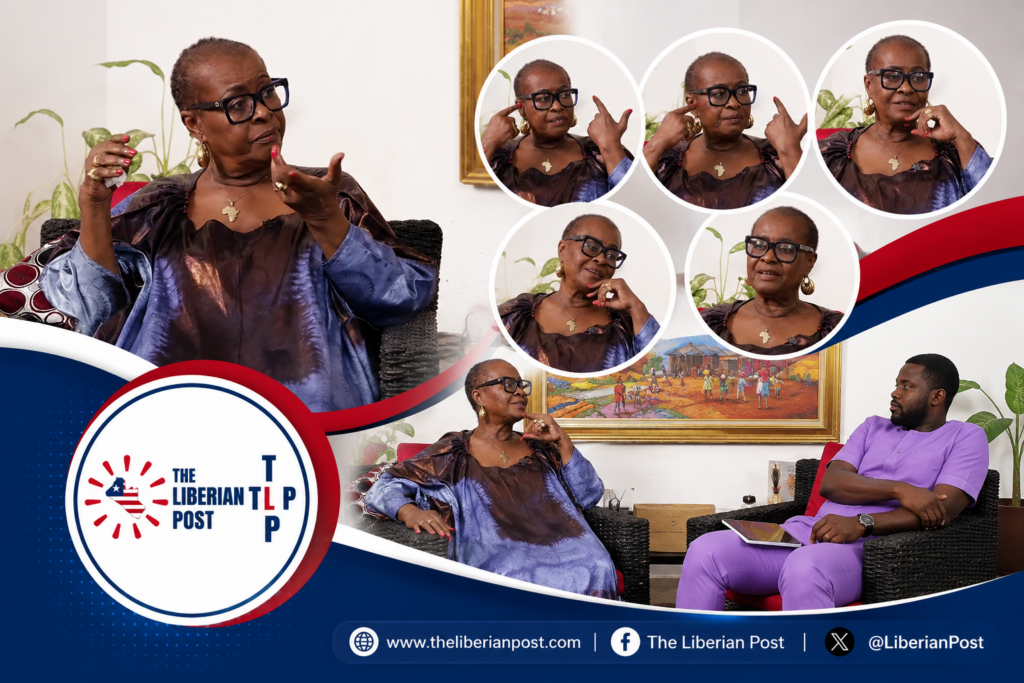
The Liberian Post also believes it is important to remember who Miatta Fahnbulleh is. She is not merely an entertainer commenting from the sidelines. For decades, she has been one of Liberia’s most recognizable cultural figures—a singer, broadcaster, educator, women’s advocate and public intellectual whose voice has influenced generations of Liberians. Like every citizen, she is entitled to hold opinions. Like every public figure, those opinions are open to challenge. But they should be challenged with reason, not ridicule.
Those attacking her should ask themselves a simple question: if they insist on their own right to defend George Weah, why should Miatta Fahnbulleh not enjoy the equally protected right to criticize him?
Rights are not reserved for those with whom we agree. They belong equally to those whose views make us uncomfortable.
Perhaps the greatest irony in this controversy is that Aunty Miatta criticized more than one political figure. She did not single out George Weah alone. She reflected on the leadership of Sirleaf, the devastating legacy of Taylor, the unfinished work of reconciliation and the broader challenges that continue to confront Liberia. Yet much of the public conversation has narrowed itself to a single political personality, as though every national debate must eventually become a contest between political camps.
That mindset impoverishes public discourse. It leaves little room for nuance, reflection or historical perspective. Every issue becomes partisan. Every conversation becomes tribal. Every disagreement becomes personal.
Liberia deserves better.
As our nation moves toward its bicentennial in 2047, we should aspire to build a political culture where ideas are stronger than personalities, evidence matters more than emotion, and citizens are judged by the quality of their arguments rather than the identities of those they criticize.
Strong democracies are not built by silencing dissent. They are strengthened by welcoming it. Nations that progress are those willing to listen to uncomfortable truths, test competing ideas and allow history—not political loyalty—to render its verdict.
In the final analysis, Aunty Miatta’s interview will eventually fade from the headlines. Another controversy will emerge. Another political argument will dominate social media. Another public figure will say something that divides opinion.
The lasting question, however, will remain. What kind of democracy do Liberians want to build?
One where citizens are free to think, question and disagree without fear? Or one where opinions become enemies?
The answer will shape not only our politics, but the character of our Republic itself.
For breaking news, in-depth analysis, and exclusive reports from Liberia and around the world, follow The Liberian Post on Facebook (https://web.facebook.com/profile.php?id=61576017166570) and X, formerly Twitter (https://x.com/LiberianPost).