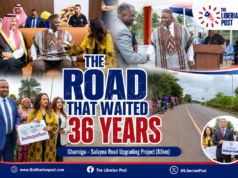
-President Launches Next Phase Toward Konia, Declares Infrastructure Is About Transforming Lives as Development Partners Reaffirm Commitment to Liberia
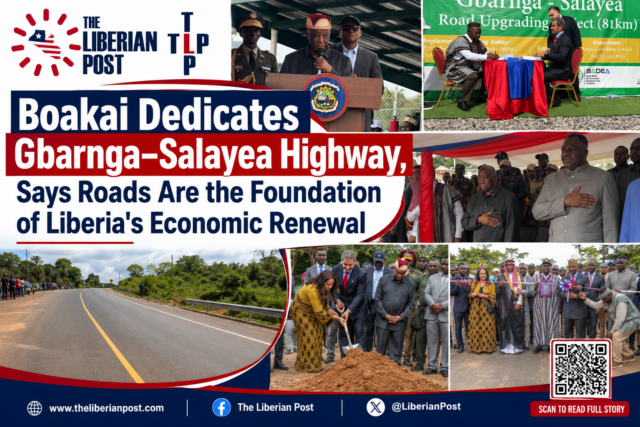
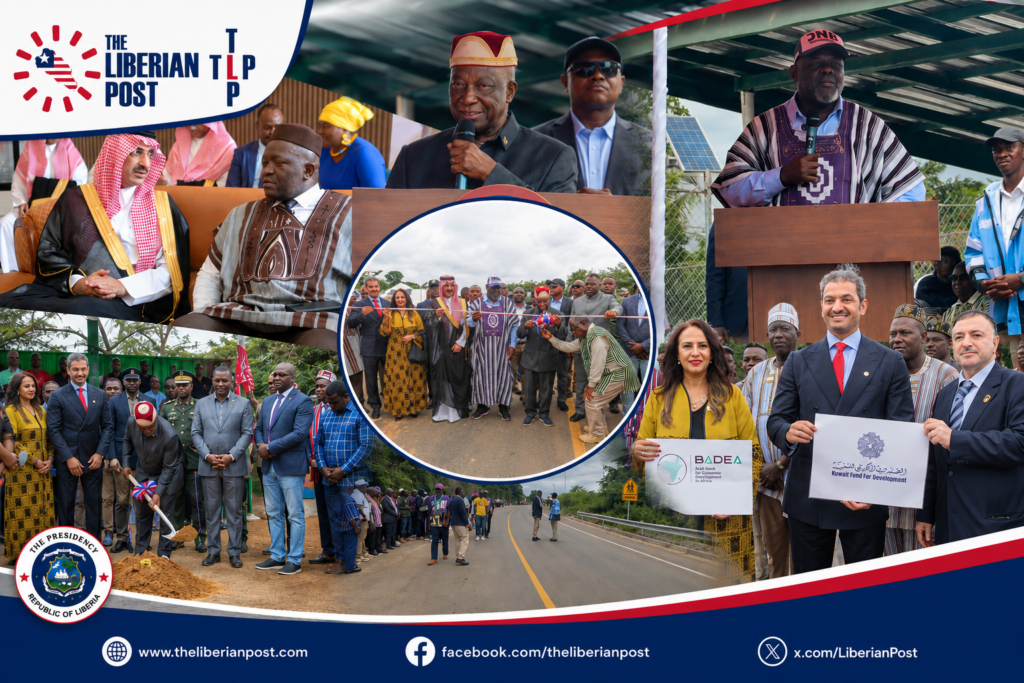
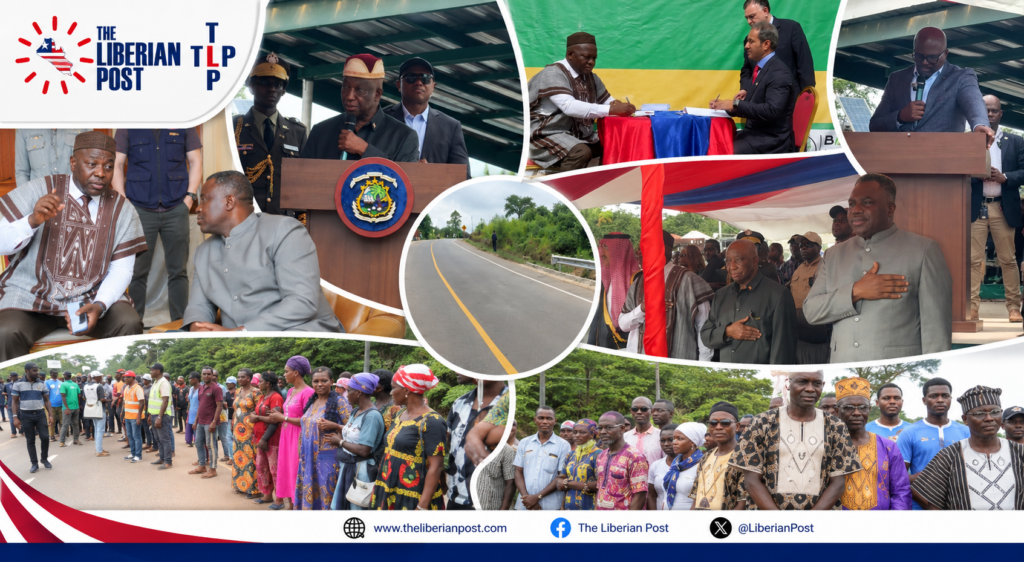
LOFA, BONG Counties – President Joseph Nyuma Boakai on Tuesday dedicated the newly completed 81-kilometer Gbarnga–Salayea Highway, describing the landmark project as more than a road, but a symbol of Liberia’s renewal and a gateway to economic opportunity for thousands of citizens across Bong and Lofa counties.
The ceremony also featured the signing of financing agreements for the next phase of the corridor—the Salayea–Konia–Zorzor–Yeala road project—bringing Liberia closer to realizing a fully paved transport network linking much of Lofa County.
Speaking at the ceremony, President Boakai said the completion of the highway represents “another defining moment in Liberia’s journey of renewal and transformation,” emphasizing that the government’s infrastructure agenda is aimed at improving the everyday lives of Liberians rather than simply constructing roads.
“You can’t eat that road,” the President remarked while pointing toward the newly paved highway, “but that road will make you eat.”
He explained that improved roads reduce isolation, connect farmers to markets, improve access to education and healthcare, and create new economic opportunities for communities that have long struggled with poor transportation infrastructure.
Boakai thanked the Arab Coordination Group—including the Saudi Fund for Development, the Kuwait Fund for Arab Economic Development, BADEA and the OPEC Fund—for their longstanding partnership with Liberia, describing the collaboration as one built not merely on financing but on genuine relationships.
“It is not just about roads and road construction,” the President said. “It’s about relationship… When people sit and have resources to support people they don’t even know, that’s what is called true relationship.”
He reaffirmed his administration’s commitment to infrastructure development under the ARREST Agenda for Inclusive Development, pledging that road construction will remain one of the government’s highest priorities.
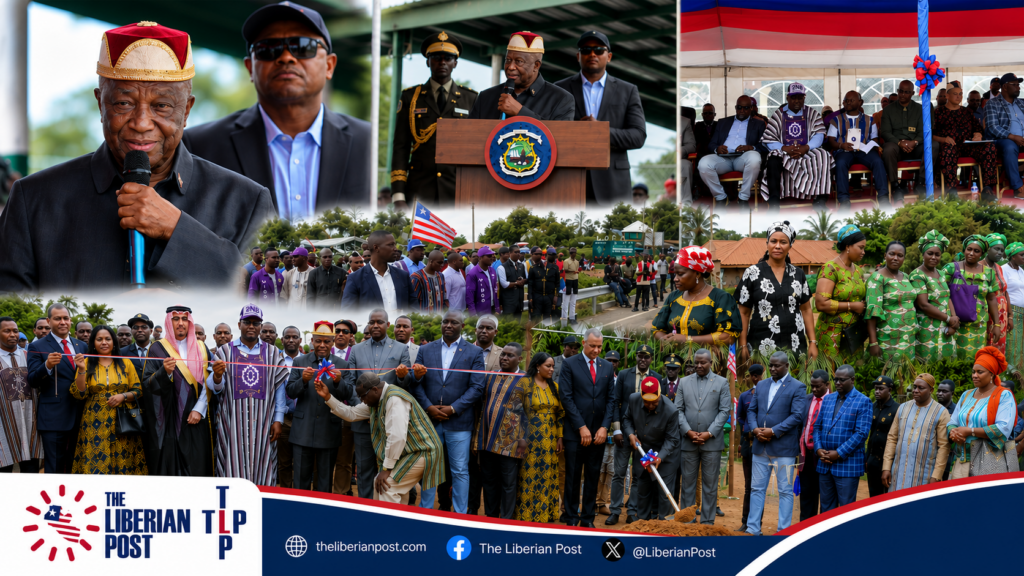
“My government remains fully committed to working closely with all partners to advance infrastructure development as a cornerstone of our ARREST Agenda for Inclusive Development,” Boakai said, adding that the projects are laying “the foundation for a more connected and prosperous United Liberia.”
The President also stressed the importance of constructing durable paved roads capable of withstanding Liberia’s climatic conditions, noting that quality infrastructure would provide lasting benefits for future generations.
Several speakers echoed the President’s message, highlighting the transformative impact of the road.
Saudi Fund for Development Chief Executive Officer Sultan Abdulrahman Al-Marshad said roads should be measured not only by their length but by the lives they change, telling the story of a young girl named Mary whose dream of becoming a doctor depends on reliable access to school during the rainy season.
“When we speak about roads, we speak about kilometers,” he said. “We don’t speak about people. But I think a road is people.”
China’s Ambassador to Liberia, Yin Chengwu, described the highway as a critical artery in Liberia’s Northern Corridor that will strengthen trade, reduce transportation costs, expand agricultural production and improve the quality of life for ordinary Liberians.
Quoting a well-known Chinese proverb, Ambassador Yin said, “If you want to get rich, build roads first,” expressing confidence that the project would become “a road of opportunity and shared prosperity” for the Liberian people.
Lofa County Legislative Caucus Chairman Senator Joseph Jallah also hailed the project as a transformative investment, saying development means farmers reaching markets more easily, children getting to school during the rainy season, and patients traveling safely to healthcare facilities.
“Roads do not ask who you voted for,” Jallah said. “Roads serve everyone.”
The Gbarnga–Salayea Highway forms part of Liberia’s broader strategy to improve national connectivity and stimulate economic growth, with construction of the Salayea–Konia section expected to further strengthen transportation links between Bong and Lofa counties while supporting agriculture, commerce and regional integration.
For breaking news, in-depth analysis, and exclusive reports from Liberia and around the world, follow The Liberian Post on Facebook (https://web.facebook.com/profile.php?id=61576017166570) and X, formerly Twitter (https://x.com/LiberianPost).