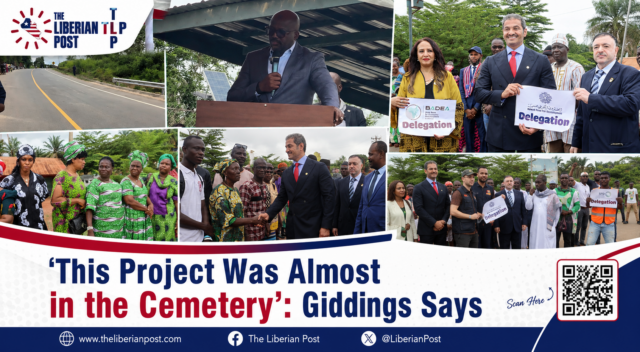
–Public Works Minister Vows Nine-Year Delays Will Not Be Repeated as Government Launches Next Phase Toward Konia and Regional Connectivity
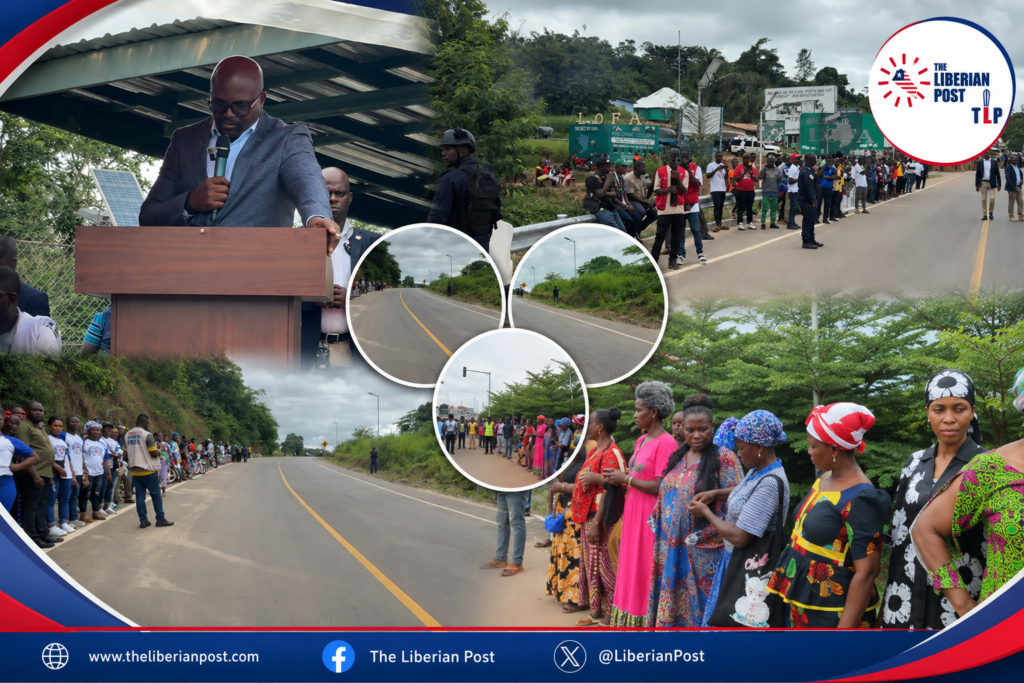
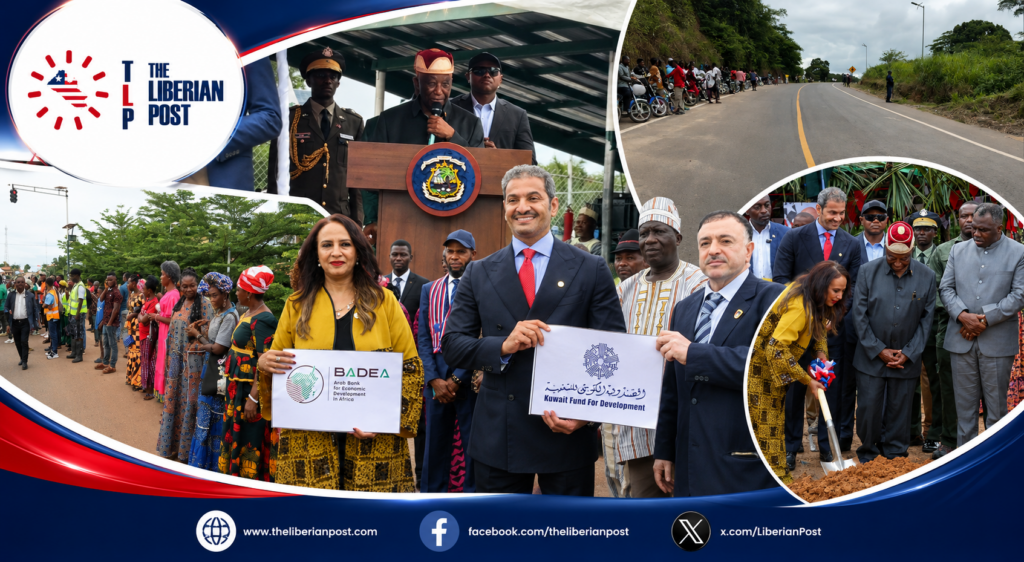
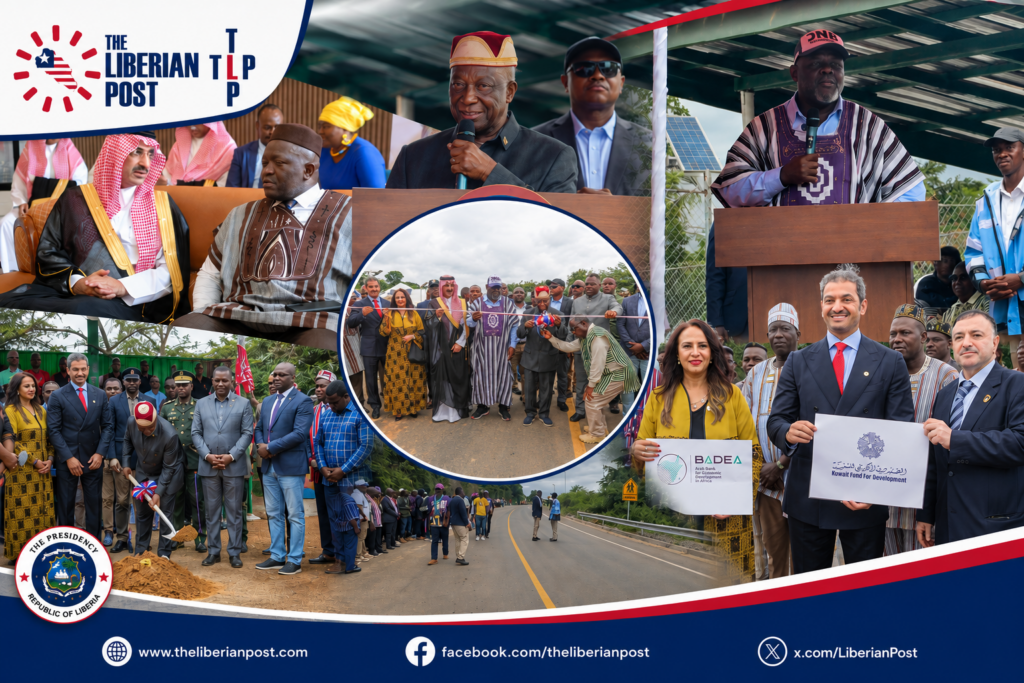
LOFA, BONG County – Public Works Minister Roland Lafayette Giddings on Tuesday, July 28, declared that the completion of the 81-kilometer Gbarnga–Salayea Highway marks more than the end of a long-delayed construction project—it represents a turning point in Liberia’s determination to deliver infrastructure on time and restore confidence in national development.
Speaking during the official dedication of the highway, Giddings acknowledged that a project originally designed to take just three years instead consumed nearly a decade because of repeated setbacks, cost overruns and work suspensions.
But standing before government officials, international financiers, engineers and residents of Bong and Lofa counties, the Public Works Minister said those painful lessons are shaping a new approach to road development.
“This project was almost in the cemetery,” Giddings said, recalling how construction stalled before the government successfully renegotiated financing with development partners to revive the project.
“The government dispatched a delegation to Kuwait headed by the Minister of Finance to renegotiate and get the project started again,” he said, crediting Liberia’s development partners for refusing to abandon the country despite years of delays.
The completed highway stretches 81 kilometers from Gbarnga in Bong County to Salayea in Lofa County and forms part of the broader Gbarnga–Voinjama–Mendikorma corridor, which is expected to strengthen trade, agriculture and regional integration with neighboring Guinea and Sierra Leone.
Giddings disclosed that although the project was originally awarded in December 2017 with a planned completion period of 36 months, unforeseen challenges extended construction by almost five years.
The delays pushed the contract value from an initial US$40.858 million to approximately US$51.9 million after two contract extensions and additional engineering works.
The minister, however, assured Liberians that such prolonged delays would not become the norm.
“Let me emphasize that the Ministry of Public Works will do everything possible to avoid the reoccurrence of this cost extension, time extension, which took this project nine years,” he pledged.
“This will not occur on the Salayea–Konia Road Project.”
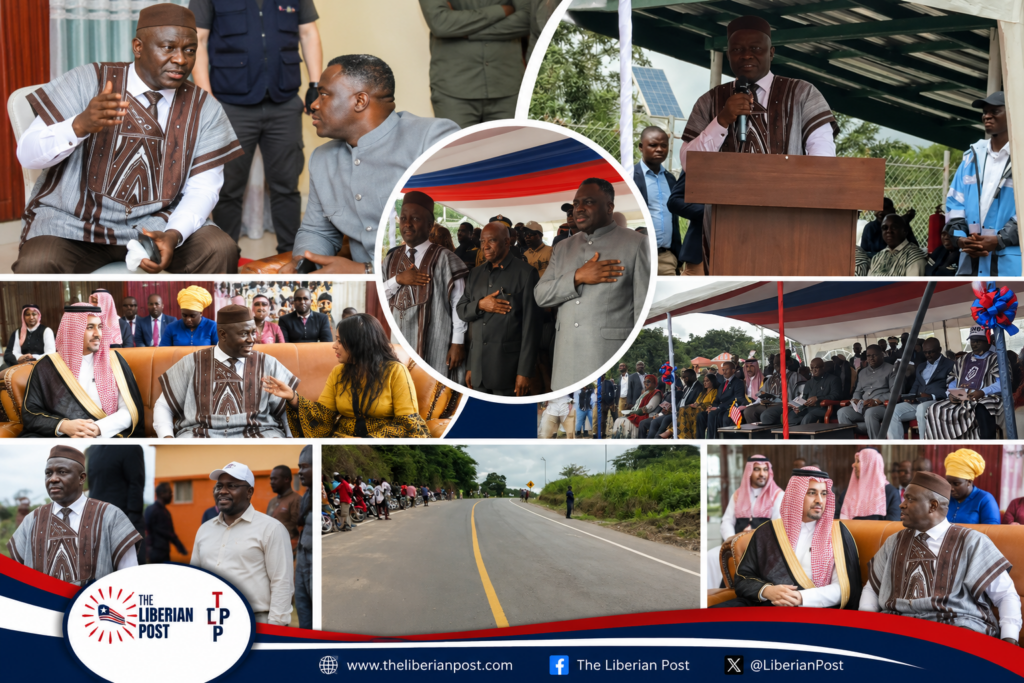
Giddings described the highway as a model of international cooperation, noting that the project was jointly financed by the Saudi Fund for Development, the OPEC Fund for International Development, the Kuwait Fund for Arab Economic Development, the Arab Bank for Economic Development in Africa (BADEA), and the Government of Liberia.
“We are glad, as the people of Liberia, that you did not give up on us,” he told the financiers. “You continued to stay with us. And today, the project is being dedicated.”
He outlined the project’s engineering features, including modern pavement structures, improved drainage systems, pedestrian walkways, market lay-bys, safety shoulders and urban upgrades designed to protect motorists and pedestrians while supporting growing commercial activities along the corridor.
Looking ahead, Giddings said the government is already moving to the next phase of construction.
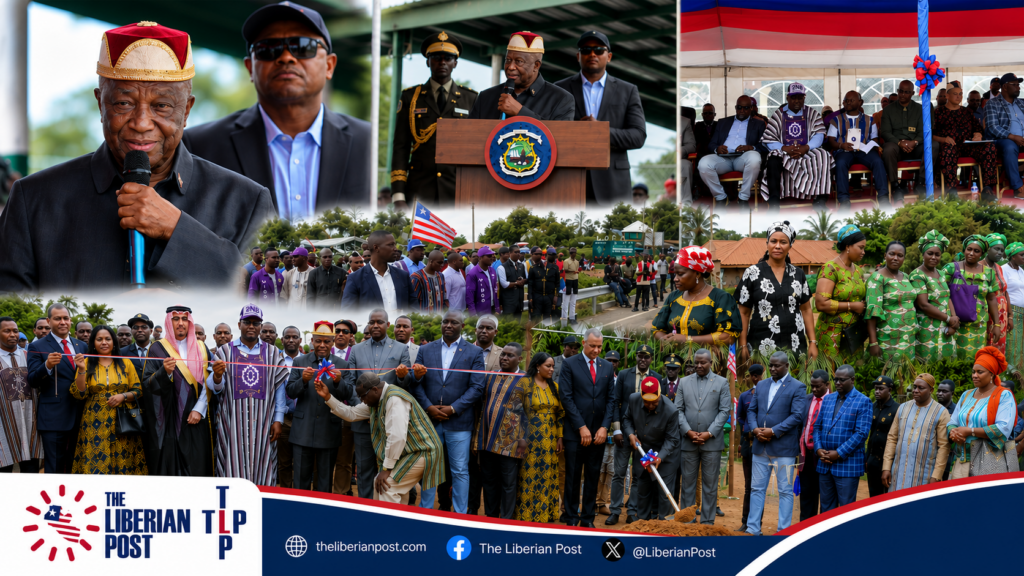
Groundbreaking for the Salayea–Konia segment, he said, represents another important step toward connecting Voinjama and eventually linking Liberia’s road network to Guinea and Sierra Leone.
“The benefit of this project is going to be manifested when we get to Voinjama,” he said, describing regional connectivity and national integration as central objectives of the government’s infrastructure strategy.
He further disclosed that the government has already signed a public-private partnership concession for the paving of the Voinjama–Foya–Mendikorma corridor, ensuring that work will continue beyond the newly dedicated section.
The minister also announced that the completed road has entered its defects liability period, during which the contractor will remain responsible for correcting any engineering deficiencies that emerge before the project is formally closed.
The significance of the highway was echoed by Deputy Speaker of the House of Representatives Thomas P. Fallah, who described the road as a gift that will outlive politics and generations.
Fallah pledged the Legislature’s continued support for future road financing, assuring the Executive that lawmakers would expedite infrastructure agreements because of their importance to national development.
“We’ll always give you timely passage, because we know the importance of roads,” he said. “There will be no time to waste with those legislations.”
He also praised the condition of the corridor after personally driving from Foya earlier that morning, saying the improved road has already begun stimulating trade, easing transportation and lowering the cost of doing business across Lofa County.
“Our people trade and commerce is on the rise. Our people are moving in and out. Business is moving,” Fallah said, adding that better roads are enabling Liberians to improve their own lives through agriculture and commerce.
For Giddings, however, Tuesday’s ceremony was not the end of the journey.
It was the beginning of another.
With the Salayea–Konia phase ready to commence and the Voinjama corridor already planned, he said Liberia is steadily transforming decades of deferred infrastructure into a connected national road network capable of driving economic growth for generations to come.
For breaking news, in-depth analysis, and exclusive reports from Liberia and around the world, follow The Liberian Post on Facebook (https://web.facebook.com/profile.php?id=61576017166570) and X, formerly Twitter (https://x.com/LiberianPost).