MONROVIA – The world’s biggest sporting spectacle is officially underway.
The 2026 FIFA World Cup has kicked off across North America, bringing together 48 national teams, millions of fans, and billions of viewers in what is already being described as the largest and most ambitious tournament in football history.
Hosted jointly by the United States, Canada, and Mexico, the competition marks a new era for the FIFA World Cup, featuring more teams, more matches, and a larger global audience than any previous edition.
As the tournament unfolds, here is everything football fans need to know about the historic event.
A Historic Expansion to 48 Teams
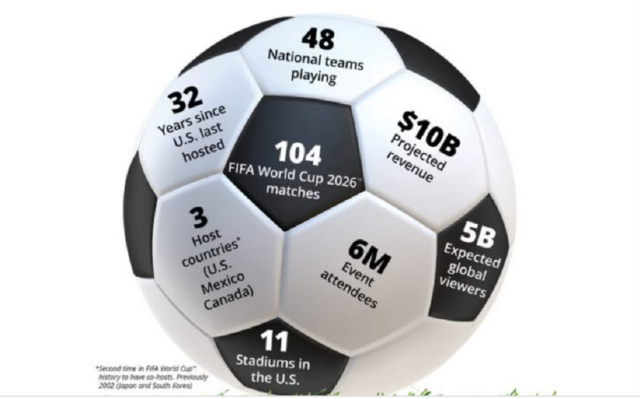
One of the defining features of the 2026 FIFA World Cup is its expansion from 32 to 48 participating nations.
The increase has opened the door for more countries from Africa, Asia, North America, South America, Europe, and Oceania to compete on football’s grandest stage.
FIFA introduced the new format to make the tournament more inclusive and provide greater opportunities for emerging football nations. The result is a World Cup featuring a broader range of talent, cultures, and playing styles than ever before.
Three Nations Hosting One Tournament
The 2026 edition is also making history as the first World Cup to be co-hosted by three countries.
The United States, Canada, and Mexico are jointly staging the competition, showcasing some of North America’s most modern stadiums and sporting infrastructure.
Mexico has added another milestone to its football legacy by becoming the first country to host World Cup matches in three different tournaments, having previously hosted the event in 1970 and 1986. The United States last hosted the competition in 1994, while Canada is hosting World Cup matches for the first time.
Record-Breaking Number of Matches
Fans are enjoying more football than ever before.
The expanded format has increased the total number of matches from 64 to 104, making the 2026 World Cup the largest tournament in FIFA history.
The competition is being played over 39 days, giving supporters around the world nearly six weeks of continuous football action.
United States Hosts Most of the Games
Although three countries are sharing hosting duties, the United States is staging the majority of the tournament.
According to information released by the U.S. Embassy in Liberia, the United States is hosting 78 of the tournament’s 104 matches across 11 cities, including the semifinals and the final.
The scale of the event has transformed host cities into global football destinations as fans from every corner of the world gather to support their teams.
Millions of Fans in Attendance
The tournament is attracting massive crowds.
Organizers estimate that approximately six million spectators will attend matches during the World Cup, making it one of the most attended sporting events ever organized.
In addition to ticket holders, millions of visitors have traveled to North America to experience fan festivals, cultural events, and celebrations surrounding the competition.
A Global Audience of Five Billion
While stadiums are packed with supporters, billions more are watching from home.
The 2026 FIFA World Cup is expected to reach a global audience of approximately five billion viewers through television broadcasts and digital streaming platforms.
The tournament remains the most-watched sporting event on the planet, uniting people across continents through their shared passion for football.
A US$10 Billion Economic Boost
Beyond the excitement on the pitch, the World Cup is generating significant economic activity.
The tournament is projected to produce approximately US$10 billion in revenue through broadcasting rights, sponsorship agreements, tourism, hospitality services, transportation, and other commercial activities.
Businesses across the host nations are already benefiting from the influx of visitors and increased global attention.

What the Tournament Means for Africa
The expansion to 48 teams has particular significance for African football.
With more qualification slots available, African nations now have greater opportunities to compete at the World Cup and showcase their talent on the international stage.
The new format is viewed by many football observers as an important step toward increasing representation and competitiveness among emerging football nations.
For countries such as Liberia, the tournament serves as both inspiration and a reminder of the possibilities that exist when investments are made in youth development and sports infrastructure.
More Than a Football Tournament
The 2026 FIFA World Cup is more than a sporting competition. It is a global celebration of culture, unity, and excellence.
As matches continue across North America, the tournament is already producing unforgettable moments, introducing new stars, and bringing together people from different backgrounds through the universal language of football.
With weeks of action still remaining, fans around the world are watching to see which nation will ultimately lift football’s most coveted trophy.
2026 FIFA World Cup at a Glance
- Host Countries: United States, Canada, and Mexico
- Participating Teams: 48
- Total Matches: 104
- Tournament Duration: 39 Days
- Matches Hosted by the United States: 78
- U.S. Host Cities: 11
- Expected Attendance: 6 Million Spectators
- Projected Revenue: US$10 Billion
- Projected Global Audience: 5 Billion Viewers
The tournament is underway, history is being made, and the world is watching.
For breaking news, in-depth analysis, and exclusive reports from Liberia and around the world, follow The Liberian Post on Facebook (https://web.facebook.com/profile.php?id=61576017166570) and X, formerly Twitter (https://x.com/LiberianPost).