–Initiative Targets Food Security and Economic Empowerment for Vulnerable Households in Montserrado, Margibi, and Bong Counties
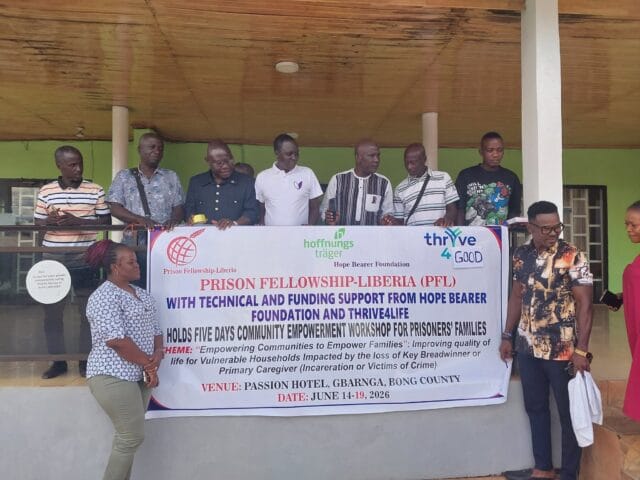
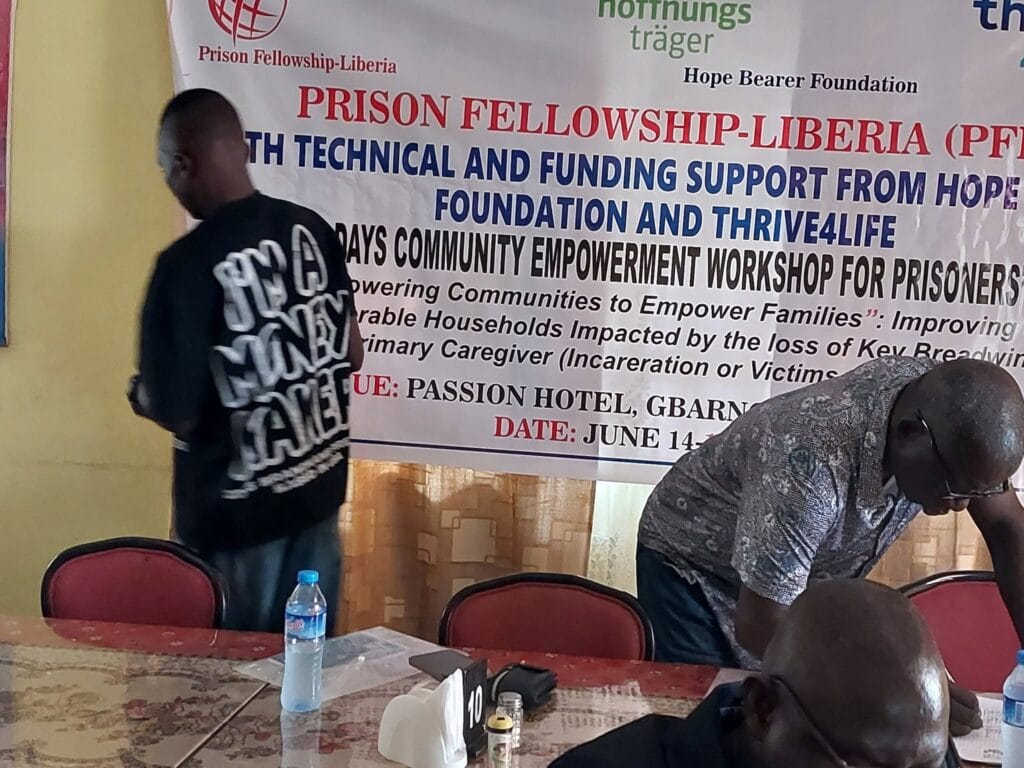
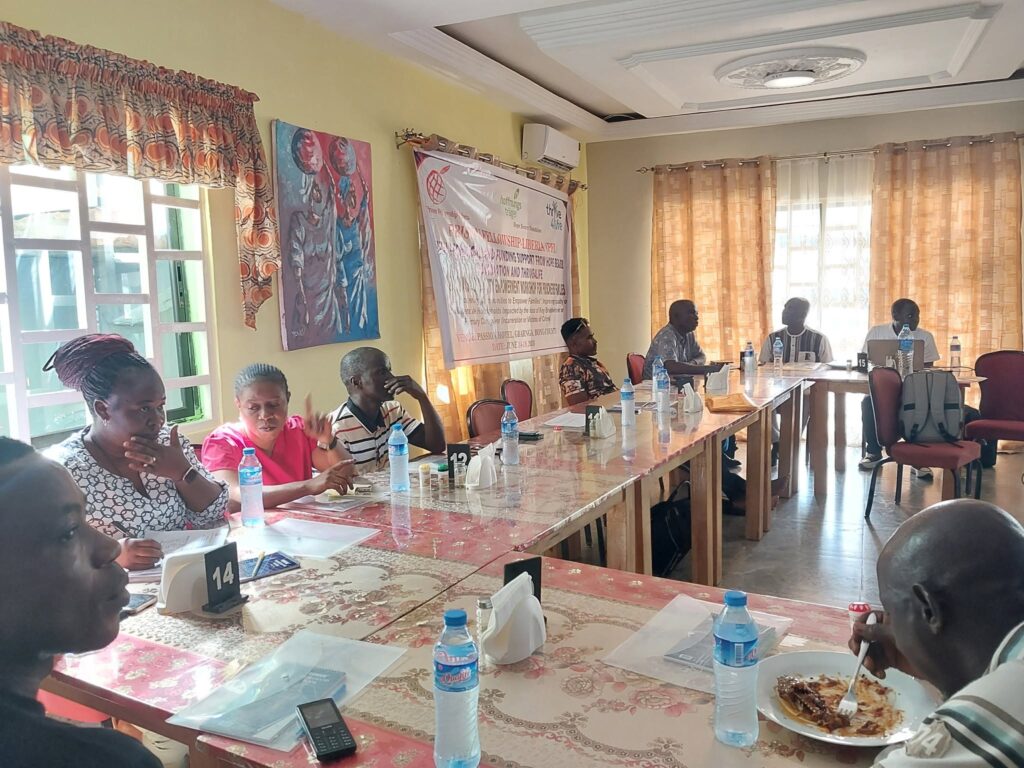
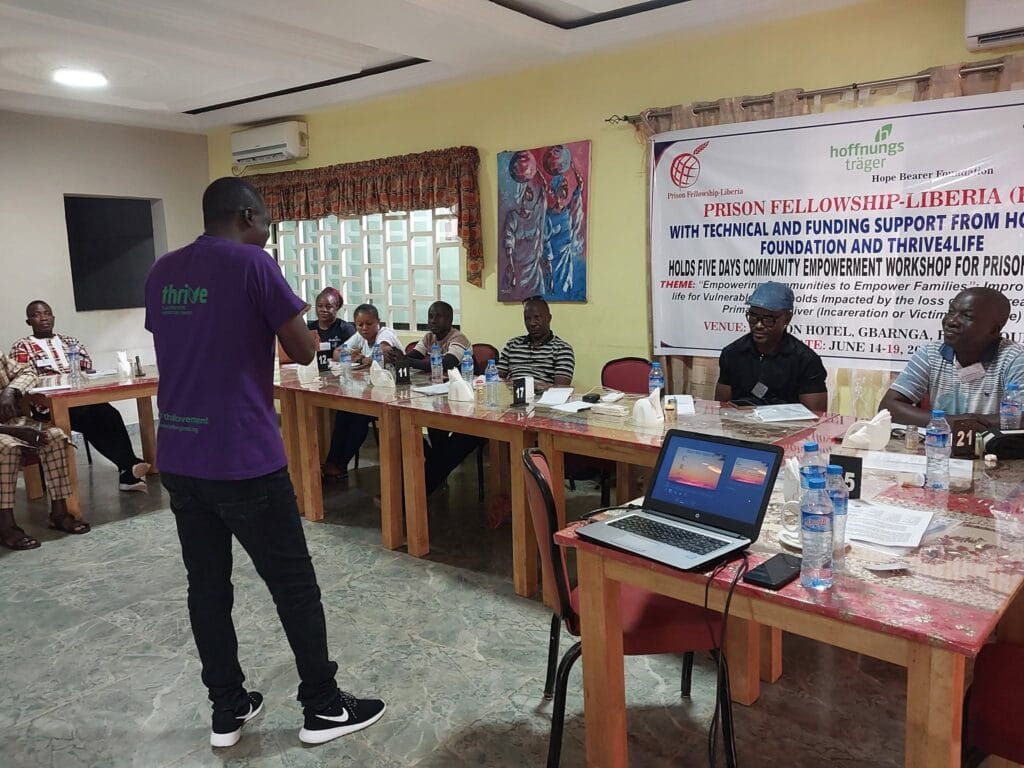
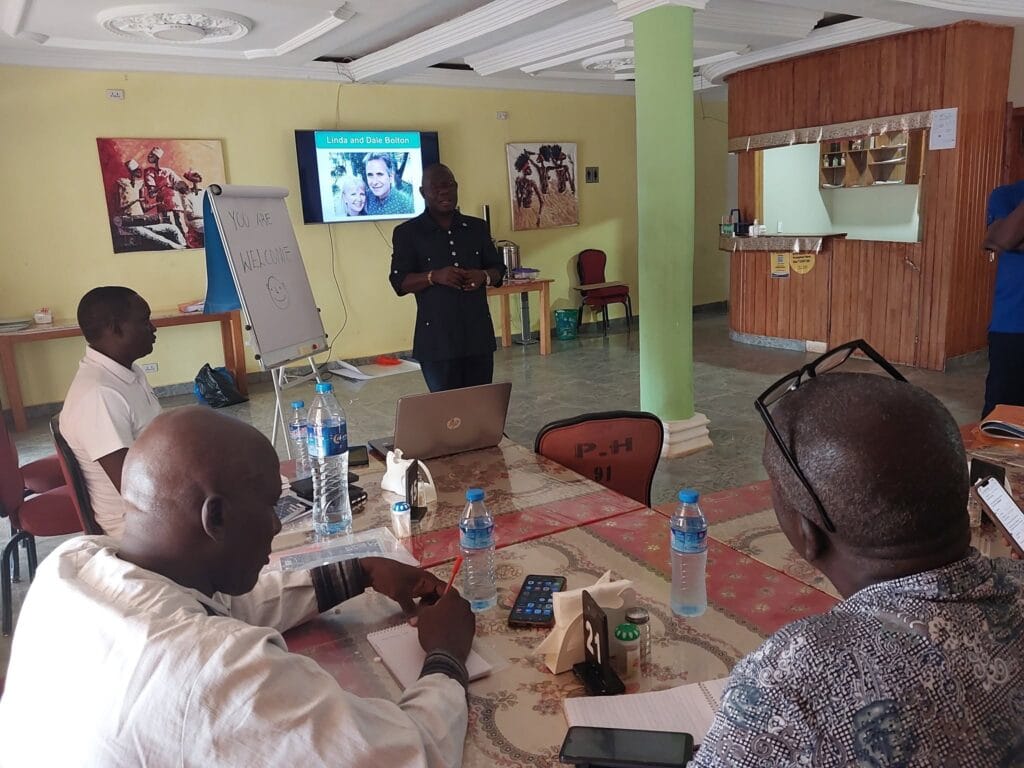
GBARNGA, Bong County – Prison Fellowship Liberia (PFL), with technical and financial support from the Hope Bearer Foundation and Thrive 4 Life, has concluded a five-day community empowerment training aimed at strengthening the livelihoods of families affected by incarceration.
The training, held in Gbarnga, brought together monitors and trainers of trainers who will now return to their respective communities to equip 500 family members of inmates with practical skills in agriculture and animal husbandry.
Speaking at the close of the workshop, PFL Country Director Rev. Francis Kollie said the initiative is designed to promote self-reliance, improve food security, and provide sustainable income-generating opportunities for families whose livelihoods have been negatively impacted by the incarceration of breadwinners.
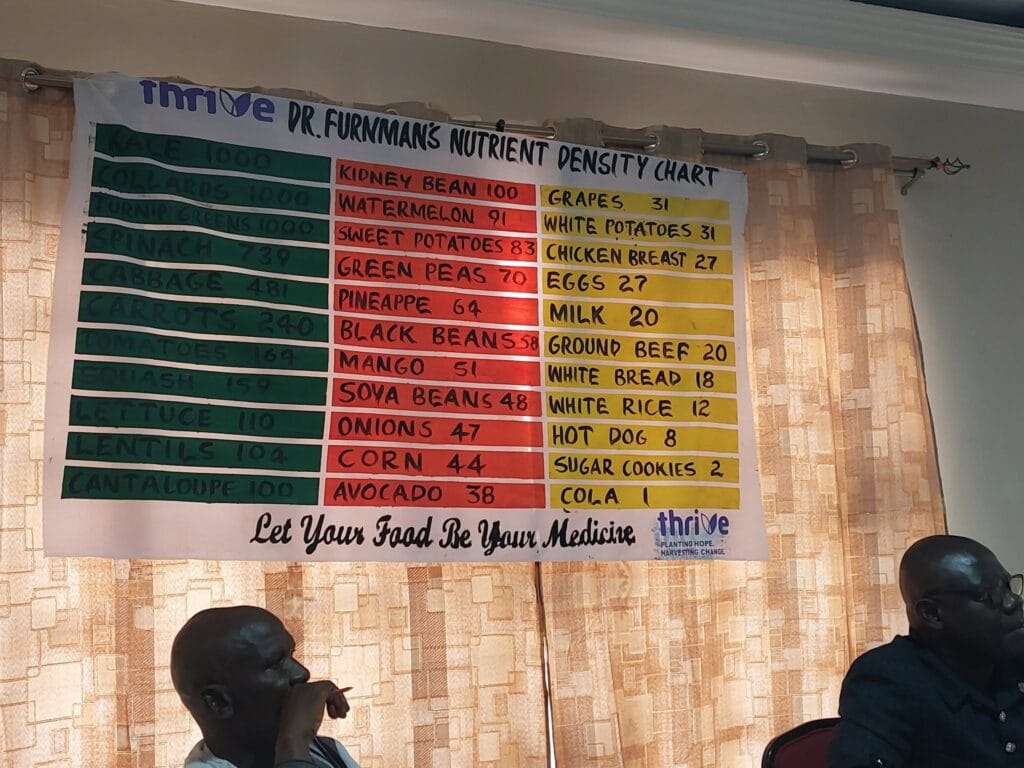
According to Rev. Kollie, selected beneficiaries will receive vegetable seeds and livestock to support their farming activities and help establish sustainable agricultural enterprises.
“The goal is to empower families to become productive and self-sufficient while improving their overall quality of life,” he said.
Supporting Families Left Behind
Rev. Kollie explained that the newly trained monitors and trainers will serve as mentors and field staff responsible for implementing the project in Montserrado, Margibi, and Bong Counties.
He noted that the three counties were selected because they host a significant number of inmates whose families often face severe economic hardship following the incarceration of key income earners.
“Many families of inmates struggle to meet basic needs, including food, healthcare, and education, after losing the support of a breadwinner,” Rev. Kollie observed. “This project seeks to address those challenges by creating opportunities for economic empowerment and food production.”
He added that the program is intended not only to improve household incomes but also to strengthen resilience among vulnerable families and reduce their dependence on external assistance.
Linking Agriculture to Inmates’ Rights Advocacy
The PFL Country Director described the initiative as a major step toward changing public perceptions about families of incarcerated persons, who often face stigma and social exclusion despite having committed no crimes themselves.
According to him, years of engagement by Prison Fellowship Liberia and its partners have shown that the consequences of incarceration frequently extend beyond prison walls, disproportionately affecting children, spouses, and other dependents.
“When a person is incarcerated, the impact is often felt most by the family members left behind,” Rev. Kollie said. “Children and dependents frequently suffer the most, facing hunger, interrupted education, and limited access to healthcare.”
He noted that the project links food security and economic empowerment to broader advocacy efforts aimed at improving the welfare and rights of inmates and their families.
“It is based on this reality that PFL and its partners are connecting food security to advocacy for inmates’ rights through agricultural training and support,” he added.
Promoting Modern Farming Techniques
As part of the initiative, beneficiaries will receive training in modern agricultural practices, livestock management, and income-generating farming techniques.
Organizers say participants will learn how to increase agricultural productivity, improve food production, and utilize farming as a sustainable source of household income.
The training will also focus on helping beneficiaries develop the skills needed to meet essential family needs, including healthcare expenses, school fees, and other basic requirements.
Call to Embrace Agriculture
Launching the project, Rev. Kollie encouraged Liberians to embrace agriculture as a pathway to economic empowerment and national development.
He urged citizens to adopt the principle of “growing what they eat and eating what they grow,” emphasizing the importance of local food production in addressing poverty and food insecurity.
The training was conducted under the theme: “Empowering Communities to Empower Families, Especially Those Incarcerated: Improving Quality of Life for Vulnerable Households Impacted by the Loss of a Key Breadwinner, Primary Caregiver, Incarceration, or Victims of Crimes.”
Organizers believe the initiative will not only improve livelihoods but also strengthen community support systems for families facing the social and economic consequences of incarceration.
For breaking news, in-depth analysis, and exclusive reports from Liberia and around the world, follow The Liberian Post on Facebook (https://web.facebook.com/profile.php?id=61576017166570) and X, formerly Twitter (https://x.com/LiberianPost).