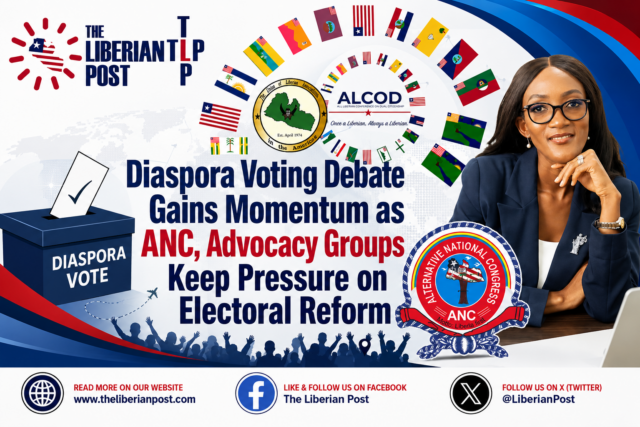
–Support for Out-of-Country Voting Continues to Grow as ALCOD, ULAA and Political Stakeholders Push to Expand Democratic Participation Ahead of Liberia’s 2029 Elections
MONROVIA, Liberia – The campaign to secure voting rights for Liberians living abroad continues to gather momentum as political parties, diaspora organizations and governance advocates intensify calls for reforms that would allow citizens outside the country to register and vote in future national elections.
Among the strongest political endorsements has come from the Alternative National Congress (ANC), which formally backed both diaspora voter registration and out-of-country voting during the Liberian Senate’s electoral reform consultations, adding significant political weight to a campaign that has been championed for years by diaspora organizations.
Although the Senate hearings concluded a few weeks ago, the issue remains one of the most closely watched aspects of Liberia’s ongoing electoral reform process ahead of the 2029 General and Presidential Elections, with advocates arguing that the country’s democracy should evolve to include millions of Liberians living overseas.
ANC Calls for Full Diaspora Participation
Representing the ANC during the Senate consultations, Cllr. Moriah Yeakula argued that Liberians residing abroad should not lose their constitutional right to participate in national elections simply because they live outside the country.
“Our fifth point is diaspora registration. We support fully diaspora registration,” Yeakula told lawmakers, emphasizing that Liberians everywhere remain citizens whose voices deserve representation in the country’s democratic process.
However, the ANC went a step further than supporting voter registration alone.
The party urged lawmakers to establish a legal framework that would permit out-of-country voting, allowing Liberians overseas to cast their ballots from their countries of residence instead of being required to travel home during election periods.
Yeakula argued that many Liberians abroad face significant financial and logistical barriers, including the cost of airline tickets, time away from work and other expenses that effectively deny them meaningful participation in the electoral process.
The ANC’s position places the party among a growing coalition of political and civil society voices advocating reforms that would extend voting rights beyond Liberia’s borders.
Years of Advocacy by Diaspora Organizations
While the ANC’s endorsement has elevated the issue within national political discourse, advocates note that the push for diaspora voting is the product of years of sustained lobbying by organizations representing Liberians abroad.
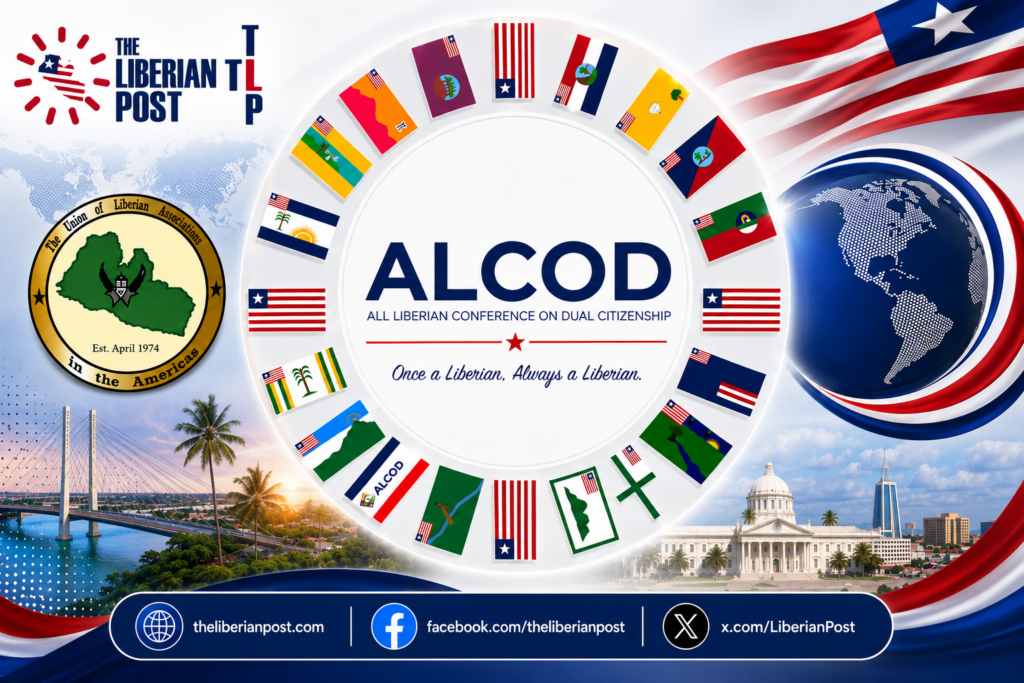
Two organizations have been at the forefront of that campaign: the All-Liberian Conference on Dual Citizenship (ALCOD) and the Union of Liberian Associations in the Americas (ULAA).
For years, both organizations have advocated constitutional and legislative reforms that would permit Liberians overseas to register and vote in national elections, arguing that members of the diaspora remain an integral part of the country’s political, economic and social fabric.
Their campaign gained renewed momentum between December 2025 and January 2026, when representatives of ALCOD and ULAA met with House Speaker Richard Nagbe Koon, Senator Abraham Darius Dillon, and Representative Prof. Thomas Romeo Quioh, Chairman of the House Committee on Elections and Inaugurations, to present petitions supporting out-of-country voting.
During those engagements, lawmakers indicated a willingness to examine amendments to Liberia’s election laws, while Speaker Koon noted that legislation addressing out-of-country voting was before the Legislature. The administration of President Joseph Nyuma Boakai Sr. has also publicly expressed support for the initiative.
More Than Remittances
Supporters argue that the debate extends well beyond electoral politics.
Liberia’s diaspora contributes hundreds of millions of dollars annually through remittances that support families, education, healthcare, housing and small businesses across the country. Yet advocates insist that Liberians abroad should be recognized not merely as financial contributors but as investors, entrepreneurs, professionals, educators and development partners with a legitimate stake in the country’s governance.
For many campaigners, the passage of Liberia’s dual citizenship reforms strengthened the case for out-of-country voting by reaffirming the enduring relationship between Liberia and its citizens living overseas.
They argue that the next logical step is to ensure those same citizens are able to participate fully in elections regardless of where they reside.
International Examples Strengthen the Case
Proponents frequently point to countries that have successfully implemented overseas voting systems.
Within Africa, nations including Ghana, Senegal, South Africa and Cape Verde have established mechanisms that allow citizens abroad to vote in national elections.
Globally, countries such as France, Italy, Portugal, Ecuador and Mexico have likewise adopted systems that recognize the electoral rights of their diaspora populations.
Advocates say these examples demonstrate that overseas voting is both practical and achievable when supported by appropriate legal frameworks, biometric voter registration systems and effective administrative planning.
Legal and Logistical Questions Persist
Despite growing political support, significant legal and operational questions remain.
Election experts have previously raised concerns regarding constitutional provisions governing voter eligibility, residency requirements, election administration, funding and the logistical challenges associated with organizing voting operations across multiple countries.
Others have stressed the importance of safeguards to preserve transparency, accountability and electoral integrity.
Supporters, however, maintain that these are implementation challenges rather than reasons to reject reform, arguing that with sufficient political will Liberia can develop a secure and credible out-of-country voting system.
A Defining Electoral Reform Before 2029
As Liberia prepares for the 2029 elections, diaspora voting has emerged as one of the defining issues in the country’s broader electoral reform agenda.
Political parties, civil society organizations, governance experts and diaspora groups continue to press lawmakers to translate years of advocacy into concrete legislative action.
For ALCOD, ULAA and other advocates, the ANC’s endorsement represents another milestone in a campaign that has steadily moved from diaspora conferences and advocacy forums to the center of Liberia’s national political conversation.
Whether lawmakers ultimately enact legislation permitting diaspora registration, out-of-country voting or both remains uncertain.
What is clear, however, is that the debate is no longer a peripheral issue. It has become a central question in Liberia’s democratic reform efforts, and thousands of Liberians living abroad will be watching closely to see whether the 2029 elections become the first in the nation’s history to allow them to cast their ballots without returning home.
For breaking news, in-depth analysis, and exclusive reports from Liberia and around the world, follow The Liberian Post on Facebook (https://web.facebook.com/profile.php?id=61576017166570) and X, formerly Twitter (https://x.com/LiberianPost).