-GLS Menzies Executive Identifies Alleged Sender, Cites Cargo Weight Discrepancies, Seeks Witness Protection as Investigators Pursue Liberia’s Largest Recent Cocaine Seizure
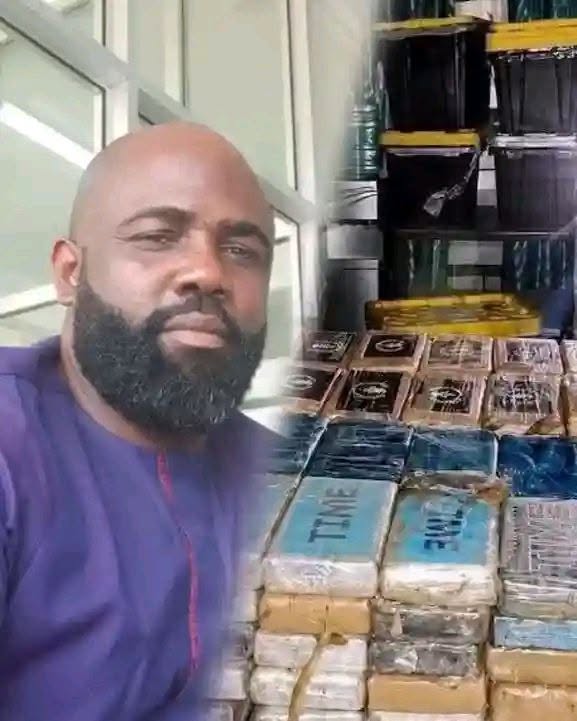
MONROVIA, Liberia – Liberia’s high-profile US$19.2 million cocaine investigation entered a potentially pivotal new phase Thursday after Paul J. King, one of the principal persons of interest in the case, reportedly provided investigators with a detailed account of the shipment that has rocked the country, introducing new allegations, identifying an alleged shipper, highlighting discrepancies in cargo documentation, and requesting state protection as he cooperates with authorities.
King’s reported statement, first published by FrontPage Africa and subsequently carried by other media outlets, marks his first comprehensive public account since voluntarily returning to Liberia and surrendering to the Joint National Security Investigative Task Force earlier this week after being declared a person of interest in the investigation.
While many of King’s assertions remain unverified and continue to be investigated, legal observers say his account introduces fresh leads that could significantly shape the direction of one of Liberia’s most complex narcotics investigations in recent years.
King Names Alleged Cargo Sender
According to King’s reported statement to investigators, the shipment intercepted at Roberts International Airport (RIA) did not originate with him.
Instead, he reportedly identified Rahem Bah as the individual who approached him on June 5, 2026, seeking assistance to export several boxes overseas through normal cargo channels.
King reportedly maintained that he accepted the shipment in the ordinary course of business, believing it contained legitimate commercial goods, and denied having any knowledge that cocaine was allegedly concealed inside the cargo.
If verified, the allegation introduces another key figure into an investigation that has already expanded to include cargo companies, airport personnel, logistics providers, and several private individuals.
As of Thursday, Liberian authorities had not publicly confirmed or commented on King’s allegation regarding the alleged sender.
Weight Discrepancies Raise Fresh Questions
Perhaps the most intriguing aspect of King’s reported statement concerns what he described as significant inconsistencies in the shipment’s documented weight.
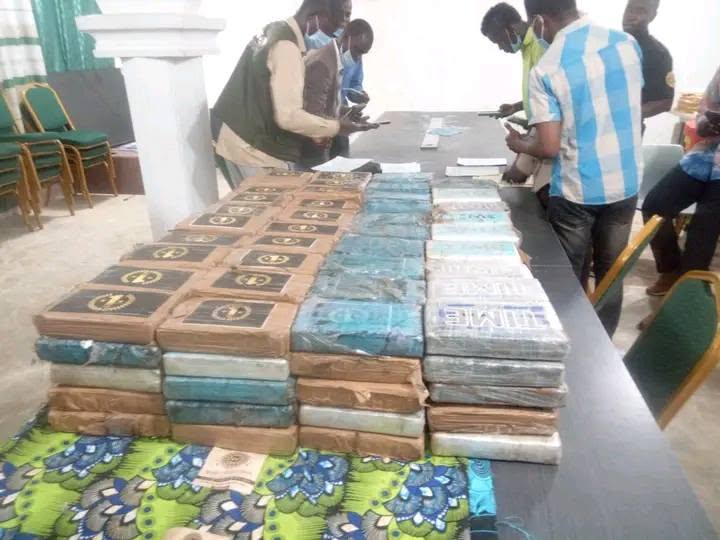
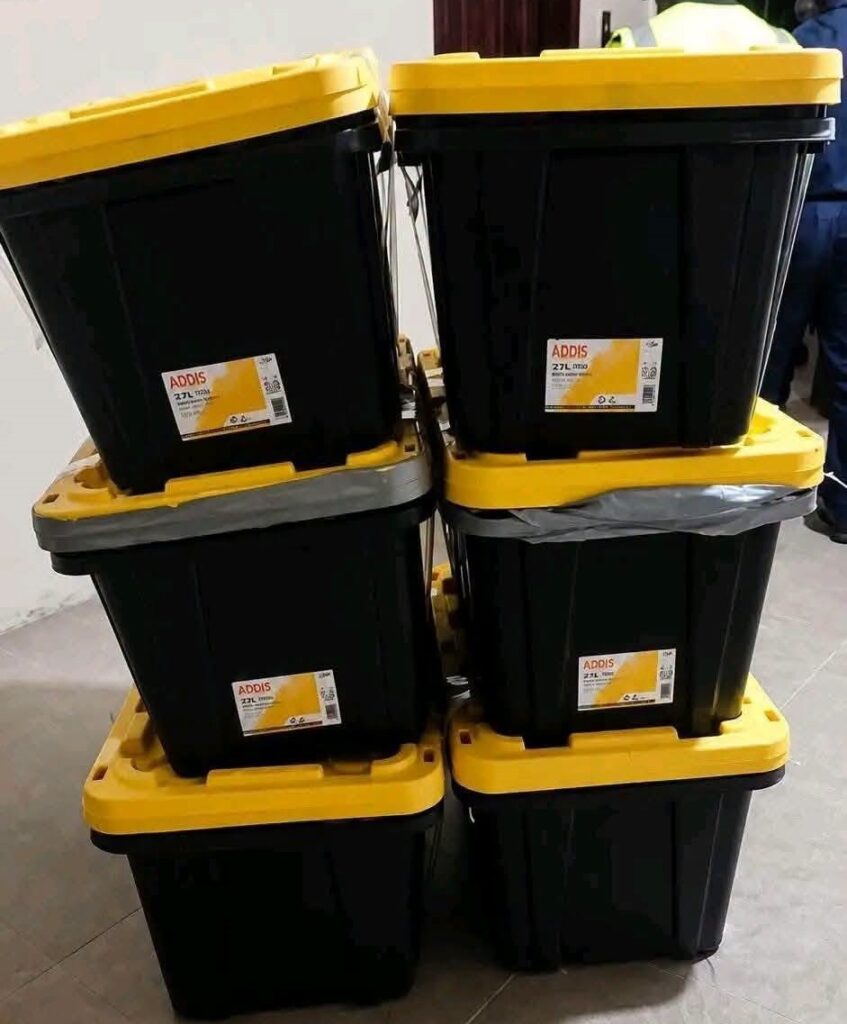
According to FrontPageAfrica, King told investigators that when the shipment was first presented to him, it was declared to weigh approximately 85 kilograms. However, by the time the cargo was processed at Roberts International Airport, official documentation reportedly reflected a weight of about 158 kilograms—a difference of roughly 73 kilograms before security officers allegedly discovered approximately 237.6 kilograms of cocaine concealed inside the six cargo boxes.
King reportedly argued that the discrepancies raise important questions about what occurred between the time the shipment was handed over and when it arrived at the airport for export. Although investigators have not publicly explained the varying weight figures, the reported inconsistencies are expected to become a critical focus of the investigation.
Among the issues investigators will likely seek to determine are whether additional materials were introduced into the shipment after it left the alleged sender, whether the cargo was altered during transportation or storage, whether the shipping documents accurately reflected the contents and weight of the boxes at each stage of the process, and who had custody of the shipment as those changes allegedly occurred.
Legal analysts say documentary evidence—including airway bills, warehouse records, cargo manifests, CCTV footage and handling logs—will likely prove essential in resolving those questions.
King Says He Was Outside Liberia When Shipment Was Arranged
King also reportedly sought to distance himself from the initial arrangements for the shipment by telling investigators that he was outside Liberia when Rahem Bah first contacted him regarding the cargo.
According to his account, Bah reached out to him while he was abroad and requested assistance in facilitating the export of what was represented as a legitimate commercial shipment. King reportedly maintained that he was not physically present in Liberia when the initial arrangements were made and later relied on information provided by Bah regarding the contents of the cargo.
If verified, that timeline could become significant as investigators reconstruct the sequence of events leading to the shipment’s arrival at Roberts International Airport and determine who exercised custody and control over the cargo at various stages before it was intercepted.
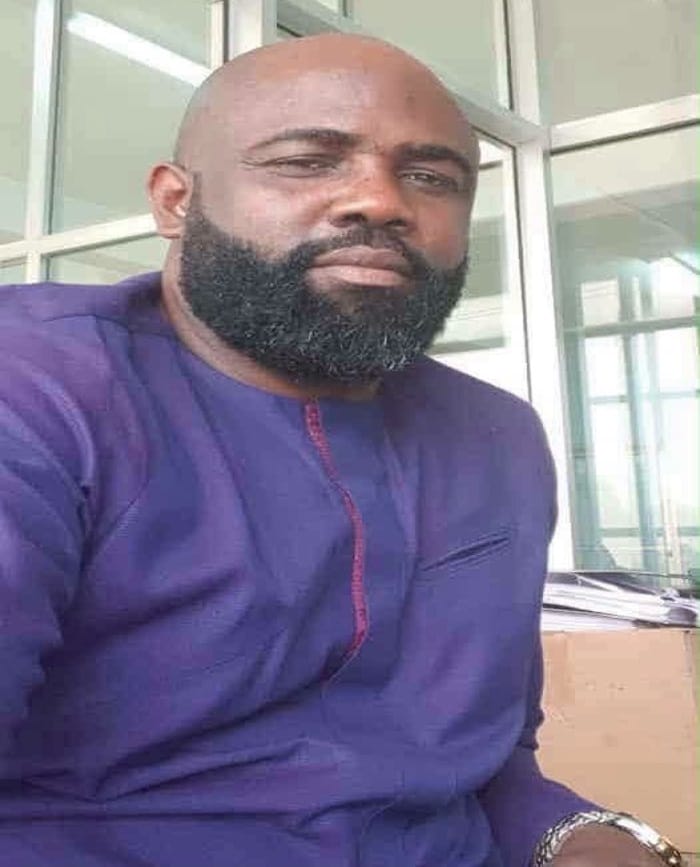
Denies Knowing Cocaine Was Hidden
King also reportedly rejected suggestions that he knowingly participated in an international drug trafficking operation.
According to his account, he believed he was handling an ordinary commercial shipment and relied on information provided by Bah who had contacted him concerning the cargo.
His reported explanation broadly aligns with earlier statements attributed to Arthur B. Abdullai, Chief Executive Officer of EHS Africa Logistics, who allegedly told investigators that he had been informed the shipment contained “lappa and chicken soup.”
Abdullai has reportedly stated that his company routinely transported cargo on behalf of logistics clients and that employees did not possess equipment capable of scanning sealed shipments before transportation.
Neither King’s nor Abdullai’s reported statements have been tested in court, and investigators continue working to determine whether those explanations are supported by documentary and forensic evidence.
Requests Witness Protection
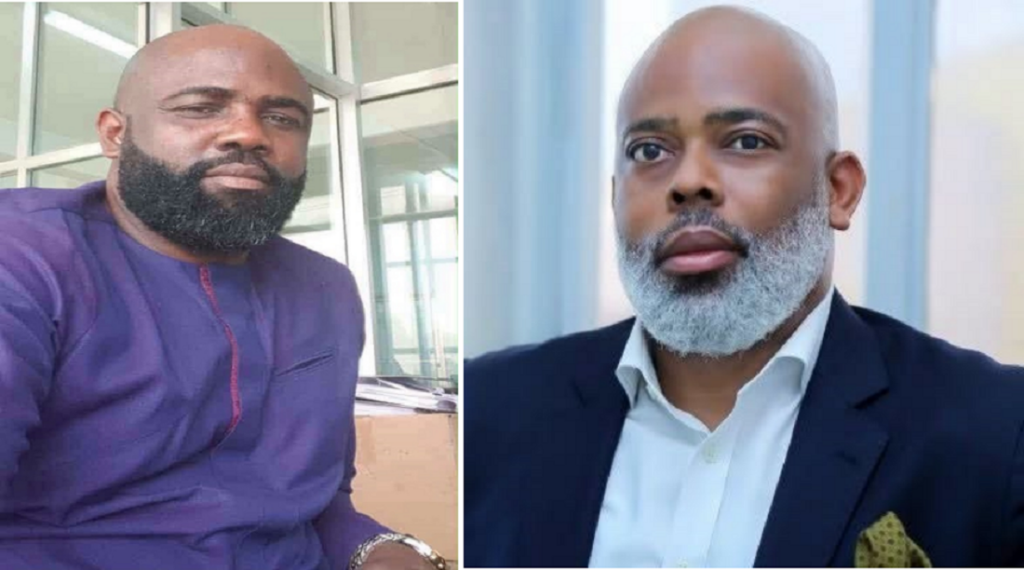
King’s statement also reportedly contains an appeal for protection from the Liberian Government.
According to published reports, he requested witness protection, arguing that his willingness to cooperate with investigators and identify individuals connected to the shipment has placed his personal safety at risk.
The Ministry of Justice has not publicly indicated whether such a request has been granted.
Legal analysts say the request is noteworthy because witness protection is generally sought when an individual believes cooperation with investigators may expose them to intimidation, retaliation, or other security threats.
Investigation Continues to Widen
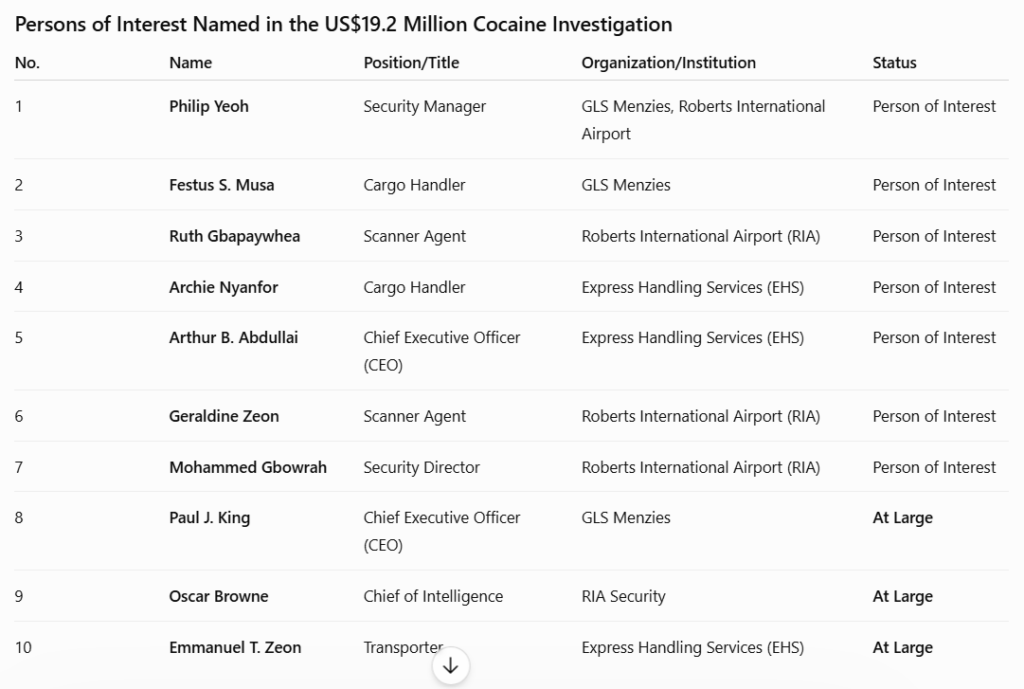
The latest developments come just days after King voluntarily returned to Liberia through Roberts International Airport after initially remaining outside the country when authorities identified ten persons of interest connected to the investigation.
His surrender followed repeated assurances from the Ministry of Justice that every individual connected to the case would receive due process under Liberian law.
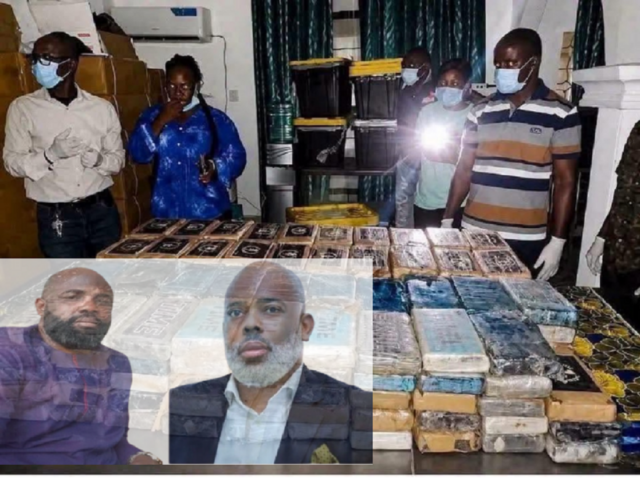
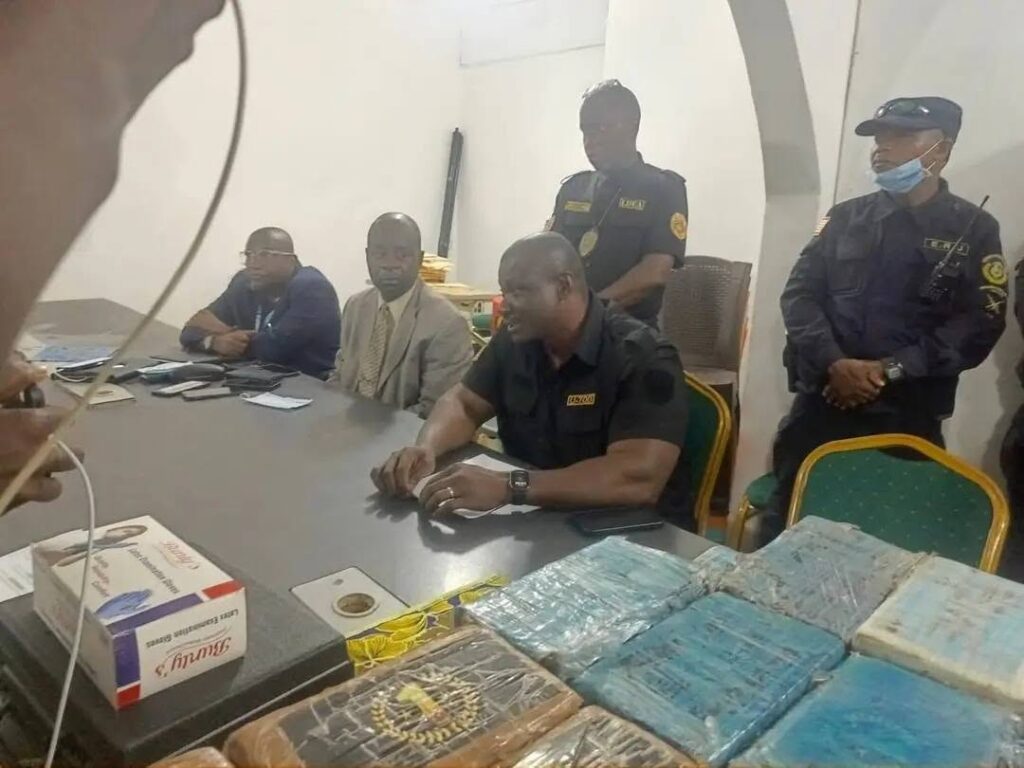
The investigation began after security personnel intercepted approximately 237.6 kilograms of cocaine concealed inside six cargo boxes prepared for international shipment through Roberts International Airport.
Authorities estimated the narcotics have an international street value of approximately US$19.2 million.
The seizure immediately triggered one of the largest coordinated criminal investigations in recent Liberian history, involving the Ministry of Justice, Liberia Drug Enforcement Agency (LDEA), Liberia National Police, National Security Agency, Financial Intelligence Agency, Liberia Immigration Service, Executive Protection Service, and other members of the Joint National Security Investigative Task Force.
Political Fallout
The investigation has already produced significant political consequences.
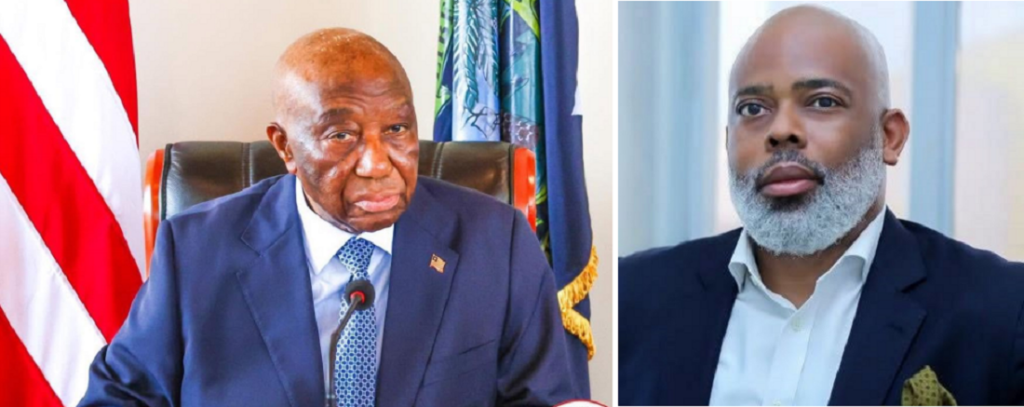
President Joseph Nyuma Boakai Sr. recently suspended Peter Malcolm King, Paul’s brother and a member of the Board of Directors of the National Oil Company of Liberia (NOCAL), after investigators identified entities associated with him for further investigative scrutiny.
The Executive Mansion emphasized that the suspension was strictly an administrative measure intended to protect the integrity of the investigation and should not be interpreted as evidence of criminal wrongdoing.
Separately, the Liberia Airport Authority placed seven employees on administrative leave and indefinitely suspended another official pending both internal administrative proceedings and the outcome of the criminal investigation.
Authorities likewise stressed that those actions were precautionary and did not constitute findings of guilt.
New Leads for Investigators
King’s statement now presents investigators with several specific factual claims that can be independently examined.
Among the issues likely to receive close scrutiny are the identity of the alleged shipper, the documented weight of the cargo at various stages of transportation, the movement of the shipment before it reached the airport, communication records between individuals involved, and whether documentary evidence supports King’s version of events.
Investigators are also expected to compare King’s account with statements already obtained from airport employees, cargo handlers, logistics company executives, customs officials, and other persons of interest.
Whether King’s claims ultimately withstand investigative scrutiny remains to be seen.
For now, they represent the most detailed public explanation yet from one of the central figures in the case—one that introduces new allegations, raises additional questions, and is likely to intensify efforts by Liberia’s Joint Security to determine who organized, financed, and attempted to export one of the largest cocaine shipments ever intercepted at the country’s main international airport.
The Ministry of Justice has repeatedly emphasized that the investigation remains active and that all individuals connected to the case are presumed innocent unless and until proven guilty in a court of competent jurisdiction.
For breaking news, in-depth analysis, and exclusive reports from Liberia and around the world, follow The Liberian Post on Facebook (https://web.facebook.com/profile.php?id=61576017166570) and X, formerly Twitter (https://x.com/LiberianPost).