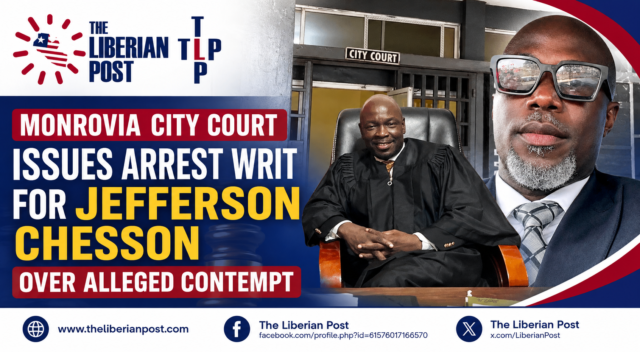
–Magistrate L. Ben Barco Convicts Lawyer of Contempt, Sentences Him to Two Days in Prison Over Public Comments on Pending Case
MONROVIA, Liberia — The legal confrontation involving lawyer J. Jefferson Chesson and the Monrovia City Magisterial L. Ben Barco Court has escalated, with the court finding Chesson guilty of contempt of court and sentencing him to two days in prison over public statements he made concerning a pending proceeding and the presiding magistrate.
The ruling was delivered by Stipendiary Magistrate L. Ben Barco on August 18, 2026, while the court’s final order, issued under its hand and seal, was entered on August 19.
The latest ruling follows the court’s earlier issuance of a writ of arrest directing law enforcement authorities to arrest and bring Chesson before the court over allegations that he had publicly commented on proceedings pending before the magistrate.
The case has now moved beyond the initial arrest order, with the court formally adjudicating Chesson guilty of contempt and imposing a custodial sentence.
According to the ruling, Chesson had been informed of a Writ of Arrest issued in connection with a matter pending before the court. Rather than appearing before the court, the magistrate said, Chesson subsequently appeared on the Spoon Talk radio program, where he discussed the pending proceedings and allegedly questioned the impartiality of the presiding magistrate.
The court concluded that the public statements exposed the judiciary to public ridicule and undermined the authority and dignity of the court.

Court Cites Judiciary Law
In reaching its decision, the L. Ben Barco Court relied on Chapter 12 of Liberia’s New Judiciary Law, which empowers courts to punish disorderly, contemptuous or insolent behavior that tends to interrupt judicial proceedings or impair respect for the authority of the court.
The magistrate also considered constitutional protections relating to freedom of expression, but emphasized that the exercise of that freedom carries responsibilities when it intersects with the administration of justice.
The court further relied on judicial precedent concerning the inherent authority of courts to protect the integrity of judicial proceedings and preserve respect for judicial institutions.
The ruling acknowledged the delicate balance between freedom of expression and judicial authority, particularly where statements made outside the courtroom potentially affect public confidence in ongoing proceedings.
Court Says Radio Appearance Was No Substitute for Court Appearance
A central issue in the court’s reasoning was Chesson’s decision to discuss the matter publicly rather than respond to the court’s process.
The magistrate rejected the argument that appearing on a radio program could constitute a legitimate alternative to appearing before the court.
“Calling a criminal defendant—even one who is a lawyer—to appear in court is a lawful and impartial act,” the ruling states.
The court said Chesson’s decision to publicly discuss the case did not establish that the magistrate had acted with bias.
The ruling therefore drew a distinction between a defendant’s right to criticize judicial proceedings and the obligation to comply with lawful court processes.
Lawyer’s Status Given Particular Weight
The court placed particular emphasis on Chesson’s status as a lawyer, noting that attorneys are officers of the court and consequently have heightened professional obligations toward the judiciary.
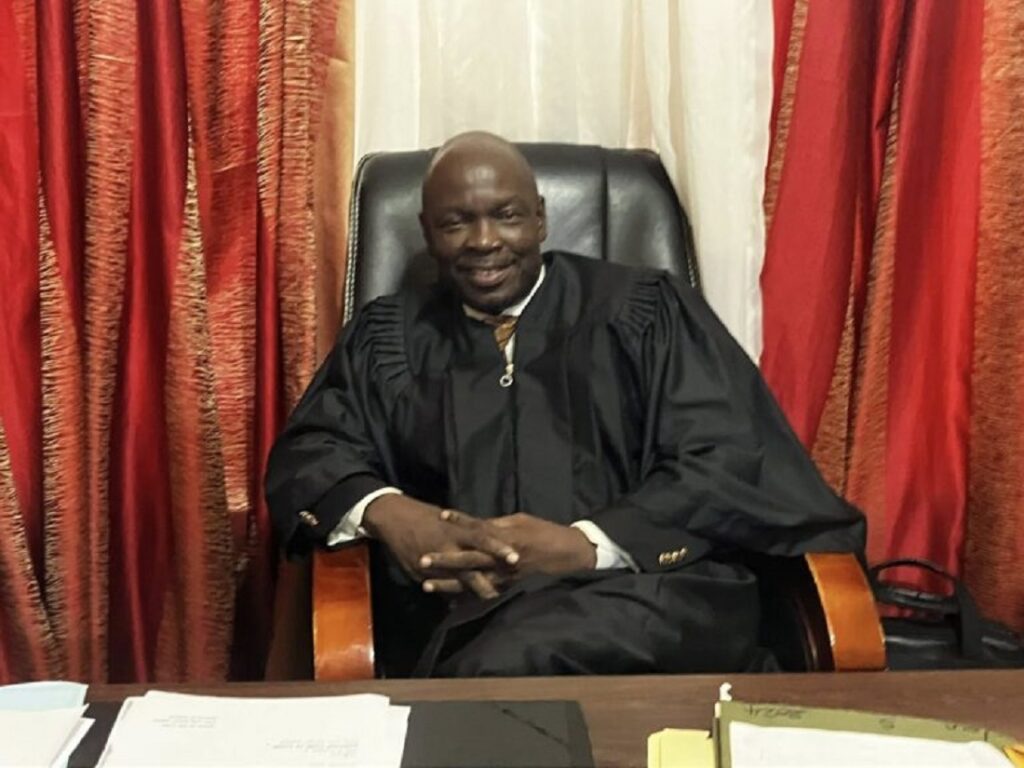
That consideration became important to the magistrate’s assessment of the seriousness of the conduct.
The court viewed the alleged public statements not simply as criticism directed at an individual magistrate but as conduct capable of undermining respect for the judicial process itself.
The magistrate emphasized that contempt, in this context, was not merely about personal disrespect toward a judge.
Rather, the court said, the contempt power exists to safeguard the integrity, authority and proper functioning of the judicial process.
Court Considers Freedom of Expression
The ruling did not ignore Chesson’s constitutional rights.
The magistrate considered the protections afforded to freedom of expression but held that those protections do not eliminate the obligation to respect lawful judicial processes.
The court’s reasoning is also consistent with the broader principle recognized in Liberian jurisprudence that courts possess inherent authority to protect their proceedings and maintain respect for judicial authority.
At the same time, the legal framework surrounding contempt based on statements made outside court remains subject to important limitations.
Liberian Supreme Court jurisprudence has recognized contempt as an important judicial power while also emphasizing the need to consider whether extrajudicial statements create a sufficiently serious and imminent threat to the administration of justice.
That distinction could become relevant if Chesson pursues further legal remedies.
Defense Seeks Leniency
During the contempt proceedings, Chesson’s lawyers reportedly asked the court for leniency.
The defense pointed to several mitigating circumstances, including Chesson’s remorse, his lack of a prior contempt record and the isolated nature of the incident.
The court acknowledged those factors.
However, Magistrate Barco determined that the mitigating circumstances did not outweigh what he considered the seriousness of Chesson’s conduct.
The court stressed that the purpose of contempt proceedings extends beyond addressing perceived personal disrespect toward a judicial officer.
Instead, contempt sanctions serve to protect the authority and functioning of the judicial system.
Two-Day Prison Sentence
At the conclusion of the ruling, Magistrate L. Ben Barco adjudged J. Jefferson Chesson guilty of contempt of court and sentenced him to two days in prison.
The sentence represents the culmination of the proceedings arising from Chesson’s public comments concerning the pending matter and the presiding magistrate.
The court’s final order was issued under its hand and seal on August 19, 2026.
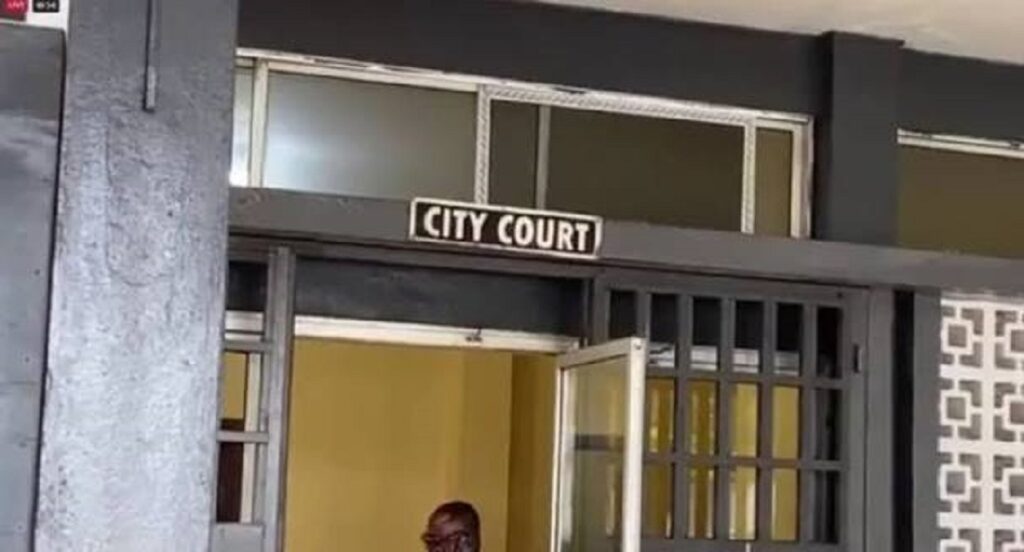
Defense counsel excepted to the ruling, signaling that the defense does not accept the decision as final and intends to pursue whatever legal remedies are available under Liberian law.
The defense indicated that it would “take advantage of the applicable statute,” thereby preserving Chesson’s right to seek further review or other remedies provided by law.
A Case That Raises Broader Questions About Contempt and Free Speech
The Chesson ruling has implications beyond the two-day sentence.
It places renewed attention on the difficult boundary between freedom of expression, criticism of the judiciary and the courts’ authority to protect pending proceedings.
Lawyers occupy a particularly sensitive position because they are simultaneously advocates for their clients and officers of the court.
The ruling therefore sends a broader message that attorneys who criticize judicial proceedings publicly remain subject to professional and legal obligations concerning compliance with court orders and respect for judicial authority.
For Chesson, the immediate consequence is a two-day prison sentence.
For the broader legal community, however, the case could become a point of discussion over how Liberian courts should balance the contempt power against constitutional protections for expression—particularly when the statements at issue are made outside the courtroom and concern the conduct or impartiality of a sitting magistrate.
The defense’s decision to pursue the remedies available under Liberian law could now bring the matter before a higher court, potentially creating an opportunity for further judicial clarification of the limits of contempt in cases involving public commentary on pending proceedings.
For now, Magistrate Barco’s ruling stands: J. Jefferson Chesson has been found guilty of contempt and sentenced to two days in prison.
For breaking news, in-depth analysis, and exclusive reports from Liberia and around the world, follow The Liberian Post on Facebook (https://web.facebook.com/profile.php?id=61576017166570) and X, formerly Twitter (https://x.com/LiberianPost).