–Union President Julius Kanubah Calls on Boakai, Legislature and Judiciary to Make Anti-Corruption Court Their ‘Collective Legacy’ Before Politics Overtakes Reform Agenda
MONROVIA – The Press Union of Liberia (PUL) has joined a growing chorus of national stakeholders calling for the urgent establishment and operationalization of Liberia’s proposed Specialized National Anti-Corruption Court, describing the initiative as a defining step toward strengthening democratic governance, combating impunity, and protecting the country’s future.
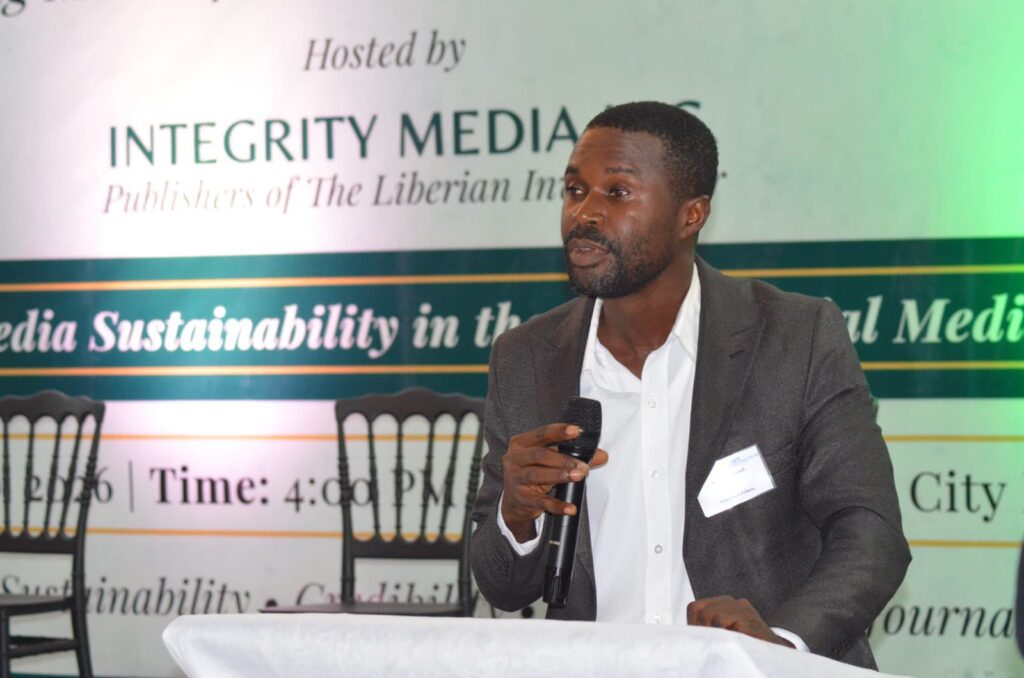
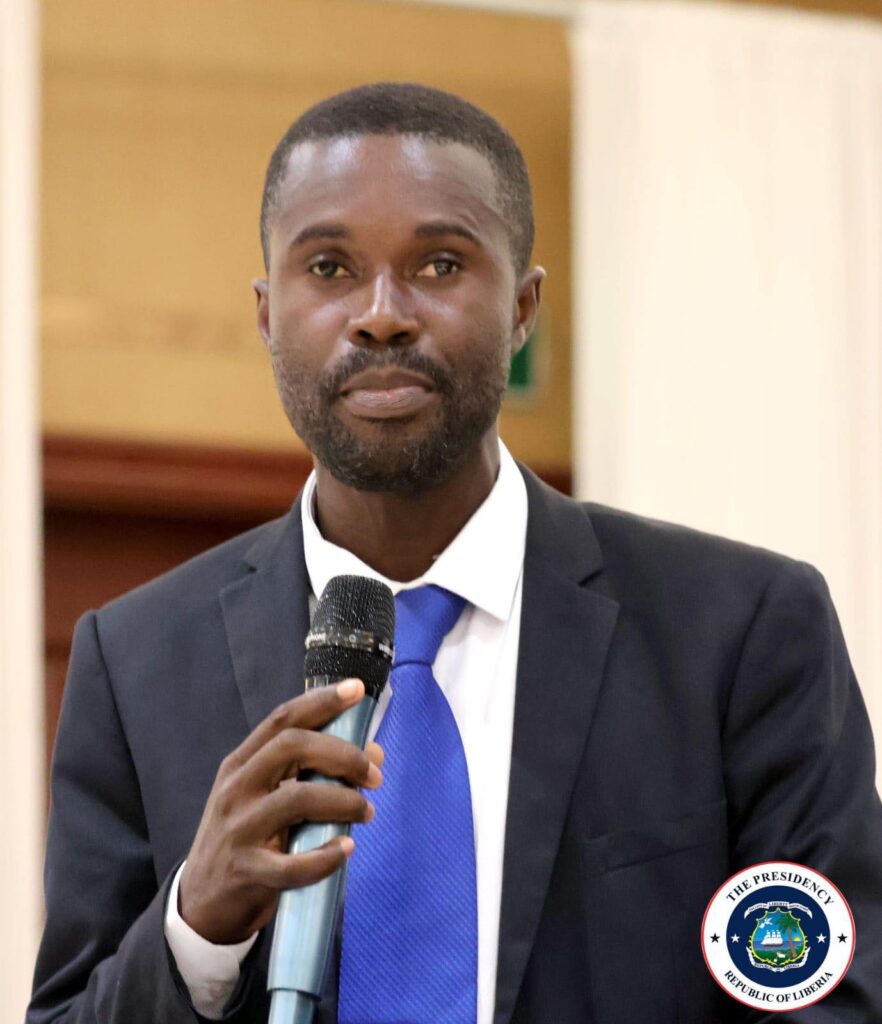
Speaking Tuesday at the National Anti-Corruption Policy Dialogue in Monrovia, PUL President Julius Kanubah urged the Executive, Legislature and Judiciary to work collectively to ensure the court becomes operational without delay.
“The Press Union of Liberia calls on President Joseph Nyuma Boakai, House Speaker Richard N. Koon, Senate Pro Tempore Nyonblee Karnga-Lawrence, the Chief Justice and Associate Justices of the Supreme Court, and all branches of government to make the establishment of the National Anti-Corruption Court their collective legacy,” Kanubah declared.
According to him, establishing the specialized court is no longer merely a policy option but a national necessity if Liberia is to effectively confront entrenched corruption and restore public confidence in state institutions.
Warning Against Delays
Kanubah cautioned that any attempt to delay or frustrate the establishment of the court would amount to a betrayal of future generations, arguing that corruption has remained one of Liberia’s greatest obstacles to national development.
He said corruption has consistently reversed development gains, entrenched poverty, weakened public institutions, eroded human security, and undermined the rule of law.
Reflecting on Liberia’s history, Kanubah noted that corruption has had devastating national consequences, contributing to political instability, fueling civil conflict, eroding citizens’ trust in government, and even serving as one of the factors behind periods of violent political upheaval.
He warned that Liberia cannot afford to repeat those mistakes.
Progress Acknowledged, But More Needed
While commending the Boakai administration for taking visible steps to combat corruption—including the suspension and dismissal of public officials as well as the prosecution of alleged offenders—Kanubah maintained that the pace of reform remains insufficient.
He stressed that meaningful accountability requires strong institutions capable of ensuring the swift and impartial adjudication of corruption cases.
“The progress is encouraging, but it is not enough,” he suggested, emphasizing that institutional reform must accompany administrative action.
Kanubah further warned that if the Specialized National Anti-Corruption Court is not established and fully operational by December 2026, political calculations ahead of the 2029 general elections could jeopardize the momentum behind the reform effort.
According to him, delaying implementation risks allowing electoral politics to overshadow what should remain a national governance priority.
A Court Designed to Strengthen Accountability
The PUL President highlighted several anticipated benefits of the proposed court, arguing that its establishment would significantly strengthen Liberia’s anti-corruption architecture.
According to Kanubah, the court would:
- Guarantee more effective and timely prosecution of corruption-related offenses;
- Restore public confidence in government institutions and the justice system; and
- Better safeguard public resources while promoting transparency, accountability and sustainable national development.
He argued that specialized judicial mechanisms are increasingly recognized internationally as effective tools for handling complex financial crimes and corruption cases requiring dedicated expertise and expedited proceedings.
‘Liberia’s Anti-Corruption Vampire’
Drawing inspiration from former President Ellen Johnson Sirleaf’s longstanding description of corruption as “a vampire,” Kanubah employed a powerful metaphor to illustrate the court’s intended role.
“The Specialized National Anti-Corruption Court must become Liberia’s Anti-Corruption Vampire,” he declared.
“It will be the instrument that drains corruption of its lifeblood, ensuring that impunity no longer stalks our institutions and that justice prevails over exploitation.”
The remark drew attention to the urgent need for stronger enforcement mechanisms capable of ending what many governance advocates describe as a longstanding culture of impunity.
Background to the Proposed Court
The call comes weeks after President Joseph Nyuma Boakai formally submitted to the National Legislature legislation seeking the establishment of the Specialized National Anti-Corruption Court.
The proposed bill, transmitted in May 2026, followed months of nationwide consultations coordinated by the Office for the Establishment of War and Economic Crimes Court in Liberia (OWECC-L) as part of broader justice sector reforms.
If enacted, the legislation would create a dedicated judicial body with exclusive jurisdiction over corruption-related offenses, allowing such cases to be heard more efficiently while reducing delays associated with the regular court system.
The proposal has received growing support from civil society organizations, governance advocates and Liberia’s international development partners, many of whom view specialized anti-corruption institutions as critical to strengthening accountability and improving investor confidence.
National Dialogue Brings Together Governance Stakeholders
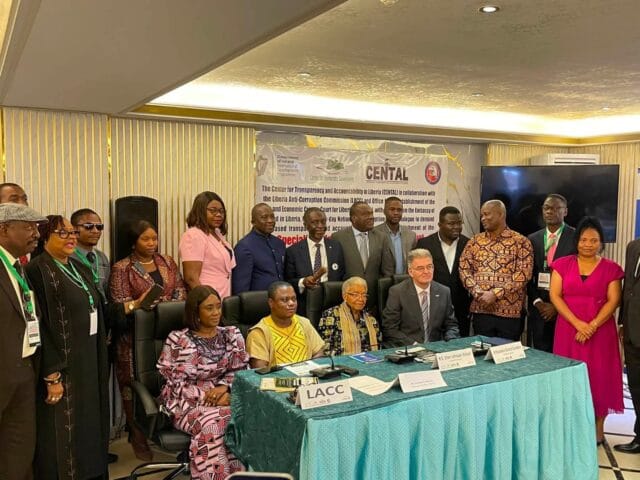
The National Anti-Corruption Policy Dialogue was organized by the Center for Transparency and Accountability in Liberia (CENTAL) in partnership with the Liberia Anti-Corruption Commission (LACC) and the Office for the Establishment of War and Economic Crimes Court (OWECC-L), with support from the Embassy of Ireland.
Held at the Boulevard Palace Hotel in Sinkor, the dialogue brought together senior government officials, members of the judiciary, civil society organizations, development partners and governance experts to discuss strategies for strengthening Liberia’s anti-corruption framework.
Among the prominent participants were former President Ellen Johnson Sirleaf, representatives of the Embassy of Sweden, OWECC-L Executive Director Cllr. Dr. Jallah A. Barbu, veteran human rights lawyer Cllr. Tiawan Saye Gongloe, LACC Chairperson Cllr. Alexandra Zoe, representatives of the United Nations Office of the High Commissioner for Human Rights, the Governance Commission, the Independent Information Commission, the National Civil Society Council of Liberia, and the Association of Female Lawyers of Liberia (AFELL).
As momentum continues to build around the proposed legislation, stakeholders at the dialogue agreed that establishing the Specialized National Anti-Corruption Court could become one of Liberia’s most consequential institutional reforms in its ongoing fight against corruption and the promotion of good governance.
For breaking news, in-depth analysis, and exclusive reports from Liberia and around the world, follow The Liberian Post on Facebook (https://web.facebook.com/profile.php?id=61576017166570) and X, formerly Twitter (https://x.com/LiberianPost).