–President Says Infrastructure Is Creating Jobs, Restoring Dignity and Laying the Foundation for Inclusive National Development
MONROVIA, Liberia – President Joseph Nyuma Boakai has reaffirmed that road infrastructure remains at the heart of his administration’s development agenda, declaring that expanding Liberia’s road network is essential to unlocking economic growth, creating jobs and improving the quality of life for ordinary Liberians.
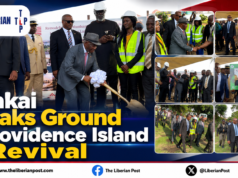
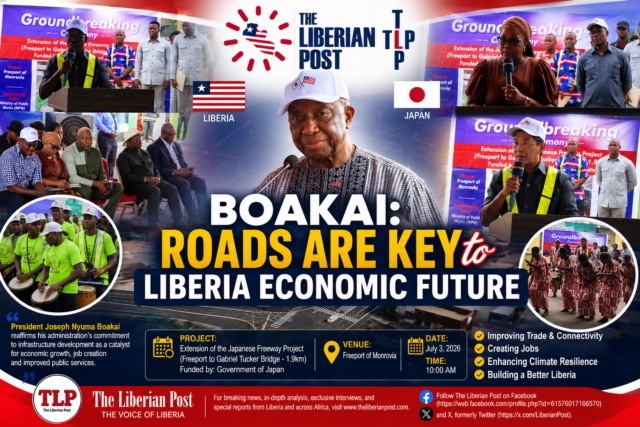
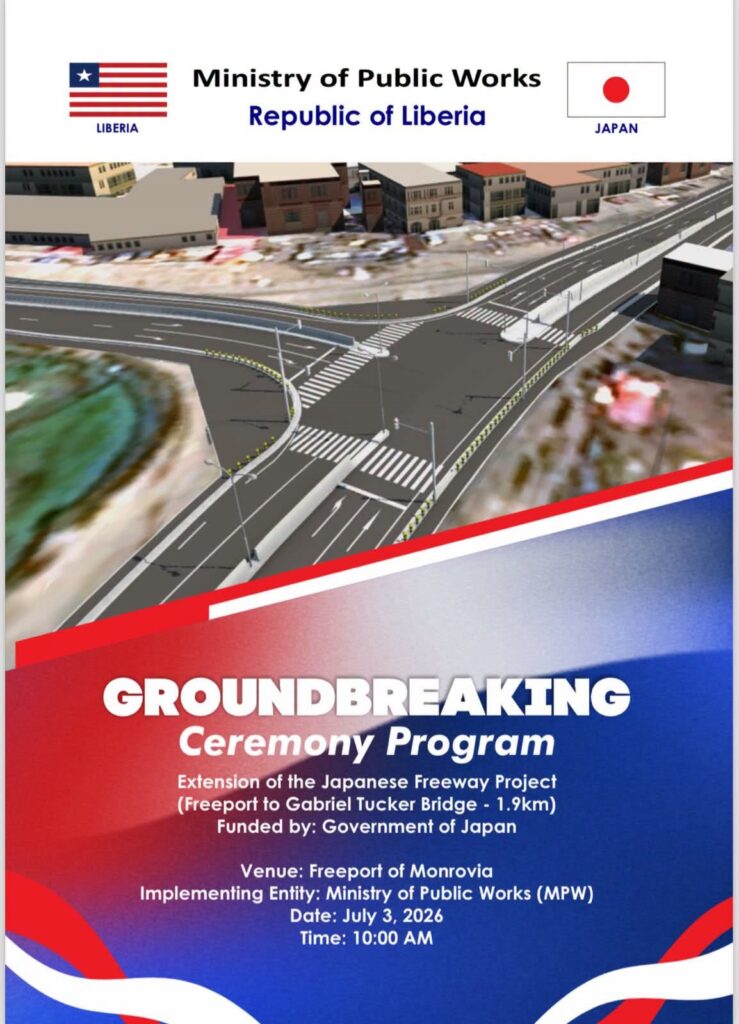
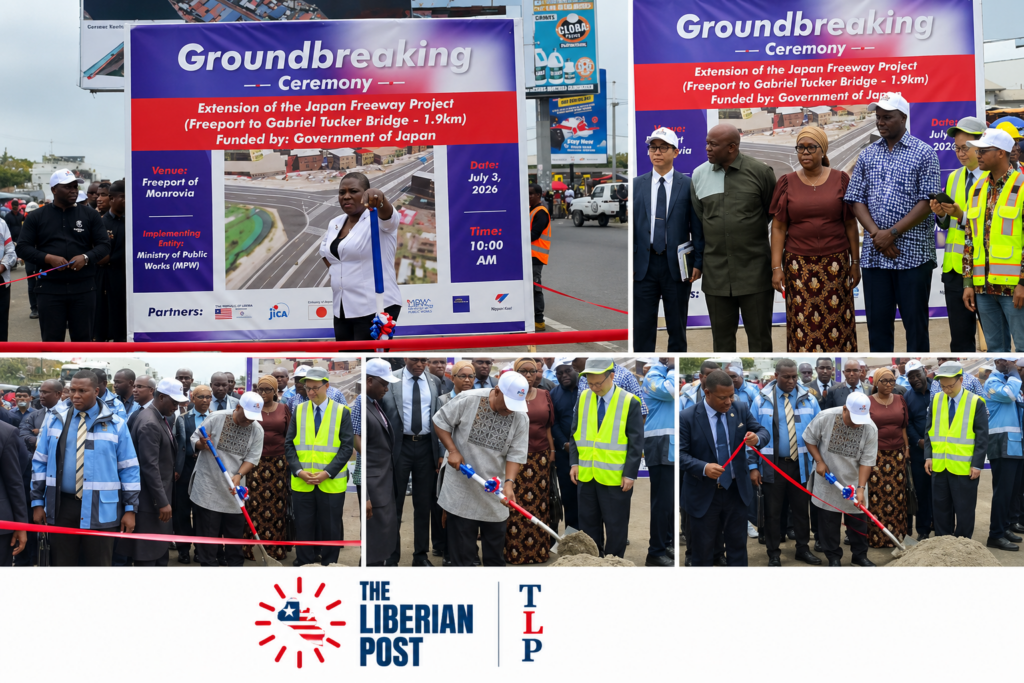
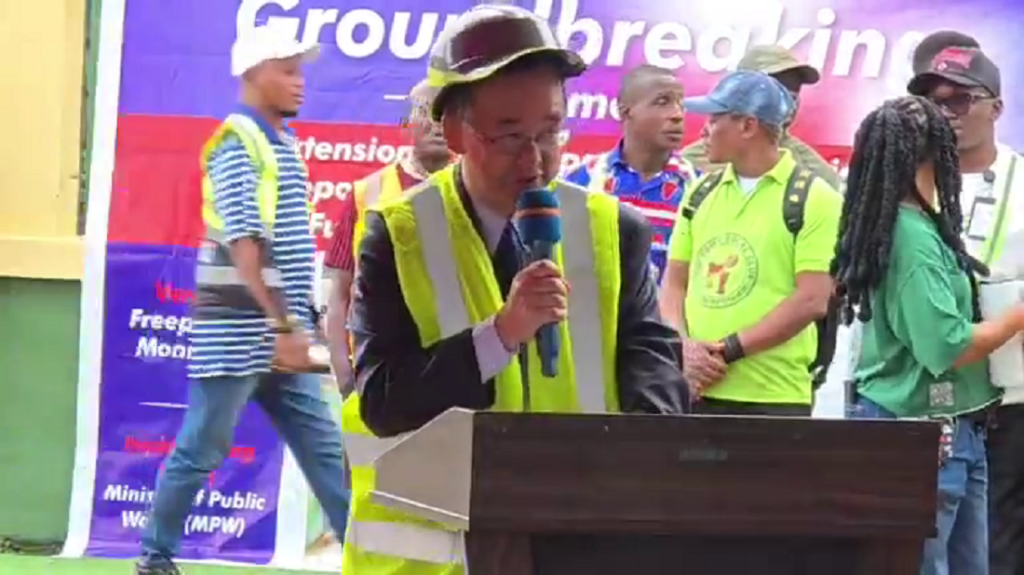
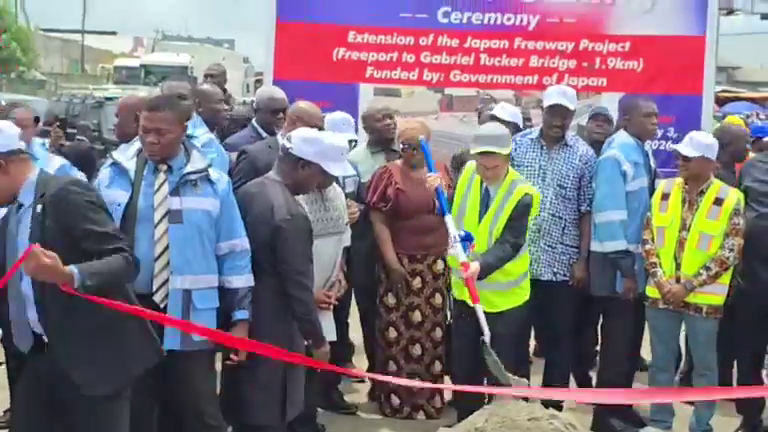
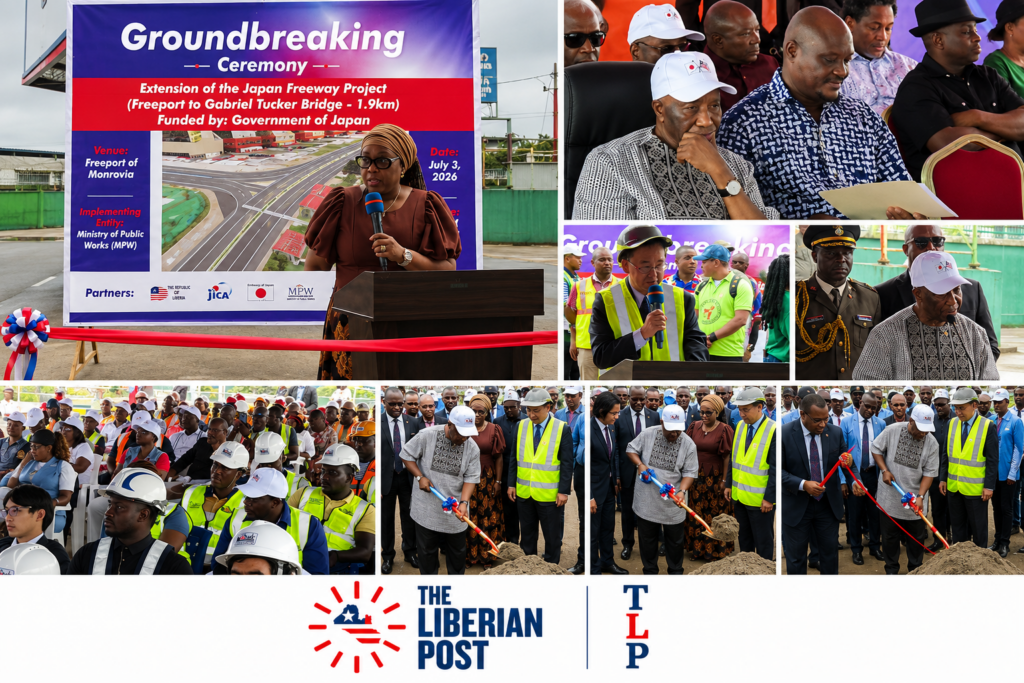
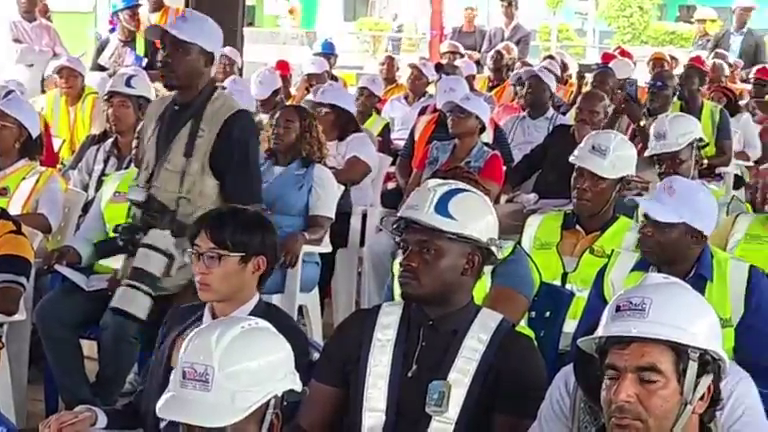
Speaking Friday during the groundbreaking ceremony for the reconstruction and expansion of the 1.9-kilometer road corridor linking the Gabriel Tucker Bridge to the Freeport of Monrovia, President Boakai described modern infrastructure as the engine of national transformation and one of the surest pathways toward sustainable development.
The project, financed entirely through a Japanese grant valued at approximately 2.7 billion Japanese Yen (about US$16 million), will rehabilitate one of Liberia’s busiest commercial corridors connecting the country’s principal seaport with central Monrovia and surrounding communities.
Although only 1.9 kilometers long, President Boakai stressed that the road carries enormous economic significance.
“Although measuring only 1.9 kilometers, this road is one of the most strategically important transport corridors in our country. It is the lifeline of Liberia’s economy, linking the nation’s principal seaport to the capital, supporting the daily movement of our people, goods, commerce as well as trade,” the President said.
He said modernizing the corridor would improve mobility, reduce travel time, enhance road safety, strengthen climate resilience and boost economic activity across the country.
The President used the occasion to highlight what he described as the steady implementation of his government’s infrastructure agenda, noting that within the past three months alone, his administration has launched major road projects covering more than 255 kilometers in western Liberia, including the strategic Wonderman–Menekoma corridor linking Liberia to neighboring Sierra Leone.
According to Boakai, these projects demonstrate his administration’s determination to connect communities, expand economic opportunities and remove longstanding barriers to national development.
‘Roads Are Making People Eat’
Responding to frequent public concerns about employment opportunities, President Boakai argued that infrastructure investments generate jobs both directly and indirectly.
He noted that the Japan-funded project alone is expected to create approximately 175 jobs for Liberians during construction while opening additional opportunities for transport operators, local suppliers, service providers and surrounding businesses.
“Sometimes we say there are no jobs,” the President remarked.
“Everything that is going there is adding jobs. You may not be having one, but jobs are being created.”
He added humorously:
“I hope nobody is going to ask my road how it eats. The road is making them eat.”
Boakai said infrastructure spending creates ripple effects throughout the economy by stimulating business activity and reducing transportation costs.
‘Dignity of Life Matters’
Beyond economic benefits, President Boakai said road development is fundamentally about restoring dignity to Liberians.
He argued that quality infrastructure enables citizens to travel safely, access clean water, reduce flooding and erosion, and receive better public services.
“I always like to say dignity of life,” Boakai said.
“Many people don’t understand. But for your people to ride on good roads, drink quality water, avoid all of these erosions—dignity of life—it matters a lot to me.”
He added that improving public services remains one of government’s foremost responsibilities and pledged to continue investing in roads, electricity and safe drinking water across Liberia.
Praise for Japan’s Commitment
The Liberian leader also paid glowing tribute to the Government and people of Japan, describing Japan as one of Liberia’s most dependable and committed development partners.
He praised Japan’s long-standing investments in roads, bridges, ports, agriculture, healthcare, education and food security, saying the partnership extends beyond financial assistance.
“When they commit, they commit,” President Boakai said while recounting Japan’s continued support for development initiatives even after changes in government.
“There is a lot we can learn from each other—not just money giving; there is commitment and integrity.”
He said Liberia’s decision to rename the former Somalia Drive as “Japan Freeway” appropriately recognizes Japan’s enduring friendship and contributions to the country’s post-war reconstruction.
Strategic Investment
Upon completion, the upgraded corridor will feature improved drainage systems, elevated road sections designed to withstand seasonal flooding, enhanced lighting, durable pavement and improved traffic safety.
The project is expected to significantly improve cargo movement between the Freeport of Monrovia and the capital while strengthening Liberia’s logistics network and reducing transportation delays during the rainy season.
President Boakai encouraged contractors, consultants and engineers to maintain high standards throughout implementation while ensuring skills transfer to Liberian professionals.
He also appealed to businesses and residents along the construction corridor to exercise patience during the construction period.
Roads Remain Government Priority
Concluding his remarks, President Boakai reiterated that infrastructure development will remain central to his administration’s ARREST Agenda for Inclusive Development.
He said government would continue pursuing strategic partnerships with development partners while expanding Liberia’s transportation network to support economic transformation.
“And we are building roads,” Boakai declared.
“We are helping our people move from one place to another. We will continue to build roads. We will continue to give our people quality drinking water and electricity.”
The Freeport–Gabriel Tucker Bridge road project is expected to be completed in June 2028 and forms part of broader efforts to modernize Liberia’s critical economic infrastructure while improving trade, mobility and climate resilience.
For breaking news, in-depth analysis, exclusive interviews, and special reports from Liberia and across Africa, visit www.theliberianpost.com. Follow The Liberian Post on Facebook (https://web.facebook.com/profile.php?id=61576017166570) and X, formerly Twitter (https://x.com/LiberianPost).