

–Inspector General Gregory Coleman Says Liberia Will No Longer Serve as a Transit Corridor for International Narcotics Traffickers as Investigators Uncover Wider Criminal Enterprise Linked to Earlier Shipment
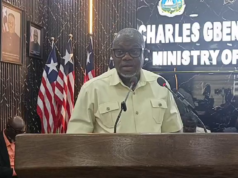
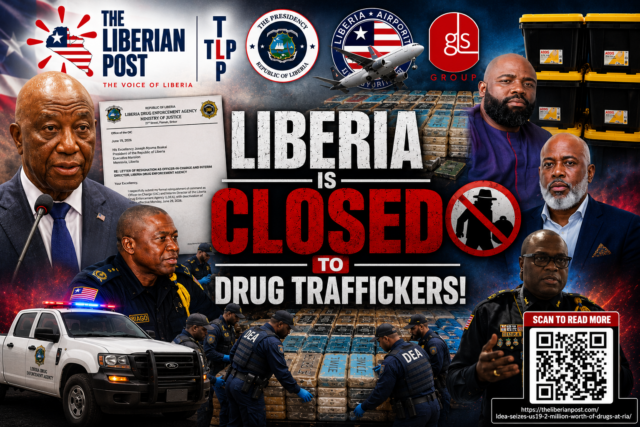
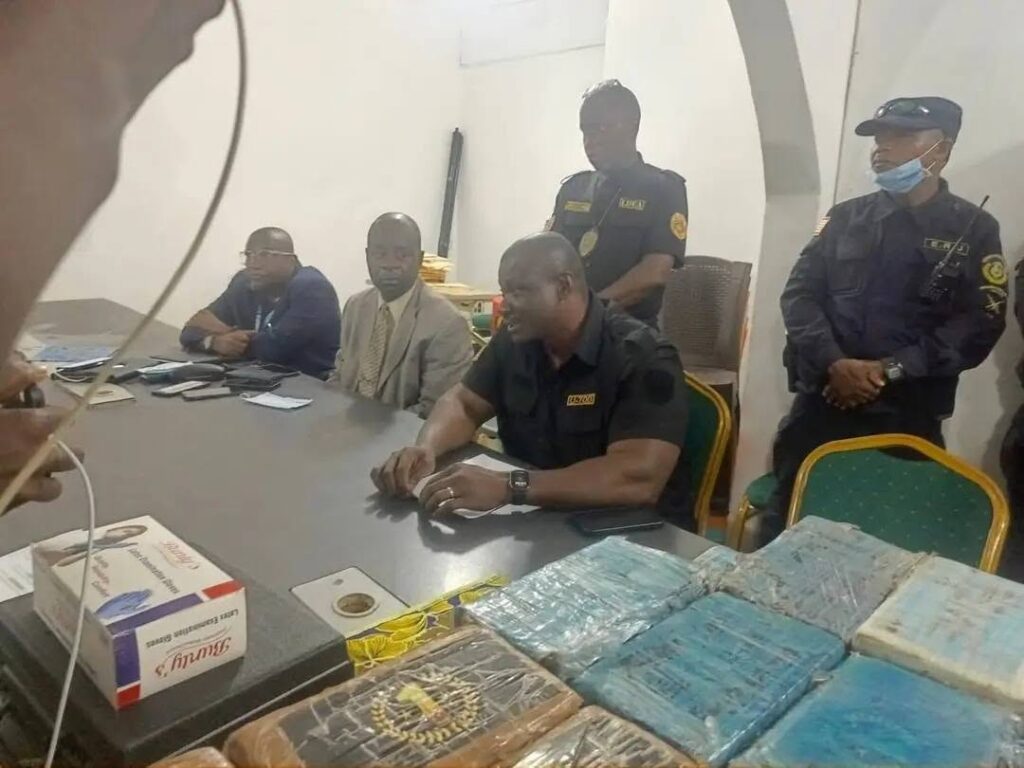
MONROVIA – Declaring that “Liberia is closed to drug traffickers,” Inspector General of Police Gregory O. W. Coleman on Saturday, July 4, 2026, announced sweeping criminal charges against five principal suspects allegedly linked to the attempted export of more than US$19 million worth of cocaine through Roberts International Airport (RIA), describing the case as one of the most significant transnational narcotics investigations in Liberia’s history.
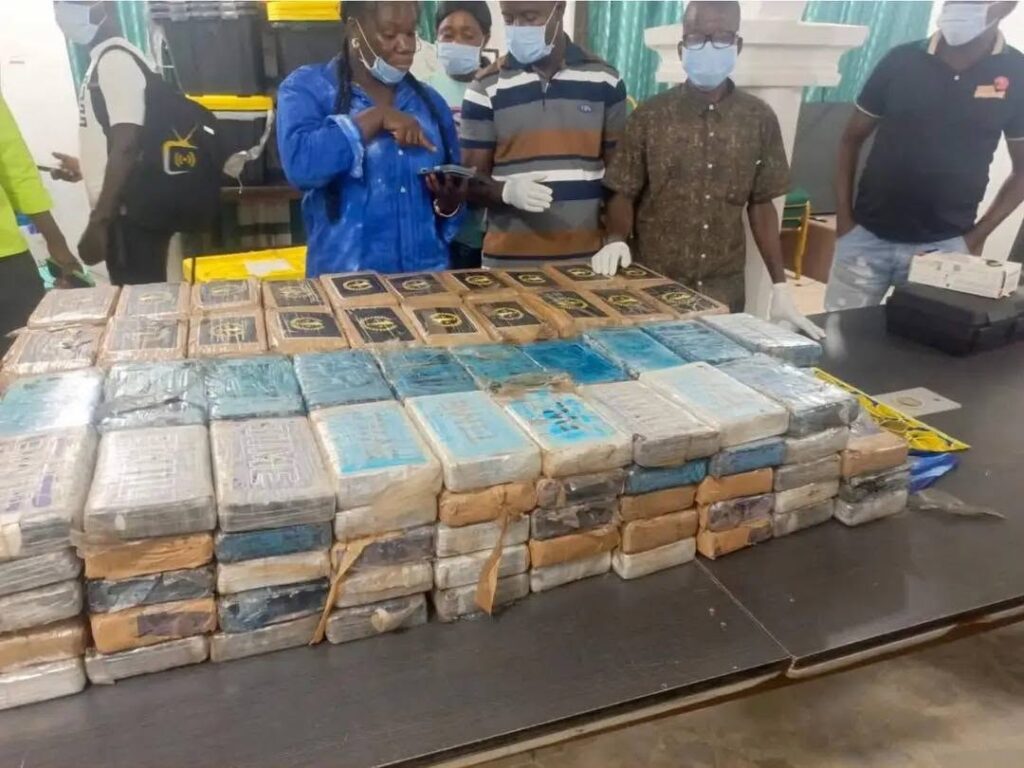
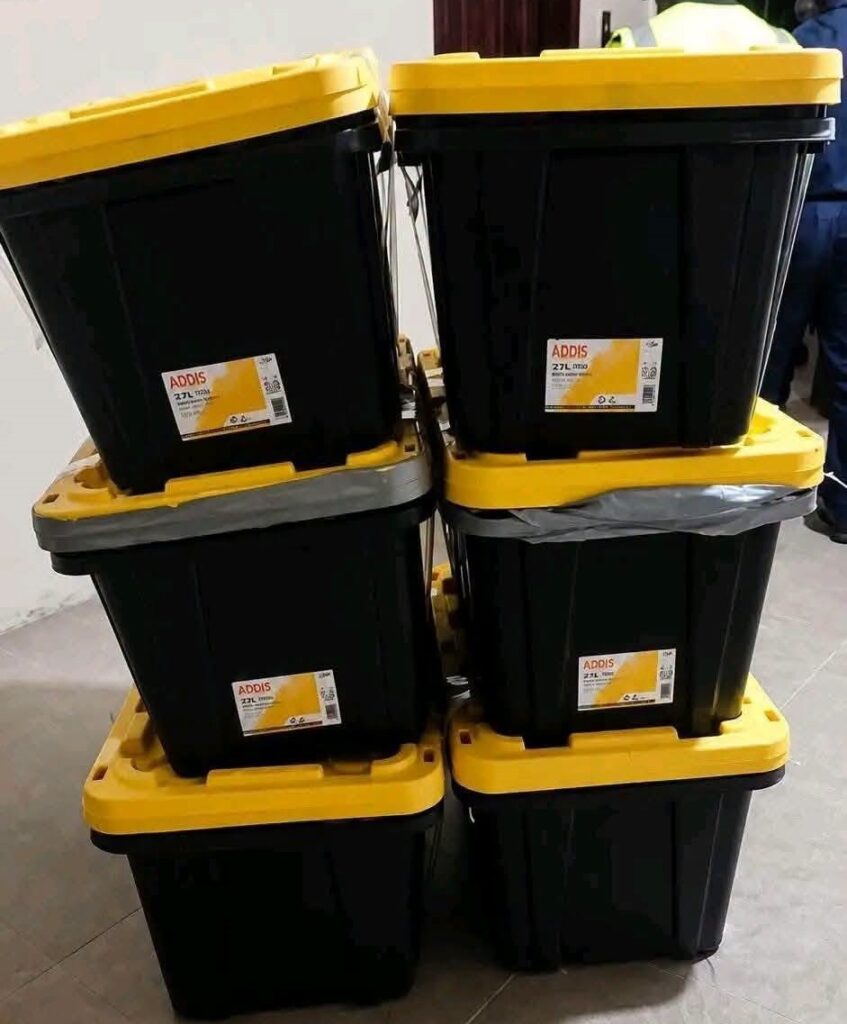
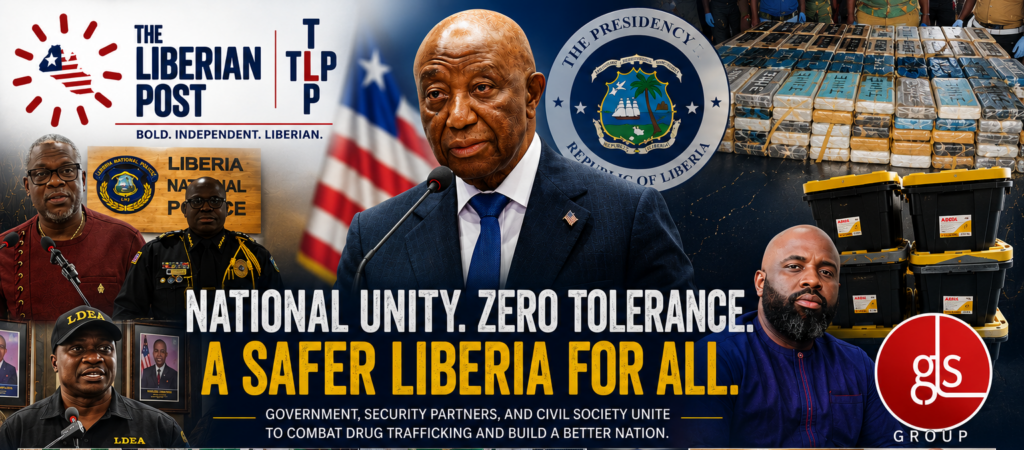
Addressing a nationally televised press conference at the Liberia National Police Headquarters, Coleman disclosed that investigators have charged four individuals and one logistics company following an intensive Joint National Security Investigation ordered by President Joseph Nyuma Boakai after authorities intercepted approximately 237.6 kilograms (198 plates) of cocaine concealed in six export boxes at Roberts International Airport on June 7, 2026.
The narcotics, which authorities estimate have a street value exceeding US$19 million, were allegedly packaged as ordinary commercial cargo and falsely declared as Maggi cubes and lappas before investigators uncovered what Coleman described as a sophisticated international trafficking operation.
“This was not a paperwork error. This was not a routine cargo discrepancy. This was not an innocent shipment gone wrong,” Coleman declared.
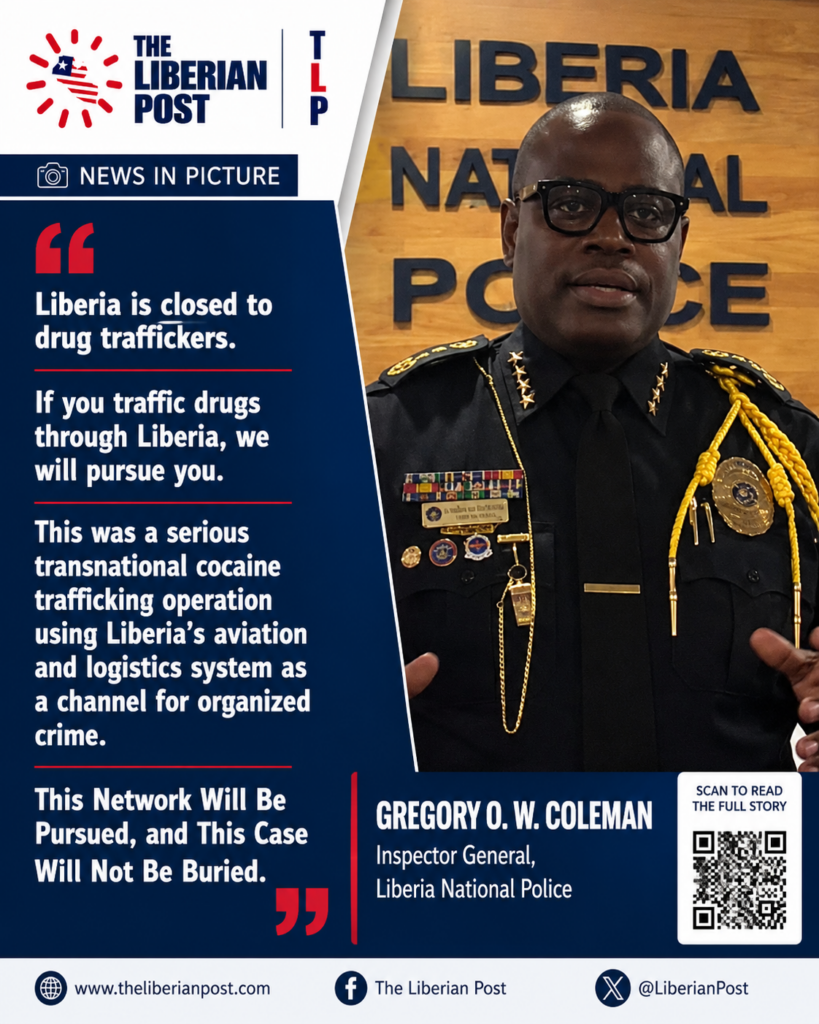
“This was a serious transnational cocaine trafficking operation using Liberia’s aviation and logistics system as a channel for organized crime.”
President Boakai Ordered Full National Security Investigation
Coleman revealed that immediately after the seizure, President Joseph Nyuma Boakai elevated the matter to a national security priority by directing the establishment of a Joint National Security Investigation under the supervision of the Ministry of Justice.
The investigation brought together the Liberia National Police (LNP), Liberia Drug Enforcement Agency (LDEA), and other national security institutions to conduct what authorities described as an exhaustive examination of the case.
Investigators reviewed witness statements, suspect interviews, cargo documentation, airport screening records, shipping manifests, digital communications, call logs, financial transactions, forensic evidence, airway bills and other intelligence to reconstruct how the shipment entered Liberia’s air cargo system.
According to Coleman, investigators quickly concluded that the cocaine seizure represented far more than an isolated drug bust.
“The magnitude of the seizure, the method of concealment, the intended international routing and the surrounding circumstances made clear that this was not an ordinary drug case,” he said.
“It raised immediate concerns of a serious transnational narcotics trafficking operation using Liberia’s air cargo system as a channel for the movement of dangerous drugs beyond our borders.”
Cargo Failed Initial Screening
Authorities disclosed that the six-box consignment was initially processed through the airport cargo terminal on June 5, where officials immediately detected irregularities.
According to investigators, the shipment contained discrepancies involving its declared weight, suspicious screening images and conflicting shipping documentation, preventing it from departing Liberia as originally intended.
When the same cargo returned for re-screening two days later, airport security officers conducted a physical inspection and discovered a white powder concealed inside the packages.
The substance was subsequently transferred to the Liberia Drug Enforcement Agency, where laboratory testing confirmed it to be cocaine.
Investigation Uncovers Larger Criminal Enterprise
Coleman said investigators soon discovered that the June seizure represented only one part of a much broader criminal enterprise.
According to him, investigators uncovered evidence suggesting that members of the trafficking network attempted to bribe airport security personnel, recover the shipment after its discovery and interfere with law enforcement’s seizure of the narcotics.
More significantly, the Joint Special Investigative Team reportedly linked the June shipment to an earlier consignment exported in May 2026, which investigators say followed an almost identical pattern using the same false cargo descriptions and was connected to many of the same individuals.
“This means the June 7 seizure was not a one-off event,” Coleman said. “It points to a pattern, a system and a criminal enterprise.”
Authorities emphasized that investigators are treating the matter not simply as a drug seizure but as a continuing network investigation targeting financiers, organizers, handlers, facilitators, insiders, foreign partners and every individual connected to the operation.
Five Principal Suspects Charged
Based on witness testimony, documentary evidence, digital records, forensic findings and reconstruction of the cargo chain, police announced criminal charges against five principal suspects.
Those charged include:
- Paul J. King, Operations Manager of Global Logistics Services (GLS);
- Global Logistics Services (GLS);
- Michael U.S. Browne, also known as Rahim or Raheem Bah;
- Oscar J. Browne;
- Emmanuel Kpah; and
- Usman Ali, identified by investigators as the United Kingdom-based consignee of the shipment.
Police allege that Paul King and GLS accepted, stored, transported and facilitated the six-box cocaine shipment through Liberia’s airport cargo system.
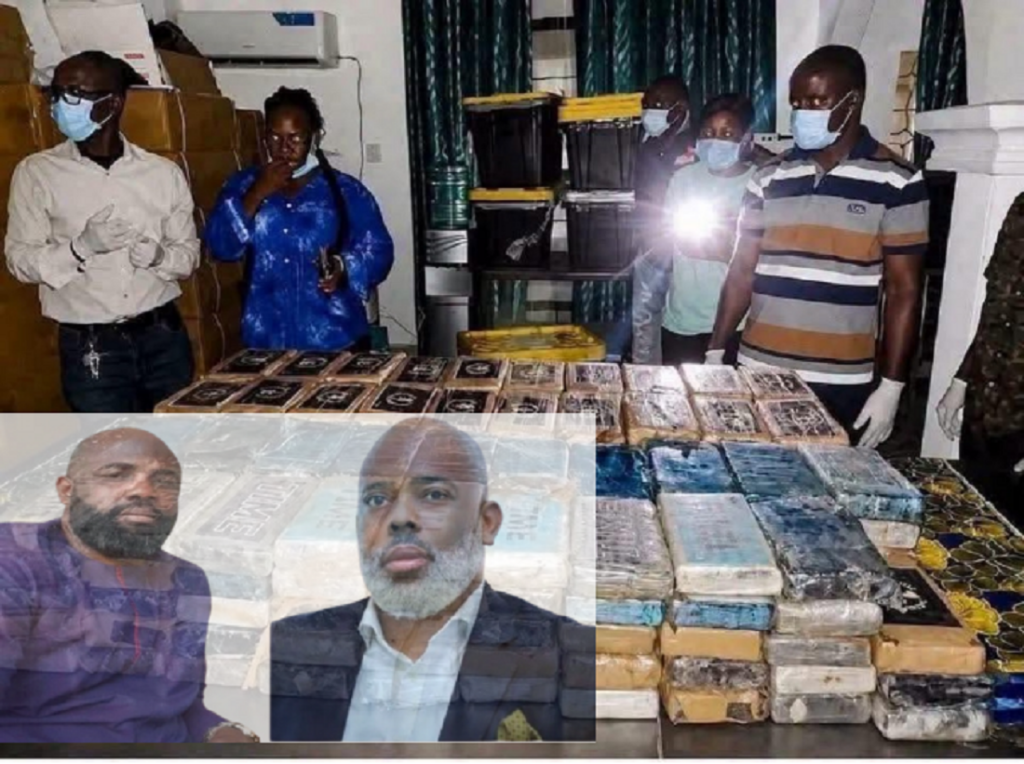
Michael U.S. Browne is accused of organizing the shipment, coordinating bogus front companies, arranging the false cargo declaration and attempting to recover the cocaine after authorities intercepted it.
Investigators allege Oscar J. Browne previously processed a similar shipment in May before making repeated telephone calls seeking the release of the June cargo after its contents had already been discovered.
Authorities further accuse Emmanuel Kpah of delivering both the shipment and associated cash connected to the cargo transaction.
Usman Ali is alleged to have served as the United Kingdom-based consignee of the shipment.
Multiple Serious Charges Filed
The suspects face numerous charges under Liberia’s Amended Controlled Drugs and Substances Act of 2023 and the Revised Penal Code, including:

- Unlicensed exportation of controlled drugs;
- Unlicensed transportation and trading in controlled substances;
- Unlicensed possession of controlled substances;
- Illicit trafficking in controlled drugs;
- Criminal conspiracy; and
- Criminal solicitation, in the case of Usman Ali.
Several suspects have been charged in absentia, with authorities confirming they are believed to be outside Liberia or actively evading arrest.
International Manhunt Underway
Coleman announced that Liberia has activated international law enforcement cooperation mechanisms to pursue the fugitives.
He said authorities are working through arrest warrants, extradition requests, mutual legal assistance agreements and partnerships with foreign security agencies to locate and apprehend those outside the country.

“This is not a mere investigation,” Coleman told journalists.
“This is a complex transnational criminal investigation. It transcends borders. It requires international cooperation, and you cannot control the time of other partners as to how fast they respond.”
Nevertheless, he expressed confidence that authorities would eventually arrest those responsible.
“We’re working with them, and we’re hoping we will be able to arrest these criminals.”
“No One Is Above the Law”
Responding to questions from journalists regarding whether influential individuals could escape accountability, Coleman insisted investigators would follow the evidence wherever it leads.
“I’ve got nothing to cover up for anybody,” he said. “If any hands—big or small—are in it, they will be exposed.”
He added: “Absolutely no one in this country is above the law. Regardless of who you are—your political connection, your political status, social, religious or financial—we will bring you to the full weight of the law.”
The Inspector General also confirmed investigators have already identified weaknesses within Liberia’s airport cargo handling system and are working to tighten screening protocols, chain-of-custody procedures and internal safeguards at Roberts International Airport.
Government Intensifies Anti-Drug Campaign
The announcement represents the most consequential development since authorities intercepted the massive cocaine shipment in early June.
The seizure immediately triggered national concern because of both the quantity of narcotics involved and indications that Liberia may have been used as a transit corridor by sophisticated international trafficking organizations.
In the weeks following the discovery, President Boakai publicly declared a policy of zero tolerance for narcotics trafficking, insisting that no individual—regardless of position or influence—would be shielded from investigation.
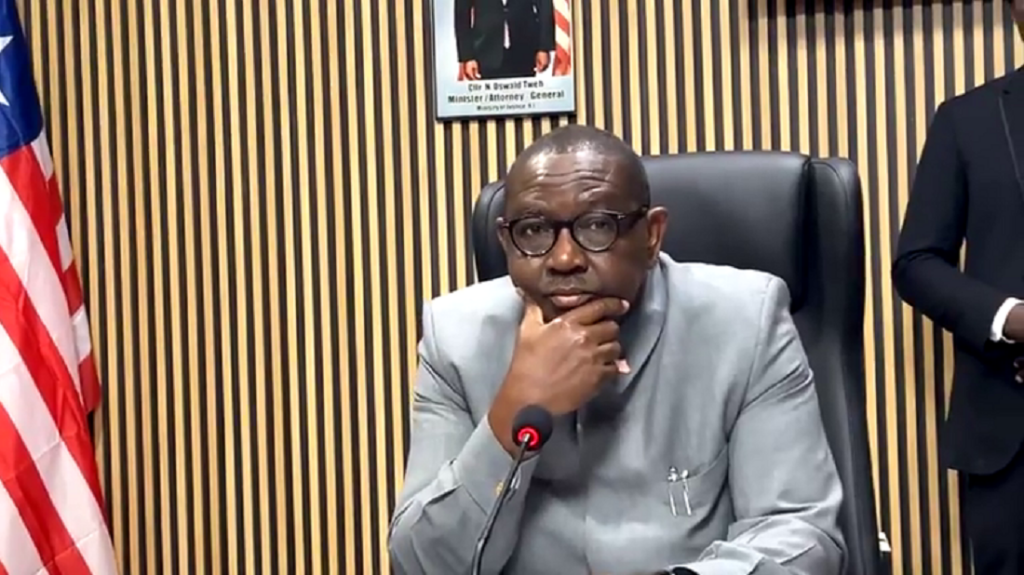
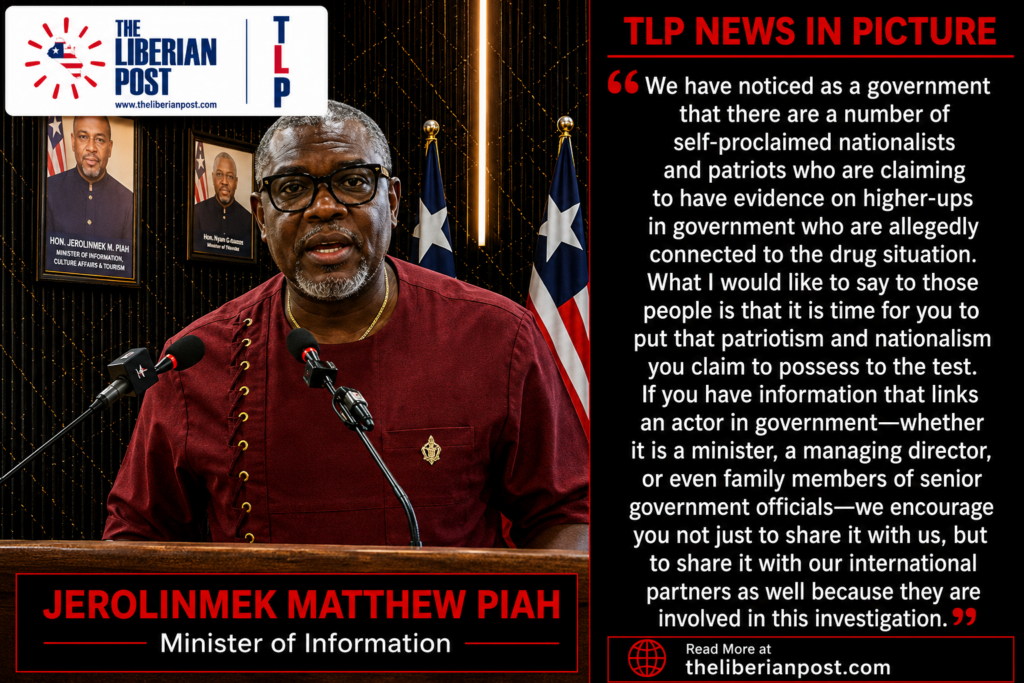
The Ministry of Information, Cultural Affairs and Tourism has likewise challenged anyone with credible evidence implicating public officials in the trafficking network to present that information to investigators and Liberia’s international law enforcement partners.
Saturday’s announcement marks the first formal criminal charges arising from the investigation.
Investigation Far From Over
Despite announcing the charges, Coleman stressed repeatedly that the investigation remains active.
Authorities continue pursuing evidence related to the May shipment, additional consignments, financiers, facilitators, airport insiders and possible foreign collaborators.
“This investigation will continue,” he declared.
“This network will be pursued.”
“And this case will not be buried.”
Ending the nationally televised address with one of his strongest warnings yet, Coleman delivered a direct message to international drug traffickers.
“Liberia is closed to drug traffickers.”
“Our airport is not your corridor.”
“Our institutions are not for sale.”
“Our officers are not your brokers.”
“And anyone who mistakes this Republic for a safe passageway for illicit trafficking will be met with investigation, arrest, prosecution and the full force of the law.”
Although charges have now been filed, Coleman emphasized that all accused persons remain entitled to due process under Liberian law and are presumed innocent unless and until proven guilty by a court of competent jurisdiction.
For more Liberian news and updates, visit www.theliberianpost.com. Follow The Liberian Post on Facebook (https://web.facebook.com/profile.php?id=61576017166570) and X, formerly Twitter (https://x.com/LiberianPost).