–Petition Before the House of Representatives Seeks Sweeping Overhaul of Liberia’s NASSCORP Act, Proposing Higher Benefits, Lower Retirement Age, Expanded Welfare Programs, and Structural Governance Reforms
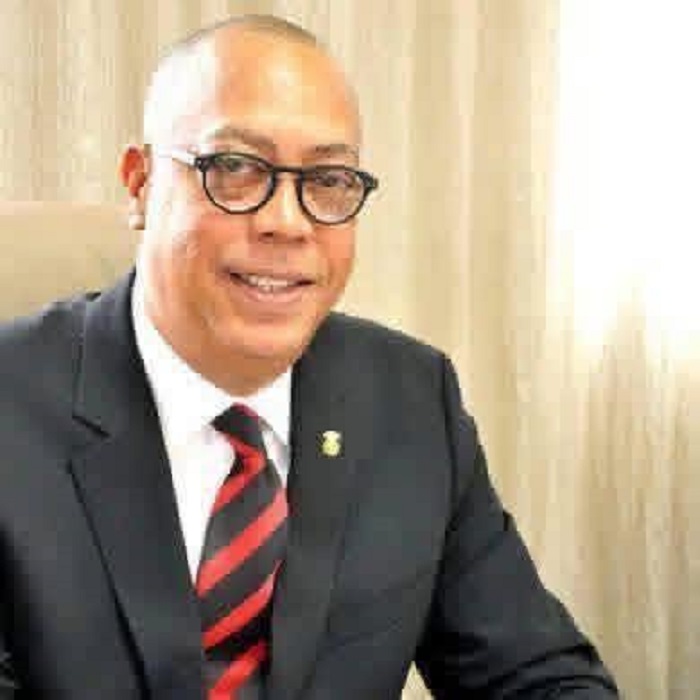
MONROVIA – Former Montserrado County District #8 legislative aspirant Fubbi F. A. Henries has placed one of the most ambitious social protection proposals before Liberia’s 55th Legislature, seeking to fundamentally transform the country’s pension and welfare system through comprehensive amendments to the National Social Security and Welfare Corporation (NASSCORP) Act.
Far from being a simple pension adjustment, Henries’ 12-page petition proposes sweeping reforms affecting retirement age, pension contributions, benefit levels, welfare financing, board governance, disability support, school feeding, healthcare, and disaster assistance. If enacted, the proposal would significantly expand Liberia’s social safety net while increasing financial obligations for both employers and employees.
The petition, submitted through Montserrado County District #8 Representative Prince A. Toles, argues that Liberia’s current social security law no longer reflects present-day economic realities or international best practices.

A Call for a Modern Pension System
At the heart of Henries’ proposal is the contention that Liberia’s pension system has fallen behind those of neighboring West African countries.
He notes that although the NASSCORP Act was revised in 2016, Liberia still provides one of the region’s lowest pension contribution rates and retirement benefits.
The petition compares Liberia with Ghana, Nigeria, Sierra Leone, The Gambia, Guinea, and Côte d’Ivoire, arguing that Liberia’s current 8 percent contribution rate and 25 to 40 percent pension replacement rate rank among the lowest in the sub-region.
To address what he describes as outdated provisions, Henries proposes a broad restructuring of the National Pension Scheme.

Retirement at 55 Instead of 60
One of the most significant proposals is a reduction in the minimum retirement age.
Currently, the NASSCORP Act allows contributors to qualify for retirement pension upon reaching 60 years of age, subject to statutory conditions.
Henries proposes lowering the retirement age to 55, provided the individual has not been actively employed for at least two years.
Supporters may argue that earlier retirement would allow older workers to enjoy their pensions while creating employment opportunities for younger Liberians entering the labor market.
However, pension specialists could also question whether lowering the retirement age without corresponding actuarial adjustments would increase long-term liabilities for the pension fund.

Doubling Minimum Pension Benefits
Perhaps the most consequential financial proposal involves pension payouts.
The petition recommends increasing the minimum monthly retirement pension from 25 percent to 50 percent of an employee’s average monthly remuneration.
It also proposes increasing annual pension accrual rates from 1 percent to 2 percent for every additional qualifying contribution period, allowing maximum pension benefits to rise from 40 percent to 81 percent of average earnings, while maintaining a payout ceiling of US$5,000 per month.
Invalidity pensions would receive identical treatment, with the minimum benefit likewise increasing from 25 percent to 50 percent of average remuneration.
If adopted, these provisions would substantially improve retirement income for qualifying beneficiaries but would also require significantly higher funding.

Higher Contributions from Employers and Employees
To finance the expanded benefits, Henries proposes increasing mandatory NASSCORP contributions.
The current 10 percent overall contribution would rise to 14.5 percent of gross remuneration.
Under the proposal:
- Employers’ National Pension contribution would increase from 4 percent to 6.5 percent.
- Employees’ contribution would rise from 4 percent to 5 percent.
- A new 2 percent Welfare Scheme contribution would be introduced, with employers contributing 1.5 percent and employees 0.5 percent.
The Employment Injury Scheme contribution would remain unchanged at 2 percent, paid entirely by employers.

Activating the Long-Dormant Welfare Scheme
Perhaps the most innovative aspect of the proposal is Henries’ effort to operationalize the Welfare Scheme originally envisioned under the NASSCORP Act but never fully implemented.
His proposal would expand NASSCORP beyond pensions into a broader social welfare institution.
Among the programs envisioned are:
- Healthcare and Medicare support for children aged 0–5, senior citizens aged 55 and above, and persons with disabilities.
- Subsidized medical insurance for workers.
- A nationwide school feeding program for public schools.
- Food assistance for elderly citizens and persons with disabilities.
- Educational support for blind and deaf students.
- Expanded disaster relief initiatives.
- National rehabilitation and skills training programs for drug addicts and substance users.
These proposals would represent one of the largest expansions of statutory social protection in Liberia’s history.

A US$28 Million Welfare Fund
To finance the proposed Welfare Scheme, Henries outlines a funding model combining government appropriations with mandatory payroll deductions.
The proposal calls for:
- An annual government appropriation of US$15 million.
- Mandatory Welfare Scheme contributions from employers and employees.
- Estimated annual payroll contributions of approximately US$13.14 million.
Combined, the Welfare Fund would begin with approximately US$28.14 million annually.
Henries further proposes allocating those resources among medical assistance, food aid, school feeding, disability support, rehabilitation programs, mental health services, and disaster response.

Governance Changes
Beyond pensions and welfare, the petition recommends restructuring NASSCORP’s Board of Directors.
Instead of allowing the President to appoint all members, Henries proposes reserving six board seats for representatives of employers, employees, civil servants, and labor unions without presidential appointment.
He also recommends strengthening job security for the Director General and Deputy Director General by limiting removal to criminal or felonious causes established through due process before a court of competent jurisdiction.
Supporters may view these provisions as strengthening institutional independence, while critics could argue they reduce executive oversight of a major public institution.

A Broader Vision of Social Protection
Throughout the petition, Henries frames pension reform as a matter of national dignity rather than merely financial policy.
He argues that retirement should not condemn elderly Liberians to poverty and that the country must do more to support vulnerable populations.
The petition repeatedly references elderly citizens, persons with disabilities, and children seen begging on Monrovia’s streets as evidence that Liberia’s welfare architecture requires urgent reform.
His central message is summarized in one of the document’s recurring themes:
“There is no Decent Work Act without decent pension benefits.”
Legislative Road Ahead
Representative Prince Toles has indicated that the petition will be transmitted to the House of Representatives for consideration.
Should lawmakers choose to proceed, the proposal is likely to undergo committee review, public hearings, fiscal analysis, and consultations with NASSCORP, the Ministry of Finance and Development Planning, employers’ organizations, labor unions, and other stakeholders before any amendments are considered.
Given its sweeping financial implications, the proposal is expected to generate robust debate over affordability, sustainability, and the future direction of Liberia’s social protection system.
Whether the Legislature ultimately adopts all, part, or none of Henries’ recommendations, the petition has already succeeded in placing pension adequacy, retirement security, and social welfare squarely at the center of Liberia’s public policy conversation.
For breaking news, in-depth analysis, and exclusive reports from Liberia and around the world, follow The Liberian Post on Facebook (https://web.facebook.com/profile.php?id=61576017166570) and X, formerly Twitter (https://x.com/LiberianPost).