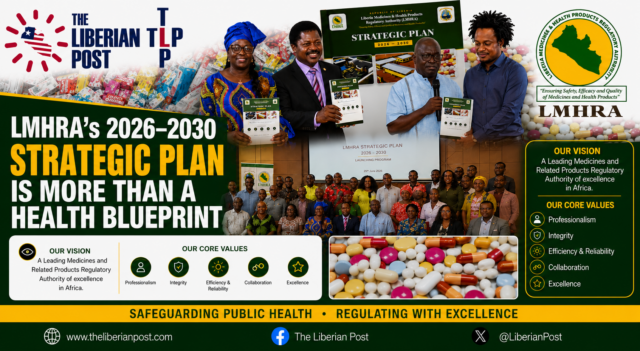
–Authority Charts Ambitious Five-Year Roadmap to Transform Medicines Regulation, Combat Fake Drugs, Modernize Oversight, and Position Liberia Among Africa’s Most Credible Pharmaceutical Regulators
MONROVIA – When most Liberians think about healthcare, they think about hospitals, doctors, nurses, ambulances, or the availability of medicines. Few stop to consider the institution responsible for ensuring that the medicines sold in pharmacies, clinics, hospitals, and markets are genuine, safe, effective, and not counterfeit.
Yet that responsibility rests squarely on the Liberia Medicines and Health Products Regulatory Authority (LMHRA), an institution whose work quietly affects millions of lives every day.
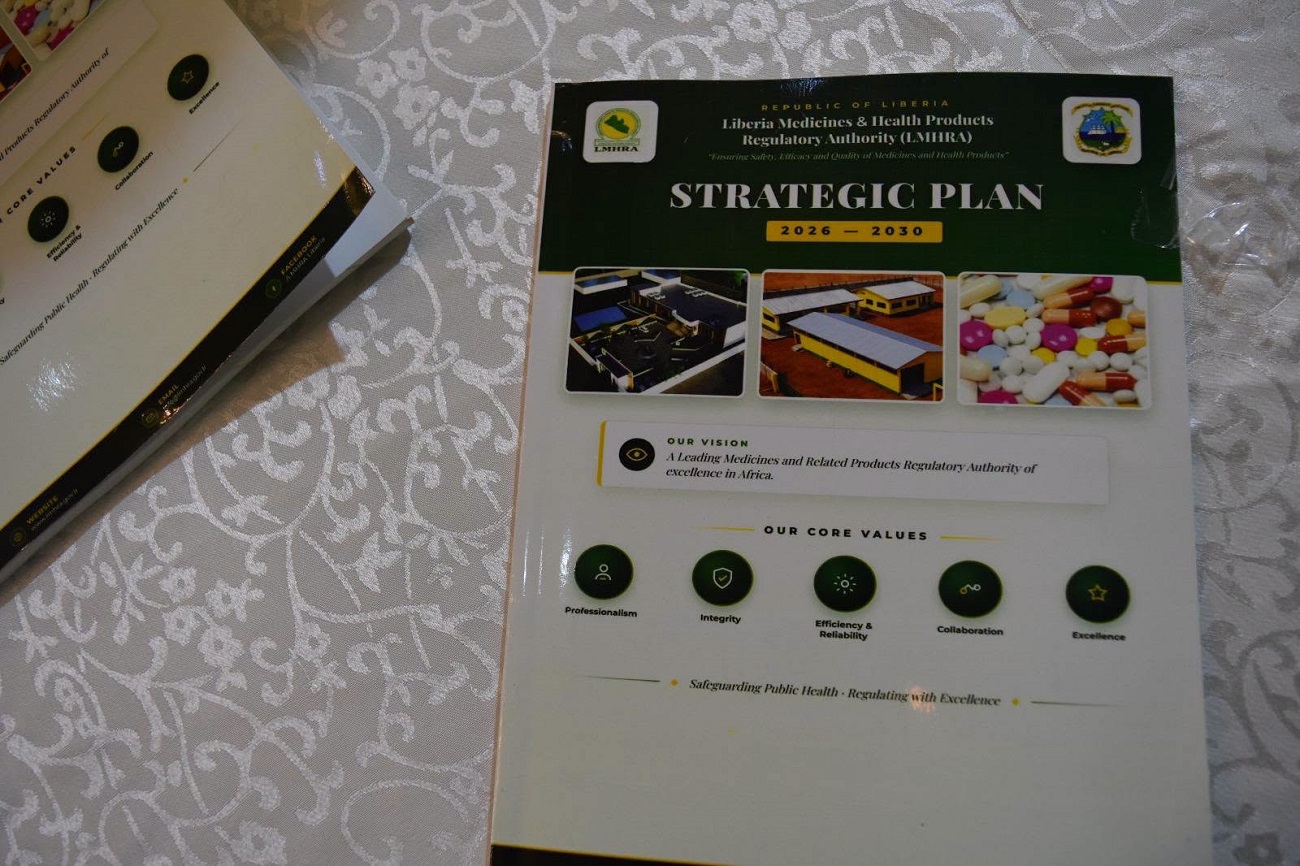
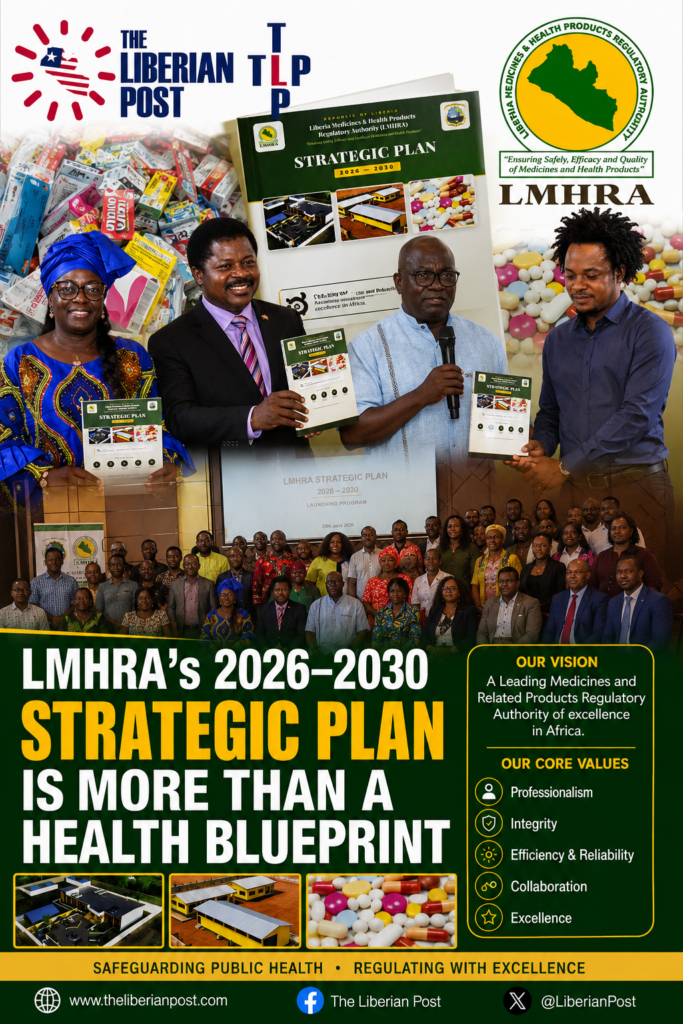
With the unveiling of its Strategic Plan 2026–2030, the LMHRA has presented far more than another government planning document. It has unveiled an ambitious blueprint that seeks to fundamentally transform medicines regulation in Liberia while positioning the Authority among Africa’s leading regulatory agencies.
The five-year strategy is, in many respects, both a diagnosis of the country’s regulatory weaknesses and a prescription for fixing them.
The question now is whether Liberia can turn this ambitious vision into reality.
A Plan Born Out of Hard Realities
The Strategic Plan does not shy away from acknowledging the difficult environment in which LMHRA operates.
The Authority recognizes that today’s pharmaceutical landscape is becoming increasingly complex due to global supply-chain disruptions, the growing circulation of substandard and falsified medicines, increasing demand for healthcare products, and rapidly evolving technologies.
The COVID-19 pandemic exposed just how vulnerable countries are when medicine supply chains break down. It also demonstrated that countries without strong regulatory institutions struggle to protect their populations during health emergencies.
LMHRA’s response is clear: Liberia cannot depend solely on imported medicines without simultaneously building a strong institution capable of regulating those products.
That philosophy runs throughout the entire strategy.
Protecting Public Health Is Also Protecting National Security
Perhaps the most important message emerging from the Strategic Plan is that medicine regulation should no longer be viewed as a narrow health-sector responsibility.
The document effectively reframes medicine regulation as an issue of national security.
Substandard medicines kill.
Counterfeit medicines undermine confidence in healthcare.
Poor regulation creates opportunities for criminal networks to exploit weak borders.
Unsafe pharmaceuticals can weaken entire health systems.
In this sense, LMHRA argues that strengthening regulation is just as important as building hospitals.
That represents a significant policy shift in thinking.

The Authority Is Surprisingly Honest About Its Weaknesses
One of the strongest aspects of the Strategic Plan is its willingness to identify internal shortcomings.
Through its SWOT analysis, LMHRA openly admits that it faces:
- inadequate funding;
- insufficient office infrastructure;
- shortage of qualified technical staff;
- weak automation;
- inadequate logistics;
- limited public awareness;
- coordination challenges;
- weak staff performance assessment systems;
- insufficient technical expertise; and
- low public visibility.
Many government strategic plans spend pages celebrating achievements while avoiding uncomfortable truths.
LMHRA does the opposite.
By candidly identifying its weaknesses, the Authority establishes credibility and provides policymakers with a realistic picture of what must be addressed.

A Bold Goal: Becoming One of Africa’s Leading Regulators
The vision statement may appear ambitious—even audacious.
LMHRA wants to become:
“A Leading Medicines and Related Products Regulatory Authority of Excellence in Africa.”
Achieving that vision will require far more than good intentions.
The Authority aims to attain WHO Global Benchmarking Tool (GBT) Maturity Level 3 by 2029, an internationally recognized benchmark indicating that a national medicines regulator operates with stable, well-functioning, and internationally credible regulatory systems. The Plan notes that only a small number of African countries have reached that level, underscoring the scale of the challenge.
For Liberia, reaching that milestone would dramatically increase confidence among development partners, investors, pharmaceutical manufacturers, and international health organizations.

Digital Transformation May Become the Biggest Game Changer
Among the most consequential reforms proposed is the digitization of nearly every major regulatory process.
The Strategic Plan envisions automated systems for product registration, licensing, inspections, reporting, compliance monitoring, and regulatory decision-making, with a target of digitizing 95% of regulatory processes by 2030.
If fully implemented, these reforms could:
- reduce opportunities for corruption;
- accelerate product registration;
- improve transparency;
- create digital audit trails;
- enhance accountability;
- strengthen data-driven decision-making; and
- make it easier for businesses to comply with regulatory requirements.
For importers and pharmaceutical companies, this could significantly reduce bureaucratic delays while improving regulatory certainty.
The Laboratory Ambition Could Transform Healthcare
Another major pillar of the strategy is strengthening Liberia’s medicine-testing capacity.
Currently, one of Liberia’s longstanding challenges has been limited capacity to scientifically verify medicine quality before or after products enter the market.
LMHRA intends to establish internationally accredited laboratory services capable of testing medicines to globally accepted standards, including achieving ISO/IEC 17025 accreditation.
If achieved, Liberia would rely less on external laboratories for quality verification, speed up enforcement actions, and better protect consumers from dangerous or ineffective products.
The Fake Drug Fight Moves to Center Stage
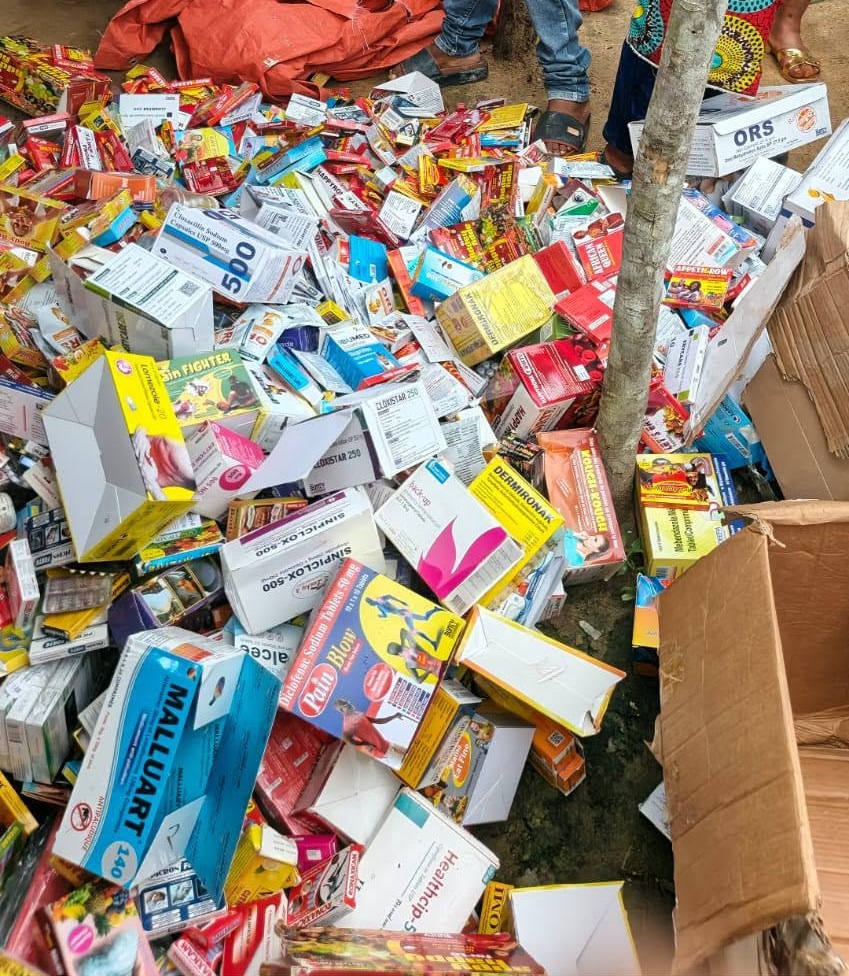
The document repeatedly identifies substandard and falsified medicines as one of Liberia’s greatest regulatory threats.
Its proposed response is comprehensive:
- stronger border inspections;
- enhanced post-market surveillance;
- improved pharmacovigilance;
- nationwide product recall systems;
- stronger enforcement;
- better coordination with partner agencies; and
- improved public reporting mechanisms.
In a country with porous borders and heavy reliance on imported medicines, these measures could substantially improve medicine safety.
The Financial Question
Every ambitious strategy eventually confronts the same question:
Who will pay for it?
LMHRA estimates implementation will cost approximately US$34.7 million over five years, to be financed through government budget support, internally generated revenue, and development partner assistance.
For an institution that openly acknowledges inadequate funding as one of its principal weaknesses, securing these resources may prove to be the greatest implementation challenge.
Without sustained investment, many of the strategy’s objectives could remain aspirations rather than achievements.
Alignment with the ARREST Agenda
The Strategic Plan is carefully aligned with President Joseph Nyuma Boakai’s ARREST Agenda for Inclusive Development, particularly Pillar Six on Human Capital Development.
One flagship national target highlighted in the Plan is increasing health-product testing coverage from 40 percent in 2024 to 95 percent by 2029, positioning LMHRA as a central institution in delivering that outcome.
This alignment increases the Authority’s relevance within the broader national development framework and may strengthen its case for increased budgetary support.

Public Education May Be the Missing Ingredient
Perhaps the most overlooked element of medicines regulation is public awareness.
LMHRA recognizes that consumers themselves are critical stakeholders.
The Plan proposes stronger communication strategies, public education campaigns, improved reporting of adverse drug reactions, and greater engagement with patients and healthcare providers.
These initiatives acknowledge that regulation cannot succeed through inspections alone; it also depends on an informed public capable of identifying and reporting suspicious medicines.
A Test of Political Commitment
Ultimately, strategic plans do not implement themselves.
The success of LMHRA’s 2026–2030 roadmap will depend on sustained political backing, reliable financing, institutional discipline, and effective collaboration across government.
The Authority has presented an ambitious but coherent vision: strengthen institutions, modernize regulation, improve laboratory capacity, embrace digital systems, develop human resources, and align with international best practices.
Whether those ambitions translate into measurable improvements will become one of the more important governance tests in Liberia’s health sector over the next five years.
For ordinary Liberians, the true measure of success will not be the number of policy documents produced or workshops held. It will be something far more tangible: the confidence that every medicine purchased from a pharmacy, clinic, or hospital is safe, effective, and worthy of trust.
For breaking news, in-depth analysis, and exclusive reports from Liberia and around the world, follow The Liberian Post on Facebook (https://web.facebook.com/profile.php?id=61576017166570) and X, formerly Twitter (https://x.com/LiberianPost).