By Vandalark R. Patricks
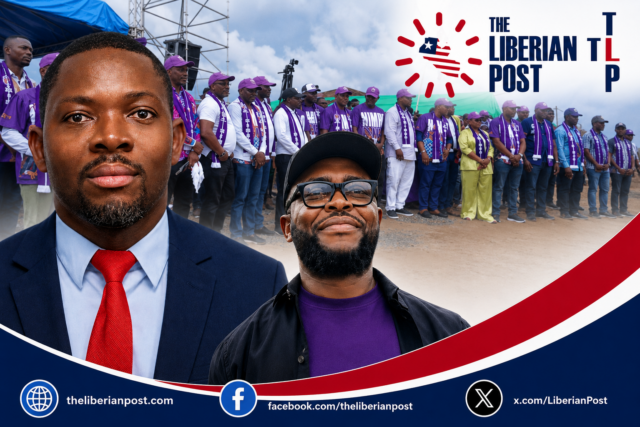
On July 16, 2026, the Liberian Senate voted to recommend the removal of the Director-General of the Civil Service Agency (CSA), Dr. Josiah F. Joekai Jr., urging President Joseph Nyuma Boakai to dismiss him over his attendance at a political rally organized by the National Independent Movement for Boakai (NIMBO) several months ago.
While the Senate is constitutionally empowered to exercise oversight over the Executive Branch, its recommendation in this instance represents, in my view, a fundamental misinterpretation of Liberia’s constitutional framework, the Civil Service Law, and binding Supreme Court precedent.
The Senate’s request lacks both statutory foundation and constitutional standing.

Political Appointees Enjoy Constitutional Protection
It is important to distinguish between a career civil servant and a political appointee.
The Director-General of the Civil Service Agency is not the head of an autonomous constitutional commission, nor is the office protected by tenure. Rather, the Director-General is appointed by the President pursuant to Article 56(a) of the 1986 Constitution and serves at the pleasure of the President.
As a political appointee, the CSA Director-General enjoys the same constitutional rights guaranteed to every Liberian citizen.
Article 17 of the Constitution guarantees every citizen the right to freely assemble and associate with political parties and organizations.
Similarly, Article 81 recognizes citizens’ rights to participate in political activities, provided such participation does not involve the misuse of public office or government resources.
Dr. Joekai’s attendance at a NIMBO political rally—an organization that publicly supports President Boakai’s development agenda—falls squarely within these constitutional protections. Attendance at a political gathering, standing alone, does not constitute a violation of the Constitution or the National Code of Conduct.

Supreme Court Decisions Are Binding
More importantly, the Liberian Supreme Court has already addressed this issue.
Under Liberia’s legal system, decisions of the Supreme Court constitute binding precedent and are controlling on all public officials and institutions.
The Mappy-Polson Decision
In Mappy-Polson v. Republic of Liberia (2017), the Supreme Court held that the political restrictions contained in the National Code of Conduct cannot be interpreted so broadly as to strip non-tenured executive appointees of their constitutional rights.
The Court recognized that executive officials who serve at the pleasure of the President retain their constitutional freedom of political association, provided they do not abuse public office or utilize government resources for partisan purposes.
Against that backdrop, it is difficult to see how mere attendance at a political rally by a presidential appointee constitutes a violation of the Code of Conduct.

The Fonati Koffa Decision
Likewise, in J. Fonati Koffa v. Republic of Liberia (2016), the Supreme Court reaffirmed an important constitutional distinction between career civil servants and political appointees.
The Court acknowledged that political appointees are appointed specifically to implement the President’s policies and political agenda. Requiring such officials to maintain absolute political neutrality would not only contradict the nature of their appointments but would also undermine the constitutional structure of executive governance.
In essence, the Supreme Court has twice recognized that non-tenured executive officials cannot be categorically prohibited from engaging in lawful political activities.
The Senate Has No Authority to Compel Removal
The Senate may express its opinion or make recommendations to the President, but it possesses no constitutional authority to compel the dismissal of a non-tenured executive appointee based solely on the lawful exercise of constitutionally protected political rights.
The Director-General of the Civil Service Agency answers to the President—not to the Legislature—in matters concerning appointment and removal.
To recommend removal on grounds that have already been addressed by binding Supreme Court decisions risks blurring the constitutional boundaries between the Executive, the Legislature, and the Judiciary.
Respect for the separation of powers requires each branch of government to operate within its constitutional limits.
Should the President Act?
Given the constitutional protections afforded political appointees and the Supreme Court’s established jurisprudence on the matter, I do not believe President Joseph Nyuma Boakai should honor the Senate’s recommendation.
Doing so would elevate a legislative opinion above constitutional guarantees and judicial precedent.
If Liberia is to remain a nation governed by the rule of law, constitutional rights and Supreme Court decisions—not political pressure—must guide executive action.
About the Author
Vandalark R. Patricks is a Liberian human rights advocate, public sector administrator, and governance commentator with more than a decade of experience in communications, public administration, and civic advocacy. His work focuses on accountability, democratic governance, and the protection of human dignity. He holds a Master’s degree in Public Administration from the Harvard Kennedy School and has been actively engaged in anti-corruption, governance, and human rights initiatives in Liberia through various civil society and public service platforms.