–Calls for Confidence in Government
MONROVIA – Former Liberian President Ellen Johnson Sirleaf has called on the Liberian government to strengthen public confidence and institutional credibility, warning that countries lacking trust and good governance risk attracting criminal enterprises rather than reputable investors.
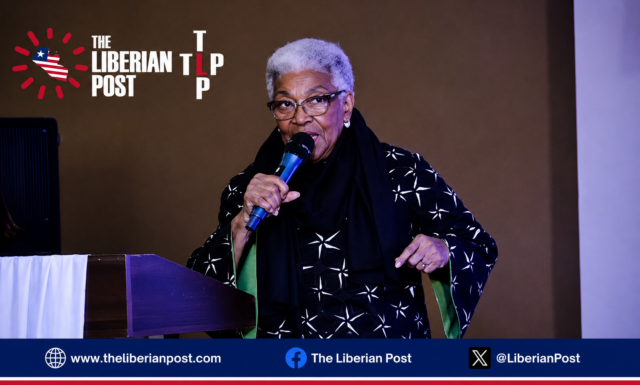
Speaking on Wednesday, July 29, at the National Conference on Women’s Financial Inclusion in Congotown, Monrovia, Sirleaf said Liberia’s ability to attract meaningful investment depends largely on whether both domestic and international investors have confidence in the country’s governance, rule of law and business environment.
“If you want more banks to open, if you want investment to come, they have to have confidence in our government,” Sirleaf declared. “A government that they must respect. A government that they can rely on.”
Good Governance as an Investment Magnet
The Nobel Peace Prize laureate stressed that confidence in government is the foundation for sustainable economic growth, arguing that investors seek countries where institutions are stable, predictable and trustworthy.
She cautioned that when governments fail to inspire confidence, they become vulnerable to illicit actors instead of legitimate businesses capable of creating jobs, expanding the tax base and contributing to national development.
“A government that has the reputation to attract them. Otherwise, they will attract only the bad businesses, like these drug people who come here. So, we have to build that confidence,” Sirleaf warned.
Her remarks come at a time when Liberia is under increasing pressure to strengthen its anti-drug campaign following recent high-profile narcotics seizures and heightened international scrutiny over transnational drug trafficking through the country. Against that backdrop, Sirleaf argued that Liberia must distinguish itself as a destination for credible investment rather than a haven for illicit networks.
Creating an Attractive Business Environment
The former President emphasized that restoring investor confidence requires governments to create an environment where businesses are assured that their investments will be protected while ensuring that the Liberian people also receive a fair return from the country’s natural and economic resources.
“A government has to have that confidence to tell the people, come to Liberia, bring us your money, do your investment, do your business, make sure you get your return,” she said. “They will not bring their money, their business, for nothing. They will bring big money, but make sure that the country also has its fair share.”
Sirleaf further noted that confidence is not only essential for foreign investors but also for ordinary Liberians, who must trust that their government will consistently act in the public interest.
“And we as people must have confidence in our government that can rely on them, on the government, to do the right thing,” Sirleaf added.
Her Administration’s Investment Legacy
Sirleaf’s remarks also revive discussion about Liberia’s own investment governance during her 12-year presidency. Under her administration, Liberia attracted billions of dollars in foreign direct investment across the mining, agriculture, forestry and petroleum sectors as the country emerged from years of civil conflict and sought to rebuild its economy.
Among the landmark investments secured during her tenure were the expansion of ArcelorMittal Liberia’s mining operations, Sime Darby and Golden Veroleum’s palm oil concessions, China Union’s investment in the Bong Mines, and several forestry and energy projects that collectively helped restore investor confidence in post-war Liberia.
The LEITI Audit and Questions Over Concessions
However, Sirleaf’s administration also came under intense scrutiny following the release of the Liberia Extractive Industries Transparency Initiative (LEITI) Post Award Process Audit in 2013. Conducted by international accounting firm Moore Stephens, the audit reviewed 68 concession agreements awarded between July 2009 and December 2011 and found widespread procedural deficiencies in the concession award process. Initial reports indicated that only two of the 68 contracts fully complied with applicable laws, although the Sirleaf administration maintained that the findings reflected procedural shortcomings rather than evidence that the concessions themselves were illegal or invalid.
Subsequent reviews of the final LEITI audit presented a more nuanced picture. Rather than describing the concessions as “bogus,” the report categorized 35 contracts as non-compliant, 25 as partially compliant, six as compliant and two as having limitations of scope. The findings sparked years of debate over transparency, competitive bidding, due diligence and the institutional capacity of government agencies responsible for negotiating and awarding major investment concessions.
The Sirleaf administration defended its overall governance record, arguing that commissioning the independent audit itself demonstrated a commitment to transparency and institutional reform. Nonetheless, the report remains one of the most consequential assessments of Liberia’s concession management framework and continues to influence debates on investment governance today.
Women’s Financial Inclusion Takes Center Stage
The National Conference on Women’s Financial Inclusion brought together government officials, financial institutions, development partners, entrepreneurs and civil society representatives to discuss expanding women’s access to finance, promoting inclusive economic growth and strengthening women’s participation in Liberia’s economy.
While the conference focused primarily on empowering women economically, Sirleaf used the platform to broaden the discussion, stressing that financial inclusion and economic empowerment can only thrive in an environment where governance inspires confidence among both citizens and investors.
A Message Beyond Politics
Sirleaf’s remarks ultimately underscored a message that transcends politics: Liberia’s long-term prosperity depends not merely on attracting foreign capital, but on building institutions that inspire confidence, enforce the rule of law and ensure that investment serves the interests of the Liberian people.
Her call comes as the Boakai administration seeks to deepen foreign investment while simultaneously confronting rising concerns over drug trafficking and organized crime—issues that Sirleaf suggested are closely linked to the quality of governance and the country’s international reputation.
For breaking news, in-depth analysis, and exclusive reports from Liberia and around the world, follow The Liberian Post on Facebook (https://web.facebook.com/profile.php?id=61576017166570) and X, formerly Twitter (https://x.com/LiberianPost).