–First 20 Arriving Thursday as Boakai Government Says Transferees Will Be Free to Move, Seek Asylum or Leave Liberia
MONROVIA — Liberia is set to receive up to 1,200 third-country nationals removed from the United States over the next 12 months, with the first group of 20 people expected to arrive Thursday, August 20, under a new migration arrangement between Monrovia and Washington.
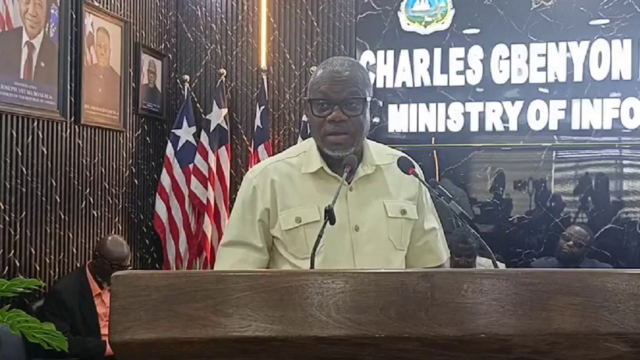
Information Minister Jerolinmek Matthew Piah announced the development Tuesday at the Ministry of Information, saying the arrangement was formalized through an exchange of diplomatic notes between Liberia and the United States in September 2025.
The announcement places Liberia among a growing group of countries that have agreed to receive people removed from the United States who are not nationals of the country to which they are being transferred. Reuters reported Tuesday that Liberia’s arrangement covers up to 1,200 people over 12 months, while the Associated Press reported that the group will include people from Africa, the Americas and the Caribbean.
According to Piah, the individuals to be transferred to Liberia will be medically cleared before travel, and the first group is expected within days.
First Group of 20 Due Thursday
Piah said preparations have already been completed to receive the first 20 arrivals at Roberts International Airport (RIA).
The government insists the individuals will not be detained upon arrival.
Instead, Piah said, they will be received as guests of the Republic of Liberia and allowed freedom of movement under Liberian law.
The government also says the individuals will have access to Liberia’s legal system and will be free to leave the country if they choose.
That distinction is significant because third-country removals have generated international controversy, particularly over whether people transferred to countries where they have no prior connection can obtain meaningful legal protection and whether they may ultimately face removal to places where they could be at risk.
Amnesty International has described the broader U.S. third-country removal policy as raising serious human-rights and due-process concerns, noting that the United States has concluded arrangements with more than 30 countries, including a growing number in Africa.
Liberia Says Arrivals Can Seek Asylum
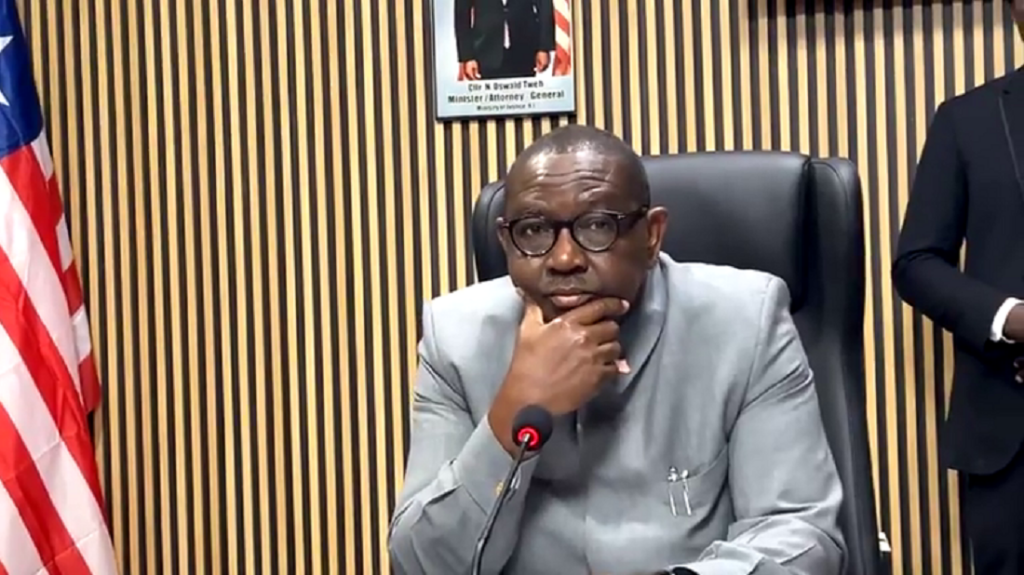
Piah said any person transferred to Liberia who wishes to remain permanently will have the opportunity to apply for asylum under Liberian law.
The government’s position is that the arrangement does not automatically make Liberia the permanent home of those being transferred.
Rather, Liberia will provide a place where the individuals can remain while exercising their rights under the country’s laws.
The government has also emphasized that the individuals are being received as guests, rather than prisoners or detainees.
That assurance is likely to be closely watched given concerns surrounding the treatment of third-country deportees in some destination countries. Amnesty has reported that some people transferred under similar U.S. arrangements have faced detention and difficulties obtaining independent legal assistance.
Piah Invokes Liberia’s History as a Refuge
Defending the decision, Piah framed Liberia’s participation as consistent with the country’s historical identity as a place of refuge.
He pointed to Liberia’s origins in the resettlement of formerly enslaved Black people from the United States and its historical role in supporting African liberation movements during the anti-colonial era.
“As a country, we have always welcomed people who cannot return to their home of origin.”
Piah argued that refusing to receive the third-country nationals would run against what he described as Liberia’s longstanding humanitarian tradition.
“To reject these third-party nationals will be acting against our best interest.”
The government’s framing places the arrangement within a broader narrative of Liberia’s historical ties to the United States and its identity as a country that has offered refuge to people displaced by conflict and political upheaval.
Government Says Security Screening Remains in Liberian Hands
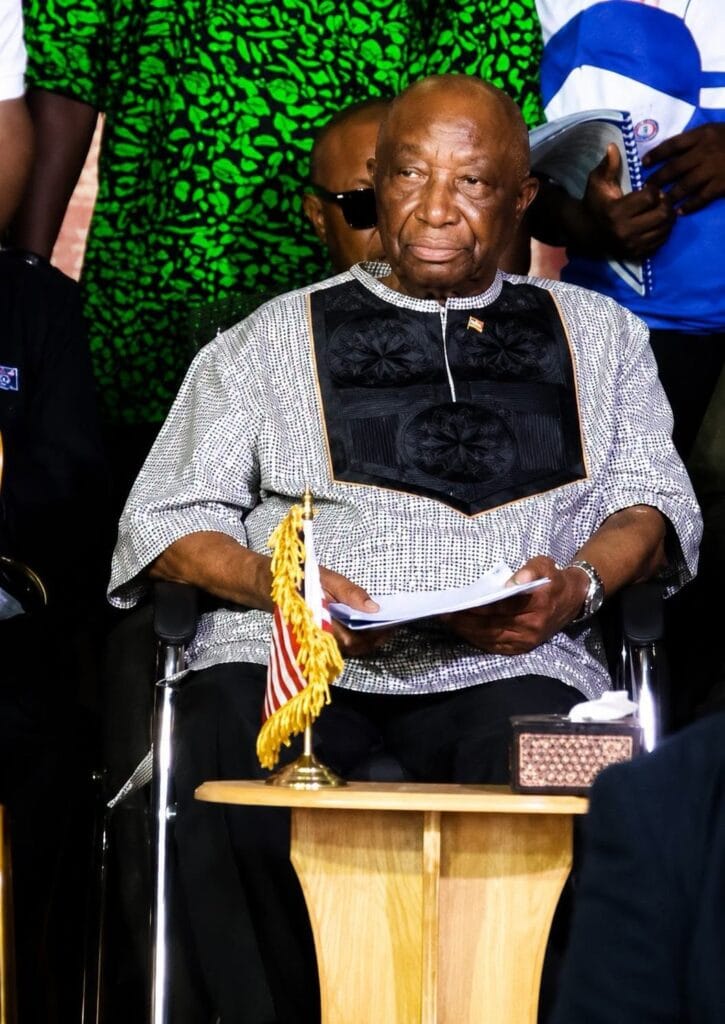
Justice Minister Cllr. Natu Oswald Tweh, Sr. sought to address concerns over who will be allowed into Liberia under the arrangement, emphasizing that Washington’s screening process will not replace Liberia’s own security assessment.
Tweh said U.S. authorities conduct initial screening of individuals before they are transferred, but Liberian authorities will conduct a separate vetting process.
Under the government’s arrangement, U.S. authorities are expected to provide Liberian officials with a complete manifest of persons scheduled for transfer ahead of their arrival.
That process, the Justice Minister said, gives Liberia the opportunity to review the individuals and reject anyone deemed unacceptable.
The government’s position is therefore that accepting third-country nationals does not mean surrendering Liberia’s sovereign authority over who enters its territory.
Most Were Removed Over Immigration Violations, Government Says
Tweh also said the individuals being transferred were primarily removed from the United States because of immigration violations, rather than because they were being sent to Liberia to serve criminal sentences.
However, Liberia intends to examine the circumstances surrounding each person’s removal as part of its own vetting process.
That distinction is important because U.S. immigration removals can involve a wide range of circumstances, and a removal order does not necessarily mean that an individual has been convicted of a crime.
Piah and Tweh did not publicly identify the nationalities of the first 20 people expected to arrive Thursday.
Liberia to Receive Support for Migration System
Beyond the arrivals themselves, the agreement is expected to provide Liberia with technical and financial support to strengthen its migration-management infrastructure.
Piah said Liberia will use the cooperation to bolster its broader migration systems and capacity.
Reuters reported that the agreement is part of a wider U.S. effort under President Donald Trump’s administration to negotiate arrangements with African and other countries for third-country removals.
Amnesty International similarly lists Liberia among at least 12 African countries that have concluded or agreed to arrangements involving third-country removals from the United States.
The broader policy has drawn criticism from human-rights organizations, which argue that transferring people to countries where they have no previous ties can expose them to legal uncertainty, isolation and potential human-rights risks.
A Sensitive New Chapter in U.S.-Liberia Relations
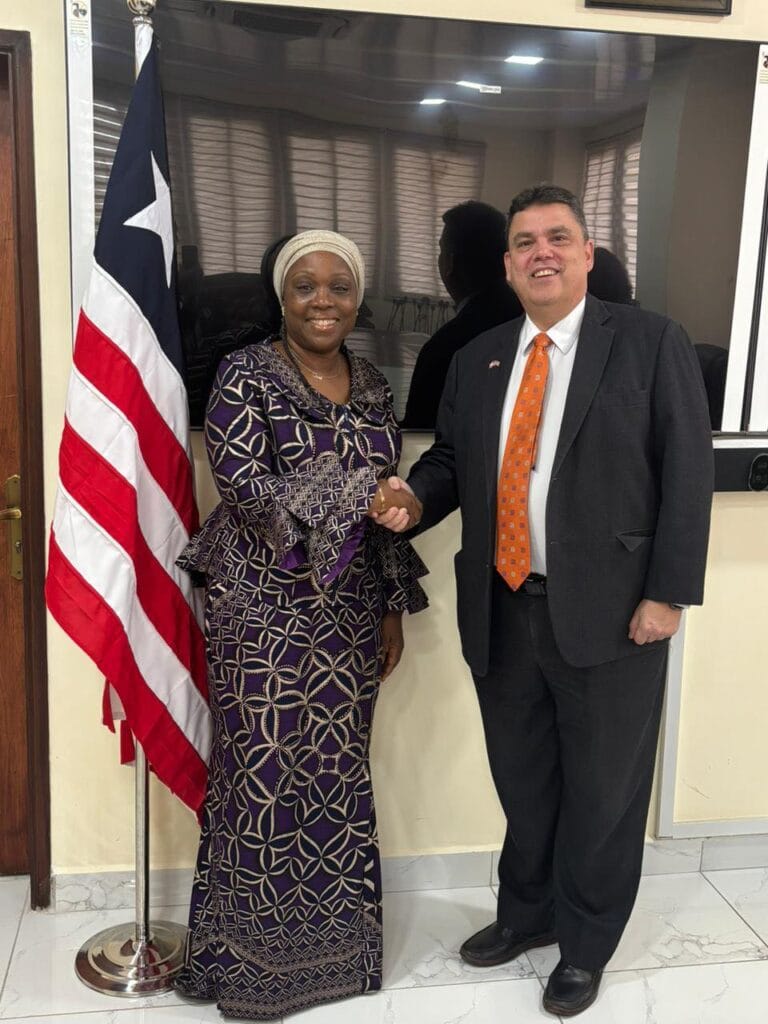
Liberia’s decision comes against the backdrop of a longstanding U.S.-Liberia relationship rooted in history, migration, development cooperation and strong people-to-people ties.
The arrangement also follows earlier U.S. efforts to transfer individual third-country nationals to Liberia. In 2025, a federal court filing involving Kilmar Armando Abrego Garcia referenced plans by U.S. authorities to remove him to Liberia and assurances attributed to the Liberian government concerning his treatment.
At the time, however, Liberia’s Foreign Ministry publicly stated that the government had not entered into a formal or informal agreement obligating it to receive third-country nationals.
The latest announcement represents a significant change: the Boakai administration now says a formal arrangement exists and that Liberia is preparing to receive as many as 1,200 people over a year.
Hospitality Meets Sovereignty
For the Boakai administration, the policy is being presented as a combination of humanitarian responsibility, national sovereignty and migration-system development.
The government says the incoming individuals will not be prisoners, will have freedom of movement, can seek asylum if they wish to make Liberia their home and can leave the country if they choose.
At the same time, the government says Liberia retains the right to conduct its own security screening and reject individuals it considers unacceptable.
That combination—hospitality on one hand and sovereign control on the other—will likely define the public debate as the first 20 arrivals prepare to touch down at RIA.
For Liberia, the immediate test will be whether the government’s assurances on freedom of movement, legal access, asylum and independent vetting are matched by what happens on the ground when the first group arrives Thursday.
And for the United States, Liberia’s participation represents another step in an increasingly global strategy of finding countries willing to receive migrants who cannot, or in some cases are not being, returned directly to their countries of origin.
The first 20 arrivals may therefore be small in number—but their arrival could mark the beginning of one of the most consequential new chapters in Liberia’s migration and diplomatic relationship with Washington.
For breaking news, in-depth analysis, and exclusive reports from Liberia and around the world, follow The Liberian Post on Facebook (https://web.facebook.com/profile.php?id=61576017166570) and X, formerly Twitter (https://x.com/LiberianPost).