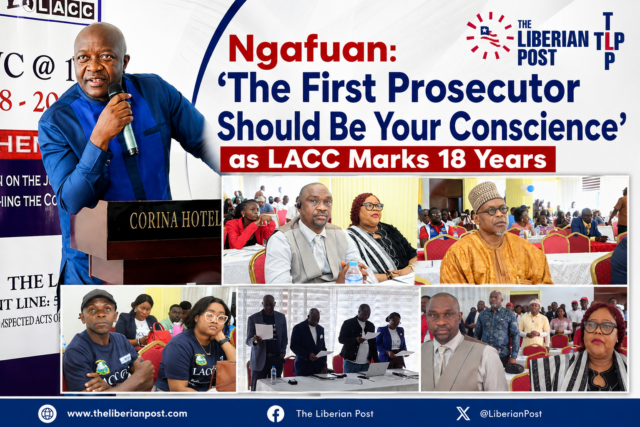
–Finance Minister Urges Liberians to Treat Corruption as a National, Not Political, Problem
Monrovia, Liberia — Finance and Development Planning Minister Augustine Kpehe Ngafuan has called for a deeper national reckoning with corruption, urging public officials and ordinary Liberians alike to recognize that the fight against graft cannot be left to government institutions alone.
Ngafuan made the call Friday, August 28th, while delivering remarks at the 18th anniversary celebration of the Liberia Anti-Corruption Commission (LACC), where he challenged Liberians to develop the moral courage to reject corruption even before law enforcement becomes involved.
“The first prosecutor should be your conscience,” Ngafuan declared, repeating the statement for emphasis.
The Finance Minister argued that corruption is ultimately rooted not only in weaknesses within government, but also in the values and attitudes of the broader society from which public officials emerge.
He said changing government personnel alone would not eliminate corruption if the social values that produce and tolerate corrupt behavior remain unchanged.
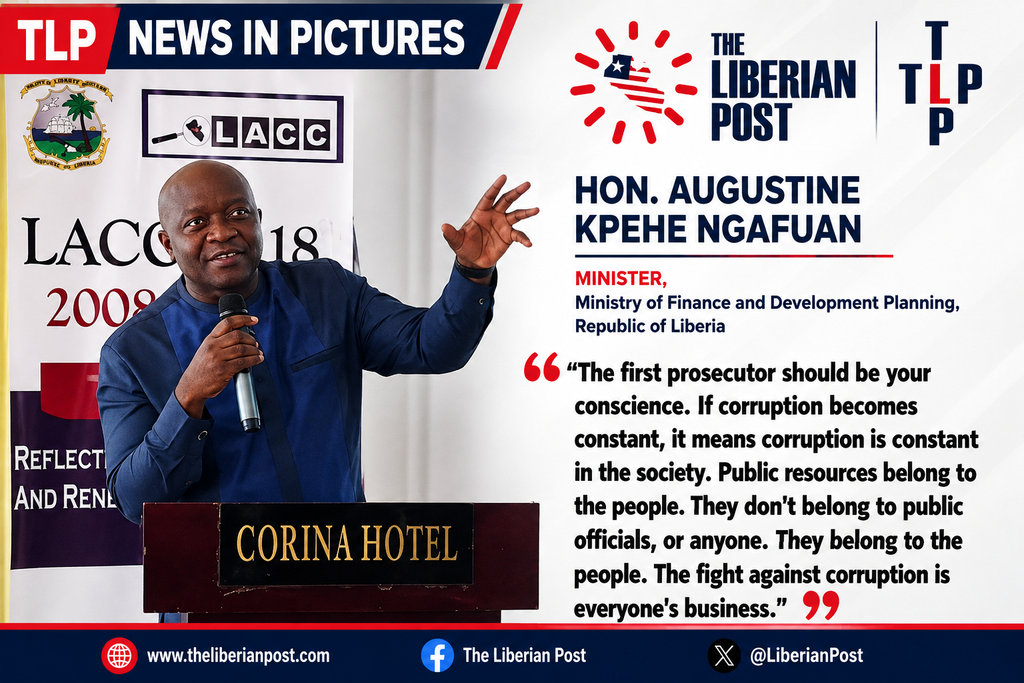
“If corruption becomes constant, it means corruption is constant in the society,” Ngafuan said, urging Liberians to look beyond government and examine the values being transmitted in homes, schools, religious institutions and communities.
‘Public Resources Belong to the People’
Ngafuan said public officials have a special responsibility to protect resources entrusted to them because government resources ultimately belong to the Liberian people.
He likened Liberia to a common enterprise in which every citizen is a shareholder, with public officials entrusted with protecting the interests of all shareholders.
“Public resources belong to the people,” he said. “They don’t belong to public officials, or anyone. They belong to the people.”
According to the minister, every act of corruption has consequences that extend far beyond the immediate financial loss.
He urged public officials to consider the impact of their decisions on future generations, particularly children who may lose educational and economic opportunities when public resources are diverted.
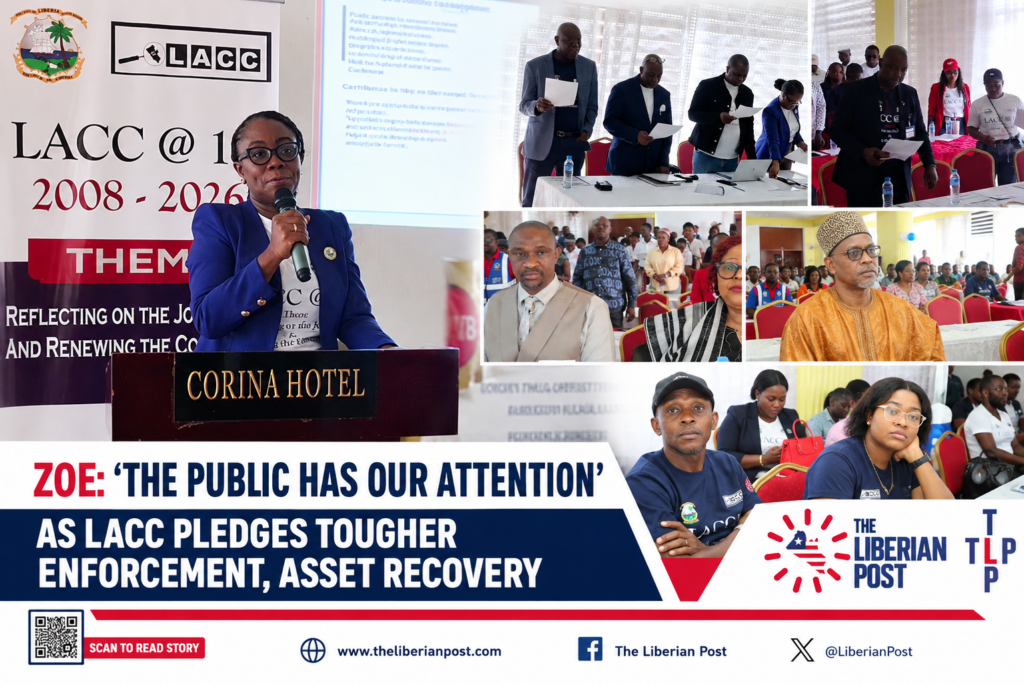
Ngafuan said that if officials genuinely understood the consequences of their actions, they would be compelled to “act differently.”
The Finance Minister also warned against the mindset that resources belonging to everyone effectively belong to no one.
He said such thinking creates an environment in which individuals feel free to abuse public resources because they do not immediately see a victim.
Fight Must Go Beyond Government
While acknowledging the important role of institutions such as the LACC, judiciary, Ministry of Justice, General Auditing Commission and other integrity institutions, Ngafuan said corruption must ultimately be confronted as a whole-of-society problem.
He specifically called on religious leaders, educators, civil society organizations, the media and citizens to participate in changing attitudes toward corruption.

“The fight against corruption is everyone’s business,” he said.
Ngafuan said religious leaders have a particularly important role because many Liberians listen closely to their pastors and imams.
He challenged religious leaders to examine the messages they communicate to their congregations and to make integrity, honesty and responsible citizenship central to their teachings.
‘We Should Feel Bad When We Do Bad’
The Finance Minister also placed strong emphasis on individual conscience, saying a functioning moral compass should make people uncomfortable when they engage in wrongdoing.
“We should feel bad when we do bad,” he said, adding that a person who feels “good,” “numb” or “neutral” after doing wrong should be deeply concerned about their moral condition.

He said Liberia must reach a point where people recognize wrongdoing as wrong without waiting for a politician, investigator or other authority to tell them so.
“Wrong is wrong,” Ngafuan stressed, arguing that corruption should not become a political issue in which people condemn misconduct only when committed by their political opponents.
Instead, he called for a national moral compass capable of distinguishing right from wrong regardless of political affiliation.
Schools as Frontline in Anti-Corruption Fight
Ngafuan extended his argument to Liberia’s educational system, warning that corruption tolerated in schools could reproduce itself in the country’s future leadership.
He criticized practices in which students are allegedly subjected to questionable fees and other forms of misconduct, warning that such experiences can normalize corruption in the minds of young people.
“These people will be the ministers tomorrow,” Ngafuan cautioned.

He said the country must pay greater attention to the messages children receive about honesty, fairness and public responsibility.
According to him, society supplies the people who eventually occupy positions of authority, making the fight against corruption inseparable from the values cultivated outside government.
Calls for Stronger LACC Support
Ngafuan also pledged continued government support for the LACC and other integrity institutions, particularly through improved resourcing.
He said the Commission and similar institutions must be adequately supported so that they can effectively prevent corruption, investigate wrongdoing and ensure that those found culpable are brought before the courts.
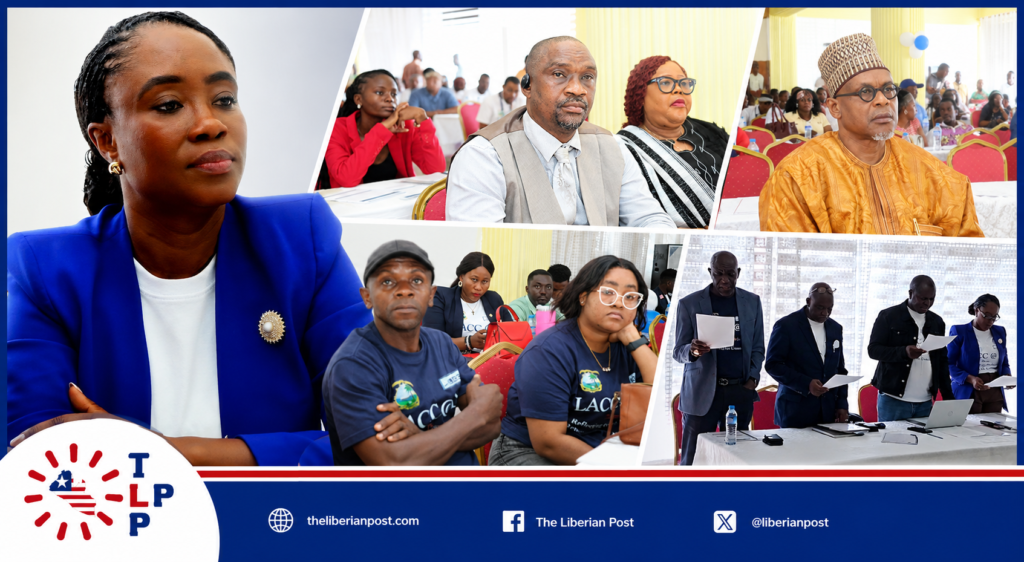
The minister acknowledged the Commission’s concerns about resources and said the Ministry of Finance would continue engaging the institution as government prepares future budgets.
He described his appearance at the anniversary program as something of an “advanced budget hearing,” indicating that LACC’s presentation of its institutional needs had been noted by officials responsible for the national budget.
Ngafuan also welcomed efforts toward establishing a specialized anti-corruption court, saying the lack of a specialized legal mechanism has contributed to delays in the processing of corruption cases.
“Let’s solve it. Let’s make it easy,” he said, while urging the LACC to remain firm and fair in carrying out its mandate.
As the LACC marked 18 years of existence, Ngafuan said the Commission and Liberia’s broader integrity system must continue confronting corruption without fear or hesitation.
He ended by urging the Commission to remain both firm and fair as it protects public resources on behalf of the Liberian people.
For more news, analysis and updates, follow The Liberian Post on Facebook (https://web.facebook.com/profile.php?id=61576017166570) and X, formerly Twitter (https://x.com/LiberianPost).