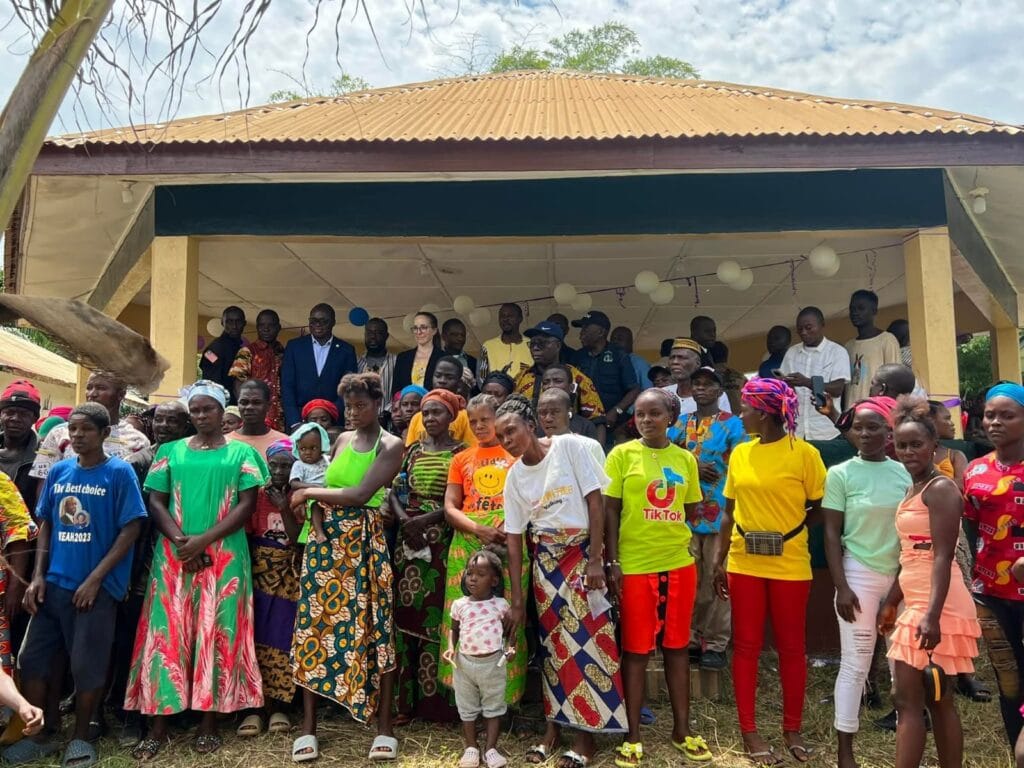
MONROVIA — The Office for the Establishment of the War and Economic Crimes Court for Liberia (OWECC-L) joined several integrity institutions and international partners on June 17, 2025, for the dedication of the Behn Town Massacre Memorial in Grand Bassa County.
Supported by the United Nations Development Program (UNDP), the Behn Town Memorial is part of a broader recommendation from the Truth and Reconciliation Commission (TRC) for the construction of memorial sites as peacebuilding mechanisms.
The initiative is spearheaded by the Independent National Commission on Human Rights (INCHR) and represents one of five memorials being dedicated across Liberia under this initiative.
The Liberian Civil War, which lasted from 1979 to 2003, remains one of West Africa’s most devastating conflicts, resulting in over 250,000 deaths and the displacement of nearly one million people. Rooted in ethnic, political, and economic divisions, the war left behind a legacy of massacres, mass rapes, forced conscription, and other atrocities. The scars are deep, and the need for healing is ongoing.
Establishing memorials at massacre sites plays a vital role in Liberia’s reconciliation process. These memorials honor the memory of victims, acknowledge past atrocities, and provide survivors and affected communities a place to grieve, reflect, and educate future generations. They serve as public reminders of the nation’s commitment to peace, justice, and accountability.
Presenting the program overview, Mr. Bowin Johnson, Program Analyst for Inclusive Governance, explained that five memorial sites have been constructed in Behn Town (Grand Bassa County), Bloe Town (Rivercess County), Bopolu City (Gbarpolu County), Kpotomai Town (Lofa County), and Gbonyea (Bong County). The initiative falls under the Peacebuilding, Reconstruction, and Social Cohesion Project.
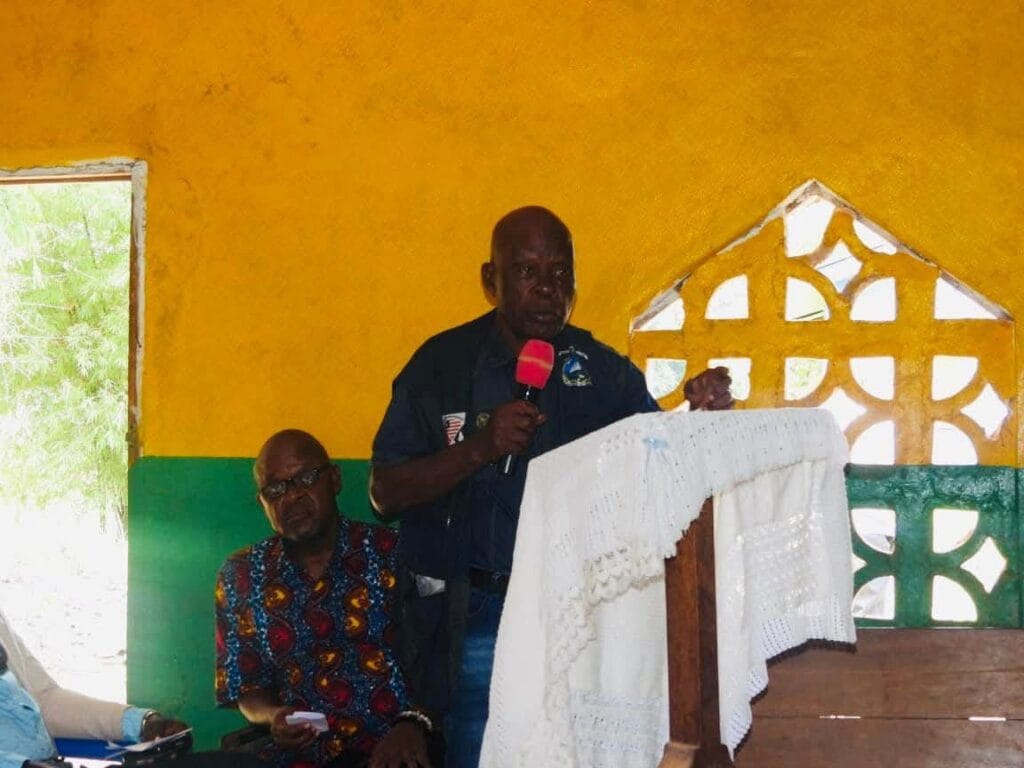
He noted that the project commenced on August 1, 2020, and was initially set to conclude on December 31, 2024. However, following the 2023 transition in government, the project was extended under the UN program through December 2025.
According to Mr. Johnson, the project addresses root causes of instability in Liberia, such as land and boundary disputes, intercommunal conflict, and political tensions linked to the civil crisis. He added, “The palava hut here is part of the healing process. Traditional elders and peace actors can use this model to help reconcile victims and perpetrators of crimes.”
Speaking on behalf of UNDP, Deputy Representative Louis Kuukpen emphasized that the initiative aligns with Recommendation 17.0 of the TRC Report, which highlights the importance of reparations and institutionalized memorialization in national healing.
Kuukpen expressed sorrow for Liberia’s painful history and reaffirmed UNDP’s commitment to community-led engagement.
He underscored the importance of transforming these memorials into spaces of remembrance, reflection, and healing.
Representing OWECC-L, Associate Director Mr. Parker Barcolleh reiterated the office’s support for all Transitional Justice efforts.
He commended the INCHR for its dedication to protecting the rights of civil war victims and briefed the audience on OWECC-L’s roadmap for establishing both the War and Economic Crimes Court and the National Anti-Corruption Court.
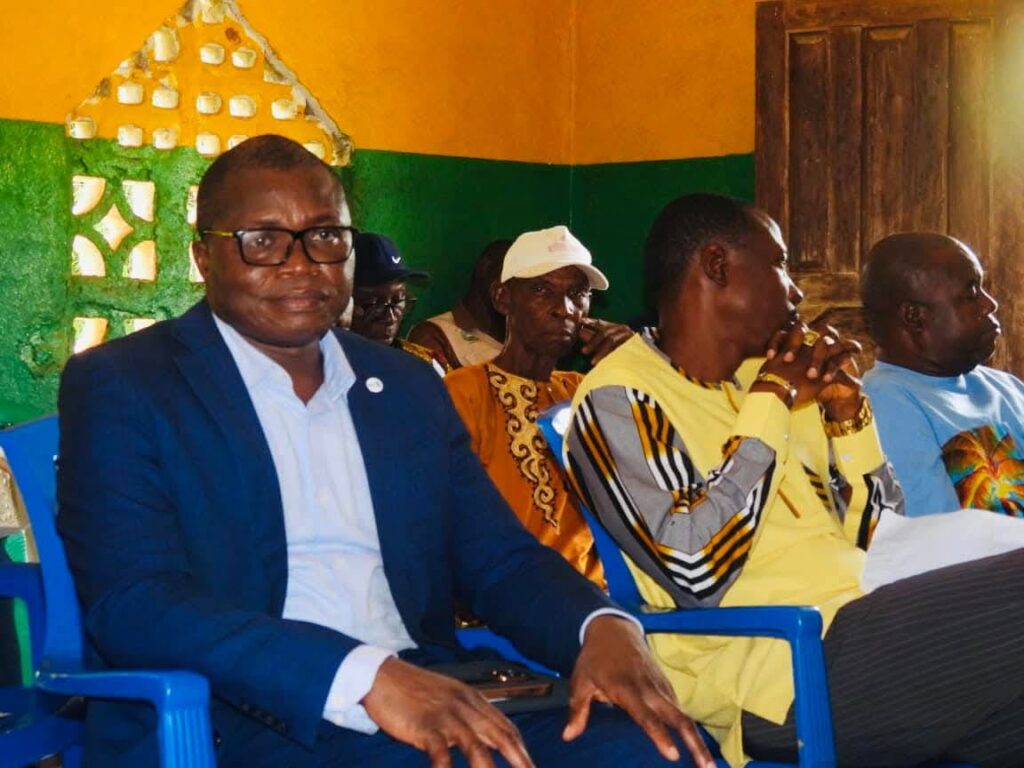
He also highlighted the need for in-depth research to identify victims of past atrocities.
“Let us remember that there are numerous mass graves across the country, some dating back to 1979 and even earlier. These must not be forgotten,” Mr. Barcolleh stated.
Accepting the memorial on behalf of the community, Assistant Town Chief Joseph D. Zeo expressed deep appreciation and gratitude to the organizers. He appealed for three key additions to help maintain the site: chairs, solar panels, and artists to create visual depictions of the massacre’s history. The ceremony was attended by the INCHR Chairperson and Commissioners, high-level representatives from the Office of the High Commissioner for Human Rights (OHCHR), Transitional Justice stakeholders, the Grand Bassa Superintendent and County Attorney, religious leaders, civil society organizations, youth and women groups, county officials, and members of the Memorial Committee.