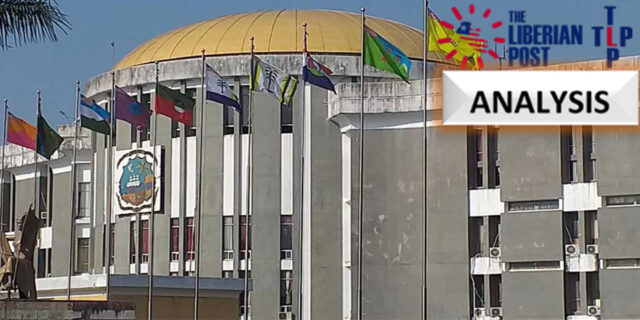
MONROVIA – The Legislature is literally referred to as the First Branch of Government in the Liberian context, as reportedly there is no constitutional reliance to justify this claim. Although, in talking about the three branches of the Government of Liberia in the 1986 Constitution, the Legislature is written about first, followed by the Executive and Judiciary. But does that signify that the Legislature if the first branch of government? However, the Constitution spells it out that there are three distinct separate branches of government who coordinate in steering the affairs of the State.
According to Chapter V of the 1986 Liberia Constitution, which focuses on the Legislature and Article 36 states: “The Senators and Representatives shall receive from the Republic remuneration for their services to be fixed by law, provided that any increase shall become effective at the beginning of the next fiscal year.”
If the services of the Senators and Representatives are to be fixed by law, who makes laws in keeping with the 1986 Constitution? The very Legislature is given that constitutional authority to enact laws, which are interpreted by the Judiciary and enforced by the Executive.
The Constitution in this regard has done Liberians a disservice by giving the lawmakers the power to decide their own remunerations (salaries, benefits & incentives). It is these remunerations authorities that members of the 55th Legislature are using to stifle Liberians by allotting unto themselves millions of United States dollars every fiscal budget year, disregarding the basic needs of the people.
To buttress this assertion that the lawmakers are choking Liberians and bagging millions of United States dollars just in two fiscal budget years, the Government of Liberia Financial Records have revealed that the Legislature has spent and continues to spend an astounding US$108,221,842 from Fiscal Year 2024 to 2025, raising growing public eyebrows amid widespread poverty, difficulty and mass unemployment (joblessness) faced by ordinary citizens.
According to the government financial records, the outturn or expenditure for the 2024 fiscal year alone was US$63,877,136, with a significant portion allocated to the exorbitant salaries and benefits of 103 lawmakers, including payments for vehicles, fuel, entertainment, travels, DSA, constituency visits, legislative hearings, and other operational services.
In 2024, lawmakers’ salaries alone cost taxpayers US$12,378,671, while an additional US$8,533,721 was spent for their personal staff’s salaries. Fuel and lubricants for vehicles in 2024 amounted to US$4,587,995, and US$369,100 for entertainment and gifts.
The 2024 legislative expenditure covers both houses, the Senate and House of Representatives, and their respective offices. The Office of the Senate Pro Tempore spent US$1,406,920, while the Office of the Speaker of the House of Representatives spent US$2,022,425. The Deputy Speaker’s office expended US$1,273,650 in just 12 months.
Beyond these individual offices, the Senate as a body expended US$19,470,322, while the House of Representatives consumed US$39,703,830 in the same 2024 fiscal year.
Looking ahead, the 2025 budget allocates an additional US$44,344,706 solely for the Legislature, maintaining the institution’s high spending levels.
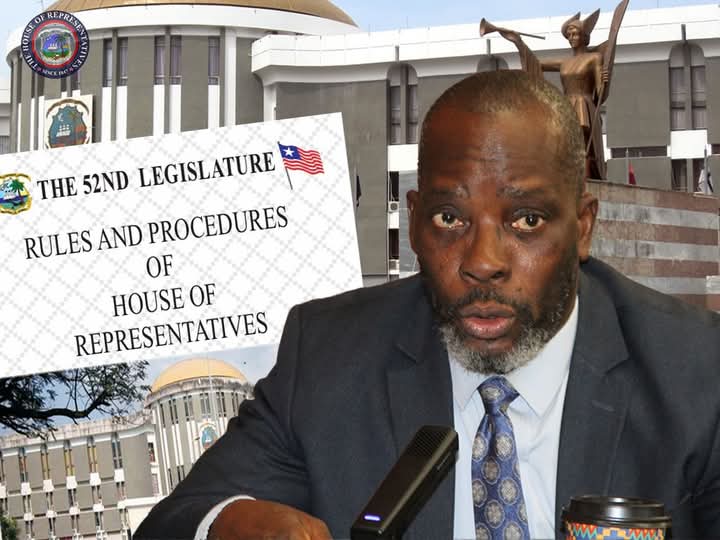
All of these monies being allotted to the Legislature by themselves is indicative of the fact that they want to amass adequate funds for their respective legislative reelection campaigns for the 2029 elections.
In their desperate needs to control and acquire more wealth to the detriment of Liberians, Grand Gedeh County Representative Jeremiah Sokan recently proposed a legislation which seeks to repeal Sections 2.2(e) and 2.2(f) of the Local Government Act (LGA). These key provisions empower County Councils to approve their respective annual budgets and development plans. The amendment proposes shifting this authority to County Legislative Caucuses—essentially centralizing decision-making powers back in the hands of national lawmakers.
Enacted in 2018, the Local Government Act was celebrated as one of Liberia’s most progressive post-war governance reforms. It marked a decisive step toward participatory democracy by empowering County Councils—locally elected and representative bodies—to lead their own development processes.
The Act decentralized power from the capital, Monrovia, to the counties, allowing communities to directly influence the formulation and implementation of their budgets and development priorities. However, civil society actors in a counter-statement view the current repeal effort as a betrayal of that vision.
The central concern raised by civil society actors is the erosion of accountability and transparency when legislative actors assume dual roles—both creating laws and directly executing or overseeing their implementation. According to those actors, this blurs the necessary separation of powers, compromises objectivity, and leaves governance vulnerable to manipulation.
In its official position, the civil society actors urge the Liberian Legislature, particularly the House of Representatives, to reject the proposed changes in full. Mobilize Resistance – The organization calls on citizens, traditional leaders, civil society, and international development partners to publicly resist what it describes as a dangerous legislative overreach.
Defend Local Governance – the civil society actors remind lawmakers that weakening the autonomy of County Councils violates democratic principles and undermines the essential doctrine of the separation of powers.
The broader implications of the proposed repeal are significant. Liberia is still grappling with uneven development, weak institutional trust, and chronic service delivery challenges. Critics argue that rather than solving these issues, re-centralizing power risks intensifying them by reducing local accountability and amplifying the influence of political elites.
Reverting to a centralized model, they caution, could hinder innovation, mute local voices, and increase susceptibility to corruption through unchecked legislative interference in county-level projects.
Lawmakers are urged to reject the proposed legislation in the interest of the people because is selfish and dangerously deceptive and not in the interest of the people of Liberia. To have control of monies generated in the country is intended by the lawmakers to amass more wealth in their quest to retain their legislative seats in the 2029 elections which are still about four and half years away.
Liberia remains one of the poorest countries in the world with a large portion of its population living below the poverty line. The lavish expenditure on legislative operations has drawn sharp criticism from citizens and civil society groups who have pointed to the stark contrast between government spending and the daily struggles of ordinary Liberians, many of whom go to bed hungry and lack access to basic social services including safe drinking water, better healthcare, quality education, electricity, improved sanitation, housing, etc.
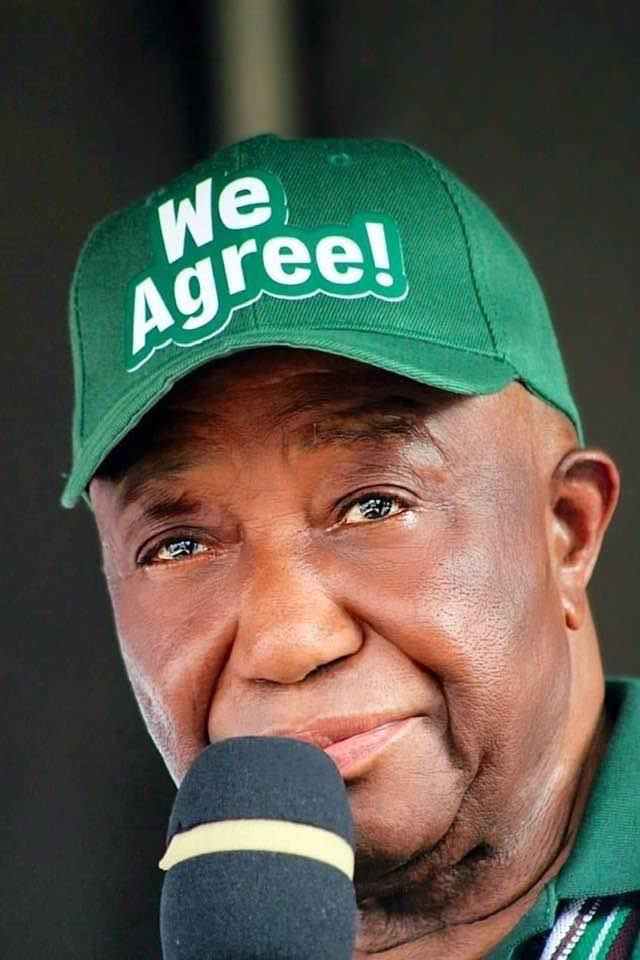
As public frustration grows, calls for increased transparency, public accountability, the redistribution of the national wealth, and the revaluation of national priorities that align with the public interest are becoming more and more compelling.
The “rescue” Administration of President Joseph Nyuma Boakai is on record of saying “There will be no business as usual,” in regards to how the country was governed in the past. But if lawmakers are still repeating those ugly things of the past by allotting unto themselves hundreds of millions in just two budgetary allotments, then President Boakai needs to act because he is the Chief Executive of the Republic of Liberia.
The President’s governing Unity Party (UP) has lawmakers in the Legislature, coupled with other lawmakers who came from alliances of political parties who supported the UP in gaining state power. Liberians are undergoing hardship while the lawmakers (103) reap millions of dollars in salaries, benefits, and other incentives, among many others to the detriment of Liberians who continue to undergo hardship, difficulty, joblessness, and poverty.
Now is the time to act, as the people are watching keenly with 2029 elections on their minds, because the 1986 Constitution Article 1 says it right that “All power is inherent in the people. All free governments are instituted by their authority and for their benefits and they have the right to alter and reform the same when their safety and happiness so require. In order to ensure democratic government which responds to the wishes of the governed, the people shall have the right at such period, and in such manner as provided for under this Constitution, to cause their public servants to leave office and to fill vacancies by regular elections and appointments.” A hint to the wise….