MONROVIA – As renewed calls mount for transparency and audit of the last Administration’s Covid_19 Food Aid usage of the US$25 million, a TLP (The Liberia Post) investigation has uncovered that the United Nations’ specialized agency—World Food Program (WFP)— was used as a scapegoat during the implementation program.
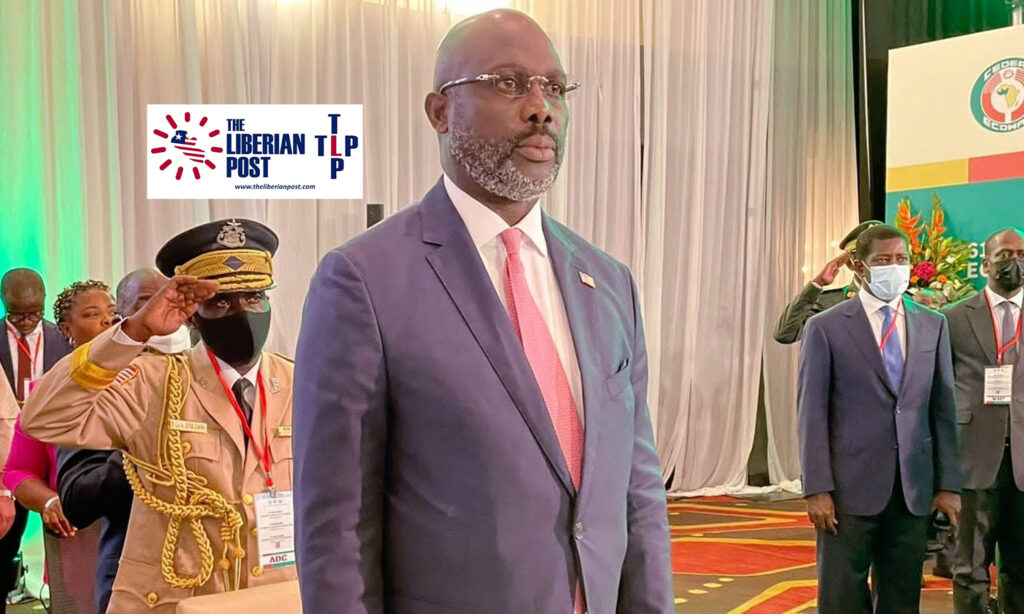
In this investigation, the TLP uncovered that while WFP was the figured face of the Fund’s implementation, the main culprits pulling the strings behind the scenes were the members of the steering committee, which comprised and was chaired by the then Minister of Commerce, Mr. Wilson Tarpeh. Other members included Ministries of State (Min. Nathaniel F. McGill now Senator for Margibi), Finance and Development Planning (Samuel D. Tweah), Justice (Cllr. Frank Musah Dean), Agriculture (Ms. Jeanine M. Cooper), Education (Dr. Ansu Sonii), and others.
Former President George Weah’s Administration had given the fund to WFP to “manage and serve as implementing partner”, but the steering committee members, including the very influential Finance and Development Planning Minister, Tweah, directed WFP where and which program the money should be spent on. “They were making all the procurement decisions and dictating to WFP how the money should be spent,” a credible source at WFP told The Liberian Post. This WFP source also blamed the agency too, for being “complacent” in the disbursement of the funds. Today, Tweah faces a draining legal battle for some of the alleged ‘shady deals’ he is said to have done during his six-year reign at the Finance and Development Planning Ministry—from 2017 to 2023.
Of the US$25 million, the Steering Committee reported that US$23.84M was spent during the height of the Covid_19 pandemic. A balance of US$1.17M was left in WFP’s account pending further actions from Tweah and his steering committee colleagues.
The TLP found out during our investigation that the former Finance Minister, McGill, Tarpeh and others eventually reached a decision that all the balanced money be used for school feeding. During our lookout, a junior official at the Finance Ministry told The Liberian Post that his bosses had praised that decision by the past Administration’s Covid_19 Steering Committee and so this present Administration overwhelmingly agreed to continue with that decision of using the balanced money to provide feeding for school-going kids especially taking into account the present situation with that program at the Ministry of Education.
So, of the balanced US$1.17M, the present Administration requested the WFP to send back to the Liberian people’s account (Government’s Consolidated Account) the amount of US$937,000 for use toward the exact same purpose— feeding Liberian children in school.
However, TLP found out that this Administration added a little bit of flavor to their plan. They have decided that the US$937,000 that WFP only recently remitted to the Consolidated Account on July 3rd, 2025, will be spent on empowering Liberian farmers to provide the locally-produced food items that will be used in the feeding program of the kids. So, the Ministries of Agriculture and Education are going to work closely together in the implementation of this project, which is dubbed Home-grown School Feeding Program. So, the remaining US$234,000 will also be used by WFP toward the same school-feeding project. A source at WFP told TLP that the agency is not going to be restricted on where it gets its feeding ingredients from as the Liberian government has exclusively decided to get all their ingredients locally. WFP, which is a specialized UN Agency, has been overseeing school feeding efforts in Liberia for many years.
Fund Repurposing Welcome
While the refund and repurposing of the funds have been widely welcomed, civil society groups and governance watchdogs are renewing calls for an independent audit of the entire COVID-19 food aid operation.
Contrary to the impression that some of the funds were recently diverted for personal use, TLP was very credibly informed by sources at both the Central Bank of Liberia and Ministry of Finance that the money was just remitted few days to the Government’s Consolidated Account and “It is still breathing in the Government’s consolidated account.”
This decision for the money to be used for the home-grown feeding program wasn’t decided by this Administration. It was decided by Min. Tweah and his colleagues on the erstwhile Covid_19 Steering Committee.
Background
In June 2021, the Liberian Senate instructed the General Auditing Commission (GAC) to conduct a comprehensive audit of the “WFP-managed program”. This followed widespread allegations of mismanagement, irregular procurement practices, and incomplete financial documentation. At the time, then Deputy Information Minister Eugene L. Fahngon—now serving as Director General of the Liberia Broadcasting System— had stressed that the money was the Liberian people’s money and the program implementer must be held accountable. At that time, he argued that WFP must be held to account.

Well, four years on TLP was told by another source at the GAC that no audits were done; consequently, no findings have been published or released, raising concerns over transparency and the credibility of the Fund’s management by former Minister Tweah and his colleagues on the Steering Committee.
During our investigation, the TLP noticed that critics of the present Administration became critical of the request for portion of the balanced money. Nevertheless, The Liberian Post uncovered that the reallocation of portion of the balanced US$1.17M to support the National Home-Grown School Feeding Program was not a recent decision, nor was it initiated by Finance Minister Augustine Kpehe Ngafuan as some speculations suggest. Instead, the National COVID-19 Food Assistance Steering Committee—established under the administration of former President Weah—made the recommendation in late 2022 following an internal review of the remaining funds from the program.
Their final report a copy of which was seen, concluded that the unspent funds—part of the over US$25 million allocated for emergency food response—should be redirected to strengthen food security for school children.
The TLP found out that the Joseph Nyuma Boakai-led Administration intends to “ring-fence” the US$937K to safeguard its use. This source further stated that the Ministries of Agriculture and Education are expected to jointly manage the purchase of locally-produce food items, with a strong emphasis on procuring locally-produced rice and other staples. This approach aims to feed school-aged children while simultaneously stimulating the domestic agricultural sector.
Sources say officials in the current administration are keen about monies under the home-grown school feeding program being used to empower Liberian farmers at the same time being used to feed school-going children with locally-produced food items.
The current Administration’s decision to endorse the past Administration’s Steering Committee decision that the balance money of US$1.17 will ultimately be used for school-feeding is timely and will mitigate the impact of USAID’s school-feeding initiative withdrawal.
National Home-Grown School Feeding Program Timeliness
The timing of the National Home-Grown School Feeding Program intervention is crucial. Liberia, like many developing countries, has been affected by recent cuts in international aid for school feeding programs—most notably by USAID. The redirected COVID-19 balance is therefore expected to play a vital role in maintaining nutritional support for school children amid shrinking donor contributions.
Background: The Home Food Support Program
The Home Food Support Program (HFSP), launched in 2020 at the height of the COVID-19 pandemic, was designed to provide direct food assistance to vulnerable households during lockdowns.
Despite its noble intentions, the program was marred by numerous implementation challenges. Key issues flagged during preliminary reviews include:
- Discrepancies in laborer payments and overcompensation
- Missing bank statements and incomplete reconciliations
- Irregular procurement processes and opaque contractual arrangements
To date, the public remains uninformed about the results of the mandated audit, and there has been no official timeline provided for its release.