MONROVIA – The Executive Mansion says President Joseph Nyuma Boakai departed Liberia on Monday, July 7, for Washington, D.C., on a special invitation from United States President Donald J. Trump.
The visit, scheduled for July 9–11, 2025, brings together five African Heads of State, including President Boakai, to engage in strategic discussions with the U.S. President. The expected high-level talks will focus on strengthening bilateral cooperation, with key emphasis on economic growth and security.
President Boakai traveled on a commercial flight, ASKY airlines, accompanied by a small, focused delegation that suggests the President’s commitment to efficiency and responsible governance.
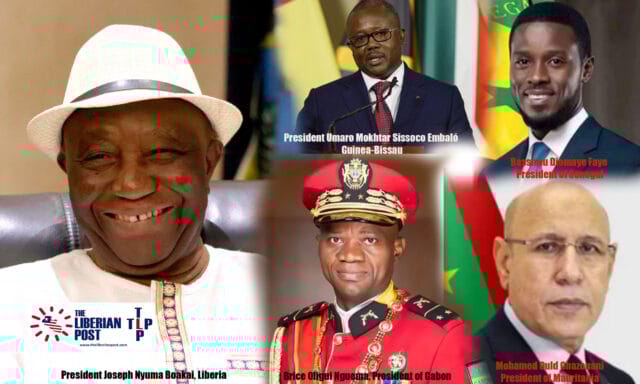
Four other African leaders joining President Boakai at the U.S.-Africa dialogue are Bassirou Diomaye Faye – President of Senegal; Umaro Mokhtar Sissoco Embaló – President of Guinea-Bissau; Mohamed Ould Ghazouani – President of Mauritania; and Brice Oligui Nguema of Gabon.
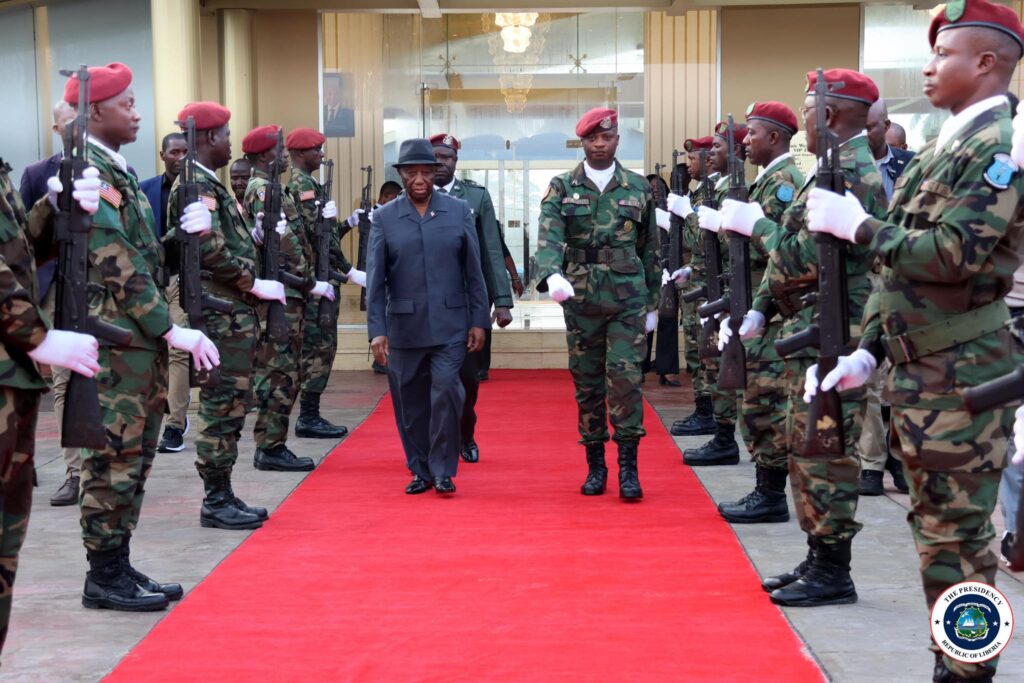
President Boakai’s participation in this important forum reflects Liberia’s growing voice on global issues and its strategic partnership with the United States.
Those accompanying the President to the U. S. Include, Sara Beysolow Nyanti, Minister of Foreign Affairs; Augustine Kpehe Ngafuan, Minister of Finance; Samuel K. Woods II, National Security Advisor; Major General Daniel Ziankahn (Rtd.), Military Advisor to the President; Jeff Bilbo, Chairman, National Investment Commission; Nathaniel Kwabo, Director General of the Cabinet; and Bedell Sandi, Special Envoy.
The President’s teams on protocol, communications, security are also part of the visit.
While the President is away, Cllr. Oswald N. Tweh, Minister of Justice, will chair the cabinet in consultation with the Vice President and President via telephone. The President is expected to return to Liberia following the conclusion of the summit on July 11, 2025.
Why is Trump meeting five African presidents this week?
Experts suggest that there will be more on the agenda than just commercial opportunities.
“A White House official explained last week that ‘President Trump believes African countries offer incredible commercial opportunities that benefit both the American people and our African partners,’” says DW’s Washington correspondent, Ines Pohl.
“In a recent update, Trump highlighted the vast commercial potential of African nations, suggesting stronger economic ties could be mutually beneficial. However, his administration has cut back on US foreign aid to Africa, viewing it as wasteful and incompatible with his ‘America First’ agenda. Instead, the focus is shifting toward trade and investment, particularly in West Africa’s critical minerals sector and regional security.”
Why these five countries?
Trump’s approach to Africa appears to have evolved since his first term. During a White House meeting on January 10, 2018, he famously referred to Haiti and several African countries as “shithole countries.”
“We recall those harsh words, but things have changed,” says Prof. Suleymane Bachir Diagne of Senegal, who teaches and researches at Columbia University in New York City. “Africa is now on the radar of the Trump administration. The continent is recognized as a place to make deals.”
But if Trump’s agenda truly centers on deals and ‘America First,’ why invite the presidents of these five relatively small economies? “It’s surprising,” Diagne says. “One might expect the usual suspects — large economies like South Africa or Nigeria. Instead, we have these five countries, which few anticipated.”
Donald Trump’s view of Africa has changed. He now looks interested in making deals with African countries.
What role do natural resources play?
In terms of trade volume with the US, the five countries are relatively minor players. However, all possess significant untapped natural resources:
Gabon is rich in oil, manganese, uranium, iron ore, gold, and rare earth elements; Guinea-Bissau holds deposits of phosphates, bauxite, oil, gas, and gold; Liberia has notable manganese and gold reserves, and diamonds have been found near its border with Sierra Leone; Mauritania is endowed with iron ore, gold, copper, oil, natural gas, and rare earth elements; and Senegal boasts gold, phosphates, iron ore, and rare earth minerals, in addition to oil and gas fields.
What about migration and drugs
“Controlling migration and drug routes — that’s what Donald Trump is truly interested in,” says Zakaria Ould Amar, an international consultant from Mauritania.
“These five countries lie directly on refugee and migrant paths that have, over the years, sent tens of thousands of people to the US-Mexico border. International drug routes also run through this region.”
Amar suggests that these security issues will dominate Trump’s talks with the five African leaders. “Economically, these countries are currently of little significance. I can’t see what Trump could realistically negotiate with them in terms of trade or business.” Trump is also interested in stemming the flow of migrants from African countries.
American affairs expert Prof. William Ferreira from Guinea-Bissau is skeptical: “I doubt this meeting will bring tangible benefits to the African countries involved. There’s no such thing as a free lunch.”
“Our president’s trip to Washington to meet Trump is not good news for Guinea-Bissau or its people,” he says. Ferreira notes that the Trump Administration has halted or drastically cut funding for aid projects in Africa, as well as in Guinea-Bissau, dimming any hopes tied to the meeting in Washington.
Five countries with rule of law challenges
For Guinea-Bissau’s President Umaro Sissoco Embalo, however, the gathering presents an opportunity to showcase himself as a respected statesman on the international stage, despite significant internal challenges. His term officially expired in February, yet he remains in office amid questions about the legality of his continued presence. The fate of scheduled elections in December remains uncertain.
“All five regimes, not just Guinea-Bissau, are grappling with major institutional problems and breaches of the rule of law,” Ferreira says. “But that doesn’t bother Trump. He wants to demonstrate he still has allies in Africa. For the five presidents, this event is a chance to present themselves as important and legitimate leaders internationally. And in fact, from their perspective, it greatly elevates their standing.”
Gabon’s current president, Brice Oligui Nguema, has faced serious corruption allegations and is linked to the recent coup that ousted Ali Bongo Ondimba. Liberia faces severe social challenges. Joseph Boakai has been president since January 2024. Mauritania’s President Mohamed Ould Ghazouani, a general and politician, has been in office since August 2019 but the country faces serious social problems.
Senegal, led by President Bassirou Diomaye Faye since 2024, confronts accusations of facilitating illegal international migration. Guinea-Bissau remains embroiled in institutional crises, with civil society groups accusing Umaro Sissoco Embalo of dismantling democratic structures and aiming to establish a dictatorship. His legitimacy is seen as derived not from the people but through international endorsements, such as the Washington meeting.
What are Liberians Saying About Pres. Boakai ‘Commercial Opportunities’ Meeting with Trump?
One of the reasons US President Donald Trump has invited the five African countries Presidents according to experts is not due to trade volume with the US because they are relatively minor players, however, all possess significant untapped natural resources.
In the case of Liberia, it has notable manganese and gold reserves, and diamonds have been found with its border with neighboring Sierra Leone.
What is Manganese? Manganese is a chemical element with the symbol Mn and atomic number 25. It is a hard, brittle, silvery-gray metal that is commonly found in the Earth’s crust. Manganese is an essential trace element that plays a crucial role in many biological processes, including metabolism, bone formation, and antioxidant function. It is also used in various industrial applications, such as the production of steel, batteries, and fertilizers.
In nature, manganese is typically found in the form of manganese oxides, which are abundant in soil, rocks, and minerals. It is also present in trace amounts in plants, animals, and human tissues.
Manganese has many important applications in modern society. One of its primary uses is in the production of steel, where it acts as a deoxidizer and desulfurizer, improving the strength and toughness of the steel. Manganese is also used in the production of batteries, such as alkaline and rechargeable batteries, due to its high electrochemical activity.
Despite its numerous industrial applications, manganese can also have detrimental effects on human health and the environment when present in high concentrations. Inhalation of manganese dust or fumes can lead to respiratory issues, and chronic exposure to manganese has been associated with neurological disorders known as manganism.
Is the Trump government taking interest in the Boakai’s administration due to the concentration of these huge natural resources that the country is endowed.
Some opposition elements have warned President Boakai not to offer Mount Wologizi to US companies on silver platter in return for “commercial opportunities”, because according to them Wologizi a reserved for future generations. Will US companies commit to investing more in Liberia following Boakai’s visit? These are questions that must be addressed at the Trump’s ‘Commercial Opportunities’ US-Africa Summit.
Liberia Opens Trade and Investment Office in Philadelphia to Boost U.S. Economic Ties
The Government of Liberia recently officially opened a Trade and Investment Office in Philadelphia, marking a significant step in strengthening bilateral commercial ties with the United States. The launch coincides with President Joseph Nyuma Boakai’s working visit to the U.S., where he is expected to headline a major business and trade conference in the city.
According to Ambassador Gurly Gibson-Schwarz, Liberia’s Trade and Investment Representative, the new office will operate as a one-stop resource center for both American and Liberian businesses. It will support efforts in market entry, joint ventures, investment facilitation, and regulatory guidance, focusing on key growth sectors such as agribusiness, energy, digital services, manufacturing, and sustainable tourism.
“Philadelphia’s long-standing history as a commercial hub and its growing role in global logistics make it a strategic location for this office,” Ambassador Gibson-Schwarz said. “It signals Liberia’s commitment to fostering robust trade partnerships across the United States.”

The two-day business conference is drawing high-level participants, including U.S. policymakers, Fortune 500 executives, diaspora entrepreneurs, investors, and development finance institutions. The sessions aim to drive investment into Liberia while forging new cross-border commercial opportunities.
President Boakai, who is in the U.S. at the invitation of President Donald Trump, will deliver the keynote address. He is expected to outline Liberia’s macroeconomic vision and present a portfolio of investment-ready projects, particularly those aimed at expanding value-added exports and creating employment for young Liberians.
Key conference sessions will focus on financing, risk mitigation tools from institutions like the U.S. Export-Import Bank (EXIM) and the U.S. International Development Finance Corporation (DFC), as well as multilateral development partners. Other panels will showcase “Made in Liberia” value chains and explore diaspora-driven innovation in areas such as infrastructure, renewable energy, roads, ports, agribusiness, and broadband.
The conference will also include the signing of a Memorandum of Understanding between the Government of Liberia and Laborers’ Local 332. A guided visit to a local shipyard is scheduled to cap off the summit.
Liberian officials say the launch of the Philadelphia office is part of a broader economic diplomacy strategy under President Boakai’s administration, designed to attract investment, increase exports, and position Liberia as a gateway to West Africa for U.S. businesses.
Are all these initiatives tied to President Trump’s interest in Liberia for ‘Commercial Opportunities’? What agenda President Boakai should push before President Trump and his government in regards to trade, investment and commercial opportunities?
U.S. Embassy Applauds $1.8 Billion Ivanhoe Atlantic Rail Deal with Liberia
Meanwhile, the U.S. Embassy in Monrovia has welcomed a momentous US$1.8 billion concession and access agreement signed between the Government of Liberia and U.S.-owned Ivanhoe Atlantic. The agreement paves the way for a multi-user railway system intended to span from Yekepa to the Port of Buchanan forming a crucial corridor for iron ore exports and positioning Liberia as a regional logistics hub.
U.S. Embassy Highlights Strategic Benefits
According to the Embassy’s statement, the deal is aligned with President Joseph Boakai’s vision of transitioning Liberia from an aid-dependent economy toward one based on trade and infrastructure-led growth. The Embassy emphasized that this agreement exemplifies a shift in U.S.–Liberia relations “from aid to trade” and marks a milestone in increased U.S. private investment in Africa.
Transparency Concerns Amid Secret Signing
Despite the celebration, the deal was finalized amid controversy: journalists were reportedly barred from attending the signing ceremonies held privately on July 5 and July 6, sparking criticism over the deal’s secrecy and fueling skepticism among public watchdogs.
Critics raise concerns that Ivanhoe Atlantic, the rebranded version of High-Power Exploration (HPX), may have undisclosed ties to Chinese state-owned enterprises. Investigative reports suggest the company’s ownership includes Chinese investors Zijin Mining and CITIC Bank triggering fears that the rail corridor could serve broader Chinese strategic interests in West Africa.
Conservative figures in Washington such as Trump allies like Laura Loomer and Senators Ted Cruz and Jim Risch have voiced alarm, accusing the U.S. State Department of prematurely endorsing a partnership that might undermine American influence and amplify China’s role in resource logistics.
Ivanhoe Atlantic insists it’s a U.S.-registered company with no Chinese state ownership, and that U.S. foreign assistance only supported policy but did not influence negotiations. Meanwhile, a senior U.S. State Department official, Massad Boulos, reaffirmed U.S. backing for Liberia’s multi-user rail ambitions. A press release from Ivanhoe detailed that the project could bring US$1.4 billion in rail fees, $600 million in taxes, $900 million in infrastructure investment, and tens of thousands of new jobs over 25 years.
The agreement reportedly awaits final approval by President Boakai and subsequent ratification by Liberia’s Legislature, after which the long-term rail concession and governance structure would be established.
Benefits: Transforms Liberia’s rail infrastructure into a multi-user asset, attracting investment beyond mining; Signifies a strategic shift in U.S.–Liberia relations, from humanitarian aid toward mutually beneficial trade and Stokes geopolitical concern in Washington amid broader U.S.–China rivalry on the African continent.
The Ivanhoe Atlantic–Liberian government deal marks a critical juncture in Liberia’s infrastructural and economic development—and a potentially pivotal front in the broader competition between U.S. and Chinese economic interests in Africa.
The proposed Ivanhoe project includes four major components: expansion of the existing rail corridor from Tokadeh to Buchanan; rehabilitation of the abandoned rail line north to Yekepa; construction of a 2–3 km rail spur to the Guinean border; and expanded port capacity in or near Buchanan.
Liberia’s railway is a strategic national asset — one of only a handful in West Africa with direct port access to the Atlantic. Under current arrangements, the Government of Liberia owns the infrastructure while ArcelorMittal, a longstanding investor, operates it and shares access under multi-user terms.
ArcelorMittal has invested over US$500 million in Liberia since 2005 and employs more than 3,200 Americans across facilities in Ohio, Texas, and Alabama. In 2024 alone, it spent more than US$100 million on U.S.-made equipment for its Liberian operations.
ArcelorMittal Liberia is also one of Liberia’s largest private sector employers, directly employing between 3,000 and 3,500 workers, with over 90 percent of them being Liberian nationals. The company also supports thousands of additional jobs indirectly through contractors and local suppliers.
“If Ivanhoe takes control, you’re looking at dual-use infrastructure with unclear governance,” warned a logistics consultant with knowledge of the railway system. “It’s not just the steel that moves – it is influence.”
President Boakai’s trip to the US based on President Trump’s invitation where trade, commerce and investment opportunities are to be discussed and coupled with the signing of the US$1.8 billion concession and access agreement between the Government of Liberia and U.S.-owned Ivanhoe Atlantic signifies the US government interest in Liberia for trade purposes after
Donald Trump’s view of Africa has changed. He now looks interested in making deals with African countries.