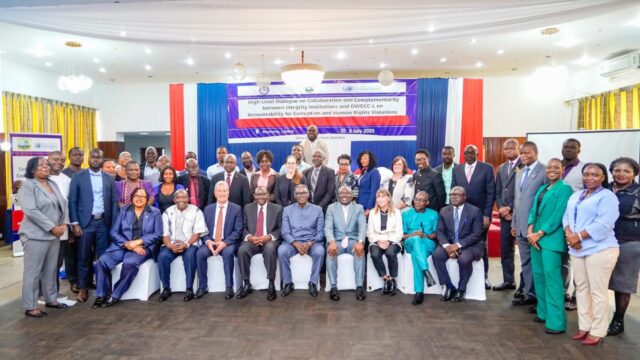
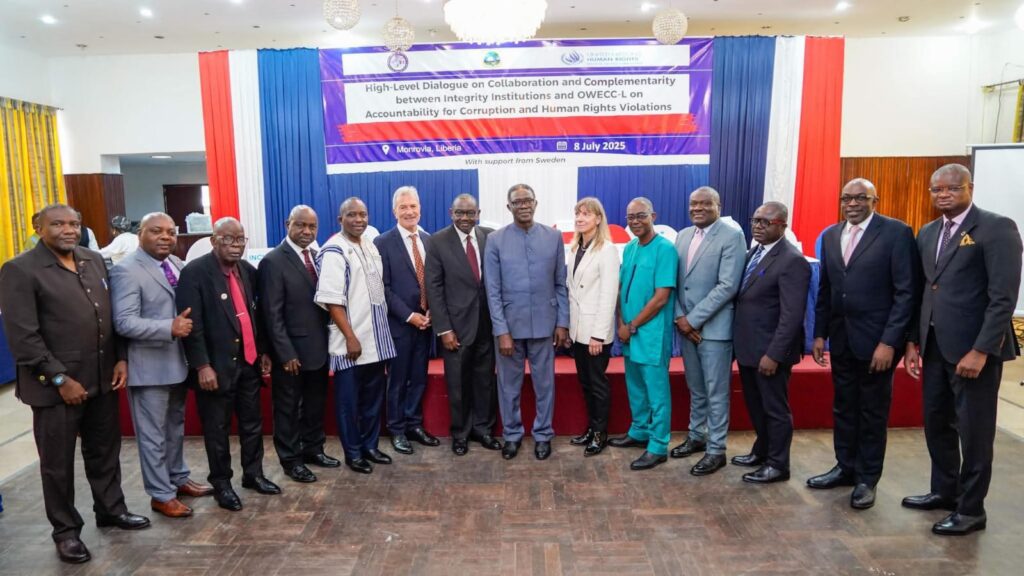
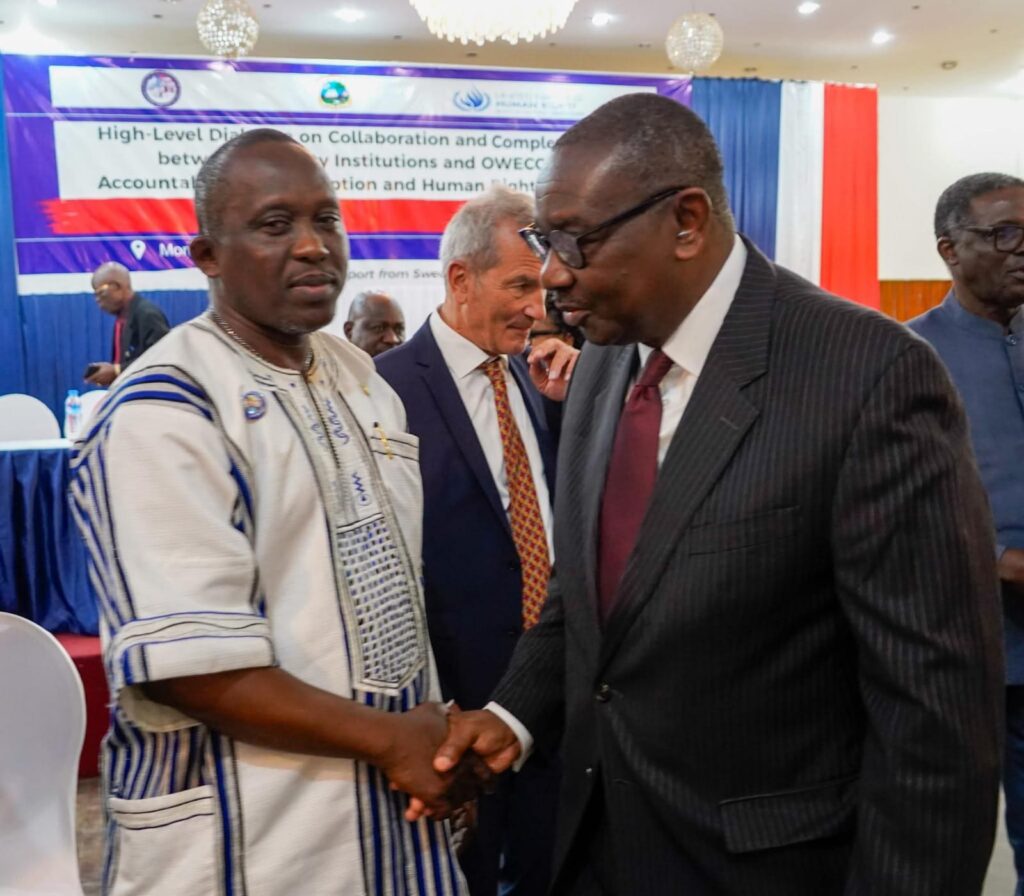
The Office of the War and Economic Crimes Court in Liberia (OWECC-L) has commenced a pivotal three-day working session aimed at fostering collaboration and complementarity between integrity institutions and OWECC-L.
The event places a strong emphasis on accountability for corruption and human rights violations in the country.
During the opening remarks, Executive Director Dr. Cllr. Jallah A. Barbue expressed gratitude to President Joseph Nyuma Boakai, for his steadfast leadership and commitment to combatting corruption.
“Before delving further into our agenda, I must acknowledge President Boakai for his bold actions against corrupt public officials and for confronting the pervasive culture of impunity that has haunted our nation,” said Dr. Barbue, underscoring the importance of support from international partners in fighting corruption.
Dr. Barbue also praised the efforts of the Technical Committee, noting that collaboration has been essential in bringing forth this dialogue to address the pressing issues of corruption and human rights violations.
He explained the historical context of corruption in Liberia, drawing parallels to the events of April 12, 1980, when a military coup led to the brutal execution of government officials under the guise of eliminating corruption, highlighting the cycle of violence and retribution that has plagued the country.
Reflecting on Liberia’s tumultuous past, Dr. Barbue questioned the effectiveness of past governmental efforts to address issues of corruption, referencing the 1979 “Rice Riot” and the subsequent civil war that resulted in over 250,000 deaths and extensive displacement.
“Corruption has become systemic and deeply embedded in our culture,” he lamented, challenging attendees to consider whether the country has truly addressed this critical issue.
The discourse shifted towards the establishment of a National Anti-Corruption Court, a proposal reinforced by Executive Order No. 148, which aims to create a framework for accountability and justice.
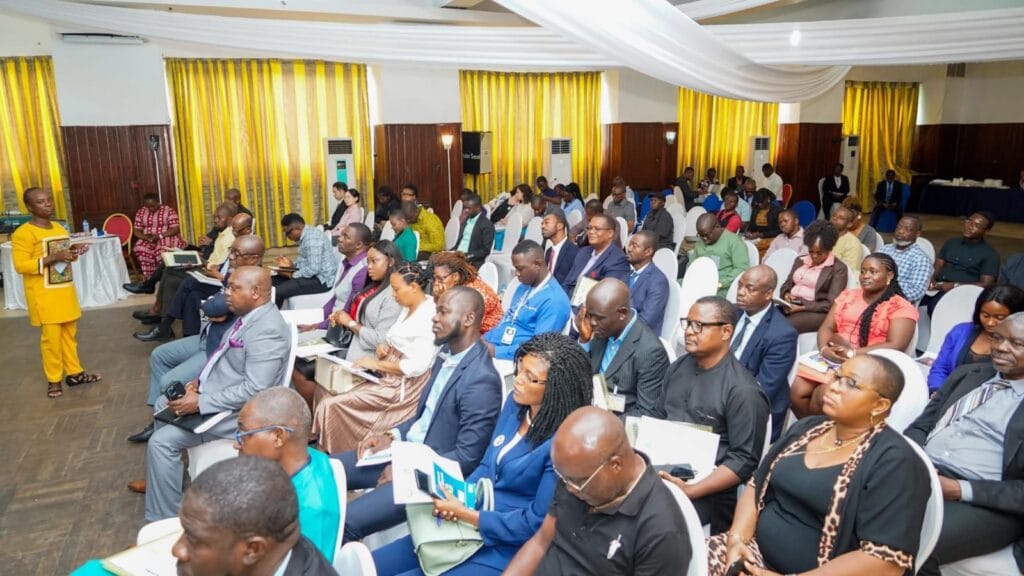
However, Dr. Barbue expressed concern over the lack of financial support necessary for the OWECC-L to fulfill its mandate, citing that despite a commitment of $2 million annually from the government, no funds had been disbursed to date.
“We find ourselves in a dire situation where the very structures intended to combat corruption are facing financial neglect,” he stated.
The urgency of the situation was starkly illustrated by Dr. Barbue’s reference to the indifference that perpetuates corruption, echoing sentiments from noted thinkers on the importance of vigilant institutions in combating impunity.
“As we gather here today, I implore the youth and all members of society to take a stand against corruption and work diligently towards the establishment of a functional National Anti-Corruption Court,” he urged.
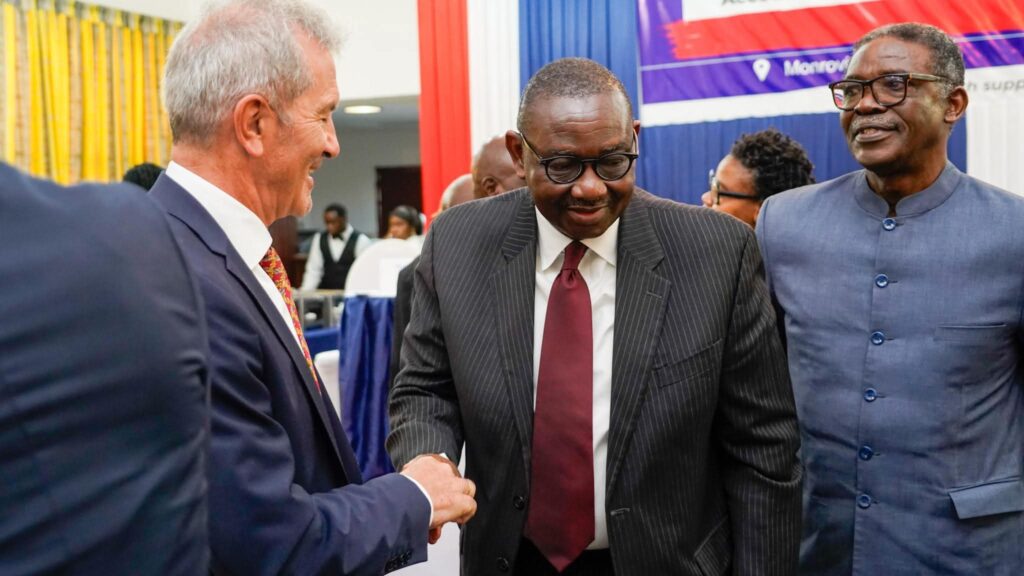
As the session progresses, participants are expected to engage in fruitful discussions aimed at solidifying strategies for enhancing integrity and accountability within Liberia’s institutions. Dr. Barbue’s closing words served as both a challenge and a rallying call.
“Together, let us embark on this journey towards a corruption-free future for Liberia, wherein justice prevails and the voices of the oppressed are heard.”
The working session is a significant step in Liberia’s ongoing struggle against corruption, aiming for tangible results and a brighter future for its citizens.