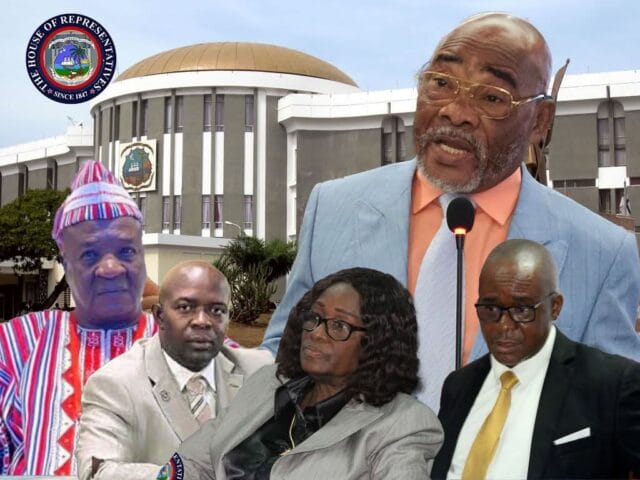
MONROVIA – A high-level Interagency–Legislative Peer-to-Peer Review Meeting on the Electoral Boundary Delimitation Process was convened on Wednesday July 9, 2025 in the Chambers of the House of Representatives in Monrovia.
The session brought together key national institutions and members of the Legislature to review and coordinate efforts surrounding Liberia’s ongoing electoral boundary delimitation initiative.
The meeting commenced with self-introductions followed by welcome remarks and a statement of purpose from the Chairperson of the House Committee on Elections and Inaugurations, Prof. Thomas Romeo Quioh.
In outlining the roles and responsibilities of participating entities, the Chairperson emphasized the need for a data-driven, legally grounded, and transparent process to ensure credible electoral outcomes and equitable representation.
The institutional segment featured focused presentations from critical stakeholders:
The National Elections Commission (NEC) presented an overview of the legal framework, core principles, and the current status of the electoral boundary delimitation process.
The Liberia Institute for Statistics and Geo-Information Services (LISGIS) highlighted the role of data from the 2022 National Population and Housing Census in informing the boundary review.
The National Identification Registry (NIR) shared insights on how population data and identification systems align with electoral boundary planning.
The Ministry of Internal Affairs (MIA) discussed administrative boundary considerations and the importance of engaging local government structures.
Following the technical presentations, members of the House Committee on Elections and Inaugurations, alongside other lawmakers, engaged in a robust session of reflections and responses, emphasizing the critical role of the Legislature in ensuring oversight, legal clarity, and institutional coordination.
The open discussion and peer engagement segment allowed participants to deliberate on key issues such as coordination mechanisms, potential legal gaps, and the integration of data sources. Participants also identified operational challenges and proposed recommendations to strengthen the boundary delimitation process.
The meeting concluded with a summary of key action points, outlining agreed-upon next steps and timelines. In his closing remarks, the Chairperson of the House Committee on Elections and Inaugurations reaffirmed the Legislature’s commitment to ensuring a credible and inclusive delimitation process anchored in law, data, and participatory engagement.