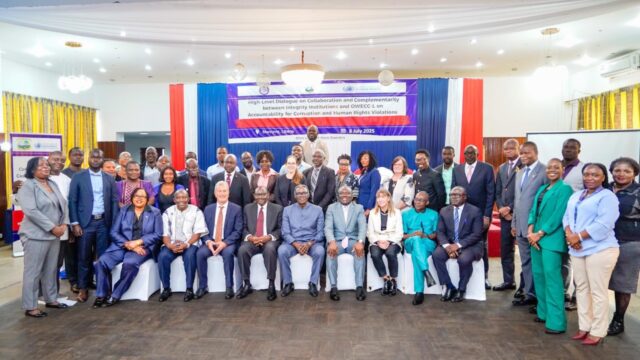
MONROVIA – On Tuesday, July 8, 2025, the Office for the Establishment of the War and Economic Crimes Court in Liberia (OWECC-L) in partnership with the United Nations Human Rights Office in Liberia (UNHRO) commenced a High-Level Dialogue and Working Session on Collaboration and Complementarity between Integrity Institutions and OWECC-L on Accountability for Corruption and Human Rights Violations.
The Dialogue and Working Session which lasted for three days, from Tuesday, July 8 to Thursday, July 10, 2026, aimed to build synergies among stakeholders (integrity institutions and partners’) human rights and anti-corruption efforts in line with national transitional justice priorities.
On Day-1 of the high-level dialogue, several stakeholders including Ambassadors of the European Union (EU): Sweden and Germany; Cameroon, ECOWAS, UNRC, and integrity institutions, including the Law Reform Commission (LRC), Liberia Anti-Corruption Commission (LACC), Independent National Commission on Human Rights (INCHR), as well as government institutions, including the House of Representatives, the Senate, the Judiciary and Ministry of Justice, made special remarks in line with the dialogue.
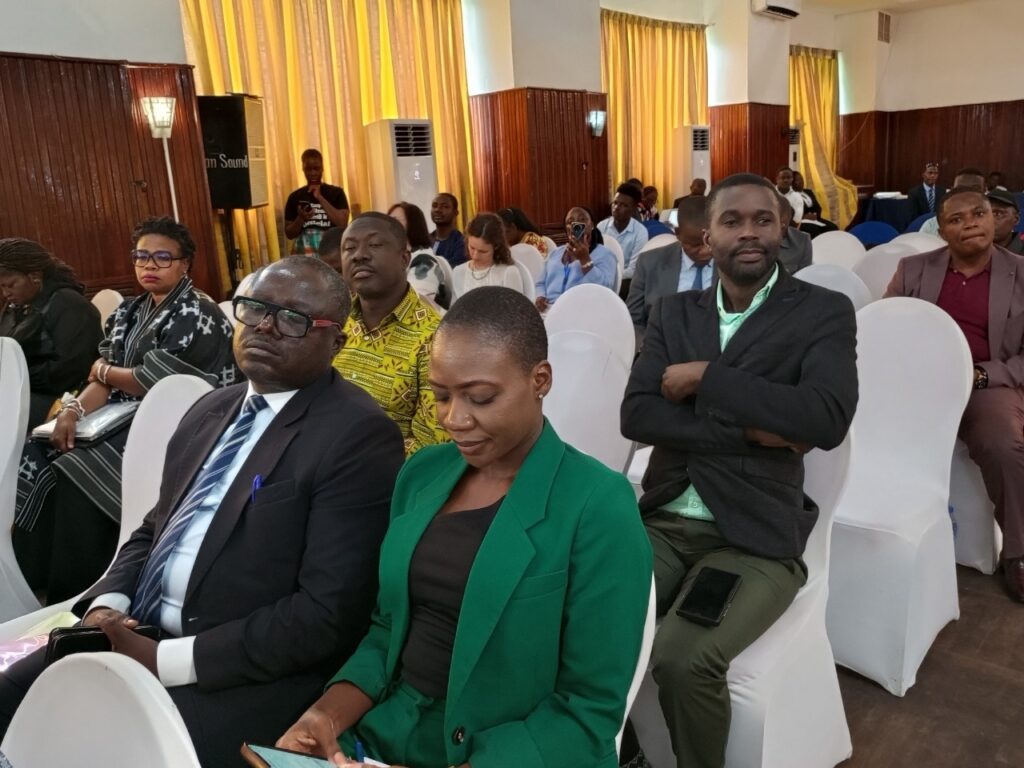
Giving the overview of the Dialogue and Working Session, the Executive Director of Office for the Establishment of the War and Economic Crimes Court – Liberia (OWECC-L), Dr. Cllr. Jallah A. Barbu firstly lauded President Joseph Nyuma Boakai for taking concrete and practical actions to penalize alleged corrupt public officials and confront impunity. Dr. Barbu also thanked international institutions and partners for their supports in the fight against corruption. Dr. Barbu said the Dialogue and Working Session reawakened the resolve of Liberian integrity institutions with the support and collaboration with international partners to crack down on corruption.
On his part, the acting Chair of the Cabinet and Minister of Justice, Cllr. N. Oswald Tweh, who delivered remarks at the high-level dialogue, reaffirmed Liberia’s steadfast commitment to transparency, accountability, and national healing.
Cllr. Tweh emphasized that the success of the War and Economic Crimes Court establishment, is mostly dependent on collective responsibility and bargaining between the government’s integrity institutions, relevant civil society actors, the victims and the public.

He recognized the pivotal roles played by civil society actors, traditional leaders, regional partners, and local communities in shaping a justice system that champions credible, cultural inclusivity in the dispensation of Transitional Justice and still continues to do so.
Additionally, the Minister of Justice and Attorney General, Cllr. Barbu, and his team at the Office for the OWECC-L on the tremendous strides made in a short while since it was instituted to establish the War and Economic Crimes Court as per Executive Order #131, issued by President Joseph Nyuma Boakai, Sr. in 2024.
Cllr. Tweh also thanked regional and international partners who have committed to support Liberia in this process.
The conference on Transitional Justice is part of several national stakeholders’ engagement activities that will precede the establishment of the War and Economic Crimes Court.
“Transitional justice refers to the mechanisms and processes that societies use to address past human rights abuses, mass atrocities, or large-scale conflict, aiming to ensure accountability, serve Justice, and promote reconciliation.”
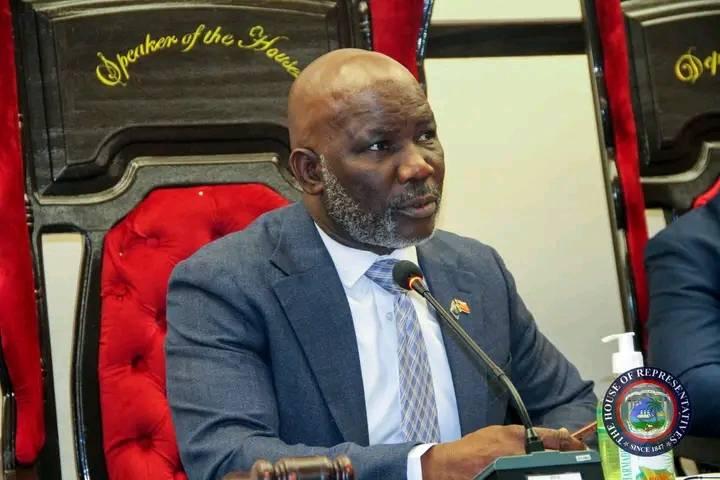
Speaker Richard Nagbe Koon Reaffirms Legislative Support for OWECC-L and NACC
Also speaking at the high-level dialogue, the Speaker of the 55th Legislature, Richard Nagbe Koon, reiterated the House’s support for the establishment of the War and Economic Crimes Court in Liberia, as well as the National Anti-Corruption Court (NACC). He also reaffirmed the unwavering support of the House of Representatives for the establishment and full operationalization of the OWECC-L.
Delivering a special statement at the High-Level Dialogue and Working Session held at Monrovia City Hall Tuesday, Speaker Koon stressed that Liberia stands at a critical crossroads – one that demands bold, honest, and united action to advance justice, accountability, and anti-corruption efforts.
“We gather at a time that demands for bold and honest action — action that aligns accountability with justice, and anti-corruption with human rights,” Speaker Koon declared.
He noted that the Legislature has already taken significant steps, including the passage of a Joint Resolution supporting the Court’s creation and ensuring an initial budgetary appropriation to begin its operations.
Speaker Koon acknowledged that while important strides have been made, greater legislative, legal, and financial support is required to strengthen the Office as it transitions from its formative stage to full operation.
He pledged that the House of Representatives will prioritize: The review and passage of the draft bill establishing a specialized anti-corruption court; Increased financial appropriations to empower the OWECC-L; and, Sustained legislative oversight and collaboration with integrity institutions.
The Speaker also stressed the importance of synergy among integrity institutions and called for structured national dialogue that fosters diverse partnerships, awareness, and inclusive participation.
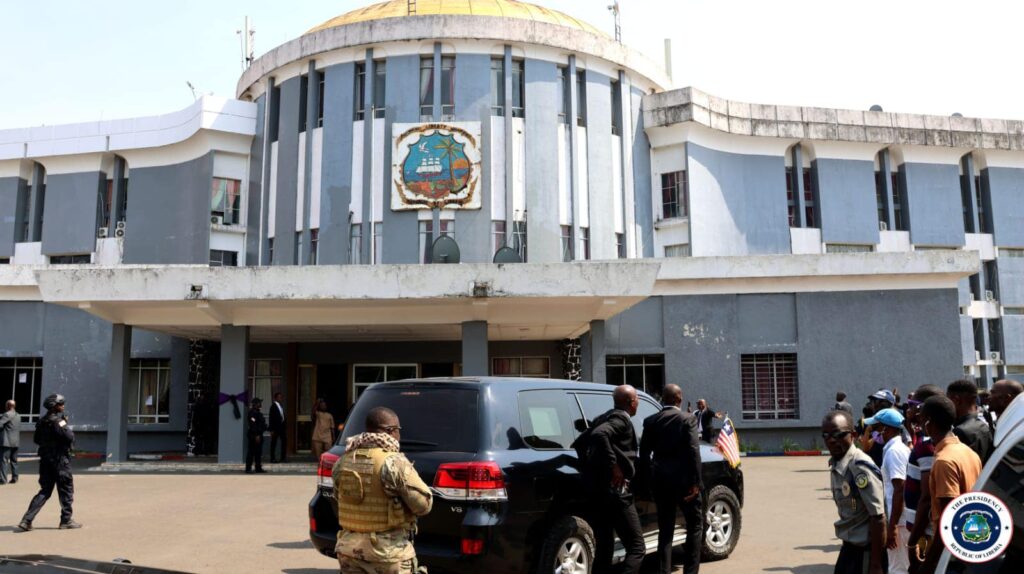
“More than law and money, people are very important. Synergy is crucial. Collaboration between integrity institutions and the War and Economic Crimes Office is key,” he added.
Meanwhile the Speaker has disclosed that the House of Representatives is contemplating legislation to elevate the current Assets Recovery Unit into a full-fledged anti-corruption agency with broader legal authority and operational independence.
Speaker Koon concluded by assuring stakeholders of the Legislature’s deep investment in the credibility, legal soundness, and successful implementation of the War and Economic Crimes Court process. “To this end, we commit our fullest legislative support,” he pledged.
The event brought together high-level representatives from the Executive, Judiciary, Diplomatic Corps, development partners, and civil society, marking a major step toward deepened coordination and national ownership of transitional justice and anti-corruption reforms.
In concerted efforts, several international stakeholders including Ambassadors of the European Union (EU), Sweden, Germany, Cameroon, ECOWAS and UN Resident Coordinator Office unanimously lauded the Liberian government and OWECC-L for their continuous resolve and initiative to bring full closure of the Liberian civil war in pursuit of establishing the War and Economic Crimes Court in Liberia, as well as for setting the stage to establish the National Anti-Corruption Court (NACC), all geared toward transparency, accountability and good governance.
There was a plenary held on Day-1 with Dr. Cllr. Jallah A. Barbu, Executive Director of OWECC-Liberia giving an overview of Executive Order #148, with emphasis on the establishment of the National Anti-Corruption Court (NACC). Also, Mr. Mohammed Youssef, of the UN Justice and Corrections Standing Capacity (JCSC) outlined key principles for the establishment of a NACC based on international norms and standards.
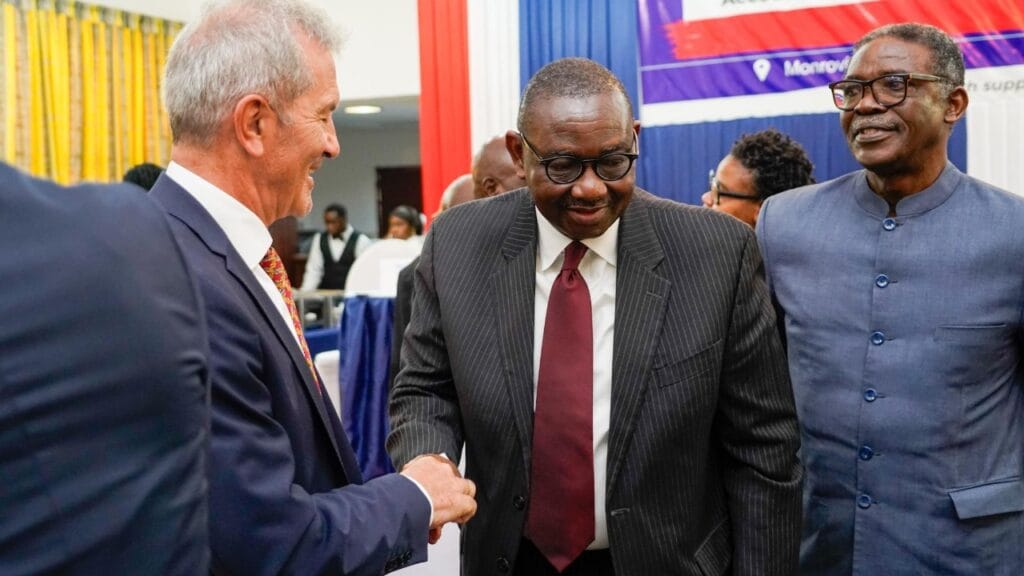
Also, during the plenary, via video link Mr. Pradeep Wagie, Chief of Economic, Social and Cultural Rights Section of the Office of the High Commission on Human Rights (OHCHR) in Geneva, Switzerland pointed out the links between human rights principles and anti-corruption efforts, while OWECC-L Executive Director of Anti-Corruption Division, Ms. Asatu Bah-Kenneth presented findings of the OHCHR regional workshop held in Banjul, The Gambia in April 2025.
On the same Day-1, there were panel discussions with integrity institutions participating. The Law Reform Commission (LRC), INCHR, LACC, Office of the Ombudsman, and CENTAL made contributions towards the development of the National Anti-Corruption Court (NACC), during the second panel discussion, Assets Recovery Unit, LACC, GAC, Internal Audit Agency (IAA) and Financial Intelligence Unit (FIU) discussed strategies to enhance collaboration, coordination, and complementarity for successful establishment of the NACC.
The High-Level Dialogue and Working Session on Collaboration and Complementarity between Integrity Institutions and OWECC-L on Accountability for Corruption and Human Rights Violations moved on to Day-2 on Wednesday, July 9, 2025 at the OWECC-L offices in Mamba Point, where the session focused on the technical aspect in setting up of the NACC.
Mapping of key national accountability mechanisms working on anti-corruption were identified and discussed to avoid overlapping of functions but rather to collaborate. Examples of successful prosecution of anti-corruption and economic crimes in Liberia – opportunities, challenges and lessons learned were highlighted.
The Law Reform Commission (LRC) and the Liberia National Bar Association (LNBA) spearheaded presentations and discussions on the options for the model – legal mandate and jurisdiction of the future NACC.
There were also working sessions that focused on the jurisdiction of the NACC; the relationship of the NACC with other national courts and other national accountability mechanisms; the structure of the NACC; and the location of the NACC. All of the integrity institutions and international partners that formed part of the technical working group participated in these discussions.
On Day-3, Thursday July 10, 2025, which was the last day of the high-level dialogue and working session, concrete actions to enhance collaboration, coordination, and complementarity for the successful establishment of the NACC were discussed by the technical working groups of the integrity institutions and partners.
The Press Union of Liberia (PUL), president Julius Kanubah and Integrity Watch presented on the role of civil society and the media in the establishment and operation of the NACC. This was followed by working session that focused on concrete actions to improve collaboration, coordination, and complementarity between stakeholders.
At the close of the High-level Dialogue and Working Session, OWECC-L Executive Director, Dr. Cllr. Jallah A. Barbu hailed the commitment, dedication and sacrifice of the integrity institutions and international partners who worked so hard for three days, along with OWECC-Liberia to build synergies in the stakeholders (integrity institutions and partners’) human rights and anti-corruption efforts in line with national transitional justice priorities.
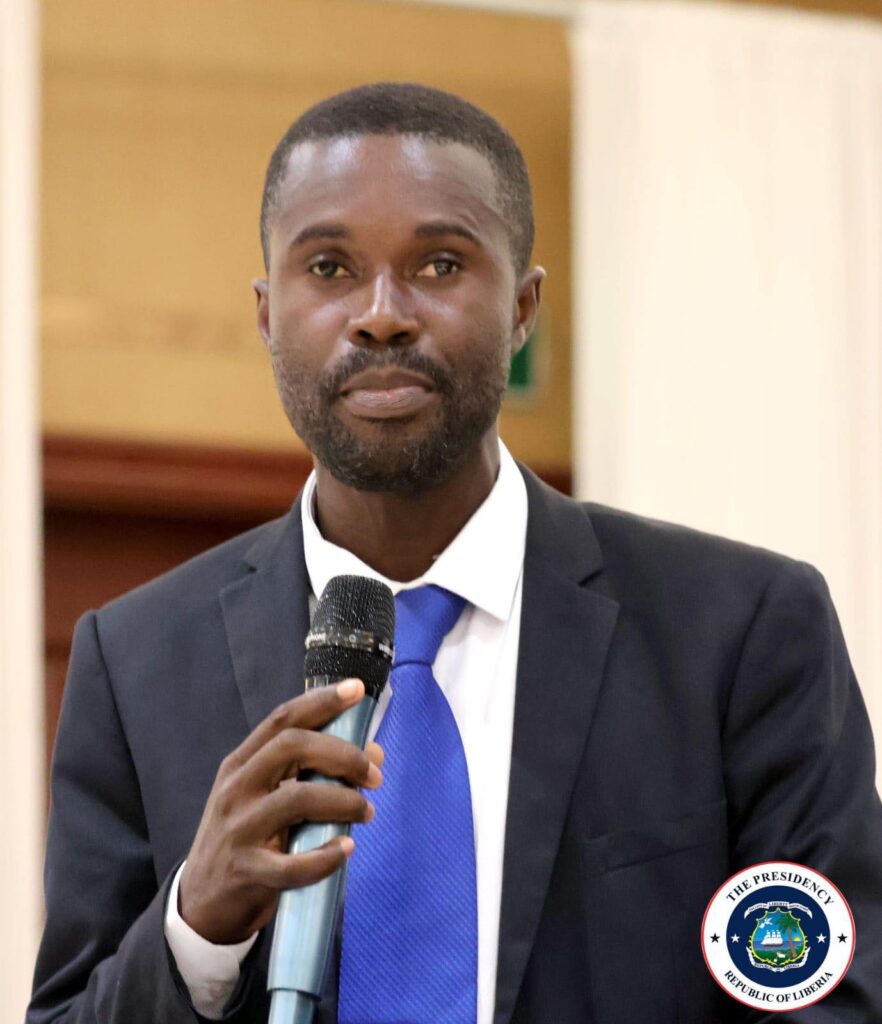
Dr. Cllr. Barbu reiterated OWECC-L’s commitment in carrying out its mandate with the support of local and international stakeholders and partners for the establishment of the War and Economic Crimes Court (WECC) and that of the National Anti-Corruption Court (NACC) in Liberia.
He challenged the Liberian Government to deliver on its promise of making funding available for the establishment and operationalization of these courts – WECC and the NACC.
The high-level dialogue and working session brought together leading integrity institutions and relevant Civil Society Organizations, who are the major stakeholders in the implementation, coordination and advancement of Liberia’s transitional justice efforts.
Among those in attendance were representatives from the Independent National Commission on Human Rights, Office of the United Nations High Commissioner for Human Rights, Liberia National Bar Association, Press Union of Liberia, National Muslim Council of Liberia, Liberia Council of Churches, Civil Society Advocacy Platform of Liberia among others.