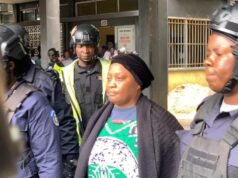
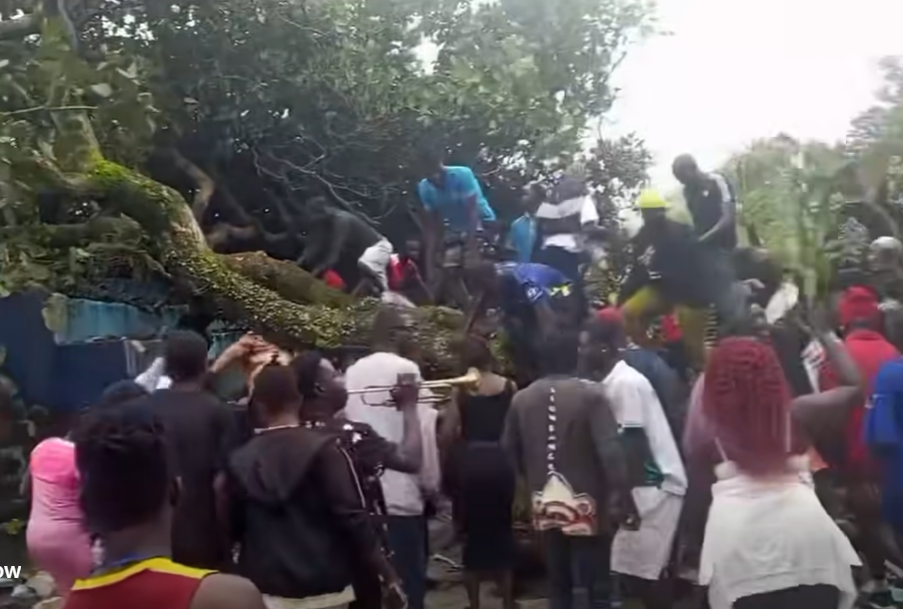
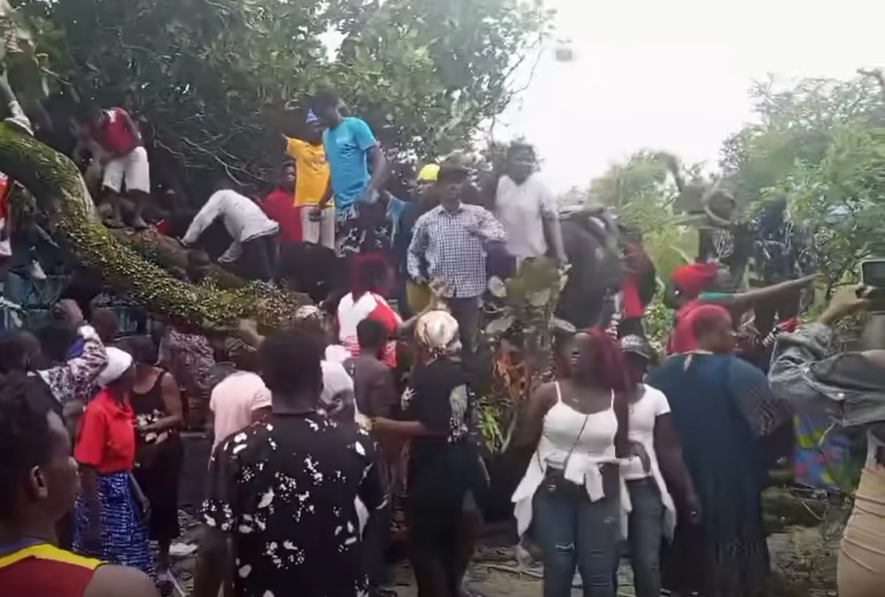
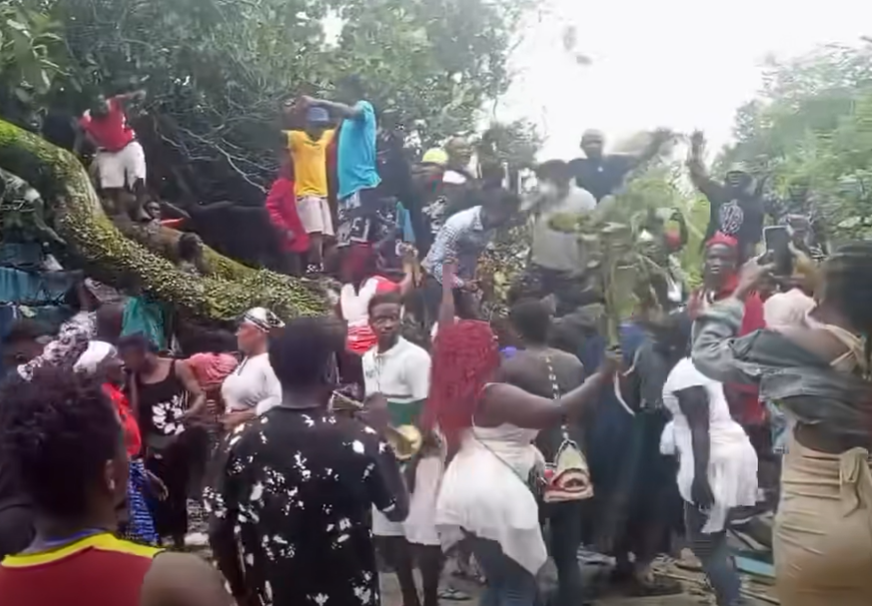
MONROVIA – Undeterred by the demolition of its long‑standing compound in Congo Town, supporters of the Congress for Democratic Change (CDC) returned on Tuesday, August 26, to the former party headquarters—now privately owned—and solemnly “worshipped” the remains of a tree they once held sacred.
The Lost Symbol
For decades, the ‘sycamore tree’—a famous tree brought into the country by the Liberia Forestry Development Authority (FDA) for reforestration purposes back in the day and planted by the owner of the ‘CDC compound’—served as the political heart of the party. Beneath its ‘canopy’, partisans gathered to welcome newcomers, strategize, and renew their dedication. Many saw it as a symbol of strength, refuge, and spiritual grounding.

Despite a court-ordered eviction and the demolition of the CDC headquarters on Saturday, August 23, hundreds of loyalists returned to the privately-owned property of Martha Stubblefield Bernard, venerating the fallen tree by singing, bowing, kissing fragments of its remains, and voicing denunciations of those they deemed responsible for the party’s eviction.
Legal Breakdown
The eviction was ordered following a century-old property dispute. In a July 31 ruling, Civil Law Court “A” Judge George W. Smith enforced a 2016 Supreme Court judgment, ordering the eviction of the CDC from the 4.23-acre Bernard estate property. Despite legal maneuvering, including a disallowed “Bill of Information,” the courts reaffirmed the CDC’s status as tenant, not owner.
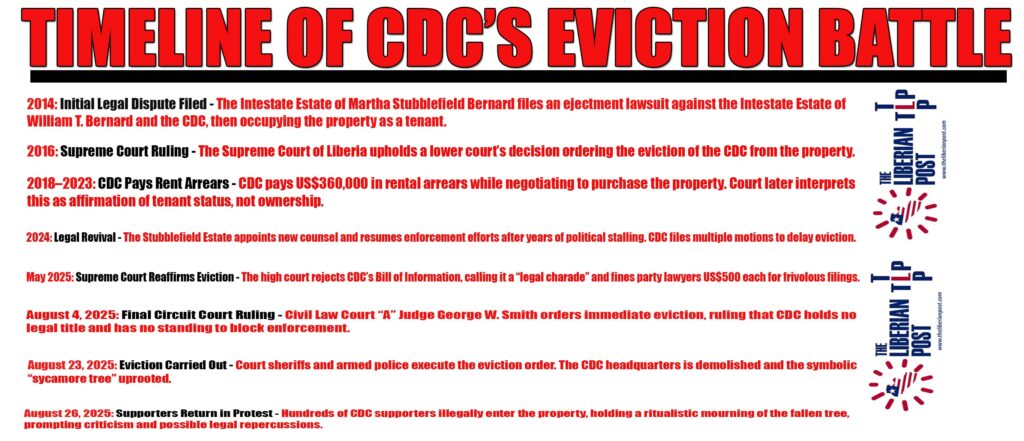
The Supreme Court dismissed the CDC’s claims, describing their filings as “preposterous,” “impermissible,” and a “legal charade,” going so far as to fine CDC lawyers US$500 each.
Judge Smith reinforced the ruling on August 4, rejecting CDC’s request to enforce an alleged purchase agreement, stating the party held no legal claim to ownership, only possession through rent arrangements.
Expert Opinions on Trespass
Legal analysts are clear: CDC supporters who ventured onto the property after eviction are in violation of the law, potentially exposing themselves and their party to civil action. One pundit told The Liberian Post: “That is a trespass… without authorization, and the law can penalize violators.” Another added: “It is unheard of… to return days after eviction to trespass and cause public disturbance.”
Some die‑hard supporters labeled the act “political trespass,” but legal experts note that—even with innocent intent—unauthorized entry onto private property is a prosecutable offense.
Political Reverberations
The fall of the CDC’s Congo Town headquarters represents a symbolic blow to the party, which governed from 2018 to 2024. Former President George Weah urged members to accept the legal outcome and channel their energies toward rebuilding, preparing for the 2029 General Elections.
Yet, partisan grief and blame have been steeped in criticism of the party’s leadership. Some rank-and-file supporters accuse former officials—many enriched during their time in office—of neglecting the party’s foundation. “You built mansions and wealth but abandoned CDC,” lamented one supporter.
Wider Political Undertones
Public reaction has been starkly divided. Critics of the eviction decried it as politically motivated, arguing that similar actions against other political entities might be met with equal ferocity. The Citizens Movement for Change, another opposition political party, described it as “a sad day for Liberian politics”, cautioning that public humiliation erodes democratic norms.
President Joseph Nyuma Boakai, on the other hand, defended the eviction as lawful enforcement—insisting it was strictly a court-mandated action, not political retaliation.

Looking Ahead
With its symbolic heart torn down, the CDC now faces the practical challenge of finding a new base—and maintaining its grassroots connection. The “sycamore tree,” once a rallying point for a populist movement, is now a memory. Whether the CDC can rebuild—or even survive—without it remains to be seen.