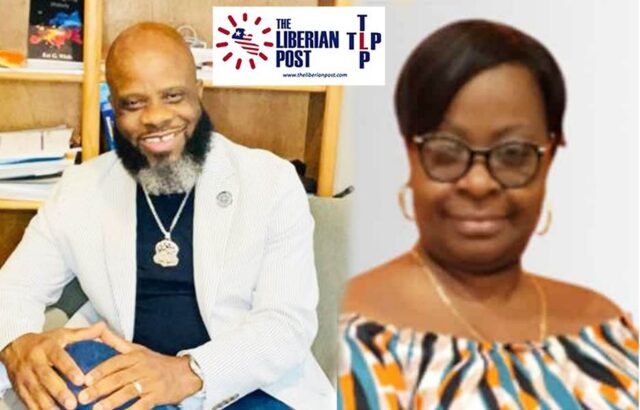
MONROVIA – The Union of Liberian Associations in the Americas (ULAA), long regarded as the nonpartisan voice of the Liberian diaspora, is facing mounting criticism after its sitting National Vice President, Mrs. Emmanuette G. Nagbe, accepted an appointment as Chairperson of the Women’s Wing for the opposition Citizens Movement for Change (CMC) in the United States.
The move has sparked concerns from several diaspora leaders who argue that ULAA’s leadership must remain politically neutral to preserve the organization’s founding principles and its credibility as a watchdog institution for good governance in Liberia.
A “Dangerous Blurring of Lines,” Says Diaspora Leader
Sizi Goyah, Vice Chairman of the Organization of Liberians in Minnesota (OLM) — the largest ULAA member organization — was one of the first to publicly raise the alarm.
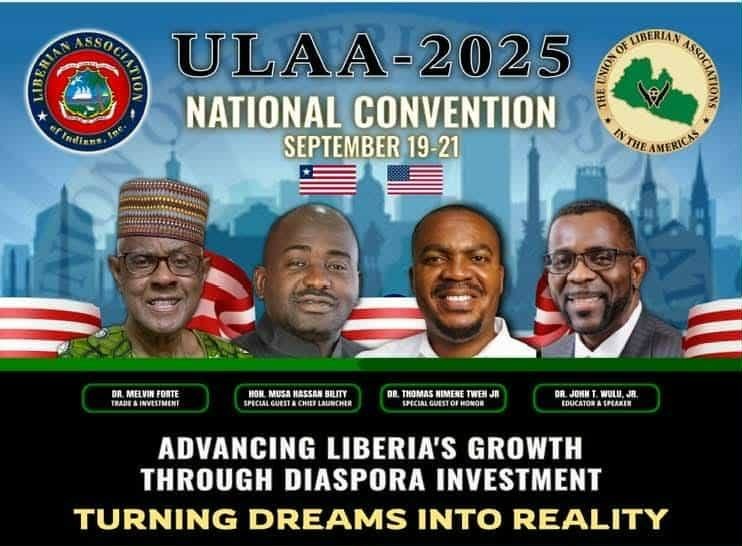
“The Citizens Movement for Change (CMC) recently appointed ULAA’s sitting Vice President to a prominent leadership role. And now, according to the flyer for the upcoming ULAA National Convention, Musa Hassan Bility — the sole proprietor of CMC — is listed as the Keynote Speaker,” Goyah wrote on social media.
“This is not just a coincidence. It’s a dangerous blurring of lines.”
He warned that such developments risk undermining the apolitical integrity of ULAA, which has, since its founding in 1974, served as a neutral platform for Liberians abroad to advocate for peace, human rights, and democratic governance back home.
Calls for Resignation and Boycott
Goyah went further, calling on CMC to withdraw Mrs. Nagbe’s appointment — or for her to voluntarily resign from ULAA if she wishes to serve in a political role.
“You cannot be a partisan leader and simultaneously claim to represent a nonpartisan diaspora institution,” he argued, referencing the precedent set by Varney Sackey, a former ULAA Vice President who resigned when he entered active politics in Liberia. “That was integrity. That was leadership,” Goyah said.
In a sharp rebuke, Goyah laid out potential steps his organization may take if no corrective action is made:
- A full boycott of all ULAA national activities
- Suspension of financial support to ULAA
- Reconsideration of OLM’s membership in the national body
“ULAA must remain independent. It must remain principled. It must remain unsold,” he stated. “We will not allow our institutions to be quietly co-opted. Not while we’re watching.”
The CMC Appointment: A Political Promotion or Organizational Overlap?
While the exact date of Mrs. Nagbe’s appointment remains unclear, a recent CMC press release, endorsed by Dr. Francien Chenoweth Richardson, CMC’s Global Chairperson, confirmed her selection as Chairperson of the Women’s Wing for the Diaspora (USA). Her responsibilities, the statement said, include:
- Mobilizing and organizing Liberian women in the diaspora
- Supporting CMC’s political vision and agenda
- Promoting grassroots engagement for change in Liberia
CMC praised Mrs. Nagbe’s “extensive experience” and noted that her position within ULAA offers strategic opportunities to grow the party’s reach and credibility abroad.
“In her new role, Mrs. Nagbe will be responsible for bringing together CMC Women in the USA to engage with women across the United States in support of the CMC’s agenda,” the release reads. On the side, her husband, Mr. Victor Nagbe, too, is an executive of CMC USA; and he is also the Chairman of ULAA Diaspora Affairs Committee.
ULAA’s Founding Mission and the Nonpartisan Debate
Founded in 1974, the Union of Liberian Associations in the Americas (ULAA) was established to serve as a nonpartisan umbrella organization representing Liberians in the diaspora. Over the years, ULAA has been a strong advocate for:
- Good governance in Liberia
- Human rights protection
- Anti-corruption reforms
- Civic engagement across diaspora communities

Though the organization has often engaged with Liberian governments and political actors, it has consistently steered clear of political endorsements or affiliations to maintain its neutral standing and moral authority.
Internal rules or codes of conduct within ULAA regarding political activity by its officers remain unclear to the public, but Goyah and others believe the organization’s leadership should avoid any appearance of partisanship.
Next Steps: Will ULAA Respond?
As the controversy simmers, many are watching whether ULAA’s national leadership will respond to the concerns raised — or allow the situation to play out quietly. So far, there has been no official statement from ULAA’s President or National Executive Committee regarding the matter.
In the absence of transparency or a formal policy on such dual roles, the debate over ULAA’s political independence could escalate further in the coming weeks — especially as its upcoming National Convention prepares to host CMC’s Musa Bility as keynote speaker.
The situation has left many wondering: is ULAA at risk of losing the very identity that made it a pillar of diaspora civic life?