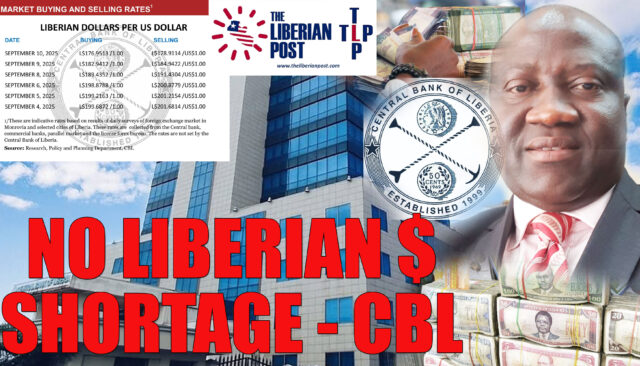
MONROVIA – The Central Bank of Liberia (CBL) has moved swiftly to dismiss reports of a Liberian dollar (LRD) shortage in the financial system, affirming that commercial banks across the country are holding sufficient cash reserves to meet all customer demands, including government payroll, settlements, and private sector transactions.
The reassurance comes amid public concerns and rumors of a scarcity of local currency—a narrative the Bank says is misleading and speculative.
“As of September 3, 2025, commercial banks held L$1.65 billion in vault cash—well above the required thresholds,” the CBL said in a public statement Tuesday, September 9. The Bank also revealed that excess reserves within the system have nearly doubled year-on-year to L$2.02 billion, signaling strong liquidity and confidence in the financial sector.
“There is no shortage of Liberian dollars in the financial system,” said CBL Executive Governor Henry F. Saamoi. “The recent appreciation of the currency reflects sound policy measures, structural improvements, and improving economic fundamentals.”
Liberian Dollar Surges 10% Against U.S. Dollar
The CBL also confirmed a sharp appreciation of the Liberian dollar against the U.S. dollar, reflecting what the Bank described as robust monetary policy and structural economic gains.
On September 8, 2025, the Liberian dollar was trading at approximately L$180.00 to US$1.00 (buying rate)—a significant gain compared to L$201.08 just a week earlier, representing a 10.5% appreciation. A market survey conducted by the Bank on September 9 showed buying and selling rates at L$182.94 and L$184.94, respectively.
This appreciation trend marks one of the most rapid strengthening periods for the LRD in recent years, following months of tighter monetary policy and improved macroeconomic indicators.

What’s Behind the Strengthening Currency?
According to the CBL, the appreciation is driven by a combination of economic, monetary, and structural factors, including:
- A tight monetary policy stance, with the Monetary Policy Rate held at 17.25% since April 2025;
- The sterilization of over L$13 billion from the economy to manage liquidity and stabilize the exchange rate;
- Strengthened remittance inflows, totaling US$425.9 million in the first half of 2025;
- An expansion in economic activity beyond Monrovia, aided by improved road infrastructure;
- A steady decline in inflation, from 13.1% in February to 7.4% in July 2025, with further easing expected.
The Bank also pointed to broader structural developments such as:
- Improved transport connectivity, reducing internal freight and logistics costs;
- Expanded domestic energy supply, lowering industrial and production expenses;
- Increased agricultural output, enhancing food availability and helping stabilize prices;
- Adoption of the Pan-African Payment and Settlement System (PAPSS), which is easing cross-border trade payments within the region;
- A narrowed fiscal deficit, which has improved macroeconomic management and investor confidence.
Rumors, Hoarding, and Market Distortions

The CBL noted that current perceptions of a Liberian dollar shortage are isolated and unsubstantiated, driven primarily by rumors, speculative trading, and currency hoarding by some market actors.
“These do not reflect the actual liquidity conditions in the market,” the Bank stated. “Panic withdrawals or hoarding of local currency only generate unnecessary pressure and distortions.”
The Bank urged the public to remain calm and act only on verified financial information, warning that rumor-driven behavior could undermine recent gains in exchange rate stability and economic confidence.
Background: Liberia’s Currency Landscape
Liberia operates a dual currency regime, where both the Liberian dollar and U.S. dollar are legal tender. This structure, while offering flexibility, often exposes the local currency to volatility—especially in a context of high dollarization and informal forex markets.
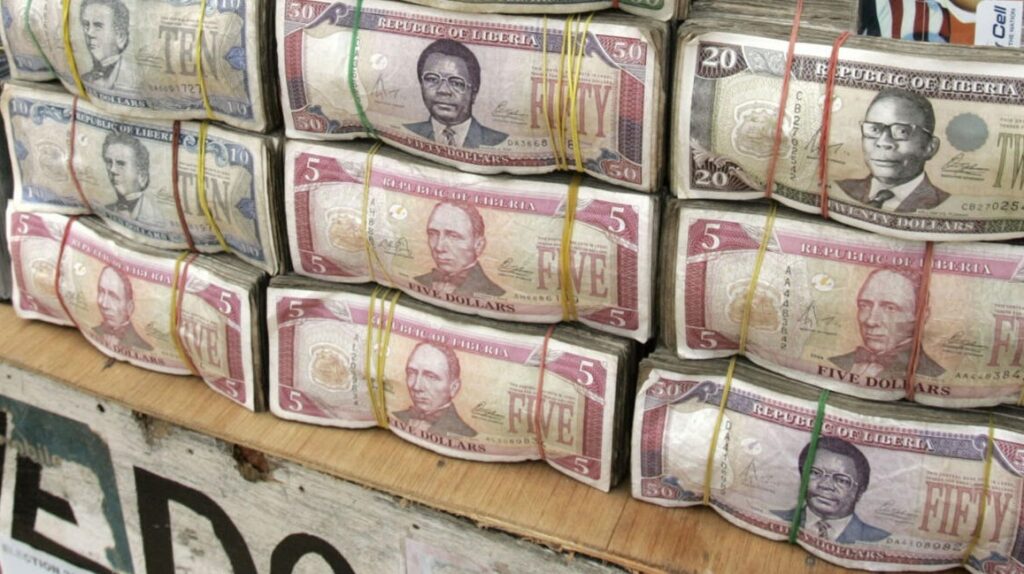
Over the past two years, Liberia has faced persistent exchange rate pressures, particularly in the second half of 2023 and early 2024, when the LRD depreciated past L$200 per US$1, fueling inflation and eroding purchasing power. The CBL responded with a series of reforms aimed at tightening monetary policy, mopping up excess liquidity, and restoring investor confidence.
The launch of new banknotes, improved fiscal discipline, and the gradual digitalization of financial services have also been part of the CBL’s broader strategy to restore macroeconomic stability and strengthen the credibility of the Liberian dollar.
CBL: “We Remain Vigilant”
Reiterating its policy stance, the Central Bank pledged to continue monitoring the foreign exchange market, counter any speculative behavior, and keep the public regularly informed.
“The Central Bank remains firmly committed to safeguarding monetary and financial stability,” the statement concluded. “We will ensure the continued availability of Liberian dollars, maintain adequate liquidity, and build public trust in the financial system.”