



MONROVIA – In recent months, the Liberian dollar has gained strength against the U.S. dollar — a shift that, in theory, should ease the burden on consumers. Yet market prices remain stubbornly high, leaving many Liberians frustrated that the exchange rate improvement is not reflected at the stalls and shops where they buy daily essentials.
This paradox — macroeconomic gains with little relief at the household level — is at the heart of concerns raised by Gbarpolu County Senator Amara Konneh. Despite reassurances from the Central Bank of Liberia (CBL) about currency stability and liquidity in the system, citizens complain of cash shortages, high prices, and weak purchasing power.
A Disconnect Between Indicators and Reality
On a recent market tour, Senator Konneh sought to understand why everyday costs remain so high despite what headline numbers suggest. He commended the CBL, under Executive Governor Henry Saamoi, for achieving important stabilization milestones: inflation fell from 13.1% in February 2025 to 7.4% in July, while the Liberian dollar appreciated against the U.S. dollar.
“These are significant achievements,” Konneh acknowledged. “But the gains are not yet reaching ordinary Liberians.”

This disconnect highlights what economists call “price stickiness” — the tendency of prices to rise quickly but fall slowly. Vendors, wary of whether favorable exchange rates and low inflation will last, are reluctant to cut prices, preferring to hedge against uncertainty.
Structural and Behavioral Barriers
Konneh pointed to multiple structural and behavioral dynamics slowing price adjustments:
- Old stock effect: Importers are still clearing goods purchased when the exchange rate was weaker, including staple commodities like rice. Until this inventory is exhausted, consumer prices will not reflect current currency gains.
- High borrowing costs: With the CBL maintaining a Monetary Policy Rate of 17.25%, trade financing remains expensive. This discourages importers from passing on savings to consumers.
- Liquidity sterilization: The CBL has sterilized over L$13 billion to stabilize foreign exchange markets, tightening cash availability even as remittance inflows surged to US$425.9 million in the first half of 2025.
- Structural dependence on imports: Liberia’s reliance on imported goods, compounded by rainy-season transportation bottlenecks, sustains upward price pressures.
- Informal sector dominance: Over 80% of Liberia’s economy operates informally, limiting the government’s ability to enforce pricing regulations or tax compliance.
These combined forces create what Konneh describes as a “market environment resistant to downward price adjustments,” even when macroeconomic indicators suggest relief should be possible.
A call for coordinated action
Senator Konneh urged his colleagues — particularly members of the Banking and Currency, Ways and Means, and Commerce Committees — to work with the CBL, Ministry of Commerce, and Ministry of Finance and Development Planning to bridge the gap between policy gains and consumer realities.
“Although the Senate is in recess, the urgency of this matter requires immediate attention,” he stressed. “We must ensure that improvements in the economy translate into real benefits for consumers.”
His intervention raises a broader policy dilemma: Should the government adopt proactive price-stabilization measures — such as targeted subsidies, stricter oversight of staple imports, or incentives for traders — or allow markets to self-correct over time?
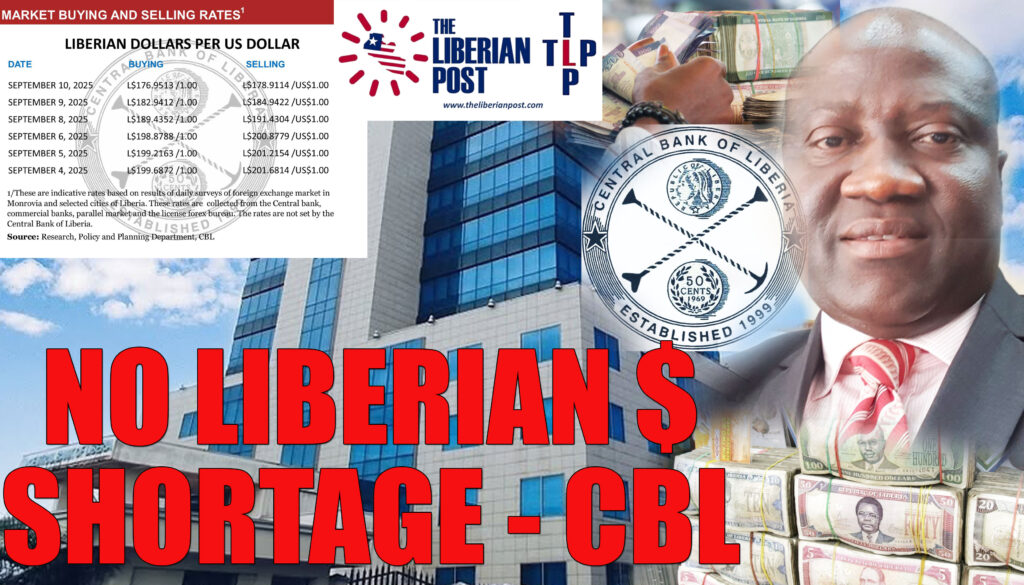
The answer, Konneh argues, is critical to the success of President Boakai’s price-reduction initiative and to rebuilding confidence among ordinary Liberians.
The political economy of pricing
Meanwhile, some economists suggest that the apparent strengthening of the Liberian dollar may itself be distorted. According to critics, certain business actors deliberately hoard Liberian dollars, creating artificial scarcity that drives U.S. dollar inflows. This manipulation allows them to import goods at favorable rates while keeping consumer prices high — a dynamic that underscores how market power and vested interests shape outcomes as much as formal policy.
Conclusion: Stability without Relief is not Enough
Liberia’s experience illustrates a broader truth: macroeconomic stabilization, while essential, is only half the battle. Unless reforms penetrate the structural weaknesses of trade, distribution, and governance, ordinary Liberians will continue to feel excluded from the gains.
Senator Konneh’s analysis reframes the debate — from celebrating falling inflation and a stronger currency to confronting why those improvements stall at the market level. His call for structural reforms, coordinated government oversight, and vigilant monitoring of traders points to a simple but urgent goal: ensuring that the economy works not just on paper, but in the pockets of everyday citizens.