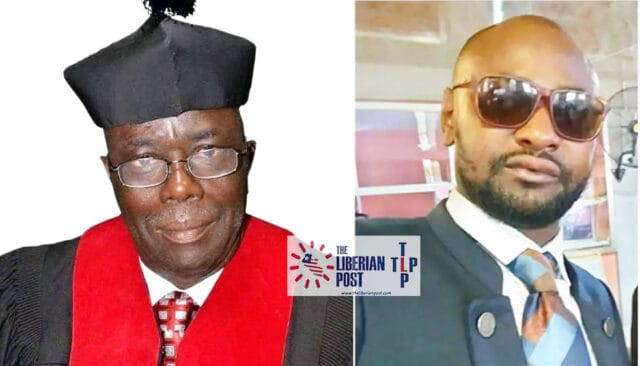
Judges’ Association Warns of Eroding Standards in Judiciary
By Jacquelyne L. Dennis
MONROVIA – Liberia’s Chief Justice, Yamie Quiqui Gbeisay, Sr., is under fire after confirming that he recommended his son, a third-year law student, along with several others without formal law qualifications, for appointment as Associate Magistrates. The appointments, approved by President Joseph Nyuma Boakai, have drawn sharp criticism from the National Association of Trial Judges of Liberia (NATJL), reigniting debates about nepotism, competence, and the future of judicial reform.
Speaking publicly for the first time since the controversy broke, Chief Justice Gbeisay dismissed the criticism, insisting there is no legal requirement that Associate Magistrates must be law graduates.
“My son is a Liberian, of age, and currently in his third year of law school. I recommended him, and the President appointed him. There is nothing wrong with that,” Gbeisay told reporters.
The Chief Justice further argued that while stipendiary magistrates must hold law degrees, the law gives the President discretion when appointing Associate Magistrates.
“If anyone can show me a law forbidding non-lawyers from serving as Associate Magistrates, I will resign,” he declared.
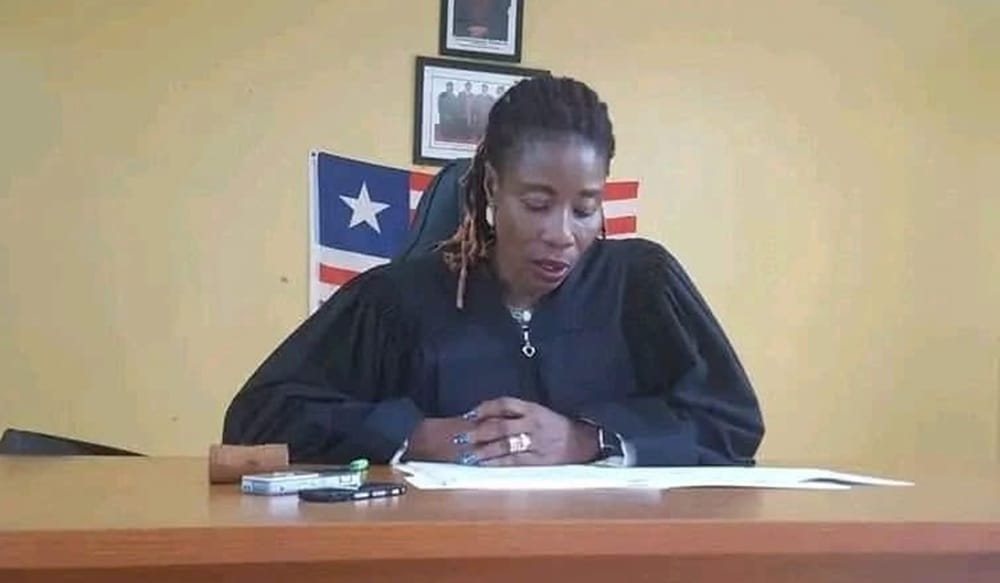
Judges Push Back
The NATJL, headed by Judge Nancy Finda Sammy, sharply disagreed. In a September 23 letter, Judge Sammy warned that such appointments undermine the standards of the judiciary and the purpose of the James A. A. Pierre Judicial Institute (JI), which was created to professionally train magistrates.
“The credibility of the judiciary depends on competence and impartiality,” Judge Sammy noted, stressing that lowering the bar could erode public trust.
The inclusion of the Chief Justice’s son has further fueled accusations of nepotism. Critics argue that even if technically legal, the decision sends the wrong signal at a time when Liberia is struggling to strengthen rule of law.
Gbeisay, however, brushed aside those concerns, pointing to what he called “double standards” within the judiciary.

“If my son cannot serve because I’m Chief Justice, then you must resign too,” he said, appearing to allude to Judge Sammy’s own family members in public service.
Legal Experts Weigh In
Several legal experts have cautioned against Gbeisay’s interpretation, arguing that while the law may not explicitly bar non-lawyers from becoming Associate Magistrates, competence and training are essential to ensuring fair judgments.
“Judicial officers must have the knowledge to correctly apply the law. Anything less risks undermining justice delivery,” one constitutional lawyer, who requested anonymity, said.
The controversy has ignited a broader debate about nepotism and accountability in Liberia’s justice system, with civil society groups now calling for clearer legal frameworks governing judicial appointments.