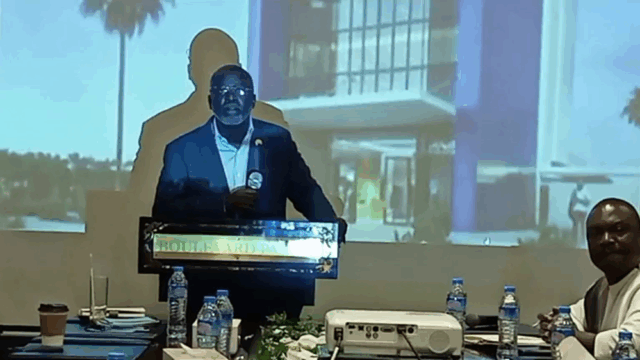
MONROVIA – The opposition Congress for Democratic Change (CDC) is set to break ground on its new multi-million-dollar headquarters in Congo Town on October 18, 2025, a project now stirring political debate after revelations about its funding sources.
Speaking to journalists, Cllr. J. Fonati Koffa, Chairman of the CDC Headquarters Committee, disclosed that 52% of the project’s funds come from CDC members, while 18% are contributed by affiliates of the ruling Unity Party (UP). The remaining funds include 10% from independents, 10% from other opposition parties, and 10% from anonymous donors.

The disclosure of UP contributors has sparked discussion about potential behind-the-scenes alliances and political maneuvering. Political analysts suggest that some UP partisans may be hedging their bets, seeking favor with a potential future CDC-led administration.
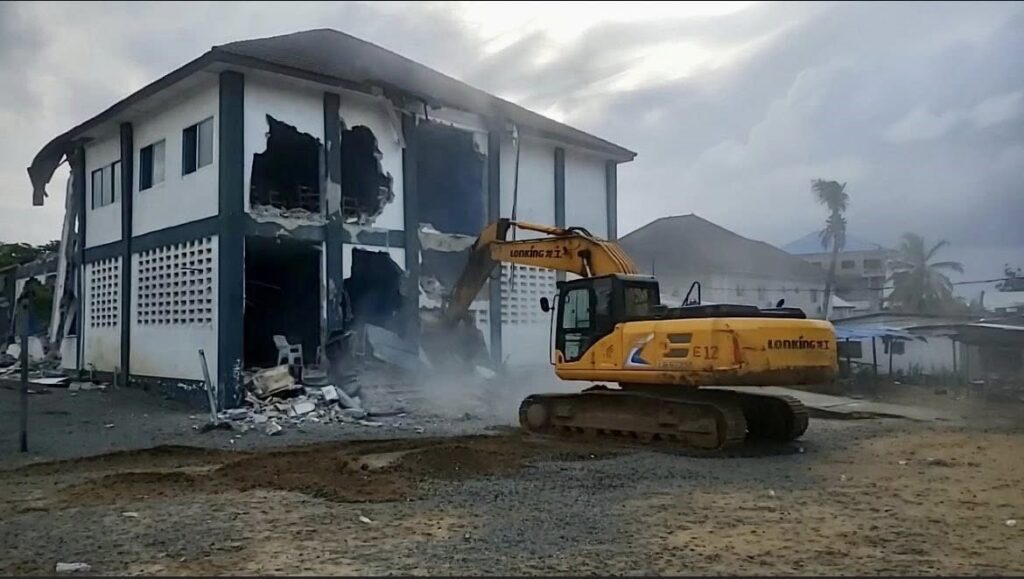
The CDC, which lost its former long-time headquarters in Congo Town following a protracted legal battle with Lonestar MTN Communications, views the new building as a symbol of resilience and institutional growth. Party officials argue the project is crucial for providing a permanent base for meetings, strategy sessions, and partisan engagement.
Civil society observers, however, criticize the timing and scale of the project. “While Liberians face rising prices, unemployment, and struggling public services, erecting an expensive party complex seems tone-deaf,” said one political commentator. “It highlights where political priorities lie—self-glorification over public welfare.”
Cllr. Koffa was notably vague when pressed on the identities of UP contributors, stating, “If you want to know the names, meet me in Room 1026,” a response perceived by some as evasive and opaque.
As the groundbreaking ceremony approaches, questions about funding transparency, cross-party alliances, and political motivations continue to stir debate. For many Liberians, the project is a stark reminder of the disconnect between political elites and the public they claim to serve.
The CDC’s leadership maintains that the headquarters will strengthen the party’s organizational structure and facilitate democratic engagement, while critics caution that the initiative could exacerbate public distrust in political institutions.