MONROVIA- It is often said that development brings pain — especially when a government moves to reclaim its own properties, including squatter lands, swamp lands, and waterways. In Liberia, particularly within Monrovia and its suburbs, the issue of squatters has long posed a challenge to successive governments. Many have occupied public lands for decades, fully aware that one day, the state would come to reclaim its property.
That reality is now unfolding at the once-glorious Hotel Africa community in Lower Virginia, Montserrado County — a site that once symbolized Liberia’s post-independence pride and continental leadership.
A Symbol of Liberia’s Golden Era
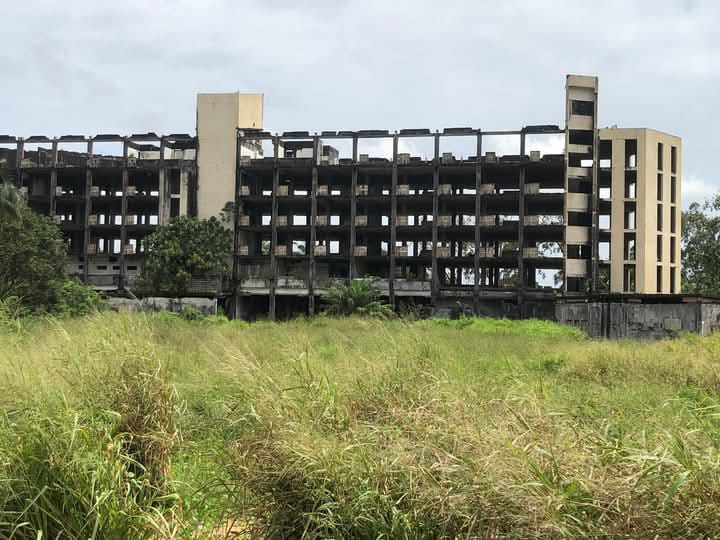
Built in 1979 under the leadership of President William R. Tolbert Jr., Hotel Africa was a national masterpiece — a shining symbol of Liberia’s ambition and progress. That same year, it hosted the historic Organization of African Unity (OAU), now the African Union (AU), when President Tolbert chaired the continental body.
Decades later, war, neglect, and illegal occupation have turned that national pride into ruins. But now, the Government of Liberia wants to bring it back to life — as part of a broader tourism and investment drive. Yet, behind this vision of progress lies a story of human tears and frustration.
Government’s Reclamation Drive
The Ministry of Public Works (MPW) recently gave residents living across the Prefile, Blessings, and Villa communities until October 30, 2025, to vacate the 393.2 acres of land surrounding the iconic hotel. According to the ministry, the exercise is part of a national plan to reclaim and secure the property for development.
But for hundreds of families who have lived there for decades — some since the Tolbert era — the eviction order feels less like progress and more like punishment.
Residents Cry for Help
During a recent meeting with officials of the Ministry of Public Works, several residents said they have lived nearly all their lives in the community, investing their savings into building homes, schools, and small businesses.
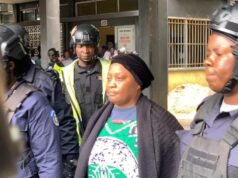
“We know it’s development they want to do,” said one resident, tears rolling down her cheeks. “But we are appealing to them to find a place for us to move or give us something to live on. Taking us from here within one month is like saying we are dogs. We are not dogs — we are human beings and citizens. My own grandmother was buried here.”
Another longtime resident, who claimed to have helped construct Hotel Africa under President Tolbert, added: “We have nowhere else to go.”
For Mr. Doe, proprietor of the Go-Ye Pentecostal Elementary School, the news is devastating. “I’ve lived here since 1979 and helped build Hotel Africa,” he said. “What will happen to the 200 children attending my school? If the government wants us out, they should at least help us resettle. Otherwise, we’ll end up in the streets.”
Community in Shock
Across the affected neighborhoods, residents are scrambling for answers. Many say they believed their lands were legally acquired, while others decry the short eviction notice — less than 30 days — as unjust and inhumane.
“This is where we were born and raised,” said a female resident of 35 years. “Everything we have is tied to this community. Instead of chasing us, the government should focus on renovating Hotel Africa to create jobs. Isn’t that what the Rescue Agenda is about?”
The MPW eviction letter, signed by Zoning Inspector Eunice S. Cooper and approved by National Zoning Inspector Stephen Kamara, warned that any defiance would attract penalties. The letter, however, made no mention of compensation or relocation support.
Tension Mounts
At a tense community meeting held on October 10, 2025, at the Unity Conference Center, residents confronted ministry officials, demanding compensation and a resettlement plan. They were told there would be none.
The announcement triggered tears and anger.
“We suffered to vote for this President. Did he come only to put us in the street?” cried a pregnant widow and mother of five. “My husband died in May. Where does he want us to go?”
A local clergywoman added her plea: “Mr. President, you are a father; Madam First Lady, you are a mother. Look at our children and churches. When our homes are destroyed, where do you want us to go?”
Some residents have vowed to march to the Executive Mansion to petition President Joseph N. Boakai, saying they voted for “change, not punishment.”
Another resident, who claimed to hold a public land deed for 10 acres, accused the ministry of ignoring legal owners. “I bought my land legally. Yet the Ministry came without engagement. This is deliberate,” he said.
Representative ‘DJ Blue’ Calls for Calm
District #17 Representative Bernard Blue Benson, widely known as DJ Blue, condemned what he described as “an abrupt eviction,” but urged residents to remain calm.
“Liberia needs development, yes,” he said, “but removing citizens without compensation is unacceptable. We’re not fighting the government for its land; we’re only asking for fairness.”
Government Defends Decision
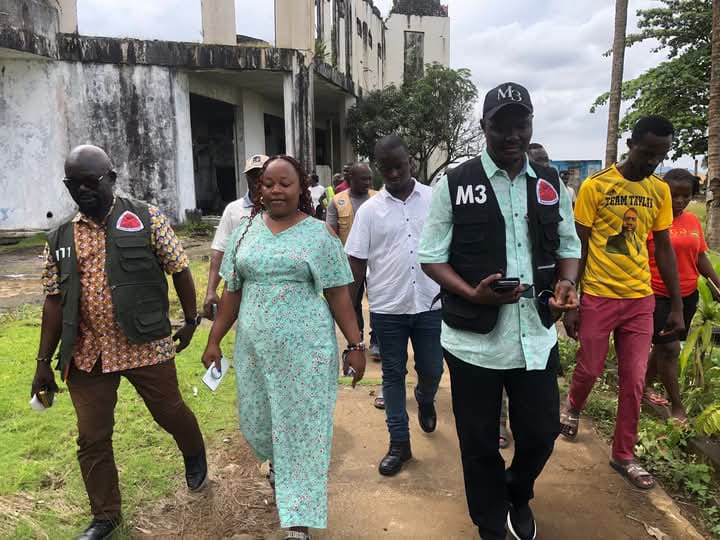
The Ministry of Public Works has announced that more than 500 structures, including churches, schools, and mosques, have been marked “MPW–HA” for demolition.
Public Works Minister Roland L. Giddings defended the decision, insisting that the government will not “bow down” on plans to reclaim the property.
“This place has to be secured for investment,” Minister Giddings said. “We’re reclaiming it for national use.”
A Painful Path to Progress
While the reclamation of Hotel Africa is widely seen as a necessary step toward reviving Liberia’s tourism sector, the social and emotional toll on affected residents remains heavy.
What message, some ask, does this eviction send to others occupying public lands across the country? Should development always come at the cost of people’s homes and livelihoods?
The Hotel Africa reclamation project may be commendable in principle — but without compassion, it risks leaving thousands of Liberians frustrated and homeless after decades of residence.
As the government seeks to rebuild Hotel Africa into a symbol of national pride once more, many are calling for a more humane approach — one that balances progress with people’s dignity.
For, indeed, development must not only build structures; it must protect lives.