-Government Seals 23.7MW Energy Deal with Scatec at World Bank Meetings as Part of President Boakai’s Drive to Expand Electricity Access and Spur Inclusive Growth
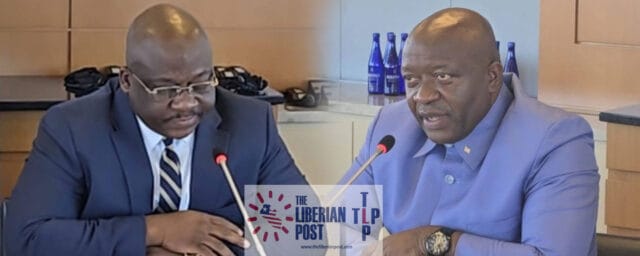
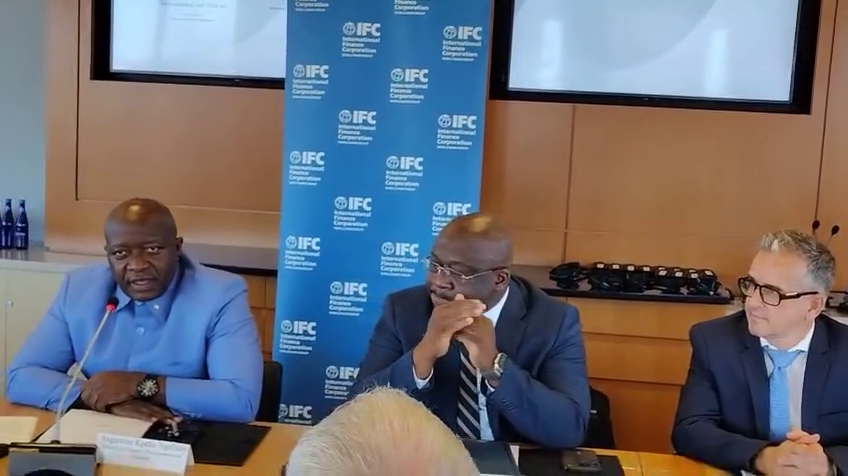
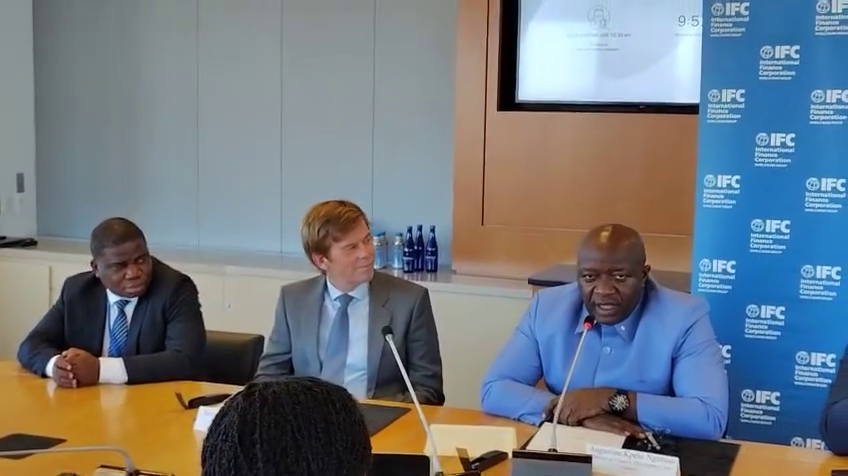
Washington, D.C. — In a major step forward for Liberia’s energy sector, the Government of Liberia, represented by Finance Minister Augustine Kpehe Ngafuan and LEC Managing Director Mohammed M. Sherif, signed a landmark power agreement with Scatec during the World Bank/IMF Annual Meetings. The deal is expected to deliver 23.7 megawatts of solar capacity to Liberia and send a strong signal of private sector confidence in the country’s utility reforms.
“We are lighting the light, not just candles.”
Minister Ngafuan, speaking just before the signing, framed the agreement as more than just a power deal — it is part of President Boakai’s vision to transform Liberia’s development trajectory. “Energy is so critical for the delivery of our development agenda,” he said, pointing to the government’s ARREST Agenda for Inclusive Development (AAID) and Liberia’s Energy Compact, which sets a target of 75 percent electrification within five years.
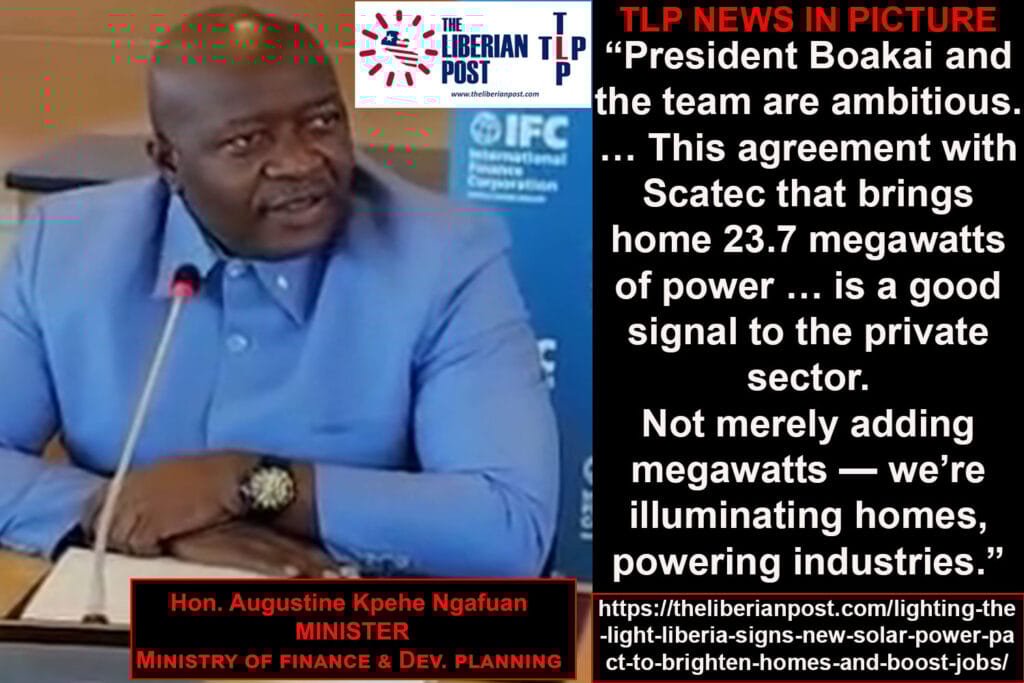
Ngafuan added that while some may view that goal as overly ambitious, “President Boakai and the team are ambitious. … This agreement with Scatec that brings home 23.7 megawatts of power … is a good signal to the private sector.”
“Not merely adding megawatts — we’re illuminating homes, powering industries.”
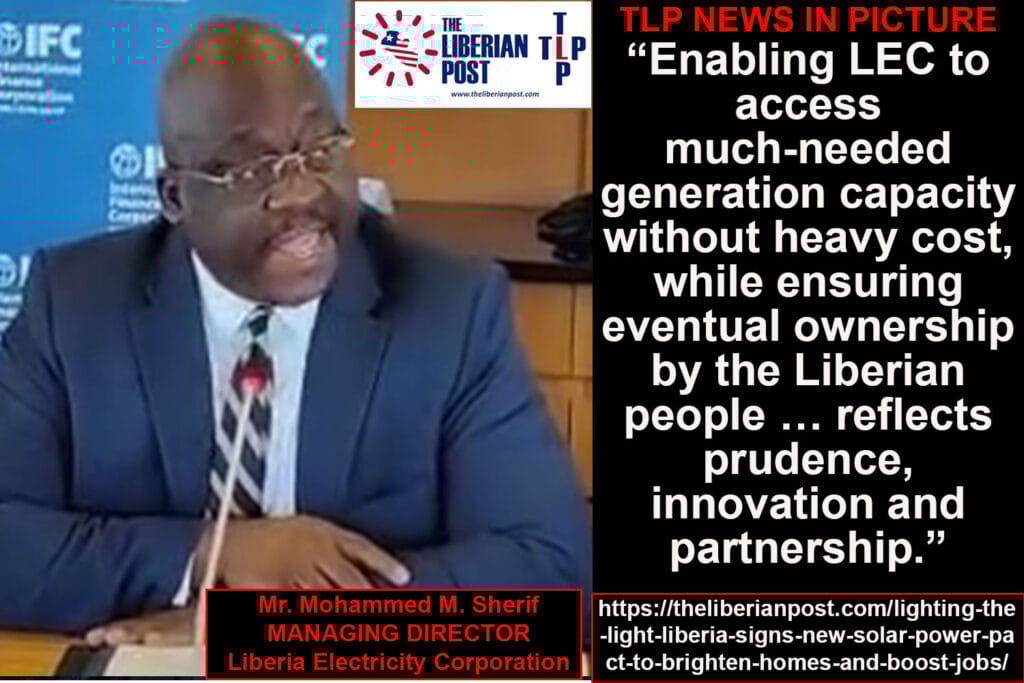
Mohammed M. Sherif, Managing Director of Liberia Electricity Corporation (LEC), highlighted the strategic nature of the arrangement. “Enabling LEC to access much-needed generation capacity without heavy cost, while ensuring eventual ownership by the Liberian people … reflects prudence, innovation and partnership,” he remarked.
Sherif praised the cooperative roles played by the Ministries of Mines and Energy, Finance, LEC, and regulatory bodies, emphasizing that the agreement aligns with LEC’s 2025–2030 strategic plan, which rests on pillars of financial sustainability, operational excellence, customer service, governance, and digital transformation.
A Turning Point in Liberia’s Energy Landscape
Liberia’s energy sector has long been characterized by severe undercapacity, high costs, and low access. According to GOGLA data, the national electrification rate hovers around 27.6 percent, with urban access at about 46 percent and rural access just 7.6 percent.
Much of Liberia’s existing generation is hydropower from the rehabilitated Mount Coffee Hydropower Plant (MCHPP), supplemented by costly thermal (diesel/HFO) plants. During dry seasons, hydropower output drops sharply, posing supply risks.
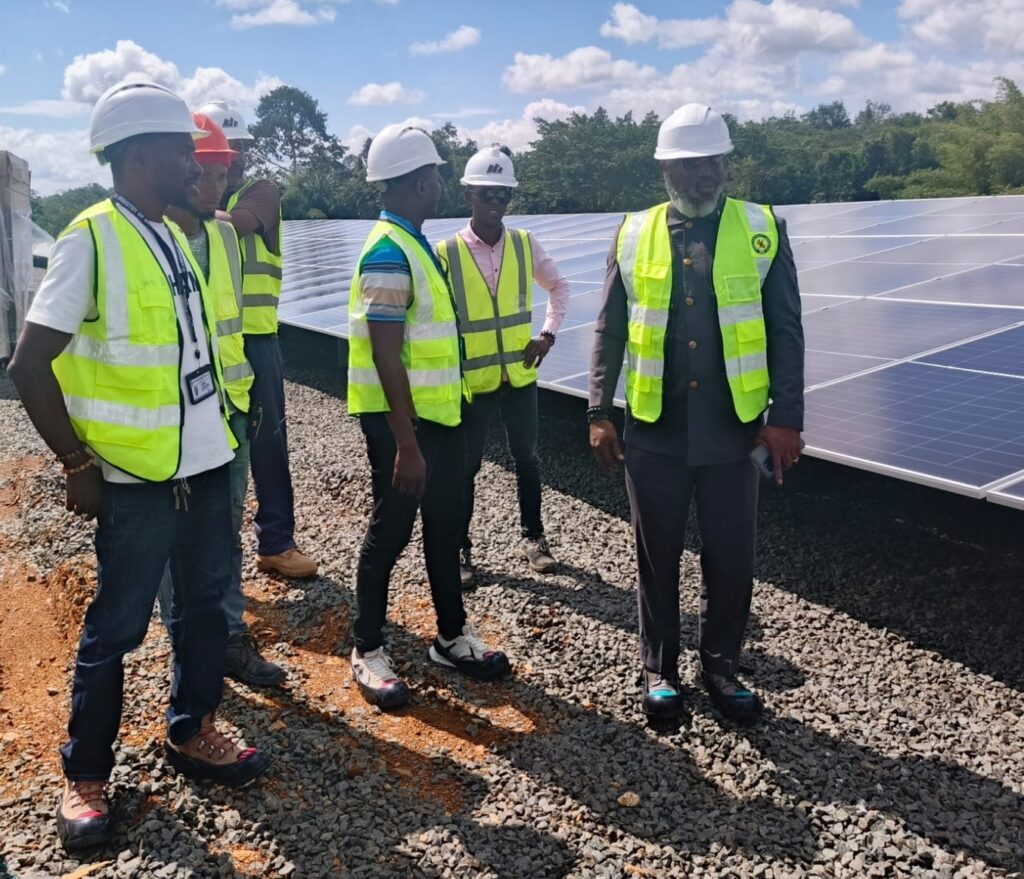
The new solar capacity from Scatec is part of Liberia’s broader push to scale up renewables under the National Energy Compact, which envisages adding utility-scale solar and distributed solutions to help reach the 75 percent electrification target.
Earlier contracts have also advanced Liberia’s clean energy ambitions. In 2024, LEC signed a USD 16 million contract for a 20 MWp solar plant located at the MCHPP site.
The Scatec deal, finalized in Washington, builds on that trajectory, signaling increasing leverage of public-private partnerships (PPPs) in Liberia’s energy future.
Signals for Private Investment, Risks Ahead
By enabling LEC to expand generation capacity without the upfront burden of full capital expenditure, the deal is expected to attract more developers into Liberia’s energy space. As Minister Ngafuan said, “We need more … private sector engagement, investment in Liberia.”
But challenges remain. Land acquisition issues, regulatory bottlenecks, and the need for stronger grid infrastructure are known constraints. Liberia’s Power Sector also must improve distribution, reduce losses, and establish clear revenue models to sustain new capacity.
Still, the Scatec agreement, backed by international financing and technical support, could become a keystone in the country’s electrification push.
As Sherif put it — this is more than megawatts: it is “fueling Liberia’s next chapter of inclusive growth.”