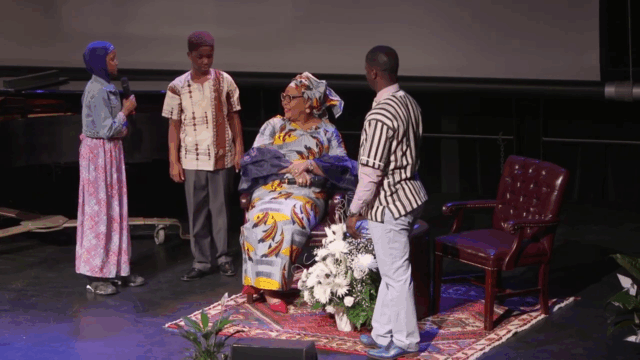
HAMILTON, Canada — When teenager Ferdosa Musse‑Berry stepped to the microphone and asked Nobel Peace Prize laureate Leymah Gbowee how it felt when people turned their backs on her, the room went quiet. Gbowee, whose women‑led movement helped end Liberia’s civil war, didn’t flinch. She turned the question into a lesson on purpose, grit, and grace.
“When we started the movement, I was very resistant about being the leader,” Gbowee said, recalling the early days of Women of Liberia Mass Action for Peace. She had gone to her boss, a pastor, to ask if church women could take the mantle. “He looked at me and smiled and said, ‘Leymah, Leymah, it’s not that easy. The dream bearer is always the dream carrier. If you give your dream to someone else, you may not recognize it the next time you see it.’”
Rejection came quickly. As she and the women tried to raise small amounts—“five hundred, one hundred”—donors dismissed her. “You’re so intelligent, why don’t you go and find a proper job?” they told her. “Initially it was very disempowering,” she admitted. “It used to make me sad.” What changed, she said, were the stories of the mothers who stood with her. “It emboldened me.”
Sometimes, when support didn’t come, they walked “two, three hours” to reach warlords. That determination became her message to Ferdosa. “There will be many people who will turn their backs on you in life—don’t let that stop you,” Gbowee said. “There’s a lot of light in you… and it’s only you who can turn that light up bright. One day when they turn around and see that light, all you will do is, ‘Ha ha, see me now.’”
The exchange took place at a community event in Hamilton organized by Leo Lekpele Nupolu Johnson, former president of the Liberian Associations in Canada (LAC) and a longtime advocate for development initiatives in Liberia. Johnson’s nonprofit runs an academic mentoring program that supports about 200 newcomer children each year. He had the students study Gbowee’s speeches and videos before the event and invited two of them—Ferdosa and Lemuel Nupolu Johnson—to ask their own questions. “I know how much Leymah cares about children,” he said. “We wanted the questions to be theirs, not ours.”
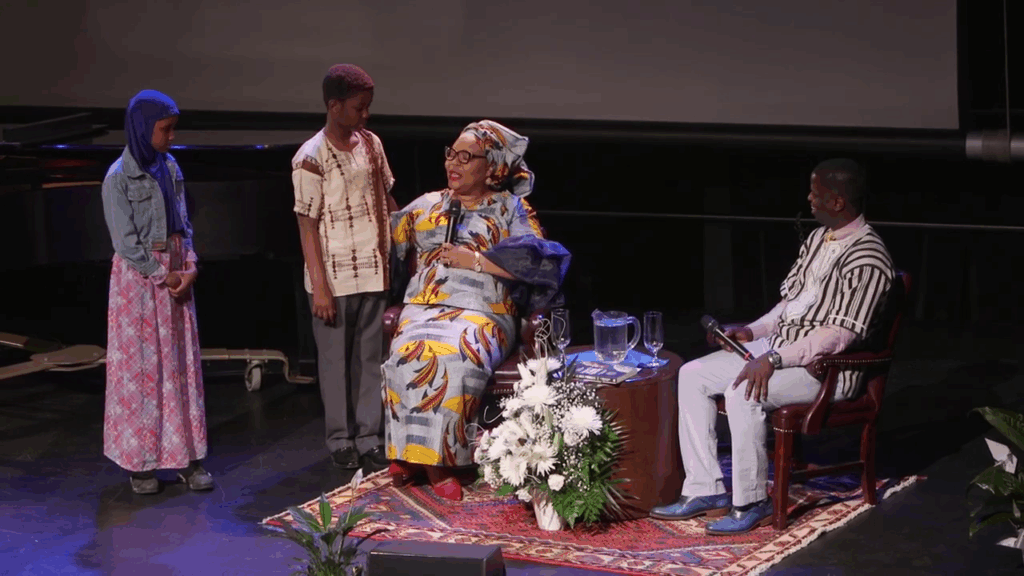
Later, Lemuel asked what it felt like to be famous—sparking another story that revealed as much about Gbowee’s character as her résumé. She recalled landing in New York the morning the Nobel Committee announced the 2011 Peace Prize, after sleeping through the overnight flight from San Francisco. A stranger in the next row confirmed the news by glancing from his phone to her face. “I was like, what the hell just happened to my life?” she told the crowd, laughing.
“Famous? I don’t think I am,” she said. “I think I’m blessed to be in a space that I can use to be a blessing to others. Don’t ever think ‘privileged.’ Think ‘blessed’—because when you think ‘blessed,’ you know God can choose someone else. So let me make the best of this.”
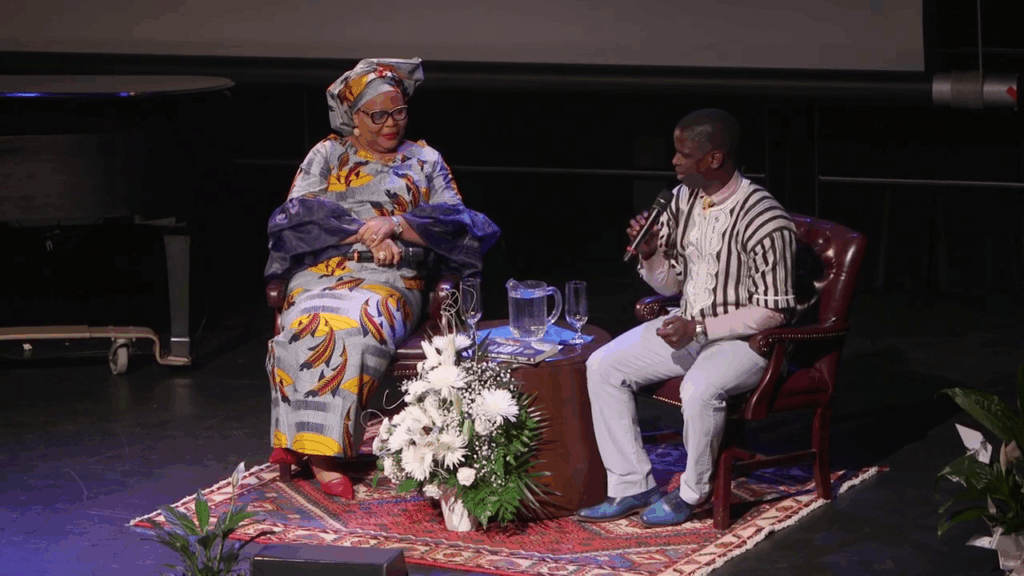
Gbowee’s counsel comes from lived experience. A social worker and trauma counselor by training, she mobilized thousands of Christian and Muslim women—market traders and professionals—to protest, pray, and hold daily sit‑ins that pressured Liberia’s warlords toward the 2003 Accra peace accord. In 2011, she shared the Nobel Peace Prize with Ellen Johnson Sirleaf and Yemeni activist Tawakkol Karman “for their non‑violent struggle for the safety of women and for women’s rights to full participation in peace‑building.” She later founded the Gbowee Peace Foundation Africa to advance girls’ education and leadership, and authored the memoir Mighty Be Our Powers.
Her advice to the Hamilton teens—delivered with humor and a disarming frankness—was anchored in action. She told them rejection and detours are constants; what matters is the mission. She also warned that praise can be as distracting as criticism if it pulls you from purpose. “I don’t know how to do the ‘famous’ thing,” she said. “What I do know is to intervene, to mentor, to use whatever platform I have to nudge the world toward kindness and justice.”
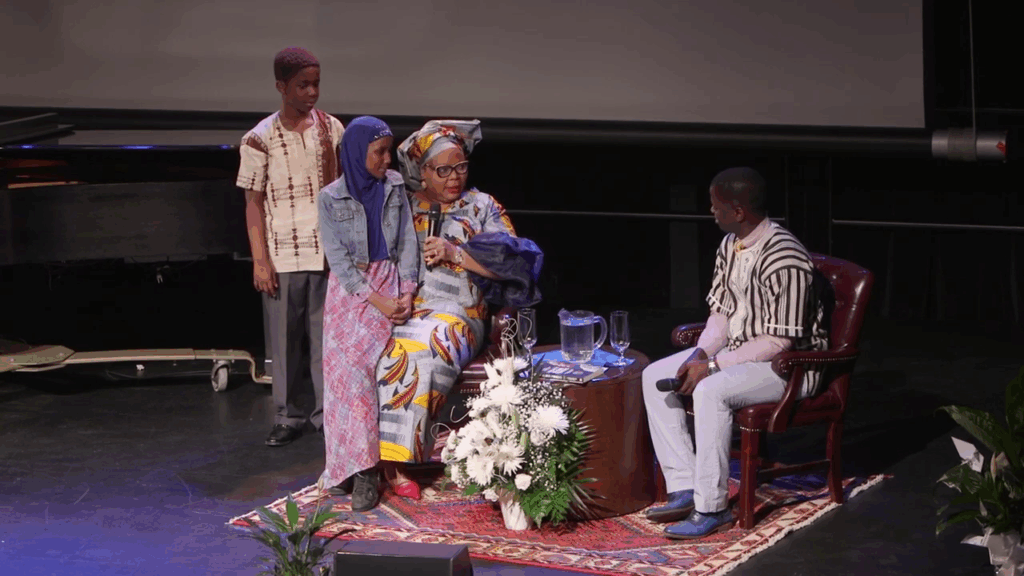
For Ferdosa, the answer landed like a charge to keep going. For Lemuel, it reframed achievement as stewardship. And for Johnson, who has spent years connecting diaspora communities to youth programs in Canada and development projects back home, it was proof that a single evening can change how young people see themselves.
As the applause faded, Gbowee looked back at the teens who had braved the stage. “Maybe all the questions should have been from the kids,” she joked. In Hamilton that night, they were—and the answers were built to last.