-Decries “Insult Politics” And Calls for Dignified Leadership
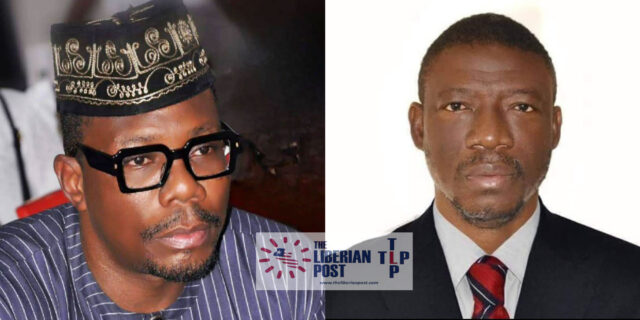
MONROVIA, Liberia — Cllr. Kanio Bai Gbala, a former campaign spokesperson for the Coalition for Democratic Change (CDC) who now backs President Joseph Nyuma Boakai, has issued a public appeal urging Liberians—especially voters in Montserrado County District 10—to reject Representative Yekeh Y. Kolubah at the polls, arguing that “abusive speech performed as leadership” is dragging national politics into disorder.
In a sharply worded essay titled “A Clarion Call to Liberians: Reject The Yekeh‑nization Of Our Politics Now,” Gbala, an assistant professor of law at the University of Liberia and founder of The Centrism Movement, says Liberia needs leaders who “disagree with dignity,” respect women, and strengthen institutions. He contends that Kolubah’s rhetoric and style undermine the “dignity and purpose of public service.”
“Strangely, we tolerate a reprobate like Yekeh Kolubah who continues to behave in ways that undermine the dignity and purpose of public service,” Gbala writes. “This behavior is not courage and it is not accountability. It is abusive speech being performed as if it were leadership.”
Gbala alleges that Kolubah has repeatedly insulted national figures—including using degrading language about the Chief Justice—and has “ridiculed the wives and mothers of political opponents,” referencing former President George Weah and President Joseph Boakai. “We cannot continue to reward abusive speech as fearlessness,” he adds. “Public office is not a space for acting out personal anger. Parliament is not a theater stage for chaos.”
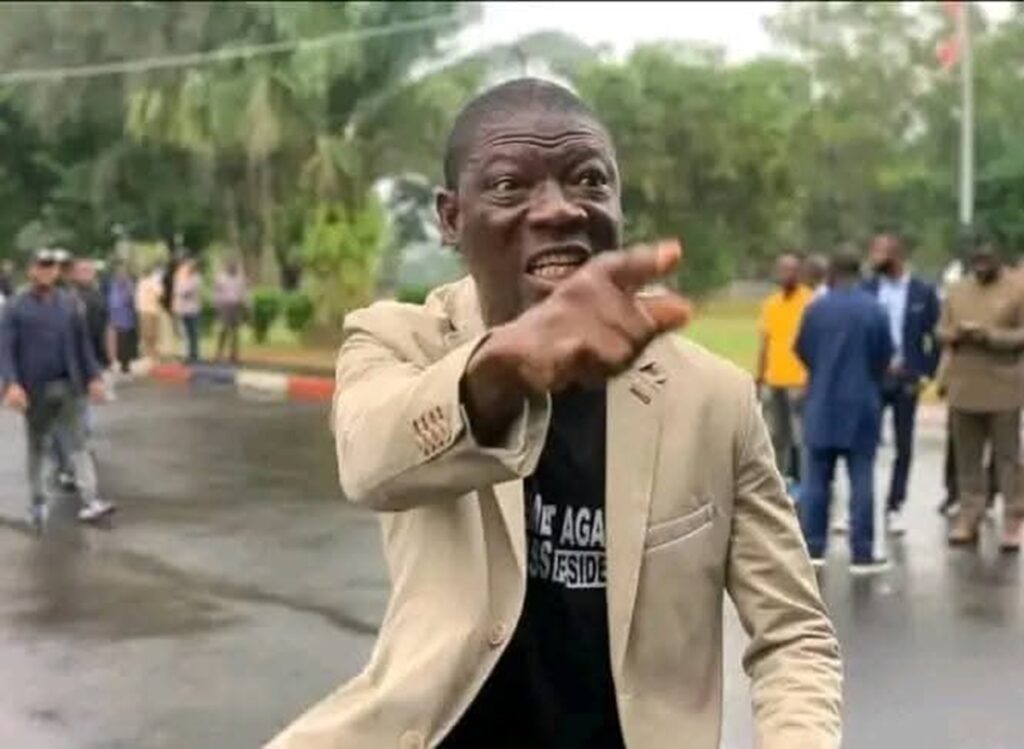
The Liberian Post reached out to Rep. Kolubah for comment; no response was immediately available. Kolubah, a firebrand lawmaker and frequent critic of successive administrations, has defended his combative style in the past as accountability in action. In recent weeks he has clashed with the Ministry of Information, accusing it of defamation and threatening legal action, and has filed a resolution seeking the impeachment of Chief Justice Yamie Quiqui Gbeisay over a nepotism controversy tied to the appointment of the Chief Justice’s son as a magistrate—a post the son has since declined.
A Political Realignment and A Broader Debate
Gbala’s intervention comes amid his own political realignment. He served as the CDC’s official spokesperson during the 2023 presidential campaign but has since aligned with Boakai’s administration, drawing criticism from CDC loyalists. In recent months he has publicly defended the Boakai government on key policy fights, including the proposed Oranto Petroleum agreement and Liberia’s push for investor confidence.
His latest critique targets what he calls a corrosive strain of political discourse. “We cannot treat hostility toward women as political bravery,” he writes. “We cannot allow public disorder to be mistaken for activism. We cannot pretend that insults represent the national conscience.”
Gbala presses District 10 voters—Kolubah’s constituents—to “make a clear choice” at the next opportunity. “If we value the future of this nation, if we care about the message we send to our children, then we must reject this conduct and vote Yekeh Kolubah out of office,” he says.
Record, Reputation, And Responsibility Kolubah rose to prominence as an outspoken opposition voice during the Weah presidency and has remained a lightning rod in the Boakai era—alternately pressing the government and clashing with agencies over rhetoric, rights, and procedure. Supporters say he names hard truths, mobilizes communities, and tests entrenched power. Critics counter that he frequently crosses lines of decorum and targets families in ways that debase the office he holds.
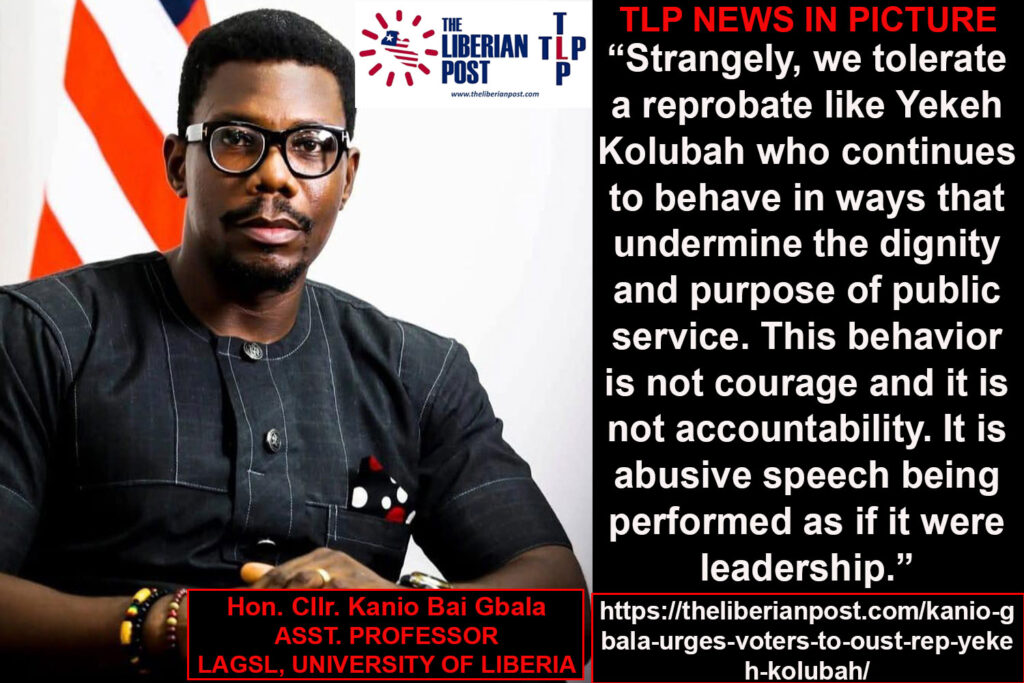
Gbala leans into the latter view, warning that the normalization of “insult politics” risks corroding the example set for youth and the credibility of legislative debate. “A person who carries national visibility should demonstrate responsibility and restraint,” he writes, adding that Liberia deserves leaders “who respect women and families as the foundation of our society.”
What Comes Next
- Response from District 10: Gbala’s call sets up a sharper contest for Kolubah’s seat, where performance, tone, and delivery of local services are likely to feature alongside national issues.
- Party reactions: The statement may widen rifts between centrists and hardliners across the aisle. CDC partisans have already criticized Gbala’s political shift; Kolubah’s allies may portray the essay as an establishment attempt to silence a critic.
- Standards and decorum: The tension renews debate over parliamentary conduct and the informal boundaries of political speech—a debate likely to intensify as Liberia navigates contentious reforms on governance, justice, and the economy.
Gbala closes by framing the matter as civic, not partisan. “Rejecting this behavior is not political hostility,” he writes. “It is a matter of civic responsibility and national self‑respect.” Whether voters agree will be tested when District 10 next heads to the ballot box—and in the meantime, the fight over Liberia’s political tone appears set to continue.