-Unveils E‑Filing and Moot Competition; Lawyers Urged to Master Rules and Case Law
MONROVIA, Liberia — The ECOWAS Community Court of Justice has launched its first-ever outreach program in Liberia, praising the country as the only member state to have signed nearly all the Court’s protocols and urging the legal community to deepen its engagement with regional justice.
The weeklong mission, running from November 10–16, includes technical sessions for lawyers and law students, public sensitization, and high-level courtesy calls on national authorities. On November 11, the Court’s delegation met Foreign Minister Sara Beysolow-Nyanti, President Joseph Nyuma Boakai, Justice Minister and Attorney General N. Oswald Tweh, Chief Justice Yamie Quiqui Gbeisay, House Speaker Richard Nagbe Koon, Vice President Jeremiah Kpan Koung (President of the Senate), the Liberia National Bar Association, and the Independent National Human Rights Commission.
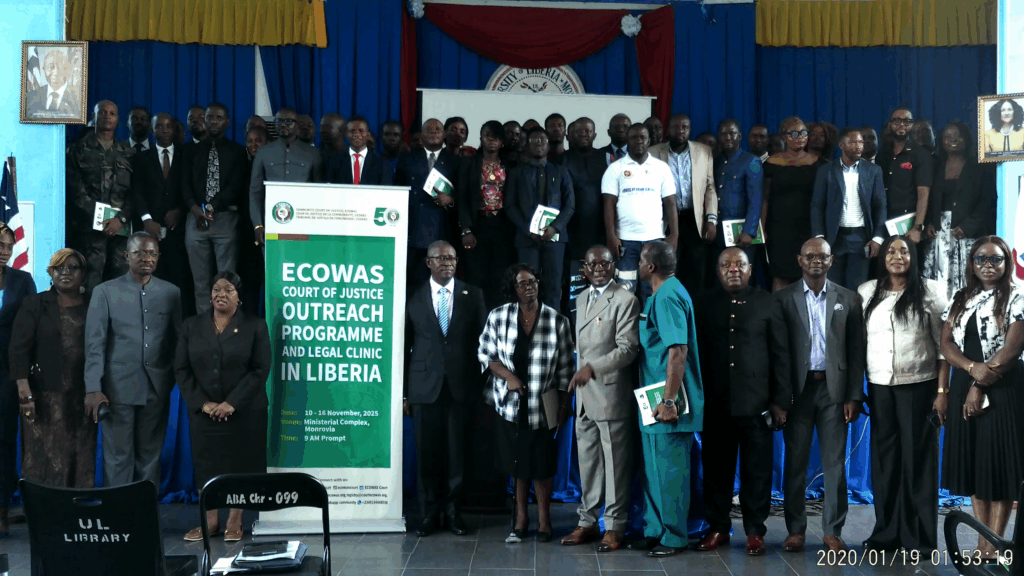
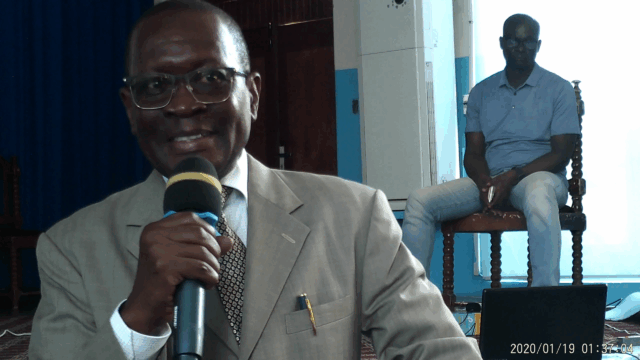
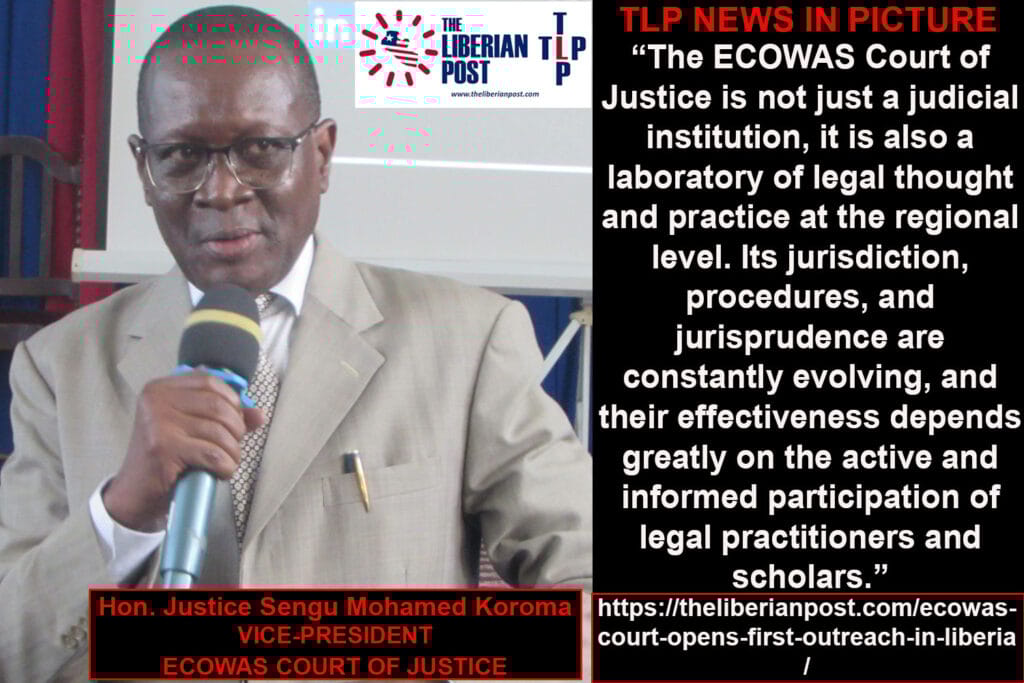
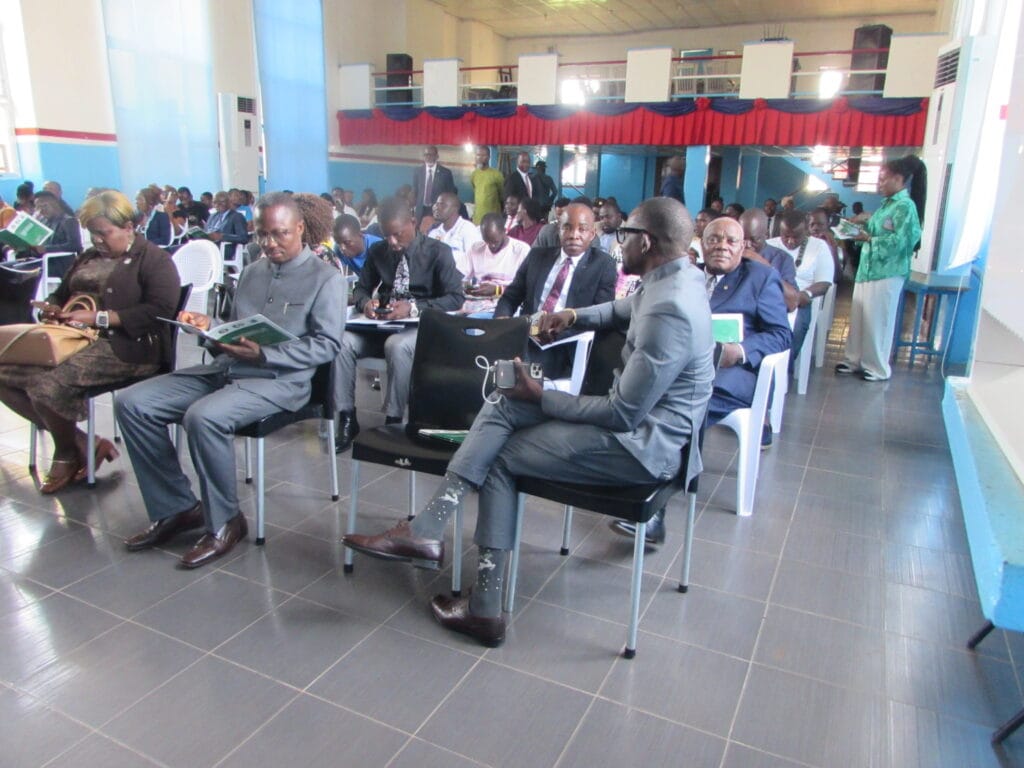
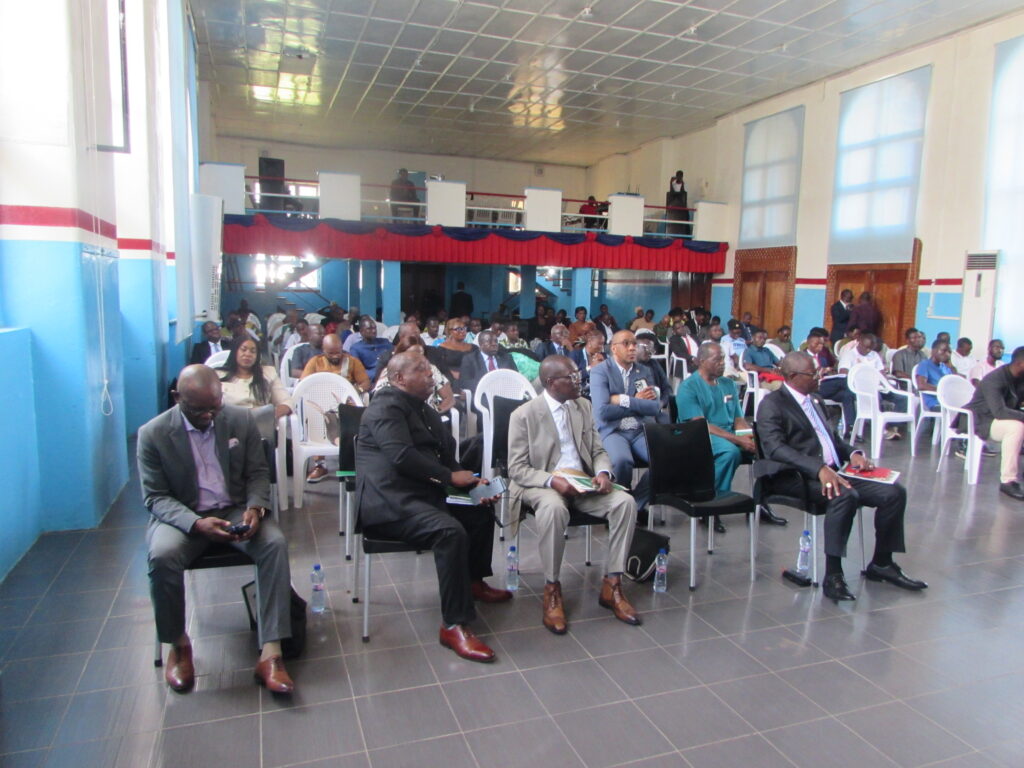
Speaking at a technical workshop hosted at the University of Liberia on Thursday, November 13, the President of the Court, Hon. Justice Ricardo Cláudio Monteiro Gonçalves—whose address was delivered by the Court’s Vice-President, Hon. Justice Sengu Mohamed Koroma—called Liberia’s legal community “the lifeblood of the justice system” and urged them to treat the Court’s procedures and jurisprudence as essential tools of practice.
“The ECOWAS Court of Justice is not just a judicial institution, it is also a laboratory of legal thought and practice at the regional level,” he said. “Its jurisdiction, procedures, and jurisprudence are constantly evolving, and their effectiveness depends greatly on the active and informed participation of legal practitioners and scholars.”
Mind the Rules—or Lose on Procedure
Justice Gonçalves reminded practitioners that many cases falter not on substance but on avoidable procedural lapses. “Regrettably… cases are sometimes dismissed or delayed not because of their substance, but because of procedural non-compliance, such as failure to observe filing timelines, inadequate pleadings, improper party designation, or lack of evidence,” he cautioned.
He reiterated foundational limits on the Court’s jurisdiction: “Only Member States can be respondents before the Court. Actions against individuals or private entities fall outside our jurisdiction. Applicants must establish a violation attributable to the State, not simply a private wrong within the territory of the Respondent State.”
A growing body of human‑rights case law
The President encouraged lawyers and students to study the Court’s precedents on fundamental rights, due process, access to justice, and state responsibility, noting that ECOWAS jurisprudence should “have a positive influence on national legal systems.” For counsel, he said, mastering precedent is “key to persuasive argumentation;” for students, it offers “a window into the living reality of regional integration law.”
E‑filing is coming: ECMS to modernize access
Pointing to reforms accelerated since COVID‑19, the Court announced it is developing an Electronic Case Management System (ECMS) that will allow 24/7 e‑filing and virtual participation from anywhere. “After its deployment, it will no longer be necessary to travel to Abuja to initiate or pursue proceedings,” the President said. “You can manage your cases remotely, receive notifications, and participate in virtual hearings before the Court – all with full procedural validity.”
The Court has also institutionalized hybrid hearings—both in person and online—turning proceedings into an “open classroom” that professors and students can follow in real time.
Moot court for the next generation
Underscoring the role of education, the Court launched its first ECOWAS Court Moot Competition in June 2025 and confirmed preparations for the second edition next year. The simulation gives students “practical exposure to the Court’s procedures, jurisprudence, and advocacy techniques,” he said, inviting Liberian faculties to begin preparing early.
Why this outreach matters
Liberia’s unique status—having signed all Court protocols—positions it to leverage the Court’s human‑rights mandate (expanded by the 2005 Supplementary Protocol) and binding judgments against member states on violations attributable to the state. The outreach aims to strengthen the pipeline of practitioners who can effectively use the regional forum and to increase public understanding of its role within West Africa’s legal order.
“The ECOWAS Court of Justice belongs to you as much as it belongs to the peoples of West Africa,” Justice Gonçalves said. “By mastering its procedures, studying its jurisprudence, and engaging with its digital transformation, you shall help to ensure that regional justice is not an abstract concept but a living reality.”
He closed with a call for a durable partnership with Liberia’s legal community: “Let us… build a community of lawyers and scholars who see in the ECOWAS Court not a distant institution, but a partner in the shared mission of upholding human rights, deepening integration, and promoting the rule of law in our region.”
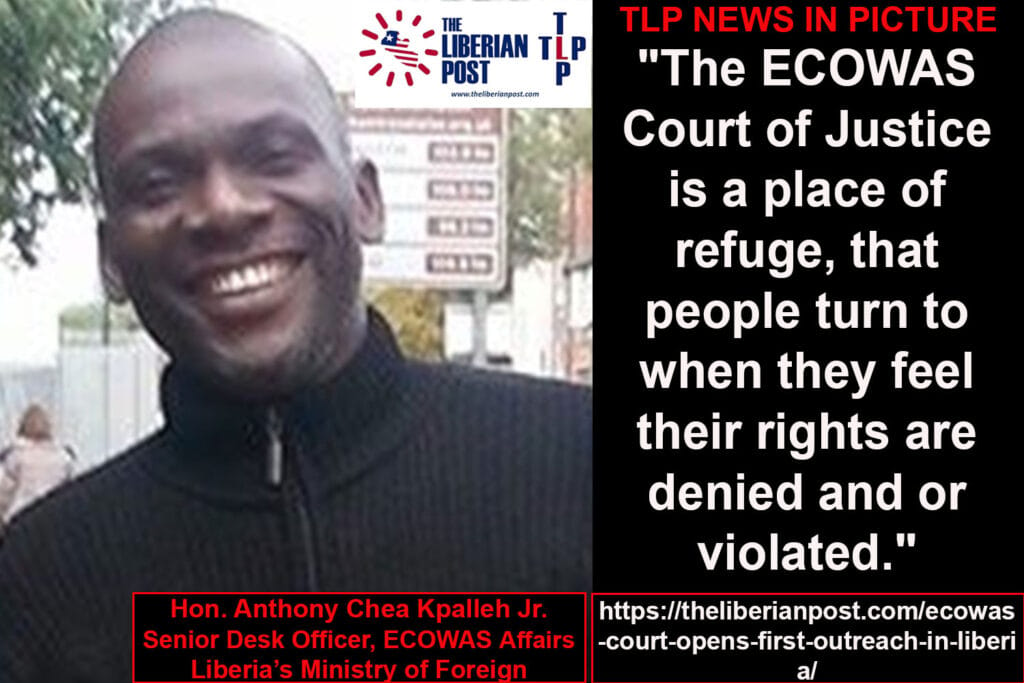
On the sideline, Mr. Anthony Chea Kpalleh Jr., a Public Policy Expert and Senior Desk Officer for ECOWAS Affairs at Liberia’s Foreign Ministry, said “The ECOWAS Court of Justice is a place of refuge, that people turn to when they feel their rights are denied and or violated.”