By Taisiah Merfee
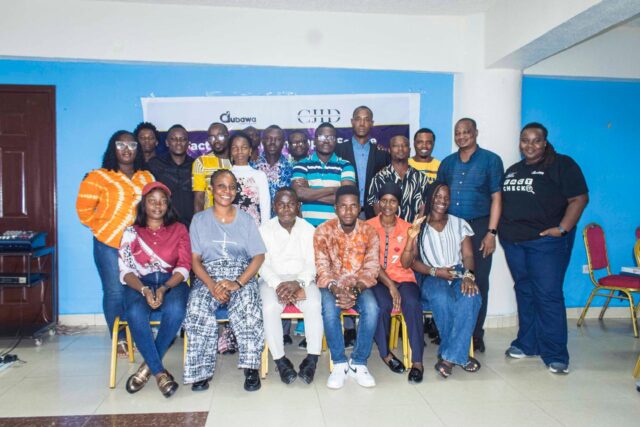
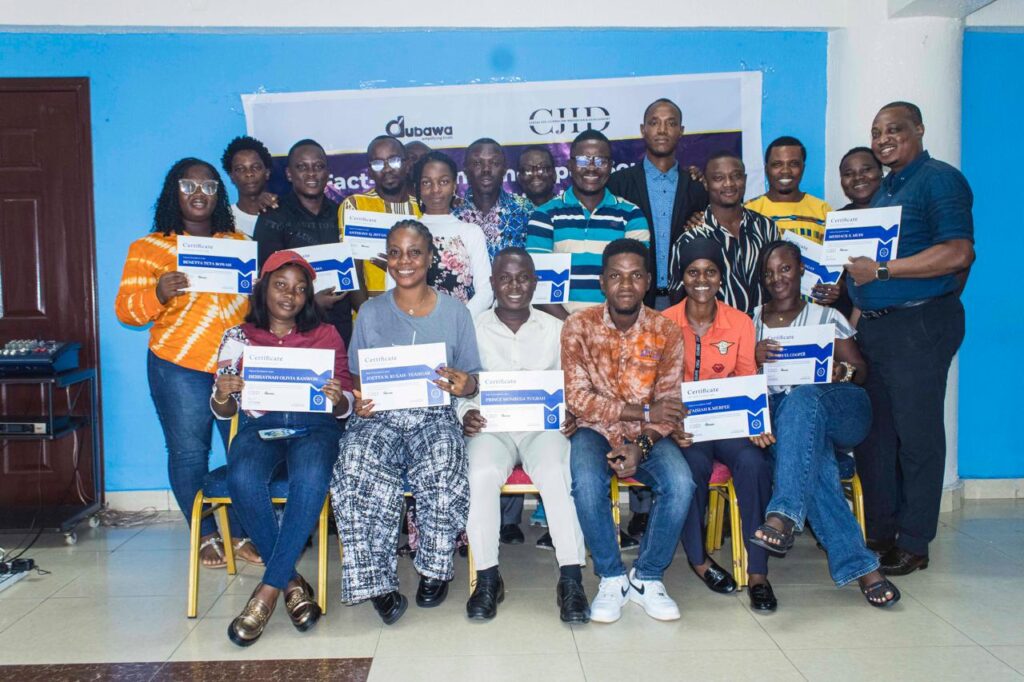
MONROVIA – DUBAWA has successfully concluded a three-day workshop aimed at enhancing fact-checking skills among media practitioners in Liberia. The non-residential training, held from November 11 to 13 at the Corina Hotel on Tubman Boulevard in Sinkor, brought together over 20 participants, including journalists, bloggers, and digital influencers.
Throughout the workshop, attendees engaged in a series of intensive sessions that tackled various critical aspects of fact-checking. Facilitators led discussions on identifying misinformation, conducting digital investigations, verifying online content, and adhering to ethical standards in reporting. The sessions also delved into the rapidly changing landscape of media manipulation and the pivotal role of content creators in maintaining truthfulness within public discourse.
DUBAWA, a non-partisan fact-checking organization committed to promoting accuracy, transparency, and accountability across West Africa’s media landscape, operates under the five guiding principles of the International Fact-Checking Network (IFCN), ensuring adherence to global standards in their operations.
The initiative was supported by the Premium Times Centre for Investigative Journalism (PTCIJ) and was proudly funded by the MacArthur Foundation and the Heinrich Böll Foundation.
Participants expressed their gratitude for the opportunity, sharing how the training had equipped them to strengthen responsible journalism and combat misinformation in Liberia.
Mariam Jalloh, a journalist from Kear Radio, shared her reflections on the workshop: “I learned that in fact-checking, you can’t just assume. You have to dig deeper to find the truth. I encourage many out there—journalists, bloggers, and influencers—to learn more about fact-checking, as it is essential to our daily operations in media.”
Kerkula Blama, a blogger from Geez Liberia, echoed Jalloh’s sentiments, noting, “This workshop opened my eyes to the responsibilities we hold as bloggers. It’s crucial for us to understand the impact of our content and to strive for accuracy.”
Nathan Gaduah, Editor West Africa for DUBAWA, addressed the importance of the training in combating disinformation. He explained, “The economic forum has identified disinformation as one of the biggest global threats. We organized this training not only to build the capacity of journalists but also to include bloggers and influencers as they play an integral role in the media ecosystem. We believe that ensuring ethical practices among all media practitioners is essential to fostering integrity in our work.”
Gaduah highlighted several key topics explored during the workshop, including fact-checking strategies, media and information literacy, digital security, and ethics in journalism. “Ethics is foundational,” he emphasized. “We hope that the skills learned will not only be temporary but will become part of their professional practice.”
While acknowledging some participants expressed a desire for deeper exploration of certain topics, Gaduah assured them of the ongoing support from DUBAWA. “We are committed to maintaining a connection with participants. Should they require further guidance or support in their future work, they are welcome to reach out.” As the workshop concluded, Gaduah reaffirmed the importance of integrity in media practices, asserting that the knowledge gained will contribute to a more informed and responsible media.