-Nimba Senators Publicly Apologize to Dillon, Disown Threats Over Labor Minister Row
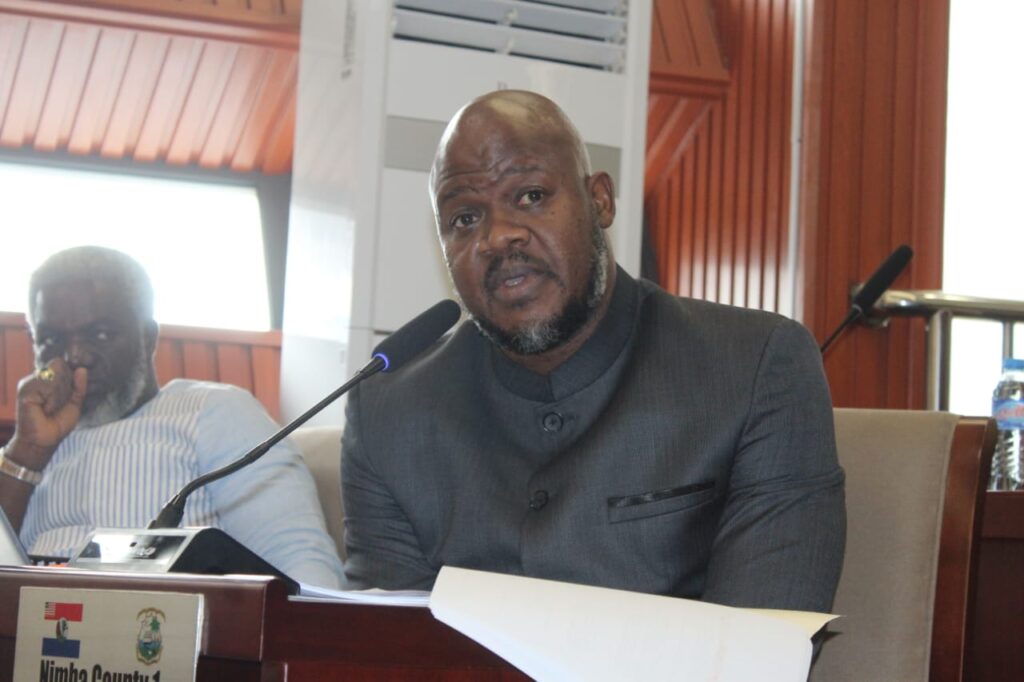
MONROVIA – Nimba County Senators Nya Twayen and Samuel G. Kogar have publicly apologized to Montserrado County Senator Abraham Darius Dillon, distancing the people of Nimba from threats made against his life and declaring that “paid political agents” do not speak for the county.
The rare apology, delivered on the Senate floor by Senator Twayen, comes amid escalating political tension following Dillon’s sustained criticism of Cllr. Cooper Kruah, Minister of Labor and chairman of the Movement for Democracy and Reconstruction (MDR).
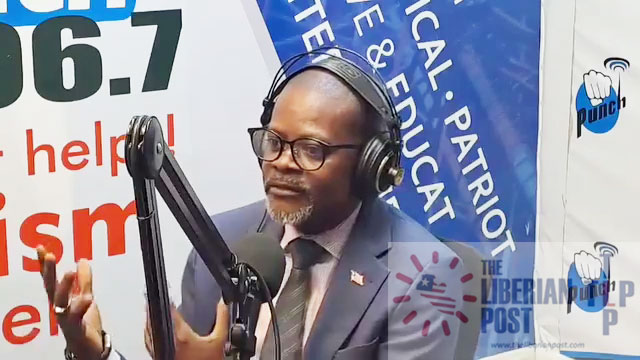
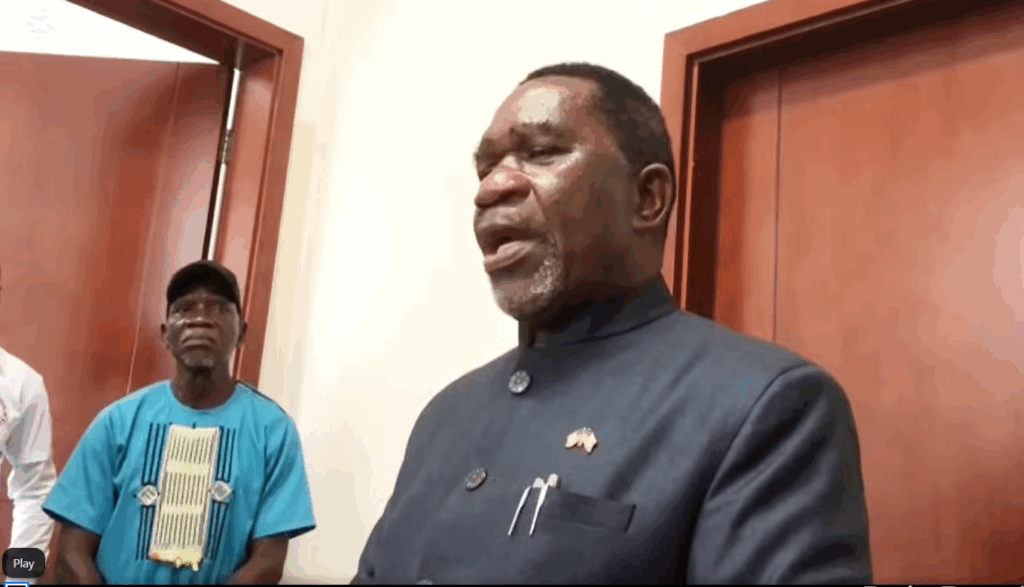
Dillon has repeatedly accused Kruah’s handling of questionable labor and work‑permit practices and using ethnic rhetoric to shield himself from accountability. In response, Kruah went on a government platform at the Ministry of Information and launched a blistering counterattack, while MDR issued a statement portraying Dillon as hostile to Nimbaians and even linking his political stance to the death of former Nimba strongman, Senator Prince Y. Johnson.
Those attacks triggered a wave of online threats and anti‑Dillon rhetoric from individuals claiming to speak for Nimba County—a development that prompted Dillon to raise concerns about his personal safety.
On Wednesday, November 19, Senator Twayen moved to draw a sharp line between Nimba’s elected leadership and those threats.
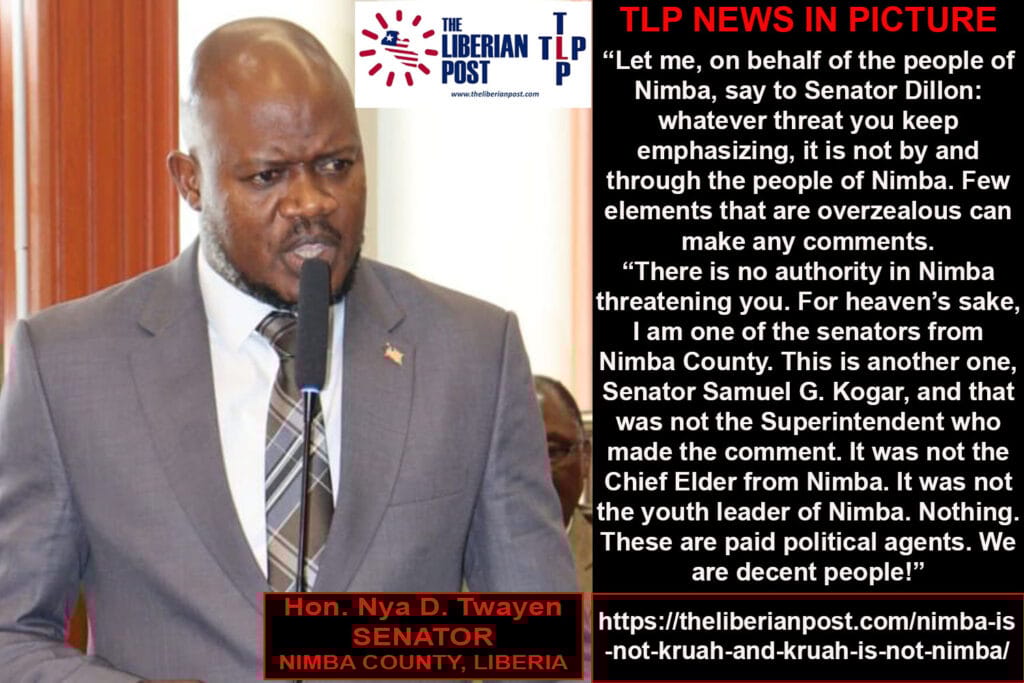
“Let me, on behalf of the people of Nimba, say to Senator Dillon: whatever threat you keep emphasizing, it is not by and through the people of Nimba,” Twayen said. “Few elements that are overzealous can make any comment.”
He emphasized that no legitimate Nimba authority had ordered or endorsed threats against the Montserrado lawmaker.
“There is no authority in Nimba threatening you,” he stressed. “For heaven’s sake, I am one of the senators from Nimba County. This is another one, Senator Samuel G. Kogar, and that was not the Superintendent who made the comment. It was not the Chief Elder from Nimba. It was not the youth leader of Nimba. Nothing.
These are paid political agents.”
“We Are Decent People”: Nimba Senators Reject Ethnic Weaponization
Twayen used his intervention to push back against attempts to turn legitimate policy disputes into an ethnic confrontation.

“So, when we take the words of few disenchanted politically‑paid agents to reflect the views and aspirations of the people of Nimba, [that is wrong]. We are decent people,” he insisted.
While acknowledging that some Nimbaians were “hurt” by certain comments made in the heat of the political back‑and‑forth, Twayen argued that Dillon had also gone “a little bit too far” in some of his historical references—particularly suggestions that, during the civil war, Nimba fighters tried to impose Nimba identity on others.
“You need to take it back, that you would think that during the civil war, Nimbaians were all over the place and forcing everyone to be from Nimba. That was not the case,” Twayen said. “We didn’t choose for the war to pass through Nimba, but every one of us became participants of the war, and even some people were very, you know, brutal in their acts.”
Even so, he emphasized admiration, not hostility, towards Dillon.
“You are a brother that we have nothing against, but admiration because of your stance—some of which will even benefit Nimba,” he said. “Don’t be threatened. The people of Nimba are not threatening you. They love you. Continue with your advocacy.”
“Nimba Is Not Him, and He Is Not Nimba”
In one of the most politically pointed lines of his statement, Twayen moved to separate Minister Cooper Kruah’s actions from the collective identity of Nimba County.
“Our people also can be assured about that, Honorable Cooper Kruah being the Minister of Labor—whatever he does in the functions of his daily life cannot also be a Nimba issue,” Twayen said.
“Inasmuch as he’s one of us, and we’ll do everything possible to respectfully protect him at some points in time while urging him to do the right thing. But he is not Nimba, and Nimba is not him.”
The remark is widely seen as a direct response to MDR’s strategy of framing criticism of Kruah as an attack on Nimbaians as a whole. It also implicitly rebukes the party’s earlier statement, which accused Dillon of “attacking Nimbaians” and suggested his politics contributed to the climate that led to Prince Johnson’s death.
By drawing that line, Twayen attempted to reclaim Nimba’s political image from partisan actors who seek to weaponize ethnic sentiment.
Background: Dillon vs. Kruah and MDR
The apology follows weeks of controversy triggered when Senator Dillon publicly raised issues around work permits and labor practices under the Ministry of Labor, now headed by Cllr. Kruah.
Dillon questioned alleged irregularities in the issuance of work permits and criticized what he described as poor labor enforcement and political patronage. Kruah fired back during an appearance at the Ministry of Information, saying he had originally been nominated for Minister of Justice but was blocked by Dillon—a claim that appeared intended to cast Dillon as personally vindictive.
MDR, the party Kruah leads, then released a statement that:
- Accused Dillon of harboring longstanding animosity toward Nimba County;
- Framed his scrutiny of Kruah as part of an “anti‑Nimba” agenda; and
- In highly charged language, invoked the legacy and death of former Senator Prince Johnson.
Those interventions, amplified by pro‑Kruah social media activists, coincided with a spike in vitriolic posts and alleged threats directed at Dillon, leading him to complain on the Senate floor that his life was being endangered for doing constitutional oversight.
Senate’s Broader Debate on Disrespect and Threats
Twayen’s apology dovetails with a broader debate already gripping the Legislature. Earlier this week, Bomi County Senator Edwin Melvin Snowe decried what he called a “pattern of abuse” by executive officials against lawmakers, citing:
- The Information Ministry’s statement accusing him of trying to “destabilize” Liberia after he said he wanted the Boakai government to be a “one‑term government”;
- Social‑media insults from the Director‑General of the state broadcaster, ELBC; and
- The attacks on Senator Dillon from the Labor Minister and his political party.
Snowe warned that if the Senate failed to act, lawmakers would increasingly be subjected to public humiliation and threats for exercising their oversight function.
Picking up that thread, Twayen argued that the Senate should avoid turning the chamber into a “stage” for dramatic confrontations with officials seeking “performative” moments, but insisted that disciplinary consequences must still follow when ministers or state actors cross the line.
“We shouldn’t give people the platform for the performative floor that they want from us,” he cautioned. “Instead of giving a well‑organized stage on the floor in the Liberian Senate for people to come and perform here… let us carve a way in which we can communicate this to the Executive and prescribe their punishments.”
He proposed that the Senate should recommend sanctions to the President rather than only rely on brief contempt detentions.
“There are punishments that would hurt people harder in their pockets or that would impugn them,” he said, calling for targeted disciplinary measures against officials found to be in error.
Standing Up to ArcelorMittal, Standing Up for Nimba
Twayen also drew on his own experience of backlash over his stance against alleged violations by ArcelorMittal Liberia in Nimba County, to illustrate how “bad political culture” works.
“I stand… against the kind of violations that Mittal Steel is carrying out in Nimba,” he said. “How many times have you seen my own people have made press conferences against me? Mittal induced people—women groups—calling me names, people writing all kinds of things on Facebook against me… It’s part of the bad political culture that we find ourselves in.”
That example was used to underscore his argument that money‑driven mobilization and smear campaigns do not reflect genuine community sentiment—whether against him or against Dillon.
What Next?
Senator Twayen pledged to consult with local stakeholders and “elements” in Nimba who have been making incendiary statements in the name of the county, while reiterating that they “don’t represent us.”
“We’re going to have some consultations with… some of the elements that are making the comments—who even knows whether they are from Nimba?” he said. “And the few that you have identified from Nimba, they don’t represent us.”
He called on the Senate to move beyond mere debates and take concrete institutional steps against officials—specifically naming those at the Ministry of Labor, Ministry of Internal Affairs, and Ministry of Information, Cultural Affairs and Tourism—if they are found to have acted improperly.
“This Senate must make a decision, if it is convinced that these people are in error, for us to recommend disciplinary action to His Excellency, to be meted against them,” Twayen urged.
For now, the most immediate political impact is the public reconciliation gesture toward Senator Dillon and the clear message to Liberians that Nimba’s leadership does not claim, authorize, or endorse threats in defense of any single official—however powerful.
Whether the apology will cool tensions around the Dillon–Kruah–MDR saga, or push the Boakai administration to rein in combative appointees, will be tested in the coming weeks as the Senate weighs possible sanctions and the national debate over political rhetoric and impunity continues.