-Chiefs’ Warning Against Insulting President Raises Free‑Speech Concerns
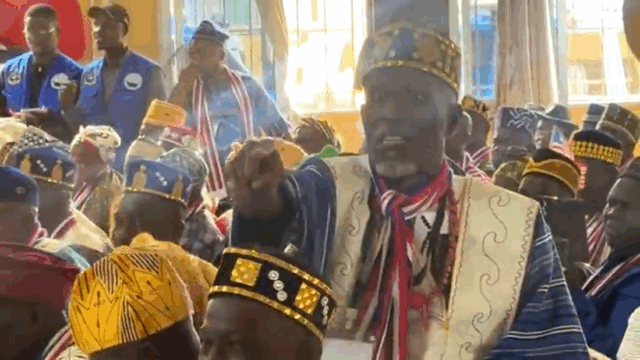
GBARNGA, Bong County – A senior Liberian traditional chief has sparked debate after warning that the Council of Chiefs will “deal with” anyone—whether senator, official or ordinary citizen—who publicly insults President Joseph Nyuma Boakai, in remarks that drew laughter over his unexpected invocation of “Jesus’ name” and raised questions about freedom of expression.
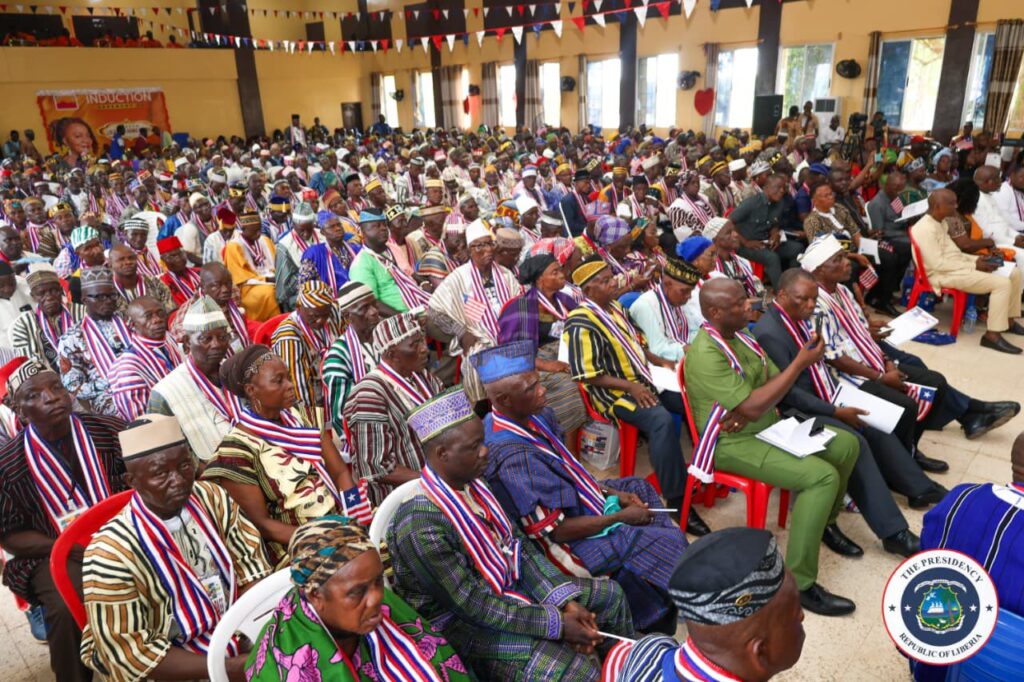
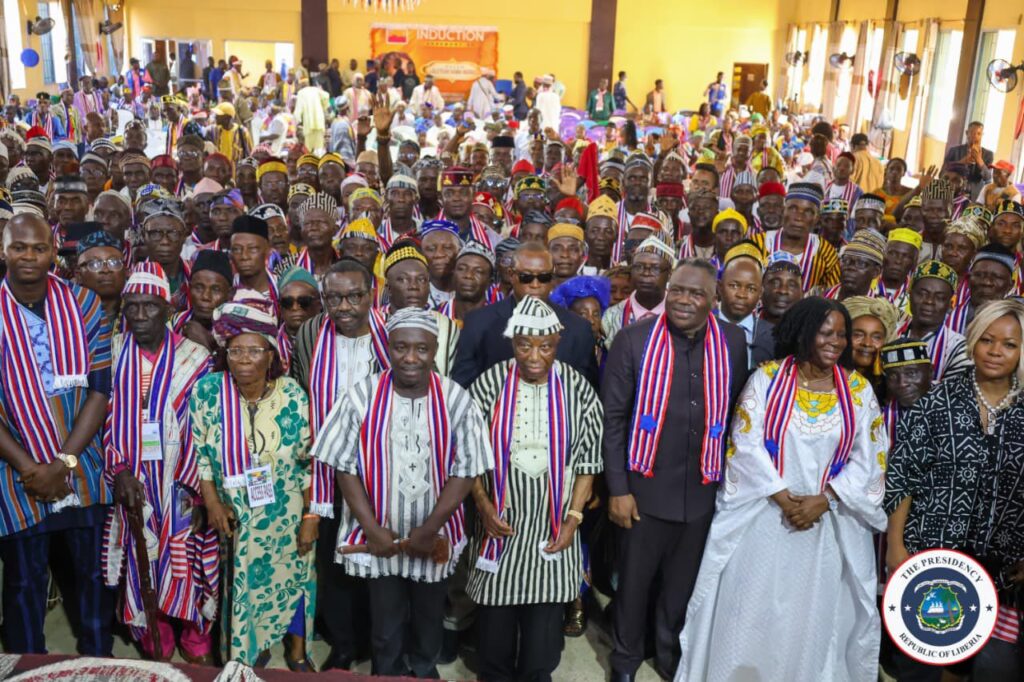
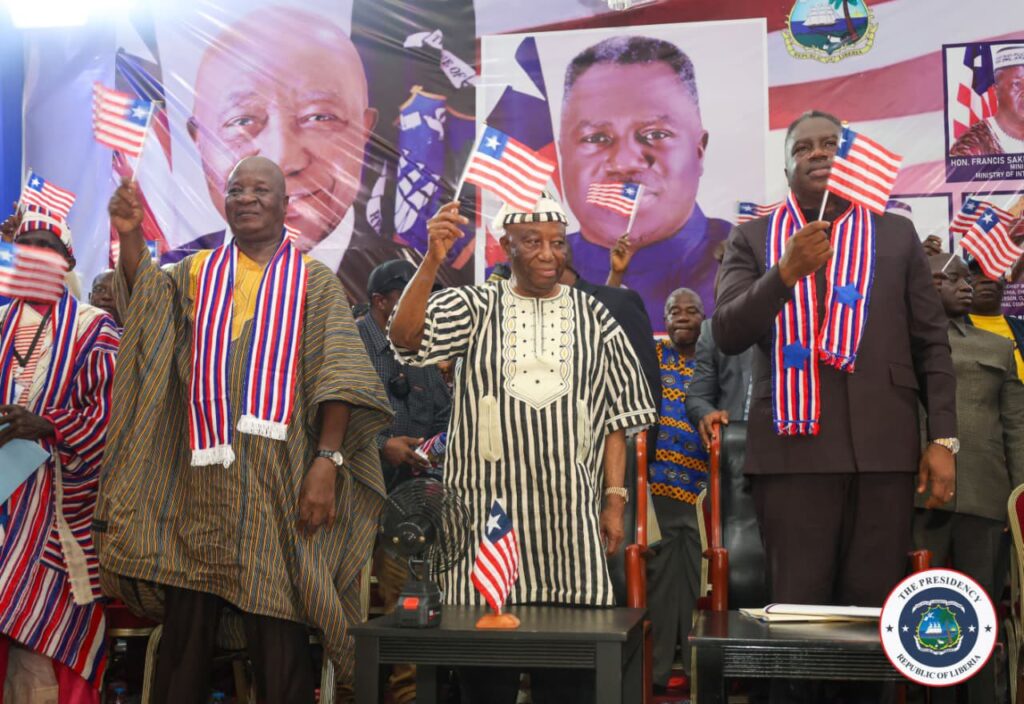
Addressing a gathering of elders and state officials, the chief elevated the presidency to near‑sacred status.
“When the President is entering, look at the multitude of people that elected that one man,” he said. “He became God of the Republic of Liberia.”
He then turned to the growing trend of harsh criticisms and insults directed at national leaders on social media and radio talk shows—particularly from opposition supporters.
“Today when we hear anybody, whether in the Senate or in the Executive Mansion, or in the chief compound, when you cuss on radio… any official of government or other people that cuss our President, we, the Council of Chiefs, we will invite you,” he warned. “We will deal with you in Jesus’ name.”
The closing phrase — “in Jesus’ name” — triggered loud laughter across the hall. Many in the audience saw it as an ironic clash between traditional authority and Christianity: chiefs are widely and openly associated with indigenous belief systems and secret societies that many churches denounce as incompatible with Jesus’ teachings.
Yet behind the humor lies a serious issue: how far can traditional leaders go in policing speech in a country that has made major legal commitments to protect press freedom and free expression?
A New Culture of Disrespect—or Democratic Scrutiny?
It is true that Liberia’s public discourse has become sharply polarized. On Facebook and call‑in shows, some citizens routinely refer to the President and senior officials in deeply disparaging terms, abandoning even basic honorifics. For traditional leaders steeped in a culture where rulers are accorded near‑absolute deference, this is seen as a collapse of “Africanness” and good manners.
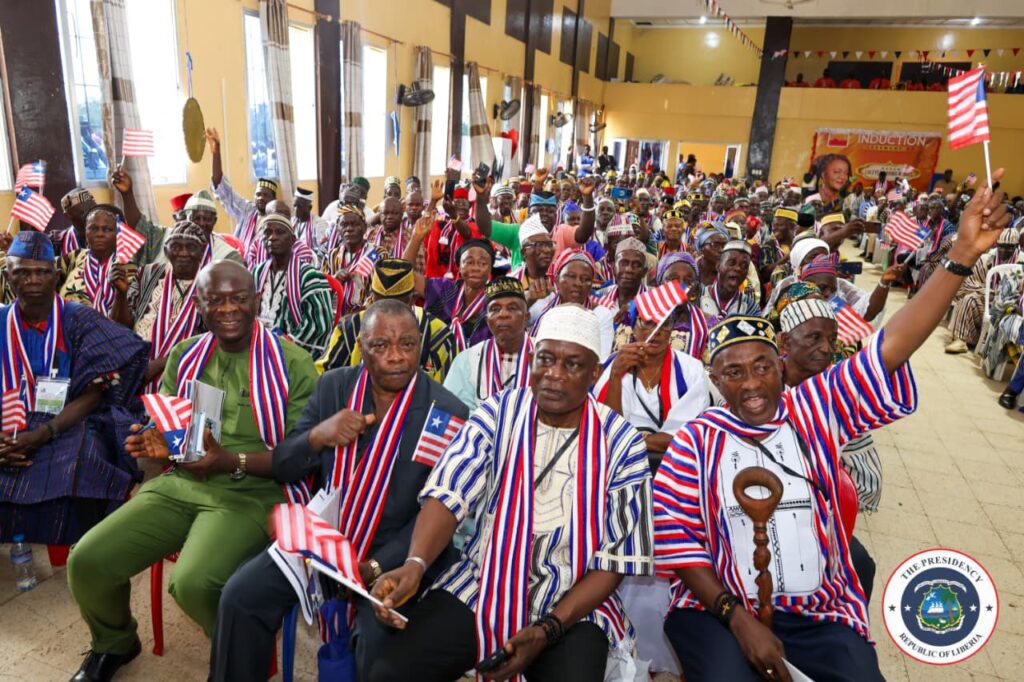
From their perspective, no properly brought‑up African insults a sitting leader in public, even in disagreement. Chiefs view their role as guardians of respect and social order.
But rights advocates and legal analysts counter that robust, even uncomfortable criticism of leaders is part of democratic life, and that Liberia has taken concrete steps to enshrine that principle.
Liberia’s Commitments: Table Mountain and the KAK Law
In 2012, Liberia became one of the early African signatories of the Table Mountain Declaration, a continental pledge spearheaded by the World Association of Newspapers and News Publishers to repeal criminal defamation and “insult” laws used to silence journalists and critics.
That commitment was substantially realized in 2019, when then‑President George M. Weah signed the Kamara Abdullah Kamara (KAK) Press Freedom Act into law. The KAK Act:
- Decriminalized defamation, sedition and criminal malevolence, offenses long used to jail or harass journalists and political opponents;
- Emphasized civil remedies rather than criminal sanctions for reputational harm;
- Reaffirmed Liberia’s obligations under international human‑rights instruments guaranteeing freedom of expression.
By passing that law, Liberia effectively removed the criminal offense of “insulting the President” from its statute books—a significant reform that was widely hailed by media groups and international partners.
Against that backdrop, the chief’s threat that the Council of Chiefs will “deal with” people who “cuss” the President has set off alarm bells among some observers, who worry it could encourage informal intimidation even where the criminal law has been reformed.
Where Tradition Meets the Constitution
The episode highlights a deeper tension: the intersection of traditional authority with a constitutional republic that guarantees both respect for culture and explicit civil liberties.
While the Constitution recognizes traditional leaders and the Ministry of Internal Affairs works closely with chiefs on local governance, there is no legal authority for traditional bodies to summon or sanction citizens over speech about the President or other officials.
Any attempt by a chiefdom to “deal with” critics—whether through public shaming, fines, or other extra‑legal measures—would risk clashing directly with:
- Article 15 of the Liberian Constitution, which guarantees freedom of expression;
- The KAK Press Freedom Act, which limits state responses to speech to civil mechanisms;
- Liberia’s international obligations under the International Covenant on Civil and Political Rights and the African Charter on Human and Peoples’ Rights.
At the same time, many ordinary Liberians are themselves uncomfortable with the new culture of unrestrained online insults, and some quietly welcome calls—formal or informal—for a return to civility in public debate.
Striking the Balance: Respect Without Fear
The challenge, then, is not whether presidents and officials should be respected – they should – but how that respect is secured.
Democratic societies rely on social norms of civility, not chiefs’ threats or criminal sanctions, to keep criticism focused on ideas and performance rather than personal abuse. Leaders, in turn, are expected to tolerate a higher threshold of criticism than private citizens.
For President Boakai’s government, which has pledged to uphold the KAK law and deepen democratic gains, the comments from the chief present a test: can it reaffirm constitutional protections and its international commitments while also encouraging a culture of respectful disagreement, not verbal violence?
For traditional leaders, the moment is an invitation to reimagine their role—not as informal censors of speech, but as mediators of dialogue, promoting both cultural respect and constitutional rights.
And for citizens, especially those in the opposition and on social media, the episode is a reminder that how they criticize may matter almost as much as what they criticize—if the goal is to build a culture that is both free and mature.
The laughter that greeted the chief’s “Jesus’ name” was about more than a clash of religions. It captured the awkward, unfinished intersection where old authority, new freedoms, and evolving norms are now colliding in Liberia’s young democracy.