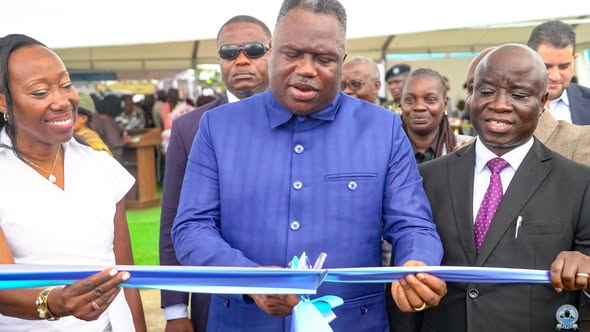
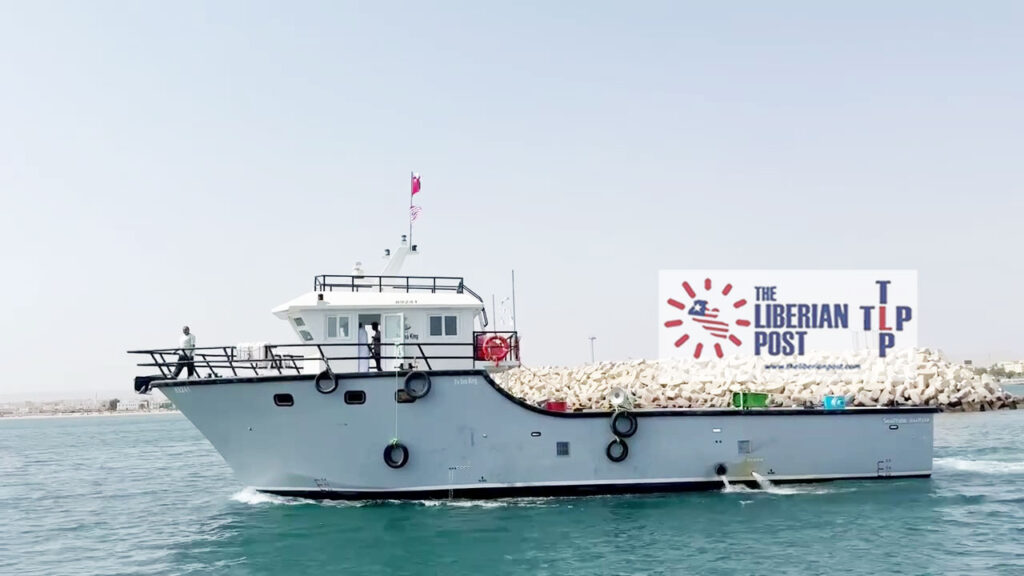
MONROVIA, Liberia – Vice President Jeremiah Kpan Koung, Sr. on Monday, November 24th, commissioned Liberia’s first semi‑industrial fiberglass fishing vessel, describing it as a “historic step” in the government’s drive to boost local fish production, create jobs, and reduce dependence on imported fish.
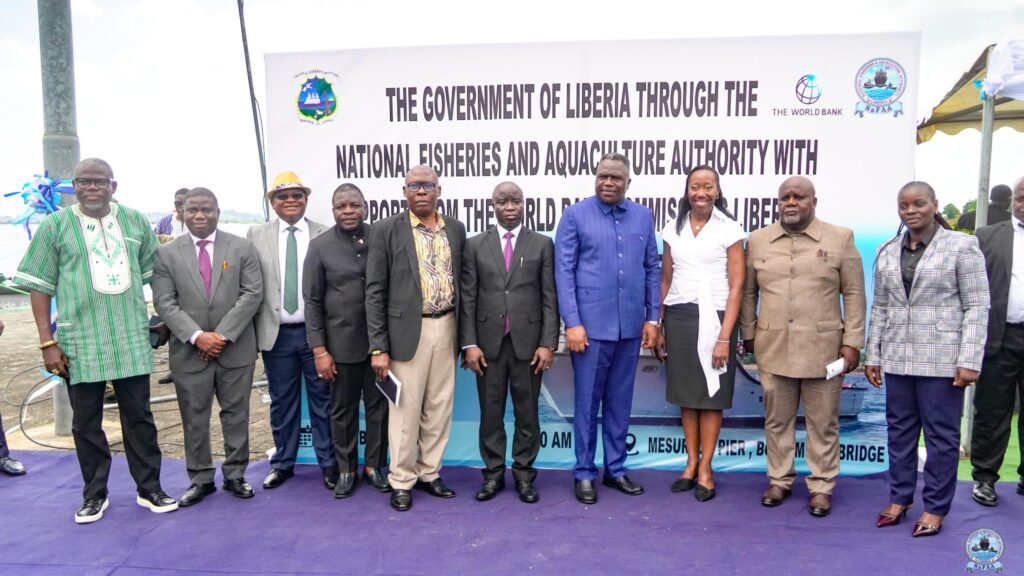
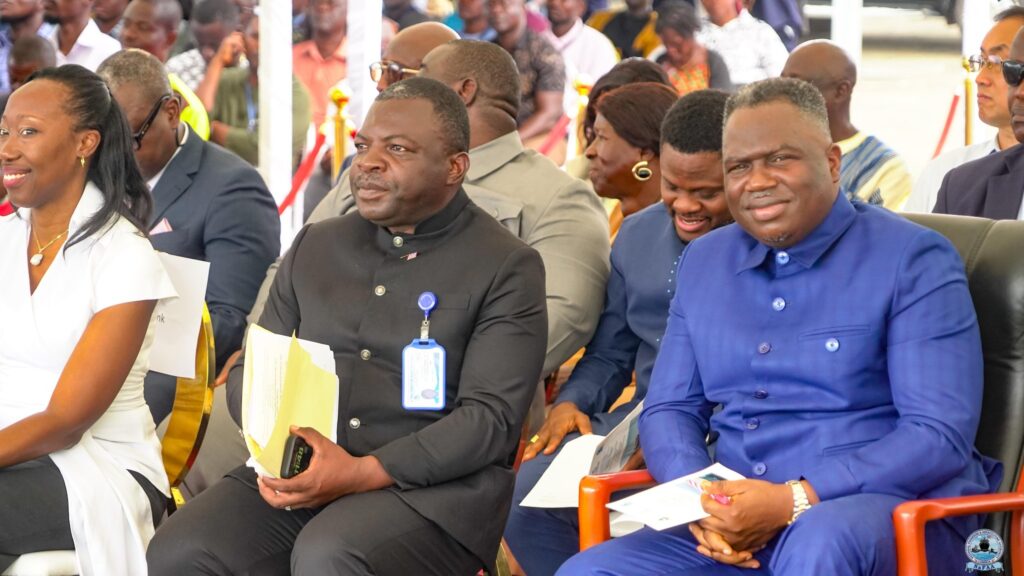
The ceremony, held at the Mesurado Pier on Bushrod Island and organized by the National Fisheries and Aquaculture Authority (NaFAA) with support from the World Bank, brought together senior government officials, development partners and members of fishing communities from across Montserrado.
Koung, representing President Joseph Nyuma Boakai, said the commissioning marked “another proud moment in our nation’s journey toward self‑reliance and inclusive development” under the administration’s ARREST Agenda for Inclusive Development.
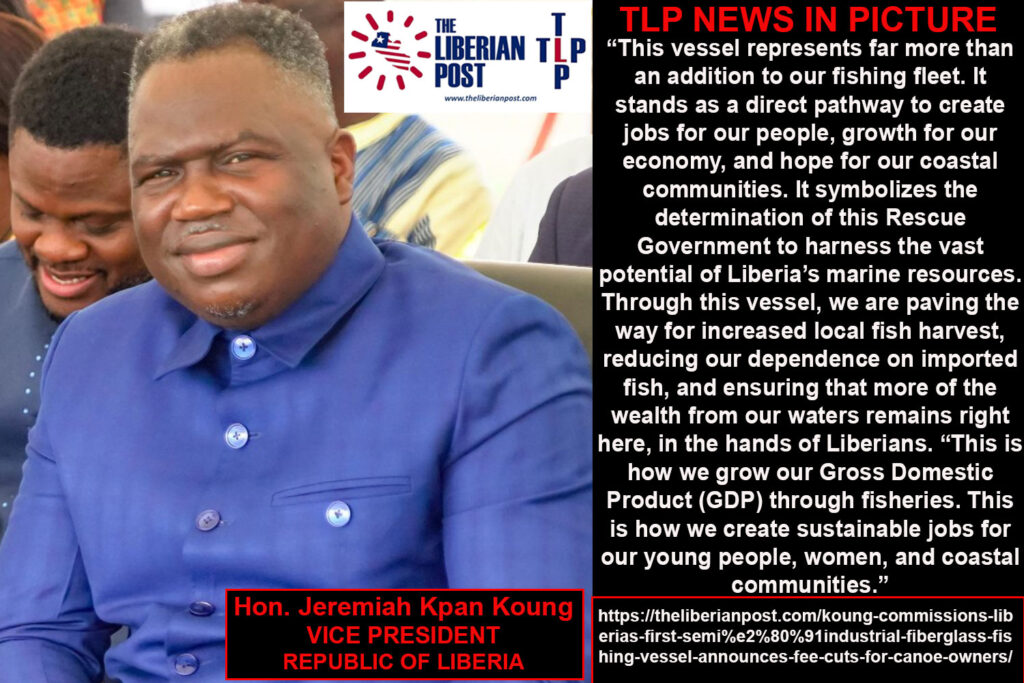
“This vessel represents far more than an addition to our fishing fleet,” the Vice President said. “It stands as a direct pathway to create jobs for our people, growth for our economy, and hope for our coastal communities. It symbolizes the determination of this Rescue Government to harness the vast potential of Liberia’s marine resources for the benefit of all Liberians.”
Boosting Local Harvest, Cutting Fish Imports
The newly commissioned fiberglass vessel, the Sea King, is classified as semi‑industrial and is expected to significantly increase local fish harvest capacity.
Koung said the vessel will help keep more of the value of Liberia’s marine resources inside the country.
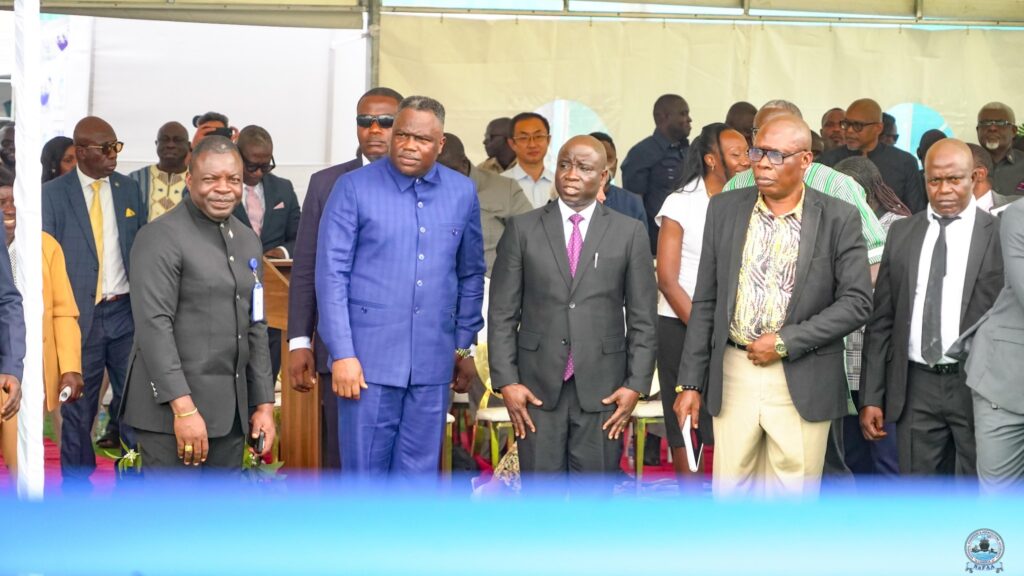
“Through this vessel, we are paving the way for increased local fish harvest, reducing our dependence on imported fish, and ensuring that more of the wealth from our waters remains right here, in the hands of Liberians,” he noted. “This is how we grow our Gross Domestic Product (GDP) through fisheries. This is how we create sustainable jobs for our young people, women, and coastal communities.”
The Vice President urged NaFAA and fishing communities to use the vessel “wisely for learning, for production, and for empowerment,” and to ensure that it serves as “a source of pride and inspiration for young Liberians to see fisheries not as a struggle for survival, but as a pathway to prosperity.”
License Fees Cut for Artisanal Canoes
In a major relief measure for small‑scale fishers, Koung announced a reduction in annual license fees for all artisanal canoes nationwide, effective January 1, 2026.
Acting on the directive of President Boakai, the new fee structure will be:
- Paddle canoes: US$30 per year (down from US$50)
- 1–15 horsepower engines: US$175 per year (down from US$250)
- 16–40 horsepower engines: US$350 per year (down from US$450)
“These reductions are a clear demonstration that this Government listens, and that we stand with our fishermen and women,” Koung declared. “For many years, our fishermen have asked for relief and today, your voices have been heard!”
He instructed NaFAA to “put in place the necessary modalities to ensure that these new fees are well communicated and implemented effectively across all coastal counties.”
The move is expected to ease financial pressure on artisanal fishers, many of whom operate on thin margins and have long complained that high license fees, fuel costs, and equipment expenses make it difficult to stay afloat.
Fisheries Branded “Low‑Hanging Fruit” for Jobs and Growth
Reiterating that agriculture is a top priority for the Boakai administration, the Vice President singled out the fisheries sector as “an integral part of that national priority” and “a low‑hanging fruit for job creation, food security, and private sector investment.”
“With the right policies, infrastructure, and partnerships, this sector can become one of the key drivers of inclusive economic growth and shared prosperity,” Koung said.
He used the occasion to thank Liberia’s “fisherfolks” for their role in feeding the nation, noting that their work helps ensure “we never lack that vital protein ingredient on our tables.”
The ceremony followed Liberia’s observance of World Fisheries Day on November 21.
Call to World Bank and Partners: From Vessel to Port, Aquaculture and Landing Sites
The Vice President extended “deepest appreciation” to the World Bank for financing the acquisition of the Sea King and for its broader support to Liberia’s fisheries.
“Your support has been instrumental in making this day possible,” Koung told Country Manager Georgia Wallen and other partners. “But let us not stop here.”
He called on the Bank and other development partners to work with the Government of Liberia to:
- Begin construction of a dedicated fishing port;
- Expand aquaculture and inland fisheries programs;
- Develop modern artisanal landing sites across the country.
“This sector can and must provide the volume of jobs our country needs when the right infrastructure is in place and the private sector is fully engaged,” he said. “Together, we can build a fisheries sector that truly works for the Liberian people.”
As the Sea King prepares to begin operations, the commissioning and the announced fee cuts signal a broader effort by the Boakai–Koung administration to turn Liberia’s coastline and rivers into engines of growth, employment, and food security—anchoring national development not just in the capital, but along the country’s long‑neglected fishing communities.
“May God bless our fishermen and women,” Koung concluded, “and may God continue to bless the Republic of Liberia.”